Music education in West London provides children, teenagers, adults and aspiring professional musicians with opportunities to develop practical skills, musical knowledge and performance experience. The area has a varied music-learning environment, including specialist music schools, independent teaching studios, private tutors, community music organisations and established music institutions.
- What Are Music Schools in West London?
- How Does Music Education Differ from Private Instrument Lessons?
- What Is the Background of Formal Music Education?
- Which Music Schools and Music Education Providers Serve West London?
- Royal College of Music, South Kensington
- Ealing Music Service
- Independent Music Schools and Teaching Studios
- Royal Academy of Music and Other Specialist Institutions
- London College of Music, Ealing
- The Rhythm Studio, Hammersmith
- The Masters Music School, West Ealing
- AB Music Academy, Acton
- Other Local Music Learning Options
- What Types of Music Courses Can Students Study in West London?
- Instrumental Music Lessons
- Singing and Vocal Training
- Music Theory and Composition
- Music Production and Technology
- Group Music and Ensemble Training
- Which Music Lessons Are Suitable for Children and Teenagers?
- How Does the London West Music Hub Support Music Education?
- How Much Do Music Lessons Cost in West London?
- Which Music Qualifications Can Students Obtain in West London?
- How Should Parents Choose a Music School in West London?
- Check Teacher Qualifications and Experience
- Review Safeguarding Arrangements
- Compare Teaching Formats
- Check Location and Transport
- Ask About Progress and Performance Opportunities
- What Facilities Should a Good Music School Provide?
- Instrumental Teaching Rooms
- Rehearsal and Performance Spaces
- Recording and Music Technology Facilities
- Accessible Learning Environments
- What Career Opportunities Are Available After Studying Music?
- Professional Music Performance
- Music Teaching and Education
- Music Production and Recording
- Composition and Songwriting
- Music Business and Events
- Where Can Students Find Music Schools Across West London?
- What Is the Future of Music Education in West London?
- Greater Access to Music Education
- Digital Music Learning
- Inclusive Music Programmes
- Collaboration Between Music Institutions
- How Can Students Get Started at a Music School in West London?
- Choosing the Right Music School in West London
West London covers several distinct areas, including Kensington, Chelsea, uk/local/hammersmith-and-fulham/hammersmith/">Hammersmith, Fulham, Ealing, Acton, hounslow/chiswick/">Chiswick, Richmond, Hounslow and nearby neighbourhoods. Each area offers access to different types of music education, from beginner piano lessons and children’s music classes to advanced instrumental training, singing tuition and professional music development.
Choosing a suitable music school involves understanding the available courses, teaching methods, qualifications, facilities, costs and progression opportunities. Students also benefit from identifying schools that match their age, musical interests, current ability and long-term ambitions.
This guide explains how music schools in West London operate, what they teach, where students find training and how families and adult learners choose suitable music education.
What Are Music Schools in West London?
Music schools in West London are educational organisations that provide structured instruction in instruments, singing, music theory and performance. They serve learners of different ages and abilities through individual lessons, group classes, ensembles and specialist training programmes.
A music school is an institution or teaching organisation dedicated to developing musical knowledge and practical ability. Its programmes generally combine instrumental instruction, listening skills, technical exercises, music reading and performance practice.
West London has several types of music education providers. These include independent music academies, specialist instrumental schools, community-based organisations, private teaching studios and schools offering broader performing arts education.
Some providers concentrate on one instrument, such as piano, guitar or violin. Others offer a complete programme covering classical music, contemporary music, jazz, singing, composition and music production.
Music education also serves different purposes. A young child attends lessons to develop musical awareness and coordination. A teenager studies an instrument to prepare for graded examinations or auditions. An adult learner takes lessons to develop a personal interest or improve existing performance skills.
The structure of a music school depends on its educational objectives. Some schools follow recognised examination syllabuses, while others create individual learning programmes around student interests.
How Does Music Education Differ from Private Instrument Lessons?
Music schools generally provide a structured learning environment with defined programmes, teaching schedules and access to different musical activities. Private tutors typically concentrate on individual instruction in a particular instrument or subject.
A music school also offers opportunities to participate in recitals, group performances, workshops and ensembles. These activities introduce students to collaboration and public performance.
Private tuition remains useful for learners who require flexible scheduling, individual attention or specialist instruction. Both approaches support musical development, and some students combine private lessons with school-based activities.
What Is the Background of Formal Music Education?
Formal music education developed through religious institutions, conservatoires, private academies and public education systems. European conservatoires established structured methods for teaching composition, instrumental technique and performance.
The Royal Academy of Music, founded in London in 1822, is an important example of Britain’s historical conservatoire tradition. Conservatoires helped establish professional standards for instrumental training and advanced musical study.
During the twentieth century, music education expanded through schools, local authorities, community organisations and private teaching institutions. Modern music education now includes classical instruments, popular music, electronic production, songwriting and digital recording.
West London’s music-learning environment reflects this wider development. Traditional instrumental teaching operates alongside contemporary music instruction and community-based programmes.
Which Music Schools and Music Education Providers Serve West London?
West London learners access music education through specialist schools, independent academies, community organisations and established institutions. Relevant examples include the Royal College of Music, Ealing Music Service and local independent music-teaching providers across the area.
The most suitable provider depends on the student’s age, ability, preferred instrument and educational objectives. Some institutions specialise in advanced professional training, while others focus on accessible lessons for beginners and local families.
The following institutions and organisations illustrate the range of music education available in and around West London.
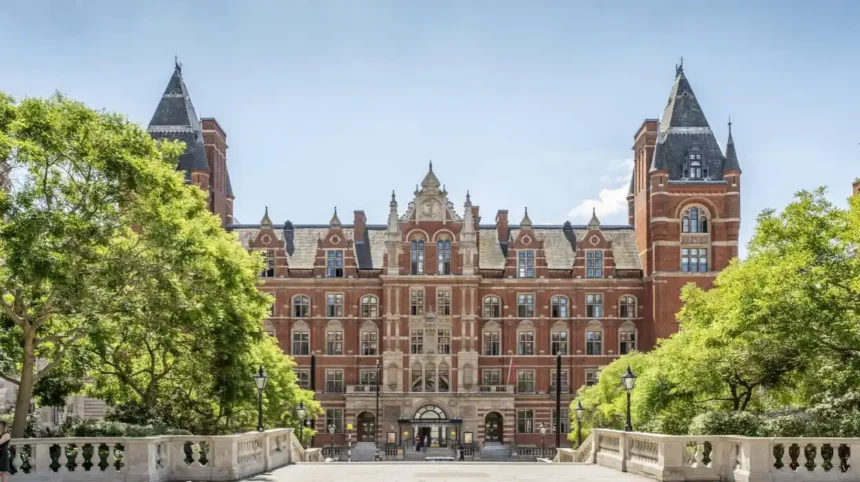
Royal College of Music, South Kensington
Royal College of Music is a major music conservatoire located in South Kensington.
Founded in 1882, the institution provides higher education and advanced musical training. Its programmes include performance, composition, conducting, research and specialist musical study.
The college primarily serves students pursuing professional or advanced music education. Its location makes it an important institution for the wider West London music community.
Its public performances, educational activities and outreach programmes also contribute to music engagement beyond its full-time student population.
Ealing Music Service
Ealing Music Service supports music education within the London Borough of Ealing.
Its work connects schools, young learners and music teaching opportunities. Local authority music services generally support instrumental tuition, ensemble activities, school music provision and progression into wider musical opportunities.
Families interested in music lessons should check current programmes, instrument availability, eligibility requirements and term dates directly with the service.
Independent Music Schools and Teaching Studios
Independent music schools operate across neighbourhoods such as Ealing, Acton, Hammersmith, Chiswick, Fulham and Richmond.
These providers generally offer instrumental tuition, singing lessons, group music classes and examination preparation. Some concentrate on children, while others provide dedicated programmes for adult beginners and experienced musicians.
Their teaching models differ. One school offers weekly individual lessons, while another combines instrumental tuition with rehearsals, workshops and performance opportunities.
Students should confirm the teacher’s experience, available instruments, lesson structure and current fees before enrolling.
Royal Academy of Music and Other Specialist Institutions
Royal Academy of Music is located in central London rather than West London. However, it forms part of the wider educational network available to musicians living in the capital.
Founded in 1822, the academy provides advanced musical education, performance training and research opportunities.
It is particularly relevant to students considering professional development, auditions and higher education in music.
London College of Music, Ealing
London College of Music is part of the University of West London and is based on St Mary’s Road in Ealing.
The college provides higher education in music and performing arts. Its academic environment supports students interested in instrumental performance, contemporary music, composition, music technology and related creative disciplines.
The institution also has a connection with London College of Music Examinations, an examination board offering graded music qualifications.
It is particularly relevant to students considering music as a professional or academic career rather than a purely recreational activity.
The Rhythm Studio, Hammersmith
The Rhythm Studio provides contemporary music education in Hammersmith.
Its teaching focuses on contemporary musical development, including instruments, singing, songwriting and performance. Its location at West London College on Gliddon Road makes it accessible to learners in Hammersmith, Fulham and surrounding neighbourhoods.
The school also offers programmes that introduce students to band formation, collaborative playing and live performance.
Its approach is relevant to learners interested in rock, pop and modern music rather than exclusively classical training.
The Masters Music School, West Ealing
The Masters Music School offers structured instrumental lessons at 19 The Avenue, West Ealing, W13.
Its published programme includes weekly individual lessons, online music theory sessions, school concerts and end-of-year certificates.
The school advertises a free introductory lesson and a four-lesson taster course. Its published standard yearly course includes 40 lessons annually, with 30-minute sessions priced at £149 per month. These are published prices and should be reconfirmed before enrolment.
The school is suitable for families seeking regular instrumental instruction with opportunities for musical progression.
AB Music Academy, Acton
AB Music Academy provides music instruction and creative facilities in the Acton area.
Its teaching covers voice, instruments and music theory. Its activities also include music workshops and opportunities for collaborative playing.
The academy is relevant to learners who want instrumental development alongside practical experience of music-making and recording.
Its location makes it accessible to people travelling from Acton, Ealing, Chiswick and nearby West London neighbourhoods.
Other Local Music Learning Options
Other providers serve specific musical interests and age groups. Examples include Voices Singing School at OPEN Ealing Arts Centre, and independent piano tuition through Piano Lessons London by WKMT.
These options demonstrate the difference between general instrumental schools and specialist vocal or piano teaching.
Families should check current enrolment arrangements, age restrictions, lesson locations and teaching schedules directly with each provider.
What Types of Music Courses Can Students Study in West London?
Music schools in West London teach instrumental performance, singing, music theory, composition, contemporary music and music technology. Course structures include individual lessons, group tuition, ensemble rehearsals and specialist programmes for beginners, intermediate learners and advanced musicians.
The course selection determines the technical and creative skills a student develops. Beginners generally start with fundamental techniques, while experienced learners follow more advanced programmes.
Instrumental Music Lessons
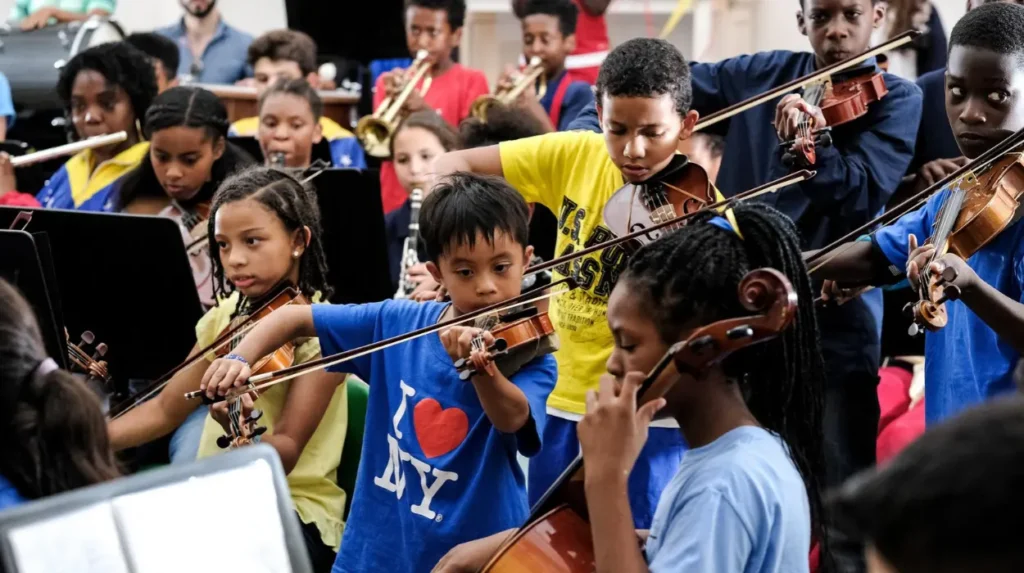
Instrumental tuition teaches students how to play a specific musical instrument. Lessons develop posture, technique, rhythm, tone, coordination and musical interpretation.
Common instruments include:
- Piano and keyboard, for melody, harmony and music reading.
- Violin, viola and cello, for string performance.
- Flute, clarinet and saxophone, for woodwind technique.
- Trumpet, trombone and French horn, for brass performance.
- Guitar and bass guitar, for classical and contemporary music.
- Drums and percussion, for rhythm and ensemble coordination.
Some schools teach instruments individually, while others provide group lessons or ensemble-based instruction.
Singing and Vocal Training
Singing lessons develop vocal control, breathing, pitch accuracy, articulation and performance confidence.
Students learn to manage their vocal range and produce consistent sound. Training also covers musical phrasing, pronunciation and interpretation.
Different vocal programmes focus on classical singing, contemporary pop, musical theatre or choir performance.
Young singers benefit from age-appropriate instruction that respects vocal development. Adult learners often concentrate on technique, repertoire and confidence.
Music Theory and Composition
Music theory explains how musical sounds are organised. It includes notation, scales, intervals, chords, rhythm, harmony and musical structure.
Students use theory to understand written music and communicate musical ideas. Composition lessons develop the ability to create original melodies, arrangements and complete pieces.
Music theory also supports instrumental examination preparation and advanced musical study.
Music Production and Technology
Music production teaches students how to create and record music using digital equipment and software.
Training can include recording, editing, mixing, arranging and sound design. Students learn how microphones, audio interfaces, digital audio workstations and studio equipment contribute to music production.
These skills support careers in recording, songwriting, film music, broadcasting and digital entertainment.
Group Music and Ensemble Training
Ensemble training teaches students to perform music with other musicians. Examples include orchestras, jazz bands, guitar groups, chamber ensembles and choirs.
Students learn to follow a conductor, maintain timing, listen to other performers and coordinate musical parts.
Group performance develops communication and musical discipline. It also prepares learners for concerts, competitions and collaborative projects.
Which Music Lessons Are Suitable for Children and Teenagers?
Children and teenagers benefit from age-appropriate music lessons that combine practical playing, listening, rhythm and musical expression. West London providers offer early-years classes, beginner instrumental tuition, school programmes and advanced training for developing young musicians.
Music education for younger learners generally progresses through several developmental stages.
Early Years Music Classes
Early-years music education introduces babies, toddlers and preschool children to rhythm, sound, movement and musical expression.
Activities include singing simple songs, using percussion instruments, listening exercises and movement-based learning.
These activities encourage listening, coordination and participation. They also introduce children to the experience of making music with others.
For example, Little Music Stars Ealing provides music and movement activities for babies, toddlers and preschool-aged children.
Primary School Music Lessons
Primary school music education introduces children to musical concepts and practical instrument learning.
Pupils develop an understanding of rhythm, pitch, melody and musical notation. They also participate in singing, classroom performances and group activities.
Some West London music services provide whole-class instrumental learning. These programmes give children an opportunity to experience instruments before selecting a specialist subject.
Secondary School and Advanced Training
Teenagers often require more specialised music education. Their lessons can include instrumental development, vocal coaching, music theory, composition and examination preparation.
Students interested in professional music education also benefit from ensemble participation, audition preparation and regular performances.
Music courses at sixth-form level provide further academic and practical progression opportunities.

How Does the London West Music Hub Support Music Education?
The London West Music Hub coordinates music education across seven West London boroughs through five local lead partners. Its work connects schools, families, music teachers and community organisations through lessons, ensembles, instrument access and performance opportunities.
The London West Music Hub began operating on 1 September 2024 following the Department for Education and Arts Council England’s new Music Hub arrangements announced in May 2024.
Its geographical coverage includes:
- Brent, including music education opportunities delivered through Brent Music Service.
- Ealing, supported by Ealing Music Service.
- Hammersmith and Fulham, supported by the Tri-borough Music Hub.
- Harrow, supported by Harrow Music.
- Hillingdon, supported by Hillingdon Music Service.
- Kensington and Chelsea, supported by the Tri-borough Music Hub.
- Westminster, also supported by the Tri-borough Music Hub.
The hub operates through five local lead partners rather than replacing the existing borough-level music services. This structure connects local delivery with wider regional coordination.
What Services Does the Music Hub Provide?
The hub supports music learning through school partnerships, instrumental instruction, ensemble opportunities and professional development.
Its work also connects schools with specialist delivery partners and cultural organisations.
The Tri-borough Music Hub provides examples of this approach through whole-class instrumental learning, vocal teaching, school ensembles and live performance opportunities.
How Can Families Access Music Hub Opportunities?
Families can explore available programmes through the relevant local lead partner.
A parent living in Ealing can contact Ealing Music Service. A family in Kensington and Chelsea can contact the Tri-borough Music Hub.
The London West Music Hub website provides a central directory of local services and information for children and families.
How Much Do Music Lessons Cost in West London?
Music lesson costs in West London depend on the instrument, teacher experience, lesson duration, teaching format and school facilities. Published examples include individual tuition, shared lessons, termly payments and structured annual programmes with different pricing arrangements.
Music schools use different payment structures. Some charge for each lesson, while others collect fees monthly or by academic term.
Private individual tuition generally costs more than shared lessons because the student receives dedicated teaching time.
Individual and Shared Lesson Fees
Individual lessons provide direct teacher attention and personalised feedback. Shared lessons allow two students to divide the cost while learning together.
For example, West London Free School publishes 30-minute individual lesson prices of £222 for 12 lessons in the Michaelmas term from September 2026. Its shared lessons cost £111 for the same term. Music Lessons
These prices apply to the school’s published provision and are not a universal West London fee structure.
Annual Music School Programmes
Some independent schools offer annual packages instead of charging separately for each lesson.
The Masters Music School in West Ealing publishes an annual programme of 40 lessons, with its standard 30-minute option advertised at £149 per month. Longer lesson options have separate prices. tmms.co.uk+1
Additional Costs to Consider
Families should calculate the full cost of music education rather than comparing tuition fees alone.
Additional expenses include instrument purchase or rental, sheet music, examination fees, performance clothing, travel and optional workshops.
Some local music services offer instrument hire or financial support. Ealing Music Service, for example, provides instrument-hire arrangements for eligible pupils and students living in or attending schools in the borough. Availability and charges depend on the instrument and current service conditions. google.com
Which Music Qualifications Can Students Obtain in West London?
Music students in West London can work towards recognised graded performance and theory qualifications, including examinations from ABRSM, Trinity College London and London College of Music Examinations. Qualification choices depend on the instrument, syllabus and student’s educational objectives.
Music qualifications provide measurable milestones for instrumental and vocal development. They assess technical ability, musical understanding and performance standards.
ABRSM Music Examinations
ABRSM provides practical and theory examinations for musicians.
Its assessments cover instruments, singing and music theory. Students progress through graded levels and develop technical and interpretative skills.
Trinity College London Examinations
Trinity College London offers music qualifications covering classical and contemporary performance.
Its examination programmes include instrumental and vocal pathways, with different assessment formats depending on the syllabus.
London College of Music Examinations
London College of Music Examinations operates within the University of West London. It offers graded qualifications across music performance and related creative disciplines.
Students should select an examination board according to their instrument, musical interests and future educational plans.
How Should Parents Choose a Music School in West London?
Parents should compare music schools according to teaching qualifications, safeguarding arrangements, lesson formats, course suitability, location and total fees. A suitable school provides clear learning objectives, appropriate student support and regular opportunities to monitor musical progress.
Choosing a music school requires more than selecting the nearest provider. Parents need to understand how the institution teaches, communicates with families and supports student development.
Check Teacher Qualifications and Experience
Parents should review the teacher’s musical education, performance experience and teaching background.
Instrumental expertise is important, but effective teaching also requires the ability to explain technical concepts and adapt lessons to different learning levels.
Review Safeguarding Arrangements
Safeguarding means protecting children and vulnerable learners from harm, abuse and inappropriate conduct.
Parents should ask about staff recruitment procedures, safeguarding policies, supervision and arrangements for individual lessons.
Music schools working with children should explain how they manage student safety and communicate concerns.
Compare Teaching Formats
A school offering individual lessons provides a different learning experience from one specialising in group classes.
Parents should decide whether the child needs personalised instrumental tuition, social music-making or a combination of both.
Check Location and Transport
West London covers a large geographical area. Travelling from Hounslow to Kensington or from Ealing to Hammersmith can affect lesson convenience.
Parents should check public transport connections, parking arrangements, lesson times and accessibility before making a commitment.
Ask About Progress and Performance Opportunities
Regular feedback helps families understand a student’s development.
A well-organised programme explains learning objectives and gives students opportunities to perform. Recitals, concerts, graded examinations and ensemble participation provide practical ways to demonstrate progress.
What Facilities Should a Good Music School Provide?
A well-equipped music school provides suitable teaching rooms, musical instruments, practice facilities and performance spaces. Depending on its specialisation, it also offers recording equipment, rehearsal studios, digital learning resources and opportunities for students to perform.
Facilities influence the quality and range of music education available to students.
Instrumental Teaching Rooms
Teaching rooms should provide enough space for the student, instructor and required instruments.
Piano studios require suitable keyboards or acoustic pianos. Drum lessons need appropriate percussion equipment and sound management. Vocal lessons benefit from suitable acoustics and recording facilities.
Rehearsal and Performance Spaces
Rehearsal rooms allow musicians to practise individually and collaboratively.
Performance spaces support student concerts, recitals and ensemble presentations. These facilities also help students become familiar with performing in front of an audience.
Recording and Music Technology Facilities
Schools offering contemporary music education benefit from recording studios and digital production equipment.
Students learn how to record instruments, edit audio, arrange compositions and create finished musical projects.
Accessible Learning Environments
Schools should provide clear information about physical accessibility, learning support and reasonable adjustments.
Students with disabilities and additional learning needs benefit from suitable teaching arrangements, adapted resources and inclusive performance opportunities.
What Career Opportunities Are Available After Studying Music?
Music education provides foundations for professional and creative careers in performance, teaching, composition, production and the wider entertainment industry. Career progression depends on practical ability, specialist knowledge, qualifications, professional experience and continuing development.
Music training develops transferable skills alongside technical musicianship. Students learn discipline, communication, collaboration, creative thinking and project management.
Professional Music Performance
Instrumentalists and singers pursue careers through orchestras, bands, solo performances, theatre productions and session work.
Professional musicians develop performance experience through auditions, rehearsals, concerts and recording projects.
Music Teaching and Education
Experienced musicians pursue teaching careers in private studios, schools, colleges and community organisations.
Music educators require appropriate subject knowledge, teaching ability and an understanding of safeguarding when working with children.
Music Production and Recording
Music production provides opportunities in recording studios, independent music production, broadcasting and digital media.
Professionals work with artists to record, edit, arrange and mix musical projects.
Composition and Songwriting
Composers create original music for performances, films, television, theatre, games and other media.
Songwriters develop melodies, lyrics and arrangements for individual performers and recording artists.
Music Business and Events
The music industry also includes event management, artist development, concert promotion, music publishing and administration.
Students interested in these areas benefit from combining musical knowledge with business and communication skills.
Where Can Students Find Music Schools Across West London?
Students can find music education providers across Ealing, Acton, Hammersmith, West Kensington and Southall. The most appropriate location depends on the instrument, teaching specialism, transport connections and whether the learner needs beginner or advanced instruction.
The following locations provide examples of music education options across the area.
- Ealing: London College of Music and The Masters Music School provide options for academic and instrumental music education.
- Acton: AB Music Academy provides instrumental, vocal and music-related learning.
- Hammersmith: The Rhythm Studio offers contemporary music training.
- West Kensington: Piano Lessons London by WKMT provides specialist piano tuition.
- Southall: Ealing Music Service supports music education across the borough.
- Ealing: Voices Singing School provides specialist vocal and musical theatre training.
These providers serve different educational needs. Students should confirm current courses and enrolment availability before travelling.
What Is the Future of Music Education in West London?
The future of music education in West London involves stronger partnerships between schools, local authorities, specialist institutions and community organisations. Digital learning, inclusive teaching, contemporary music and regional collaboration continue to shape educational opportunities.
The establishment of London West Music Hub in September 2024 represents an important development in regional music education.
Its seven-borough structure creates opportunities for local services to collaborate while continuing to deliver programmes within their communities.
Greater Access to Music Education
Local music services support access to lessons, instruments and group activities.
Financial assistance, instrument-hire schemes and school partnerships help reduce barriers for families who cannot afford private tuition.
Digital Music Learning
Digital technology has expanded access to music theory, online tuition and music production.
Students can use digital audio workstations, online learning platforms and recording software to develop practical skills outside traditional classrooms.
Inclusive Music Programmes
Inclusive music education recognises that students have different abilities, backgrounds and learning requirements.
Community partnerships and adapted teaching programmes help more young people participate in musical activities.
Collaboration Between Music Institutions
Regional partnerships connect local music services with specialist institutions, schools and professional cultural organisations.
The London West Music Hub’s partnership model provides a framework for shared development, teacher training and wider musical participation.
Explore More Area Guide
Acting Classes in West London: Best Drama Schools and Training
Dance Schools in West London: Best Classes and Academies
How Can Students Get Started at a Music School in West London?
Students can begin by identifying an instrument or musical interest, researching suitable providers, comparing lesson arrangements and arranging an introductory session. A clear learning objective helps families select appropriate tuition and establish realistic expectations.
The enrolment process generally follows a straightforward sequence.
- Identify the preferred instrument or subject, such as piano, guitar, violin, drums, singing or music production.
- Search for suitable schools in the nearest West London neighbourhood.
- Review teacher experience, course structure, student age requirements and fees.
- Ask about trial lessons, instrument availability and examination preparation.
- Confirm the timetable, payment arrangements and safeguarding procedures.
- Establish a regular practice routine and review progress with the teacher.
Students who are unsure about their preferred instrument should ask whether the school provides introductory sessions.
A trial lesson also allows families to assess teaching style, communication and the suitability of the learning environment before making a longer commitment.
Choosing the Right Music School in West London
Music schools in West London support a wide range of educational needs, from early-years music activities and beginner instrumental lessons to advanced conservatoire training and professional music development.
Institutions such as the Royal College of Music and London College of Music provide established higher education pathways. Independent providers such as The Masters Music School, AB Music Academy and The Rhythm Studio offer additional opportunities for instrumental and contemporary music training.
The London West Music Hub and its local lead partners also play an important role in connecting schools, families and young musicians with accessible music education.
Choosing the right provider requires consideration of teaching quality, course availability, facilities, location, fees and progression opportunities. With suitable instruction and consistent practice, students can develop musical ability and build a foundation for further education, creative interests or professional careers.
What are the best music schools in West London?
Some established options include the Royal College of Music in South Kensington, London College of Music in Ealing, The Rhythm Studio in Hammersmith and The Masters Music School in West Ealing.