

West London contains a diverse network of biodiversity sites, including wetlands, rivers, woodlands, grasslands, parks and nature reserves. These habitats support birds, mammals, insects, amphibians, fish and native plants while providing essential environmental benefits to surrounding communities. Important sites include the London Wetland Centre in Barnes, Gunnersbury Triangle Nature Reserve in uk/local/hounslow/chiswick/">Chiswick, Osterley Park, the River Crane corridor and the reservoirs and wetlands around the boroughs of Hounslow, Hillingdon, Ealing, Richmond upon Thames, fulham/hammersmith/">hammersmith-and-fulham/">Hammersmith and Fulham, and Kensington and Chelsea.
- What Are Biodiversity Sites in West London?
- Which Biodiversity Sites Are Most Important in West London?
- London Wetland Centre, Barnes
- Gunnersbury Triangle Nature Reserve
- River Crane Corridor
- Osterley Park
- Hillingdon’s Reservoirs and Wetlands
- What Types of Habitats Support West London’s Biodiversity?
- Wetlands and Freshwater Habitats
- Rivers and Streams
- Woodlands and Scrub
- Grasslands and Wildflower Areas
- Parks, Gardens and Urban Green Spaces
- Which Wildlife Species Live in West London’s Biodiversity Sites?
- Birds and Waterfowl
- Bats and Other Mammals
- Amphibians and Aquatic Invertebrates
- Bees, Butterflies and Other Pollinators
- How Are Biodiversity Sites Protected in West London?
- What Is a Site of Special Scientific Interest?
- What Is a Local Nature Reserve?
- What Is a Site of Importance for Nature Conservation?
- How Can Visitors Explore Biodiversity Sites in West London?
- How Do Biodiversity Sites Benefit West London Communities?
- Flood Management and Water Quality
- Climate Resilience and Urban Cooling
- Education, Research and Community Participation
- What Threats Affect Biodiversity Sites in West London?
- Habitat Loss and Fragmentation
- Water Pollution and Poor River Conditions
- Invasive Non-Native Species
- Climate Change and Extreme Weather
- How Is West London Planning for Future Nature Recovery?
- How Can You Find More Biodiversity Sites Near Your West London Neighbourhood?
Biodiversity sites protect the variety of living organisms within an area and the habitats on which they depend. In West London, these places connect urban neighbourhoods with the wider natural environment. They also support environmental education, ecological research, nature conservation, flood management and public access to green space.
Understanding West London’s biodiversity requires examining its protected landscapes, wildlife habitats, conservation designations and ecological connections. These features explain how nature survives in a densely developed part of the capital and how local conservation efforts contribute to the long-term protection of London’s natural heritage.
What Are Biodiversity Sites in West London?
Biodiversity sites in West London are locations that support a variety of plants, animals, fungi and microorganisms through habitats such as wetlands, woodlands, rivers and grasslands. They include designated nature reserves, protected ecological areas and urban green spaces that contribute to wildlife conservation.
Biodiversity describes the variety of life at genetic, species and ecosystem levels. A biodiversity site provides habitat, food, shelter, breeding areas or migration routes for living organisms. Its ecological importance depends on the species present, habitat quality, connectivity and the condition of the surrounding landscape.
West London includes highly developed residential districts, transport corridors, commercial centres, historic parklands and watercourses. Biodiversity sites help preserve natural features within this urban environment. They also provide connections between larger habitats, allowing wildlife to move through the landscape.
Some sites have formal conservation designations. A Site of Special Scientific Interest (SSSI) is an area notified for its special wildlife or geological importance under UK legislation. A Local Nature Reserve (LNR) is a site designated by a local authority for its local wildlife or geological value and opportunities for public enjoyment. Sites of Importance for Nature Conservation (SINCs) are locally identified areas with significant ecological value.
These categories have different legal and planning implications. A nature reserve does not automatically have every form of statutory protection, and a site without a public-facing reserve designation can still support important wildlife.
Which Biodiversity Sites Are Most Important in West London?
West London’s notable biodiversity sites include London Wetland Centre, Gunnersbury Triangle Nature Reserve, the River Crane corridor, Osterley Park and the reservoirs around Hillingdon. Each location supports distinctive habitats, from freshwater wetlands and woodland to riverbanks, grassland and aquatic environments.
London Wetland Centre, Barnes
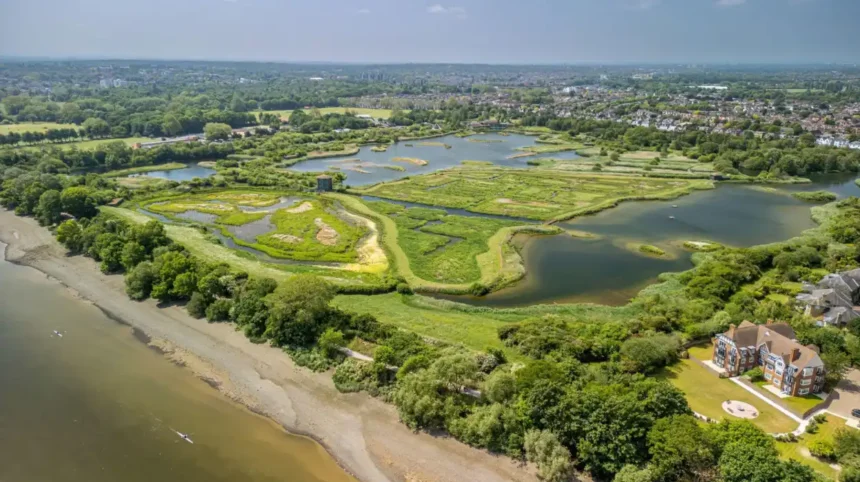
The London Wetland Centre in Barnes, within the London Borough of Richmond upon Thames, is a major wetland conservation and education site managed by the Wildfowl and Wetlands Trust (WWT). It occupies a former reservoir complex transformed into wetland habitats.
Its landscape includes freshwater lagoons, reedbeds, ponds and marshland. These habitats provide feeding and nesting opportunities for waterbirds and support amphibians, aquatic invertebrates and wetland plants. Seasonal changes influence which bird species visitors observe.
The centre demonstrates how former water infrastructure can be adapted to support wildlife in a major city. Its managed wetlands also provide opportunities for environmental education and research.
Gunnersbury Triangle Nature Reserve
Gunnersbury Triangle Nature Reserve lies in Chiswick, near the boundary between the London Borough of Hounslow and the London Borough of Ealing. The London Wildlife Trust manages the reserve, which protects a distinctive urban woodland habitat.
The site developed as woodland and wetland vegetation colonised land within a former railway triangle. Its habitats include birch woodland, ponds, scrub and areas of damp ground. These environments support birds, insects, amphibians and woodland plants.
Gunnersbury Triangle illustrates the ecological value of relatively small green spaces. Its enclosed urban setting makes it an important example of nature conservation within a densely populated area.
River Crane Corridor
The River Crane flows through parts of west and southwest London, including areas associated with Hounslow and Richmond upon Thames. Its corridor includes river channels, bankside vegetation, woodland, grassland and connected open spaces.
The Crane provides habitat for freshwater organisms, birds, mammals and invertebrates. Vegetated riverbanks offer cover and feeding areas, while flowing water supports aquatic food webs. The river also links green spaces that would otherwise be separated by roads, housing and other urban development.
The ecological value of the corridor depends on water quality, river structure, bank management and the continuity of suitable habitat.
Osterley Park
Osterley Park is a historic estate in Hounslow managed by the National Trust. Its landscape combines formal gardens, open parkland, mature trees, lakes and grassland.
The site’s ecological importance extends beyond its historic buildings and designed landscape. Mature trees provide nesting and roosting opportunities, while lakes support aquatic wildlife. Grassland and wooded areas offer feeding habitat for insects and birds.
Historic parklands demonstrate how cultural landscapes also contribute to urban biodiversity. Their long-established trees and varied vegetation create habitats that are difficult to replace quickly in newly developed areas.
Hillingdon’s Reservoirs and Wetlands
The London Borough of Hillingdon contains reservoirs, waterways, lakes and wetland environments that contribute to the wider ecological network. Reservoir margins and associated vegetation provide habitat for waterbirds and other wildlife.
The ecological value of each reservoir depends on its management, water levels, shoreline structure and surrounding land use. Access arrangements also vary because some water bodies form part of operational water-supply infrastructure.
These sites are important components of West London’s wider wetland landscape. Public access must follow the rules of the relevant landowner or water authority.
What Types of Habitats Support West London’s Biodiversity?
West London’s biodiversity depends on interconnected habitats, including wetlands, rivers, woodlands, grasslands and urban green spaces. Examples include reedbeds at London Wetland Centre, riverbanks along the Crane, woodland at Gunnersbury Triangle and mature parkland trees at Osterley Park.
Wetlands and Freshwater Habitats
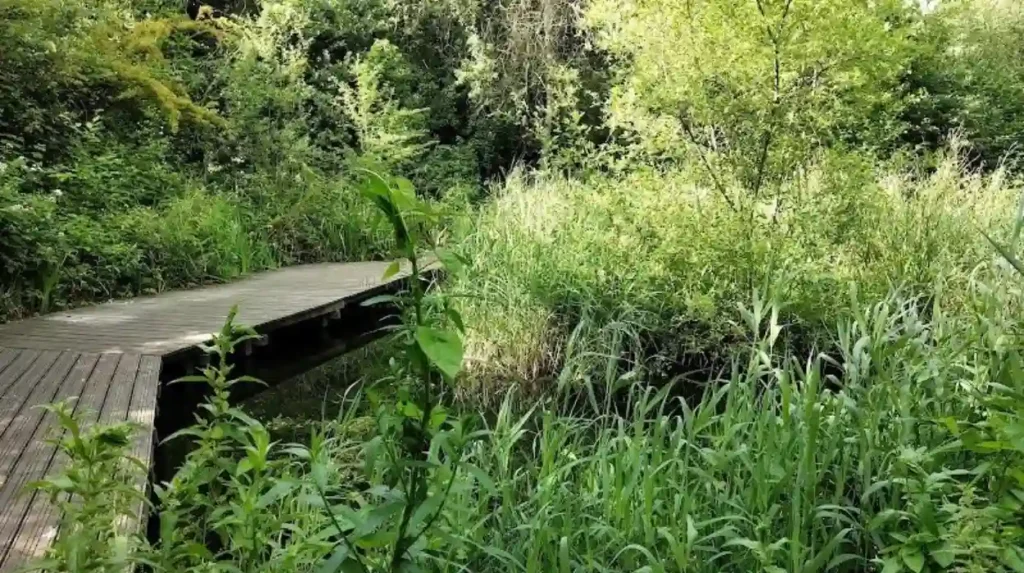
Wetlands include marshes, reedbeds, ponds, lagoons and seasonally waterlogged ground. They support organisms adapted to aquatic or waterlogged conditions and provide important feeding and breeding environments.
Wetland plants help stabilise sediments and create shelter for aquatic invertebrates. Insects and other small organisms form part of the food supply for fish, amphibians and birds. The structure of a wetland determines which species can use it.
Urban wetlands also help manage water. Their capacity to retain rainfall and temporarily store runoff depends on their design, available storage and connection to the surrounding drainage system.
Rivers and Streams
Rivers and streams create linear habitats through built-up areas. Their ecological features include flowing water, gravel or silt beds, pools, riffles, overhanging vegetation and bankside trees.
A healthy river corridor supports aquatic organisms and terrestrial wildlife. Vegetated banks provide shade, reduce erosion and contribute leaves and other organic matter to aquatic food webs.
Artificial channel modifications, polluted runoff, barriers and excessive sediment can reduce habitat quality. Restoration projects improve ecological conditions by reconnecting rivers with floodplains, creating varied channel features or establishing suitable riverside vegetation where conditions permit.
Woodlands and Scrub
Woodlands contain trees, shrubs, ground vegetation and decomposing organic material. Scrub habitats consist mainly of shrubs and young trees, often forming a transition between woodland and grassland.
These habitats support woodland birds, pollinating insects, fungi and invertebrates associated with dead wood. Mature trees provide cavities and crevices used by certain birds and bats. Fallen branches and decaying timber support decomposer organisms that recycle nutrients.
Gunnersbury Triangle is a prominent example of urban woodland conservation. Smaller wooded areas, tree-lined paths and mature parkland trees also contribute to habitat connectivity across West London.
Grasslands and Wildflower Areas
Grasslands range from regularly mown lawns to species-rich meadows. Their biodiversity depends on plant composition, soil conditions, mowing frequency and the availability of flowering plants.
Species-rich grasslands support pollinators, including bees, butterflies and hoverflies. Longer vegetation provides shelter for spiders, beetles and other invertebrates. Seeds and insects also supply food for birds.
Frequent mowing limits flowering and removes habitat structure. Meadow management often involves reducing mowing during the growing season and removing cut vegetation where appropriate to prevent excessive nutrient accumulation.
Parks, Gardens and Urban Green Spaces
Public parks, private gardens, allotments and roadside planting create additional habitat across West London. Their ecological value increases when they contain varied native plants, mature trees, ponds and areas with limited disturbance.
Urban green spaces provide stepping stones between larger wildlife sites. A sequence of gardens, hedgerows and parks supports movement for some species across developed landscapes.
These spaces do not replace every ecological function of ancient woodland, natural wetlands or species-rich grassland. They nevertheless strengthen the wider biodiversity network when their design and management respond to local wildlife needs.
Which Wildlife Species Live in West London’s Biodiversity Sites?
West London’s biodiversity sites support waterbirds, woodland birds, bats, amphibians, pollinating insects and aquatic invertebrates. Examples include wetland birds at Barnes, woodland wildlife at Gunnersbury Triangle and river-associated species along the Crane corridor, with local populations varying by habitat and season.
Birds and Waterfowl
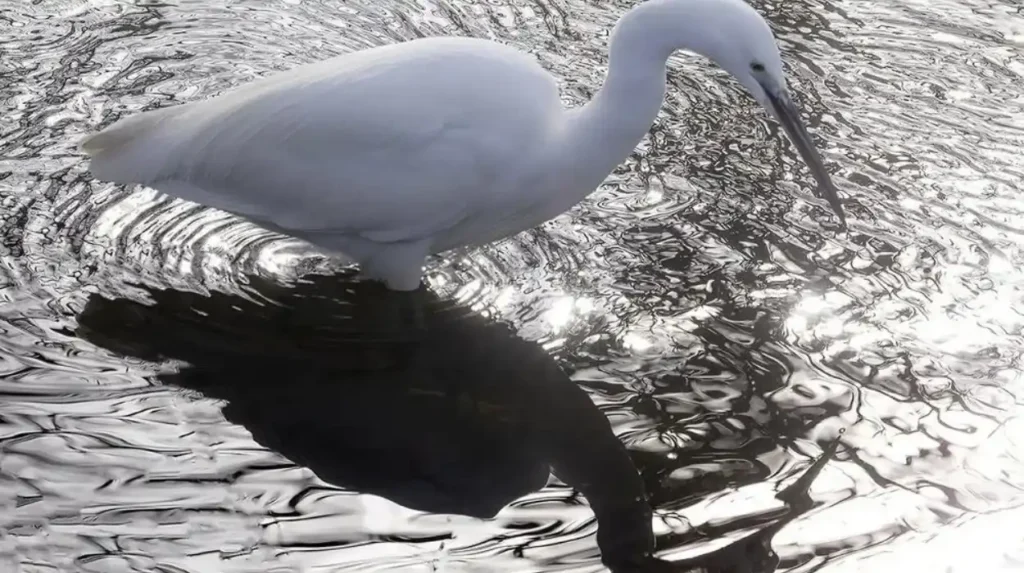
Birds are among the most visible indicators of habitat diversity in West London. Wetlands provide feeding and resting areas for ducks, geese, herons and other waterbirds. Woodlands and mature parkland support species that feed on insects, seeds, fruit and other small organisms.
The London Wetland Centre provides managed habitats for wetland birds throughout the year. Seasonal movements influence the species recorded at the site, while nesting activity depends on suitable vegetation, water conditions and disturbance levels.
Bird populations also depend on the wider landscape. Trees, hedges, ponds and river corridors help birds move between feeding and resting locations.
Bats and Other Mammals
Bats use trees, buildings and other suitable structures for roosting. They feed on insects and often follow waterways, hedgerows and tree-lined routes while searching for food. Mature trees and connected vegetation therefore contribute to their conservation.
Other mammals use West London’s green spaces for shelter and movement. Foxes, hedgehogs and squirrels occupy different combinations of gardens, parks, woodland edges and scrub. Species presence differs between locations, and individual sightings do not establish the size or health of a local population.
Wildlife-friendly management retains suitable shelter, limits unnecessary disturbance and reduces hazards such as poorly designed fencing or intensive vegetation clearance.
Amphibians and Aquatic Invertebrates
Ponds, marshes and slow-moving water provide breeding and feeding habitats for amphibians, including frogs and common toads where suitable conditions exist. Amphibian survival depends on water quality, pond vegetation, nearby terrestrial habitat and safe movement between seasonal habitats.
Aquatic invertebrates include insect larvae, water beetles, snails and other small organisms. They form important links in freshwater food webs. Their abundance and diversity respond to oxygen levels, pollution, water flow, sediment and aquatic vegetation.
Maintaining a range of pond depths, vegetated margins and connected terrestrial habitats helps support these organisms.
Bees, Butterflies and Other Pollinators
Flower-rich grasslands, gardens, woodland edges and allotments provide nectar and pollen for bees, butterflies, hoverflies and other insects. Different species depend on different flowering plants and breeding conditions.
Pollinators contribute to the reproduction of many flowering plants. Some bees require bare ground for nesting, while others use cavities or existing holes. Butterfly populations depend on suitable larval food plants as well as nectar sources for adults.
Conservation projects therefore need more than flowering displays. They also require suitable nesting areas, overwintering vegetation and management practices that preserve insect life cycles.
How Are Biodiversity Sites Protected in West London?
Biodiversity sites in West London receive protection through national nature-conservation designations, local planning policies and management agreements. Examples include Sites of Special Scientific Interest, Local Nature Reserves and Sites of Importance for Nature Conservation, each serving a distinct conservation purpose.
The planning framework for London recognises biodiversity as an essential part of the urban environment. The London Plan’s Policy G6 addresses biodiversity and access to nature, including the protection of Sites of Importance for Nature Conservation and the identification of ecological corridors. <Entity value=”Greater London Authority” category=”organization”/> provides the regional planning framework, while borough councils apply relevant policies through local planning decisions. <Cite refs={[“turn597360search0″,”turn597360search4”]}/>
What Is a Site of Special Scientific Interest?
A Site of Special Scientific Interest (SSSI) is a nationally designated area recognised for its wildlife or geological importance. Natural England administers the designation process in England.
SSSIs receive statutory protection. Activities affecting their notified features are subject to specific legal controls, and certain operations require consent. Planning authorities also consider potential effects on designated sites when determining relevant development proposals.
An SSSI designation does not mean that every part of the site is open to visitors. Access depends on ownership, management arrangements and applicable access rights.
What Is a Local Nature Reserve?
A Local Nature Reserve (LNR) is an area designated by a local authority for its local wildlife or geological value, education and appropriate public enjoyment. Natural England provides guidance on selecting, declaring and managing these reserves.
LNRs can include woodland, wetlands, former industrial land and other green spaces with ecological value. Public access is encouraged where it is compatible with protecting the site’s natural features.
Management plans commonly address habitat maintenance, visitor access, education, community involvement and the prevention of ecological damage. <Cite refs={[“turn597360search2”]}/>
What Is a Site of Importance for Nature Conservation?
A Site of Importance for Nature Conservation (SINC) is a locally recognised site of particular ecological value within London’s planning system. SINCs form a network that includes habitats such as rivers, woodlands, grasslands, parks and other valuable green spaces.
London’s SINC network has three levels: Metropolitan, Borough and Local Importance. Metropolitan sites contain some of the capital’s most important wildlife habitats, Borough sites have significance at borough level, and Local sites provide nature-conservation value close to neighbourhoods.
The Greater London Authority reports that more than 1,500 SINCs have been identified across London, covering nearly 20% of the capital. These figures describe Greater London as a whole, rather than West London alone. <Cite refs={[“turn597360search4″,”turn597360search24”]}/>
A SINC is not automatically a statutory nature reserve. Its protection primarily operates through planning policy and the relevant local planning framework. The exact designation and boundaries of an individual site should be checked with the responsible borough.
How Can Visitors Explore Biodiversity Sites in West London?
Visitors can explore West London’s biodiversity by choosing publicly accessible nature reserves, wetlands, riverside paths and historic parks. Examples include London Wetland Centre, Gunnersbury Triangle Nature Reserve and Osterley Park, with entry arrangements, opening times and permitted activities varying by site.
Planning a Nature Visit
Visitors should check the managing organisation’s official website before travelling. Some reserves charge admission, operate limited opening hours or close particular areas during habitat management. Other sites provide free access along designated paths.
The London Wetland Centre is particularly suitable for observing wetland habitats from managed visitor routes. Gunnersbury Triangle offers an introduction to urban woodland ecology, while Osterley Park combines historic landscape features with opportunities to observe trees, grassland and lake habitats.
The River Crane corridor offers a different experience because it follows a watercourse through a changing urban landscape. Visitors should check the specific path and access arrangements for the stretch they intend to explore.
Responsible Wildlife Watching
Wildlife watching is most effective when visitors minimise disturbance. Staying on established paths helps protect vegetation and reduces the risk of damaging sensitive habitats. Binoculars allow visitors to observe birds without approaching nesting or resting areas.
Dogs should be kept under control and follow the site’s rules. Some reserves restrict dogs or exclude them from particular areas. Visitors should never feed wildlife unless the site manager explicitly permits it, and they should not remove plants, eggs, feathers or other natural material.
Seasonal sensitivity is important. Ground-nesting birds, amphibians and breeding insects are vulnerable to trampling and disturbance during key life-cycle stages. Following reserve notices helps protect these species.
Accessibility and Facilities
Accessibility differs between sites because of terrain, path surfaces, gradients, steps and the location of visitor facilities. Managed visitor centres often provide clearer information about entrances, toilets, parking, public transport and accessible routes than informal green spaces.
Visitors with specific access requirements should consult the reserve’s accessibility information before travelling. They should also check whether particular hides, boardwalks or paths are temporarily closed.
Planning ahead improves access while helping site managers direct visitors away from sensitive habitats.
How Do Biodiversity Sites Benefit West London Communities?
Biodiversity sites benefit West London by supporting wildlife, improving access to nature, contributing to urban cooling and helping manage rainfall. Examples include tree-covered parks that provide shade, wetlands that retain water and riverside vegetation that supports wildlife while improving the local environment.
Flood Management and Water Quality
Wetlands and vegetated river corridors can temporarily store water, slow runoff and support natural water processes. Their effectiveness depends on their size, design, soil conditions, water levels and connections to drainage systems.
Vegetation can trap sediment and absorb certain nutrients, while wetland soils support processes that transform or retain pollutants. These functions do not eliminate every contaminant, and heavily polluted water requires appropriate management.
River restoration can also improve habitat structure by introducing varied channels, natural banks and riverside vegetation. Such interventions contribute to ecological recovery while supporting wider water-management objectives.
Climate Resilience and Urban Cooling
Trees provide shade and release water vapour through transpiration, helping reduce heat exposure in surrounding areas. Vegetated parks and green corridors also create cooler local environments than many hard-surfaced urban spaces.
Wetlands and healthy soils store carbon, although the amount varies by habitat type, soil condition and management. Protecting existing mature trees and established habitats preserves ecological functions that newly planted vegetation takes time to develop.
Biodiversity conservation therefore contributes to climate adaptation, particularly where heat, surface-water runoff and limited access to green space affect urban communities.
Education, Research and Community Participation
Nature reserves provide opportunities for environmental education, wildlife recording and ecological research. School visits introduce students to food webs, habitats, adaptation and conservation management through direct observation.
Volunteers contribute through habitat maintenance, invasive-species monitoring, litter removal and wildlife surveys. Organisations such as the London Wildlife Trust and local conservation groups provide opportunities for community participation.
Citizen-science records also help researchers understand species distributions and seasonal changes. Reliable records include the observation date, location and identification details, with sensitive species information handled appropriately.
What Threats Affect Biodiversity Sites in West London?
West London’s biodiversity sites face pressures from habitat fragmentation, development, pollution, invasive species, climate change and recreational disturbance. Examples include polluted urban runoff entering rivers, artificial lighting affecting nocturnal wildlife and the loss of connected vegetation between parks, gardens and nature reserves.
Habitat Loss and Fragmentation
Habitat fragmentation occurs when roads, buildings and other infrastructure divide natural areas into smaller or disconnected sections. Wildlife then faces greater difficulty moving between feeding, breeding and shelter locations.
Small, isolated populations are particularly vulnerable when they depend on limited habitat or cannot move safely across developed areas. Ecological corridors, hedgerows, riverbanks and connected green spaces help reduce these barriers.
Development near a biodiversity site can also affect wildlife without directly occupying protected land. Construction noise, lighting, drainage changes and the removal of nearby vegetation can alter ecological conditions. The London Plan recognises the importance of considering these indirect effects. <Cite refs={[“turn597360search0”]}/>
Water Pollution and Poor River Conditions
Road runoff, litter, misconnections from drainage systems and other pollution sources affect aquatic habitats. Excess nutrients can encourage excessive algal growth, while some chemical pollutants harm aquatic organisms directly.
Changes to river flow and channel structure also affect habitat quality. Concrete banks, barriers and excessive sediment reduce the variety of physical conditions available to freshwater species.
Monitoring water quality, preventing pollution at its source and restoring suitable river habitats are central to improving aquatic biodiversity.
Invasive Non-Native Species
Invasive non-native species are organisms introduced outside their natural range that cause ecological, economic or other harm. Certain plants outcompete native vegetation, while some introduced aquatic organisms alter food webs or habitat conditions.
Not every non-native species is invasive. Management decisions depend on evidence of ecological impact, the likelihood of spread and the available control methods.
Cleaning equipment between water bodies, disposing of garden waste responsibly and following official guidance help reduce the spread of invasive organisms.
Climate Change and Extreme Weather
Higher temperatures, droughts and intense rainfall affect the availability and quality of habitats. Wetlands can experience changes in water levels, while rivers face altered flow patterns and warmer water conditions.
Species with specialised habitat requirements are particularly sensitive when suitable environmental conditions become less reliable. Connected habitats give some species greater opportunities to move as conditions change.
Conservation planning increasingly needs to consider long-term climate resilience alongside immediate habitat protection.
Explore More Area Guide
Rivers and Streams of West London: A Complete Guide
West London Nature Photography: Best Places to Visit Guide
How Is West London Planning for Future Nature Recovery?
West London nature recovery depends on protecting existing habitats, restoring degraded ecosystems and improving connections between green spaces. Examples include river restoration, wildflower meadow management, tree planting and wildlife-friendly landscaping guided by London’s Local Nature Recovery Strategy.
The Environment Act 2021 established a framework for Local Nature Recovery Strategies in England. These strategies identify priorities for nature recovery and map locations where practical conservation measures can make a contribution.
London’s Local Nature Recovery Strategy brings together biodiversity priorities and a Local Habitat Map. The strategy identifies opportunities for measures such as river restoration, tree planting and wildflower meadow management. It supports coordinated action across London’s boroughs, landowners, environmental organisations and communities. <Cite refs={[“turn597360search3″,”turn597360search25”]}/>
The strategy does not itself create new nature-conservation designations or automatically impose new obligations on landowners. Its purpose is to guide and coordinate nature-recovery activity.
Biodiversity Net Gain and Development
Biodiversity net gain is an approach to development intended to leave biodiversity in a measurably better state than before. Under the applicable English planning framework, most covered developments must deliver at least a 10% biodiversity gain, subject to statutory exemptions and the relevant rules.
The approach uses biodiversity metrics to assess habitat value before and after development. Developers follow a mitigation hierarchy: avoid biodiversity harm first, minimise unavoidable impacts, restore affected habitats and use compensation measures where necessary.
Biodiversity net gain does not remove the need to protect designated sites or comply with other wildlife legislation. It is also not a substitute for conserving irreplaceable habitats, which receive separate treatment under the relevant rules.
The Role of Residents and Land Managers
Residents, schools, businesses and land managers contribute to nature recovery through practical changes. Native planting, reduced pesticide use, wildlife-friendly garden management and the protection of mature trees improve habitat opportunities.
Local authorities influence biodiversity through planning policies, park management, ecological advice and the maintenance of public green spaces. Conservation organisations contribute specialist knowledge, habitat-management experience and monitoring programmes.
Progress depends on maintaining habitats over time. A planted meadow or restored pond requires suitable long-term management to retain its ecological value.
How Can You Find More Biodiversity Sites Near Your West London Neighbourhood?
Residents can identify biodiversity sites through borough council nature-conservation pages, the Greater London Authority’s biodiversity resources and Greenspace Information for Greater London. These resources help locate designated sites, check habitat information and identify publicly accessible places for wildlife observation.
The Greater London Authority publishes information about Sites of Importance for Nature Conservation and London’s wider ecological network. Its biodiversity resources explain the three SINC importance levels and provide links to mapping tools.
Greenspace Information for Greater London (GiGL) is London’s environmental records centre. Its Discover London resources help people explore information about green spaces and wildlife. The availability of detailed records varies, and site boundaries should be confirmed with the relevant authority where accuracy is important.
Residents should also consult the relevant borough council for information about local nature reserves, conservation areas, parks and access arrangements. A designation on a map does not guarantee public entry, so visitors should check ownership and access restrictions before travelling.
West London’s biodiversity is sustained by a connected landscape of wetlands, woodlands, rivers, grasslands, gardens and historic parks. Protecting these habitats supports wildlife and improves the resilience of the urban environment. Continued conservation, responsible access and coordinated nature recovery remain central to preserving the area’s natural heritage.
What are the best biodiversity sites in West London?
Some notable biodiversity sites in West London include London Wetland Centre in Barnes, Gunnersbury Triangle Nature Reserve in Chiswick, Osterley Park in Hounslow and the River Crane corridor. These locations support diverse habitats and wildlife.