

uk/local/hillingdon/hayes/">Hayes is a diverse West London town in the London Borough of Hillingdon, with a restaurant scene shaped by its multicultural population, high street economy, transport connections and industrial history. The area combines independent restaurants, cafés, takeaways, pubs, hotel dining and international food businesses.
- What makes Hayes restaurants different from restaurants elsewhere in West London?
- Where are the main restaurant areas in Hayes?
- What types of cuisine can you find in Hayes restaurants?
- How has Hayes history influenced its restaurant scene?
- Which Hayes restaurants are suitable for international food?
- What are the main dining options around Station Road?
- What can you find to eat around Coldharbour Lane?
- Are there restaurants near Heathrow Airport in Hayes?
- How does the Elizabeth line affect access to Hayes restaurants?
- What types of restaurants are available for casual dining in Hayes?
- How does Hayes’s multicultural character shape local food?
- How has Hayes’s industrial heritage become part of its modern food culture?
- What should visitors consider when choosing Hayes restaurants?
- How is the Hayes restaurant scene likely to remain relevant in West London?
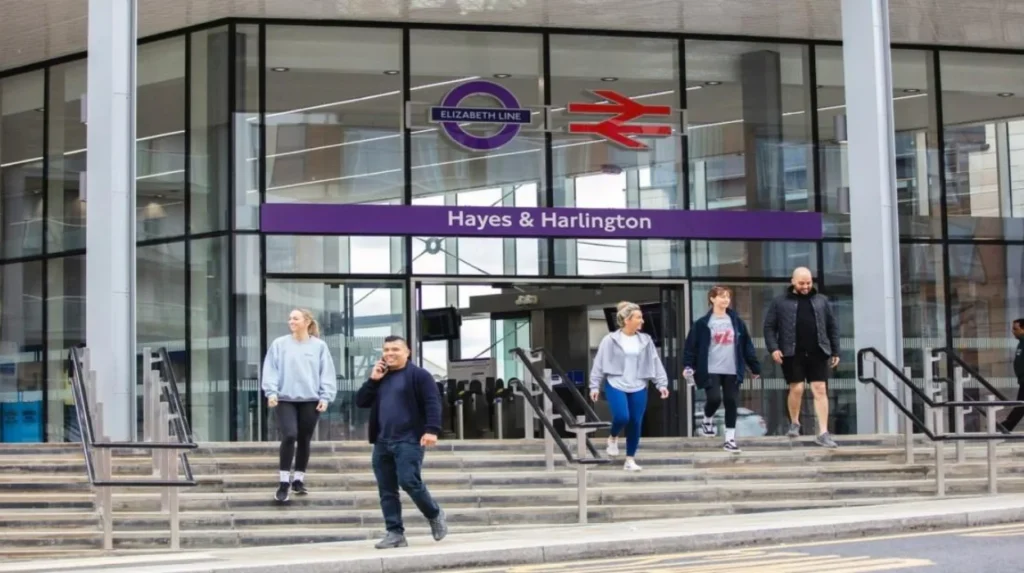
Hayes is particularly well connected through Hayes & Harlington station. The station is served by the Elizabeth line and National Rail services, linking the town with Heathrow, Paddington, central London and destinations farther west.
The local food scene also reflects Hayes’s transformation from a manufacturing centre into a modern West London town. Hillingdon Council identifies Hayes as one of the borough’s key regeneration areas, with a diverse high street, new housing and investment following the arrival of the Elizabeth line.
What makes Hayes restaurants different from restaurants elsewhere in West London?
Hayes restaurants reflect the town’s diverse population, industrial history and high-street economy, with Indian, Nepalese, Mediterranean, Afghan, Caribbean, African, British and other food traditions represented across Station Road, Coldharbour Lane and surrounding areas.
Hayes has a broad restaurant market rather than a single dominant dining style. Current restaurant directories list businesses covering Indian, Nepalese, Mediterranean, Afghan and other cuisines.
The concentration around Station Road and Coldharbour Lane makes these areas important parts of the local food economy. Station Road also connects directly with Hayes & Harlington station, making the town centre accessible for visitors arriving by rail.
Hayes is part of Hillingdon, the westernmost London borough. Hillingdon covers 115 square kilometres and includes five district town centres, including Hayes. The council describes its town centres as having a mixture of high-street chains and independent businesses.
This commercial structure supports different types of dining. Visitors find sit-down restaurants, cafés, pubs, fast-food businesses, takeaway restaurants and hotel restaurants.
The restaurant scene also benefits from Hayes’s proximity to Heathrow Airport. Heathrow creates a large travel, hospitality and employment economy across West London. The Elizabeth line provides a direct rail connection between Hayes & Harlington and Heathrow stations.
Where are the main restaurant areas in Hayes?
The main restaurant areas in Hayes include Station Road, Coldharbour Lane, Uxbridge Road and nearby commercial streets, with additional dining around hotels, residential districts and waterfront locations such as the Grand Union Canal area.
Station Road forms an important part of the central Hayes shopping and dining area. Hayes & Harlington station is located on Station Road at UB3 4BX, giving rail passengers direct access to businesses in the town centre.
Coldharbour Lane is another significant food corridor. Restaurant directories list businesses serving Indian, South Asian, African and other cuisines along this road.
Uxbridge Road extends through the wider Hayes area and connects several residential and commercial districts. Restaurants and takeaway businesses operate along different sections of this route.
The area around West Quay also provides a different setting. Lock & Quay is a waterfront bar and grill on West Quay Drive, offering restaurant dining, Sunday roasts, takeaway and delivery. The business has operated in Hayes since 2013.
These locations create several distinct restaurant clusters rather than one concentrated dining quarter.
For visitors, Station Road is practical for rail access. Coldharbour Lane provides a strong concentration of international food businesses. Uxbridge Road serves surrounding neighbourhoods. The waterfront area provides an alternative setting away from the main high street.
What types of cuisine can you find in Hayes restaurants?
Hayes restaurants offer a wide range of international and British cuisines, including Indian, Nepalese, Mediterranean, Afghan, Caribbean, African, British and Italian food, alongside cafés, fast food, grills, pubs and hotel dining.
Indian food has a visible presence in Hayes. Current local listings include several Indian restaurants and takeaway businesses across Coldharbour Lane, Station Road and Uxbridge Road.
Nepalese food is also represented. Namaste Gurkha on Station Road is listed as a Nepalese restaurant, demonstrating the broader South Asian diversity of the local dining market.
Mediterranean cuisine forms another part of the market. Little Shiraz on Station Road is listed as a Mediterranean restaurant.
Afghan cuisine appears in the wider Uxbridge Road area, with local directories listing Afghan restaurants such as Shiraz.
African food businesses also form part of Hayes’s multicultural food economy. Local listings include African restaurants in and around the town.
British food is available through pubs, cafés, grills and traditional restaurant formats. Hotel restaurants also provide British and international menus for airport travellers and local customers.
This range gives Hayes restaurants strong semantic diversity for searches covering cuisine, dining style, location and occasion.
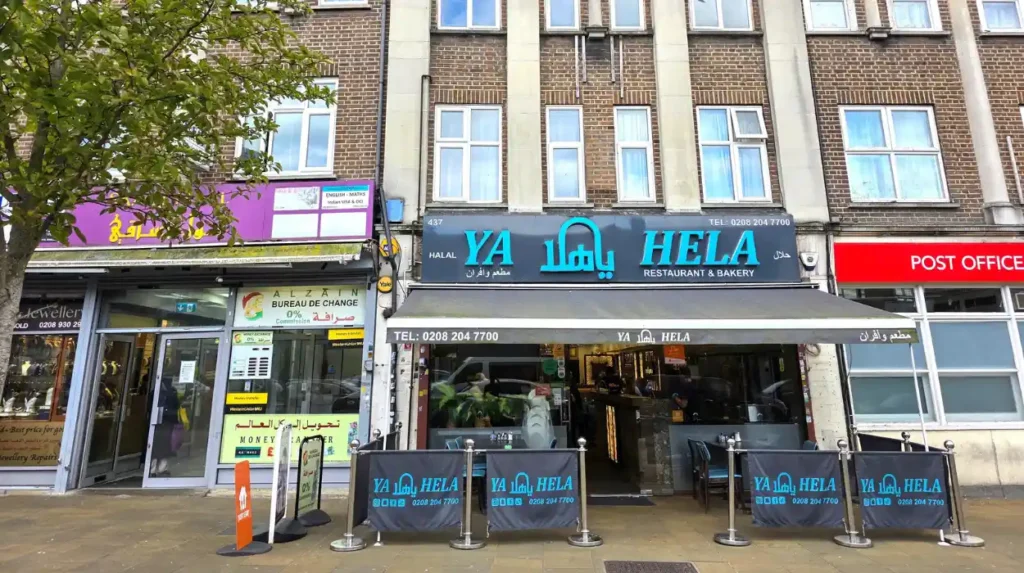
How has Hayes history influenced its restaurant scene?
Hayes developed from a group of historic villages into an industrial town during the nineteenth and twentieth centuries, creating population growth, new communities and commercial districts that continue to influence its diverse food culture today.
Hillingdon Council records the earliest references to Hayes in Saxon records. The name comes from the Anglo-Saxon word “hese”, meaning brushwood. The Domesday Book of 1086 records the Archbishop of Canterbury as lord of the manor.
Until the twentieth century, Hayes consisted of five villages: Hayes Town, Wood End, Botwell, Yeading and Hayes End. This historic settlement pattern helped create the town’s modern network of neighbourhoods.
The Grand Union Canal arrived in 1794. Brickmaking developed in Botwell and Yeading, with bricks transported by barge. The Great Western Railway reached Hayes in 1864.
Industrialisation transformed the town during the twentieth century. The Gramophone and Typewriter Company moved into Hayes in 1907. The company later became associated with EMI and His Master’s Voice.
Other major industries included printing, aviation and chocolate manufacturing. Nestlé took over the Hayes cocoa and chocolate business in 1929.
The industrial expansion generated employment and population growth. Housing development accelerated from 1910. By 1929, nearly 6,500 houses had been completed or were under construction, while the population reached 10,000 in 1931.
This industrial history matters to the restaurant scene because modern Hayes developed through successive waves of workers, residents and businesses. The town’s present-day food diversity forms part of that longer economic and demographic development.
Which Hayes restaurants are suitable for international food?
Hayes has several restaurant choices for international food, with local listings identifying Indian, Nepalese, Mediterranean, Afghan, African and other cuisines across Station Road, Coldharbour Lane, Uxbridge Road and nearby commercial areas.
Indian food is one of the most visible international categories in local listings. Examples include Curry Delight, Mazaa, Pind Punjabi and other Indian restaurants identified by local directories.
Nepalese dining is represented by Namaste Gurkha on Station Road. The presence of Nepalese food adds another South Asian tradition to the local market.
Mediterranean food is represented by businesses including Little Shiraz. Mediterranean menus commonly cover grilled dishes, salads and other regional preparations, although individual restaurant menus vary.
Afghan food is represented in the wider Hayes area through restaurants such as Shiraz on Uxbridge Road.
African food is also available. Local restaurant directories identify African businesses in Hayes, adding another international dimension to the town’s dining offer.
The result is a food market that serves local residents seeking familiar cuisines as well as visitors looking for international dining close to Heathrow and the Elizabeth line.
What are the main dining options around Station Road?
Station Road provides one of the most practical restaurant locations in Hayes because it combines the town centre with Hayes & Harlington station, shops, cafés, takeaway businesses and restaurants serving several different cuisines.
Station Road is particularly important for visitors arriving by train. Hayes & Harlington station sits directly on Station Road and is served by the Elizabeth line and National Rail.
The road also supports different food formats. Local listings identify restaurants, cafés, takeaway businesses and other food outlets.
Examples include Little Shiraz, a Mediterranean restaurant, and Namaste Gurkha, a Nepalese restaurant. Other businesses on or near Station Road provide quick-service and takeaway food.
The location is useful for short visits because restaurants can be combined with shopping and other town-centre activities.
Station Road also reflects Hayes’s transition from an older high street into a modern town centre. Hillingdon Council records the pedestrianisation of Station Road following the opening of the Hayes bypass in 1992.
The pedestrianised environment changed how the centre functions for shoppers and visitors. Restaurants form part of this wider town-centre economy.
What can you find to eat around Coldharbour Lane?
Coldharbour Lane is an important Hayes food corridor with restaurants and takeaways covering South Asian, African and other international cuisines, making the road a significant part of the area’s multicultural dining economy.
Coldharbour Lane contains several restaurants and takeaway businesses within a relatively concentrated area.
Local listings identify businesses including Bar B Q Tonight, Food of Sardar, Hilaac Restaurant, Jasiira Village, Mazaa, Najma, Pink City, Pind Punjabi and Real Lahori Chaska.
The range demonstrates the importance of South Asian and international food in Hayes. Several establishments specialise in Indian or related cuisines.
The road also provides takeaway options for customers who want food for home, work or travel rather than a full sit-down meal.
Coldharbour Lane is therefore relevant for searches such as Indian restaurants in Hayes, Asian restaurants in Hayes, halal food in Hayes and takeaway restaurants in West London. Individual businesses should be checked directly for current menus and dietary information.
Are there restaurants near Heathrow Airport in Hayes?
Hayes is close to Heathrow Airport and has hotel restaurants and local dining businesses that serve airport passengers, hotel guests, workers and residents, while the Elizabeth line provides direct rail connections between Hayes & Harlington and Heathrow stations.
Heathrow is an important part of the local economic geography. Hillingdon Council describes Hayes as the closest town centre to Heathrow Airport and identifies the airport as a major source of employment.
The local restaurant market includes hotel dining near Heathrow. Current restaurant listings include restaurants at Heathrow-area hotels, including Indian and Italian options.
Transport is a major advantage. The Elizabeth line connects Hayes & Harlington with Heathrow terminals and central London. TfL states that Elizabeth line trains serve Heathrow Terminal 2 and 3, Terminal 4 and Terminal 5.
This makes Hayes relevant for airport workers, hotel guests, visitors staying in the area and travellers looking for food before or after a flight.
Restaurant availability and opening times vary, so airport-related diners should check the individual venue before travelling.
How does the Elizabeth line affect access to Hayes restaurants?
The Elizabeth line has strengthened Hayes’s connection with central London and Heathrow, making Hayes restaurants easier to reach for residents, commuters, visitors and airport travellers using Hayes & Harlington station.
Hayes & Harlington is an Elizabeth line station with National Rail connections. TfL lists the station at Station Road, Hayes, Greater London, UB3 4BX.
The Elizabeth line runs from Heathrow and Reading through central London to Shenfield and Abbey Wood. Central London stations include Paddington, Bond Street, Tottenham Court Road, Farringdon and Liverpool Street.
This network changes the practical catchment for Hayes restaurants. Diners do not rely only on local buses or cars to reach the town.
The station also provides step-free access information and passenger facilities, including boarding ramps, help points, toilets and a waiting room.
For visitors, rail access makes Station Road restaurants particularly convenient. For local residents, it provides a direct transport connection between Hayes and major employment, shopping and cultural destinations across London.
What types of restaurants are available for casual dining in Hayes?
Casual dining in Hayes includes cafés, grills, pubs, fast-food outlets, takeaway restaurants, hotel restaurants and independent international restaurants, providing options for breakfast, lunch, dinner, quick meals and relaxed social dining.
Cafés form part of the everyday food economy. Current listings include businesses such as Flying Egg Cafe, which is categorised as a café and quick-bite venue.
Pubs also contribute to the restaurant market. The Botwell Inn is listed as a pub and Indian food venue, combining hospitality and dining functions.
Grills and fast-food businesses provide quick dining for customers seeking shorter visits. Local directories list several fast-food and speciality food businesses across Hayes.
Waterfront dining adds another category. Lock & Quay operates as a bar and grill and offers restaurant dining, Sunday roasts, takeaway and delivery.
This range means Hayes serves both destination dining and everyday food needs. The distinction is important because the town’s restaurants are not limited to formal evening dining.
How does Hayes’s multicultural character shape local food?
Hayes’s multicultural character is reflected in its restaurant diversity, with food businesses representing several international traditions across the town’s high streets, residential districts, hotel areas and commercial corridors.
Hillingdon Council describes Hayes as an extremely diverse area with a vibrant high street. The council also identifies hospitality as one of the sectors investing across the wider borough.
The restaurant listings provide practical evidence of this diversity. Indian, Nepalese, Mediterranean, Afghan and African businesses operate within the Hayes area.
Food diversity is closely connected with residential diversity. Hayes expanded substantially during the industrial period, when factories and other employers attracted workers and created new housing.
The modern restaurant economy continues this pattern through independent businesses serving established communities and wider customers.
This makes cuisine a useful way to understand Hayes’s urban identity. Restaurants are part of the town’s retail economy, community infrastructure and visitor offer.
How has Hayes’s industrial heritage become part of its modern food culture?
Hayes’s industrial heritage remains visible through the Old Vinyl Factory and other regenerated sites, where cultural events, street food and hospitality connect the town’s manufacturing history with its contemporary visitor economy.
The former EMI site is one of Hayes’s most important industrial landmarks. Hillingdon Council records that the EMI factory began in 1907 and produced gramophones and 78 rpm records under the His Master’s Voice label.
The factory became a major part of Hayes’s twentieth-century identity.
The Old Vinyl Factory now provides a modern regeneration setting. Hillingdon Council’s 2025 Old Vinyl Factory Festival included live music, a vinyl record fair, street food and creative workshops. More than 1,200 people attended the first festival.
Street food is particularly relevant because it connects food with the site’s cultural history.
This approach demonstrates how Hayes’s former industrial land now supports cultural, residential, business and hospitality activity. Restaurants therefore form part of a wider regeneration story rather than operating independently from the town’s history.
Explore More Area Guide
Neasden Fire: 125 Firefighters Tackle Hannah Close Blaze 2026
Greenford Restaurants: Best Places to Eat in West London
What should visitors consider when choosing Hayes restaurants?
Visitors should consider location, cuisine, dining format, opening hours, dietary requirements, transport access and the purpose of their visit when choosing Hayes restaurants, because the town has several food districts and different restaurant formats.
Location is the first practical factor. Station Road is convenient for Hayes & Harlington station. Coldharbour Lane offers a concentration of international restaurants. Uxbridge Road serves the wider Hayes area.
Cuisine is another important factor. Hayes provides Indian, Nepalese, Mediterranean, Afghan, African, British and other options.
Dining format also matters. A café, takeaway, pub, hotel restaurant and full-service restaurant provide different experiences and service structures.
Travellers using Heathrow should consider transport time. Hayes & Harlington has Elizabeth line services to Heathrow terminals.
Visitors with dietary requirements should check individual restaurant menus and contact venues directly when allergen information requires clarification.
Opening hours also change between businesses. Restaurant directories provide useful discovery information, but individual businesses remain the appropriate source for current opening times, menus and booking policies.
How is the Hayes restaurant scene likely to remain relevant in West London?
Hayes restaurants remain relevant because the town combines population growth, regeneration, Heathrow access, Elizabeth line connectivity, a diverse high street and a long-established multicultural food economy within West London’s expanding urban and business network.
Hayes is one of Hillingdon’s key regeneration areas. The council identifies new housing, high-street activity, investment and improved connectivity as important elements of its future development.
Transport is central to this future. The Elizabeth line connects Hayes with Heathrow and central London, while National Rail continues to serve Hayes & Harlington.
The town also benefits from its position near Heathrow. This creates demand from residents, employees, visitors and travellers.
Regeneration adds another layer. Former industrial sites such as the Old Vinyl Factory demonstrate how Hayes is converting elements of its manufacturing past into modern residential, commercial and cultural destinations.
Restaurants fit naturally into this changing urban structure. They serve everyday residents, workers, commuters, tourists and airport visitors.
The result is a West London dining market built around accessibility, international cuisine, high-street activity, local communities and ongoing regeneration. Hayes restaurants therefore form an important part of the town’s current economy and its evolving identity.
What are the best areas for restaurants in Hayes?
Hayes has several important food areas, including Station Road, Coldharbour Lane and Uxbridge Road. Station Road is particularly convenient for visitors because Hayes & Harlington station is located there.