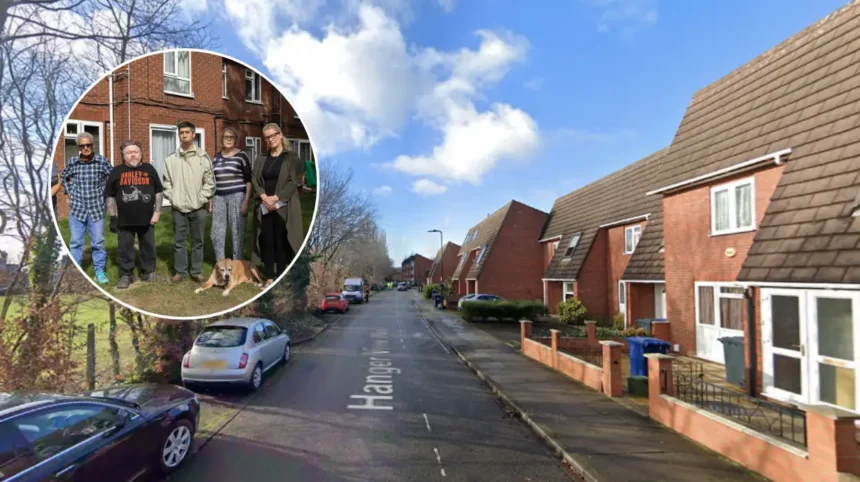
- Key Points:
- The residents occupying Hanger View Way, North Ealing, West London, 31-49, claim severe structural subsidence, dislocated bricks, and cracks; however, problems have been around for 2002 but have recently gotten worse.
- The residential property is controlled by the Peabody housing association, who maintains that the building is still safe while referring to the tree next to it as the cause of all movements.
- Cameron Kermani, who resides on the ground floor, injured his hand when his door collapsed from its frame at 5:00 in the morning, and he has been sleeping on his sofa for two years fearing a ceiling collapse in his bedroom.
- Michael (Mick) Brady, another occupant of the building, has been suffering from severe water damage, black mold, and movement for almost five years after being decanted in 2017 into a flat with cracks he refers to as “living in a squat.”
- Layla Fatima, a parent of two children suffering from chronic illness, was terrified of shared structural wall cracks, which might cause the block to collapse.
- Kevin Parish, a tenant, has not been able to sell his flat since 2025 because of structural issues and lack of response from Peabody.
- Resident claims that investigations on site have shown shallow foundations and voids under load-bearing parts of the structure, while Peabody denies this evaluation.
- Ealing Council says that the matter does not fall within their direct competence and encourages unhappy residents to address the Housing Ombudsman.
North uk/local/ealing/">Ealing (West London Times) October 20, 2026 — Residents of a housing block in West London have spoken out about living in constant fear for their safety as worsening structural subsidence causes bricks to loosen, walls to crack, and doors to collapse onto tenants, though the managing housing association maintains that the property remains safe for habitation.
Why are tenants at Hanger View Way fearing for their lives?
As reported by Philip James Lynch of MyLondon, tenants living at 31-49 Hanger View Way in West Acton, Ealing—comprising a mix of private renters and homeowners—initially raised formal concerns regarding building subsidence in 2002. The situation intensified significantly in 2022 as severe cracks began tearing through properties managed by the Peabody housing association. Speaking to the Local Democracy Reporting Service (LDRS), tenants revealed that the condition of the structure has continued to deteriorate rapidly, with bricks shifting dangerously out of alignment.
Among those affected is Cameron Kermani, who moved into his ground-floor flat in 2020 without prior warning of subsidence issues. Just weeks prior to reporting, his front door completely detached from its frame. As stated by Cameron Kermani to Philip James Lynch of MyLondon:
“I [tried] to open the door, five o’clock in the morning, completely, the door completely came to my head from the frame, and I was so lucky the glass didn’t break.”
In addition to hand injuries sustained during the incident, Cameron Kermani has extensive wall fractures across his home. Fearing a potential roof collapse, he has avoided sleeping in his bedroom for two years, opting instead for his living room sofa. His neighbour, Michael (Mick) Brady, who has lived on the ground floor since 2006, echoed these grave safety apprehensions. As reported by Philip James Lynch of MyLondon, Michael Brady told Cameron Kermani:
“Your apartment is an accident waiting to happen, isn’t it? I mean, we feel like there is going to be a tragedy here before they actually get something done.”
What are the historic grievances and living conditions reported by residents?
According to Philip James Lynch of MyLondon, Michael Brady first alerted Peabody to tearing wallpaper and developing cracks in September 2017. Over the subsequent three years, water leaks, black mould, and structural movement exacerbated the living environment to the point where he was decanted into an alternative flat for over a year for what was initially scheduled as a six to eight-week repair project. Although Michael Brady returned in 2023, structural cracks reappeared within seven days, leaving him living out of packed bags. As stated by Michael Brady to Philip James Lynch of MyLondon, his current environment feels “like living in a squat”.
Michael Brady also discovered historical correspondence from 2002 proving that Peabody was notified of structural subsidence concerns over twenty years ago. As stated by Michael Brady to Philip James Lynch of MyLondon:
“It’s soul destroying. I can’t even pull out any of my paintings or our mirrors or put anything on the walls.”
He further recounted an evening when a gas leak occurred due to building movement fracturing the supply pipes, prompting emergency intervention from the gas utility company.
Another resident, Layla Fatima, a mother of two chronically ill children, described living in persistent anxiety. As stated by Layla Fatima to Philip James Lynch of MyLondon:
“The stress is awful. I am terrified the building is going to collapse. My neighbour’s wall has massive structural cracks, and since we share the same wall, if it goes, it affects all of us.”
Although her family was temporarily rehoused for four months, the local council did not secure permanent alternative housing, forcing them to return to the cracking property.
Similarly, Kevin Parish has faced severe personal hurdles. Having first noticed cracks in 2019, he has struggled to sell his flat since 2025 due to visible structural flaws. As stated by Kevin Parish to Philip James Lynch of MyLondon:
“We have problems with leaks, we have all sorts of issues, and I’m sick of living in a place where my landlord just doesn’t do anything… And then in June last year, cracks started coming back again.”
Explore more Acton News:
Feltham Man Admits Eight Petrol Station Thefts in Acton 2026
Man Shot Dead at West London Memorial Gathering in East Acton 2026
How has Peabody housing association responded to the structural concerns?
As detailed by Philip James Lynch of MyLondon, Peabody previously attributed the structural movement to a nearby tree, which was cut down in 2002 [sic – note: text indicates tree removal happened after initial concerns], yet issues persisted. Tenants assert that borehole tests uncovered shallow foundations and empty voids beneath load-bearing sections, with workers allegedly claiming nothing was supporting the building. Residents further allege that the test sites were improperly refilled with soft soil, aggravating the subsidence.
Addressing these allegations, a Peabody spokesperson stated to Philip James Lynch of MyLondon:
“We’re sorry it’s taking so long to put things right. The building is safe to live in and we’re keeping a close eye on it. We’ve also looked into concerns about a previous borehole and how it was filled, and this isn’t causing the movement.”
The housing association added that it has identified a different tree as the primary driver of movement and is coordinating with the local school on whose land it stands to arrange its removal, while continuing day-to-day repairs.
Meanwhile, Ealing Council noted that the dispute falls outside its jurisdiction. An Ealing Council spokesperson stated to Philip James Lynch of MyLondon:
“We are concerned to hear residents remain dissatisfied with Peabody and would urge any tenants who have not had their formal complaint responded to, and resolved appropriately, to contact the Housing Ombudsman urgently so appropriate actions can be considered.”
Background of the Development
The housing crisis at Hanger View Way highlights long-standing structural vulnerabilities within social and mixed-tenure housing blocks across Greater London. Subsidence issues, often exacerbated by clay soil shrinkage, root moisture extraction, and aging infrastructure, require prompt geotechnical intervention. When maintenance backlogs or disputes over environmental factors—such as nearby mature trees—delay remediation, minor foundation shifts can escalate into severe structural fatigue. This case underscores the complex challenges faced by tenants and homeowners under housing associations when structural disputes persist across decades.
This unfolding development is likely to intensify regulatory scrutiny on Peabody and social housing providers across the United Kingdom, particularly regarding tenant safety communication and repair response times. For the affected residents of West Acton, continued delays in permanent structural stabilization risk compounding psychological distress, depressing property values, and heightening legal and political pressure on local authorities and housing regulators to intervene decisively in substandard living conditions.