Acting classes in West London provide opportunities for children, teenagers, adults and aspiring professional performers to develop stage presence, communication, creativity and performance skills. The area has an established performing arts education network, including specialist drama schools, community theatres, youth theatre programmes and professional acting institutions.
- What Are Acting Classes in West London?
- Why Do People Join Acting Classes in West London?
- Developing Confidence and Communication
- Exploring Creative Expression
- Preparing for Professional Opportunities
- What Types of Acting Classes Are Available in West London?
- Children’s Acting and Drama Classes
- Teenager Acting and Youth Theatre
- Adult Acting Classes
- Professional Acting Training
- Screen Acting Classes
- Musical Theatre Acting
- Where Can You Find Acting Classes in West London?
- What Skills Do Students Learn in West London Acting Classes?
- Voice and Speech
- Movement and Physical Expression
- Character Development
- Improvisation
- Script Analysis
- Audition Preparation
- How Do Acting Classes Work for Beginners?
- Initial Assessment and Introduction
- Practical Exercises
- Script-Based Learning
- Rehearsals and Performances
- How Do Professional Acting Schools Prepare Students for Theatre and Film Careers?
- What Qualifications Can Students Gain Through Acting Classes?
- LAMDA Acting Examinations
- Trinity College London Qualifications
- University and Vocational Qualifications
- How Much Do Acting Classes Cost in West London?
- Children’s Drama Class Fees
- Adult Acting Course Fees
- Professional Acting Programme Fees
- Private Acting Coaching
- How Should You Choose the Best Acting Class in West London?
- Identify Your Learning Objective
- Check the Teacher’s Experience
- Examine the Course Structure
- Consider Class Size
- Check Location and Transport
- Attend a Trial Session
- Are Acting Classes in West London Suitable for Children and Teenagers?
- What Is the Difference Between Stage Acting and Screen Acting Classes?
- What Career Opportunities Are Available After Acting Training?
- Theatre and Stage Performance
- Film and Television
- Voice Acting
- Commercial and Corporate Performance
- Further Performing Arts Education
- How Do Acting Classes Contribute to West London’s Cultural Community?
- What Is the Future of Acting Classes in West London?
West London is an important location for performing arts education because it combines established theatre institutions with accessible community-based training. Areas such as uk/local/ealing/">Ealing, hounslow/chiswick/">Chiswick, fulham/hammersmith/">Hammersmith, Shepherd’s Bush, Acton, Fulham and Baron’s Court offer different opportunities for learning acting and theatre performance.
Students attend acting classes for different reasons. Some want to explore drama as a hobby, while others prepare for professional theatre, television, film and musical theatre careers. Acting education also supports confidence, spoken communication, teamwork, concentration and creative expression.
West London offers options for beginners and experienced performers. Students can choose weekly group sessions, specialist screen acting courses, structured vocational training and examination-based drama programmes.
What Are Acting Classes in West London?
Acting classes in West London are structured performing arts lessons that teach students how to interpret scripts, develop characters, use their voices, express emotions and perform confidently. They serve beginners, experienced actors, children, teenagers and adults pursuing professional or recreational training.
Acting is the practice of representing characters, situations and emotions through spoken language, physical movement, facial expression and interaction. Acting classes provide structured environments where students practise these skills under the guidance of trained instructors.
West London has several types of acting education providers. These include independent acting schools, established performing arts institutions, community theatres and children’s drama organisations.
The training environment depends on the institution and course level. Beginner classes introduce basic performance techniques, while advanced programmes concentrate on professional preparation, character interpretation, audition skills and stage or screen performance.
Acting education also covers the practical requirements of performing. Students learn to understand scripts, respond naturally to other performers, maintain concentration and communicate meaning through their performances.
The area’s established institutions include Arts Educational Schools (ArtsEd) in Chiswick, London Academy of Music and Dramatic Art (LAMDA) in Baron’s Court, and The Questors Theatre in Ealing.
These institutions demonstrate the range of acting education available across West London, from introductory community training to specialist professional development.
Why Do People Join Acting Classes in West London?
People join acting classes in West London to develop performance abilities, improve communication, build confidence and explore creative interests. Professional students also use structured training to prepare for auditions, theatre productions, screen performances and further performing arts education.
Acting involves more than memorising dialogue. Performers interpret characters, understand dramatic situations and communicate emotions through their voices and physical actions.
Training helps students practise these abilities through exercises, scripted scenes and performance activities. Regular participation also provides opportunities to receive feedback and improve individual techniques.
Developing Confidence and Communication
Confidence is an important part of acting education. Students practise speaking in front of groups, presenting characters and responding to different performance situations.
These activities encourage clear communication and active listening. They also teach performers to organise their thoughts and communicate information effectively.
Children benefit from structured opportunities to participate in group activities. Adults use acting classes to improve presentation skills, public speaking and professional communication.
Exploring Creative Expression
Acting provides opportunities to explore imagination and creative interpretation. Students work with fictional characters, dramatic situations and different types of scripts.
Improvisation encourages participants to create dialogue and respond to unexpected situations. Script-based exercises develop interpretation and the ability to communicate a writer’s intentions.
Preparing for Professional Opportunities
Aspiring actors use formal training to develop the practical skills required for auditions and productions.
Professional preparation includes character development, scene study, vocal technique, movement, script analysis and audition practice.
The UK National Careers Service identifies university courses, college programmes, drama schools, volunteering and practical performance experience as possible routes into acting. It also highlights the importance of developing experience through theatre groups and other performance opportunities. Get careers information and advice
What Types of Acting Classes Are Available in West London?
West London offers several acting training formats, including children’s drama classes, adult beginner courses, youth theatre programmes, professional acting training and screen performance workshops. Examples include Perform, Lyric Youth Theatre, Questors acting courses and specialist training at ArtsEd.
The appropriate class depends on age, experience, learning objectives and preferred performance environment.
Children’s Acting and Drama Classes
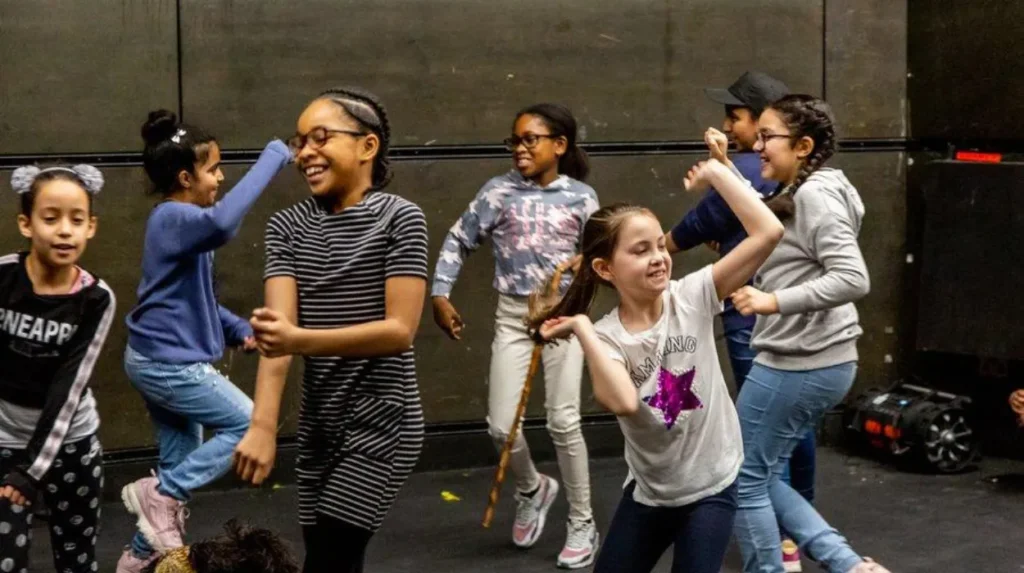
Children’s acting classes introduce young learners to performance through drama games, storytelling, improvisation and short scenes.
These sessions usually focus on participation rather than professional career preparation. Teachers introduce basic acting techniques through activities suited to children’s ages and abilities.
Perform operates classes at several West London locations.
Its venues include St Barnabas Millennium Hall in Ealing, Christ Church Watts Hall in Uxbridge, Acton Gardens Primary School in Acton and St Paul’s Church Hall in Ealing. The organisation offers separate sessions for children aged 4–7 and 7–12 at several locations.
Teenager Acting and Youth Theatre
Teenage acting classes provide opportunities to explore more complex scripts, character development and collaborative performances.
Students develop an understanding of dramatic structure, scene interpretation and stage presentation. Youth theatre programmes also introduce the process of creating original performances.
Lyric Hammersmith Theatre runs Lyric Youth Theatre programmes for different age groups, including 7–9, 9–11 and 11–13. Its activities introduce young people to drama, performance and the process of creating theatre. Lyric
Adult Acting Classes
Adult acting classes accommodate beginners, hobby performers and people exploring professional opportunities.
Courses generally include improvisation, script interpretation, character development and practical performance exercises.
Some classes operate through weekly sessions, while others follow fixed-term programmes. Evening courses provide an option for adults balancing acting education with employment or other responsibilities.
Professional Acting Training
Professional acting programmes provide more intensive instruction for students pursuing careers in theatre, television, film and related industries.
Training covers performance technique, voice, movement, audition preparation and practical production experience.
Professional courses also require consistent practice and the ability to respond to detailed performance feedback.
Screen Acting Classes
Screen acting focuses on performances for film, television and digital productions.
Students learn how to work with cameras, understand screen continuity, perform close-up scenes and deliver dialogue naturally.
Screen acting requires different technical awareness from stage performance. Actors must understand camera positioning, framing and the relationship between physical expression and the camera’s perspective.
Musical Theatre Acting
Musical theatre combines acting with singing and dance. Students learn how to communicate characters and dramatic situations while performing musical material.
This training is appropriate for performers interested in musical productions, stage entertainment and multidisciplinary performing arts.
Where Can You Find Acting Classes in West London?
Acting classes are available across several West London neighbourhoods, including Ealing, Chiswick, Hammersmith, Shepherd’s Bush, Acton and Uxbridge. Established institutions and community providers offer different training formats, from children’s drama sessions to professional acting programmes.
The location of an acting school influences accessibility, transport arrangements and the type of training available. Students should consider travel distance, class schedules and course requirements before enrolling.
Ealing
Ealing has an established community theatre and acting education environment.
The Questors Theatre provides acting training alongside its theatre programme. Its courses include beginner acting education, foundation training, advanced performance and specialist masterclasses.
The Questors Academy offers a two-year part-time training pathway for adults aged 18 and over. The programme includes acting, movement, voice and speech training, with opportunities to progress towards full-length productions. The Questors Theatre, Ealing
Another established institution is Drama Studio London.
Located at Grange Court, Ealing, the institution provides vocational actor training for students pursuing professional performance careers. Its location also places it within reach of Ealing’s wider cultural and educational facilities.
Chiswick
Chiswick is home to ArtsEd.
ArtsEd is an established performing arts institution located at Cone Ripman House, 14 Bath Road, Chiswick, London, W4 1LY.
Its professional education includes acting and musical theatre pathways. Its BA Acting programme includes training for both stage and screen performance.
The institution has historical roots in schools founded by Grace Cone in 1919 and Olive Ripman in 1922. The schools merged in 1939 to form the Cone Ripman School, which later became Arts Educational Schools. This history makes ArtsEd an established part of London’s performing arts education sector.
Hammersmith and Shepherd’s Bush
Hammersmith and Shepherd’s Bush offer access to youth drama programmes and performing arts training.
The Lyric Hammersmith Theatre supports youth participation through its theatre education programmes.
Children and teenagers attend age-specific sessions to learn performance, explore scripts and develop creative theatre projects.
West London Drama Training also provides performing arts education for children and young people aged 6–18. Its Saturday programme combines acting, singing and dance. The organisation has more than 25 years of training history and offers trial sessions.
Baron’s Court
Baron’s Court is home to the London Academy of Music and Dramatic Art (LAMDA).
LAMDA operates from 155 Talgarth Road, London, W14 9DA. It provides professional drama education and operates a recognised performing arts examination system.
Its acting examinations assess skills such as vocal expression, physical performance, interpretation and character development.
Acton and Uxbridge
Acton and Uxbridge provide community-based options for younger students.
Perform operates children’s drama classes at Acton Gardens Primary School and Christ Church Watts Hall in Uxbridge. These programmes introduce acting through structured activities, creative exercises and performance practice.
Families can also explore other community-based programmes in neighbouring areas, including Ickenham, Hanwell, Greenford and Northolt.
What Skills Do Students Learn in West London Acting Classes?
Acting classes develop practical performance skills through structured exercises, scripts and rehearsals. Students learn voice control, physical expression, character interpretation, improvisation, scene work and stage presentation. These techniques support effective communication and prepare performers for different theatrical and screen environments.
Acting education involves several connected disciplines. Each discipline develops a different aspect of performance.
Voice and Speech
Voice training helps actors communicate dialogue clearly and effectively.
Students practise pronunciation, articulation, projection, breathing and vocal expression. These techniques help performers deliver dialogue in different performance environments.
Stage actors often require vocal projection to reach audiences across larger theatre spaces. Screen actors focus on controlled delivery suitable for microphones and close-up filming.
Movement and Physical Expression
Physical expression communicates a character’s personality, emotions and intentions.
Students explore posture, gestures, movement patterns and spatial awareness. They also learn how physical behaviour influences audience understanding.
Movement training helps performers create believable characters without depending entirely on spoken dialogue.
Character Development
Character development involves understanding a fictional person’s background, motivations, relationships and behaviour.
Students examine scripts to identify character objectives and emotional changes.
They practise creating consistent performances by considering how characters respond to different situations.
Improvisation
Improvisation involves creating dialogue or performance without following a completely prepared script.
Teachers use improvisation exercises to develop spontaneous responses, listening skills and creative decision-making.
For example, students can perform an imaginary conversation between two characters who disagree about a particular situation. Each participant responds naturally to the other person’s actions.
Script Analysis
Script analysis helps actors understand the structure and meaning of dramatic material.
Students examine dialogue, character relationships, stage directions and dramatic conflicts.
They also identify the objectives behind individual scenes. This process helps performers understand why characters speak and behave in particular ways.
Audition Preparation
Audition training prepares students to present their abilities when applying for productions or professional programmes.
Activities include monologue preparation, cold reading, character interpretation and responding to direction.
Students also learn how to select suitable audition material and follow casting instructions.

How Do Acting Classes Work for Beginners?
Beginner acting classes introduce performance through simple exercises, short scripts and guided improvisation. Students develop fundamental skills before progressing to more demanding scenes. Most introductory programmes focus on participation, communication, confidence and understanding basic acting techniques.
People without previous acting experience do not need to begin with advanced training.
A structured beginner programme introduces essential concepts gradually.
Initial Assessment and Introduction
Some acting schools arrange introductory sessions or discussions before students join a programme.
These activities help teachers understand students’ experience, interests and learning objectives.
Children generally join age-appropriate groups, while adult classes often separate beginners from more experienced participants.
Practical Exercises
The first stage of training usually involves basic performance exercises.
Students practise introducing themselves, speaking clearly, responding to instructions and interacting with other participants.
Teachers gradually introduce improvisation, movement and character exercises.
Script-Based Learning
Once students understand basic performance techniques, they begin working with short scripts.
They learn to interpret dialogue, understand stage directions and respond to other performers.
Teachers provide feedback on delivery, expression and scene development.
Rehearsals and Performances
Rehearsals allow students to practise complete scenes and develop consistency.
Some programmes organise informal presentations, student showcases or theatrical productions.
These opportunities help participants experience the process of preparing and presenting a performance.
How Do Professional Acting Schools Prepare Students for Theatre and Film Careers?
Professional acting schools prepare students through structured technical training, practical performances, audition development and industry-focused education. Their programmes combine acting methods with voice, movement, script interpretation and stage or screen experience to develop professional performance capabilities.
Professional acting education differs from recreational drama sessions because it follows a more intensive training structure.
Students work towards consistent performance standards and develop the technical abilities required by the entertainment industry.
Vocational Acting Education
Vocational training focuses on preparing students for employment within the performing arts sector.
Programmes commonly include:
- Acting technique, such as scene study and character development.
- Voice and speech, including articulation and projection.
- Movement, including physical expression and stage awareness.
- Screen performance, including camera technique and continuity.
- Audition preparation, including monologues and casting exercises.
These subjects develop the practical foundations of professional performance.
Conservatoire-Style Training
A conservatoire is a specialist institution focused on intensive education in a particular performing art.
Drama conservatoires provide practical instruction through workshops, rehearsals and performance projects.
Students receive regular feedback from tutors and work towards developing professional-level techniques.
Drama Studio London and ArtsEd are examples of established West London institutions offering professional performing arts education.
Industry Preparation
Professional acting programmes also introduce students to the practical requirements of pursuing acting work.
Students develop audition material, prepare performance portfolios and practise presenting themselves professionally.
The National Careers Service explains that actors commonly use experience, training, audition opportunities and professional networks when developing their careers. Get careers information and advice
What Qualifications Can Students Gain Through Acting Classes?
Acting students can pursue graded drama examinations, vocational certificates, diplomas and higher education qualifications. The appropriate qualification depends on the training provider, examination board and course level. Some recreational acting classes focus on practical development without awarding formal qualifications.
Qualifications help students demonstrate their progress and provide structured learning objectives.
LAMDA Acting Examinations
LAMDA operates a recognised examination system for performing arts education.
Its acting examinations assess different aspects of performance, including:
- Vocal communication and speech.
- Physical expression and movement.
- Character interpretation.
- Understanding and presenting dramatic material.
- Performance technique.
Students progress through examination levels according to their experience and preparation.
LAMDA examinations are available through approved teachers, schools and examination arrangements. Students should check the current syllabus and examination requirements before enrolling.
Trinity College London Qualifications
Trinity College London provides qualifications in performance-related subjects, including drama and communication.
Its qualifications assess practical skills and performance development. Students can explore the relevant syllabus and assessment arrangements through Trinity’s official examination information.
University and Vocational Qualifications
Students interested in professional acting careers can consider foundation degrees, undergraduate degrees, postgraduate qualifications and vocational drama programmes.
The National Careers Service identifies acting, drama, performance studies and musical theatre as relevant higher education subjects. It also explains that admission requirements vary between institutions and courses. Get careers information and advice
A qualification does not automatically guarantee professional acting employment. Practical experience, audition performance and professional development remain important.
How Much Do Acting Classes Cost in West London?
Acting class prices in West London depend on the institution, course duration, teaching level and programme structure. Weekly children’s sessions, adult evening classes, private coaching and professional acting courses have different fee arrangements. Students should confirm current prices directly with providers.
There is no single standard fee for acting education across West London.
A community-based weekly class generally follows a different pricing structure from an intensive vocational programme.
Children’s Drama Class Fees
Children’s acting programmes commonly operate through weekly or term-based enrolment.
Parents should check whether the advertised price covers individual sessions or a complete term.
Additional costs can include performance materials, costumes, registration and showcase tickets.
Some organisations provide introductory or trial sessions. For example, Perform advertises free trial opportunities at selected West London venues.
Adult Acting Course Fees
Adult classes can operate through individual bookings, short courses or longer training programmes.
A short introductory course requires a different financial commitment from a multi-term acting programme.
Students should check the number of teaching hours, class sizes and whether performance opportunities are included.
Professional Acting Programme Fees
Professional acting education involves more extensive teaching and practical training.
Fees depend on the qualification, programme duration and institution.
Students should review the complete course costs, including any additional examination, registration or production expenses.
Private Acting Coaching
Private coaching provides individual instruction for specific performance objectives.
Actors use private lessons to prepare monologues, improve auditions, practise dialogue delivery and develop screen performance techniques.
Before booking, students should establish the session length, tutor experience and cancellation arrangements.
How Should You Choose the Best Acting Class in West London?
Choosing an acting class requires comparing course objectives, teacher experience, location, age suitability, class size, teaching methods and performance opportunities. Students should also examine fees, qualifications and safeguarding arrangements before committing to a particular acting school.
A suitable programme should match the student’s current abilities and long-term interests.
Identify Your Learning Objective
Students should first establish why they want to study acting.
Someone exploring drama as a hobby requires a different programme from someone preparing for professional auditions.
Children benefit from age-appropriate creative activities, while adults interested in professional development need structured technical instruction.
Check the Teacher’s Experience
The instructor has a significant role in the quality of acting education.
Students should examine the teacher’s professional background, teaching experience and knowledge of performance techniques.
Relevant experience includes theatre productions, screen acting, directing, drama education and professional coaching.
Examine the Course Structure
A clearly organised programme explains what students learn and how their abilities develop.
Look for information about weekly lessons, rehearsal activities, scripts, feedback and performance opportunities.
Professional programmes should also explain their audition requirements and progression arrangements.
Consider Class Size
Class size affects individual participation and access to feedback.
Smaller groups can provide more opportunities for individual performance practice. Larger groups require effective teaching arrangements to ensure that participants remain actively involved.
Parents should ask how teachers supervise children and support students with different confidence levels.
Check Location and Transport
West London covers a large geographical area. Travelling from Hounslow to Ealing or from Uxbridge to Hammersmith requires different transport arrangements.
Students should check nearby Underground stations, railway services, bus routes and parking availability.
For children, parents should also consider collection arrangements and travel safety.
Attend a Trial Session
A trial lesson provides an opportunity to understand the teaching environment.
Students can observe the instructor’s communication style, class structure and interaction between participants.
Parents can use trial sessions to assess whether the activities are suitable for their children’s ages and interests.
Are Acting Classes in West London Suitable for Children and Teenagers?
Acting classes are suitable for children and teenagers when programmes provide age-appropriate activities, qualified supervision and supportive learning environments. Youth drama training introduces performance, communication, teamwork and creative expression through structured exercises, scripts and group productions.
Children and teenagers have different learning requirements from adult performers.
Their classes should account for age, developmental needs, experience and individual participation levels.
Early Childhood Drama Education
Younger children benefit from introductory activities involving storytelling, imaginative play and simple character exercises.
These sessions introduce performance concepts without requiring advanced acting knowledge.
Drama providers such as Perform organise separate classes for children aged 4–7 and 7–12 at West London venues. Perform
Secondary School Age Training
Teenagers can explore more advanced acting techniques.
Activities include script interpretation, monologue preparation, character development and collaborative theatre projects.
Youth theatre also introduces young performers to the responsibilities involved in rehearsals and productions.
Safeguarding and Child Protection
Safeguarding refers to the policies and procedures used to protect children from harm and maintain safe educational environments.
Parents should ask providers about:
- Staff recruitment and relevant background checks.
- Child protection policies.
- Supervision during lessons.
- Collection and drop-off arrangements.
- Emergency contact procedures.
- Photography and video permissions.
In England, organisations working with children should understand their responsibilities under applicable safeguarding guidance. The Department for Education publishes statutory guidance titled Keeping Children Safe in Education, which explains safeguarding responsibilities in educational settings.
Parents should also confirm whether a provider has suitable insurance and appropriate procedures for managing incidents.
What Is the Difference Between Stage Acting and Screen Acting Classes?
Stage acting focuses on live performances before theatre audiences, while screen acting prepares performers for cameras and recorded productions. Both require character development, script interpretation and emotional expression, but they use different performance techniques and technical methods.
Students should understand these differences before selecting specialist training.
Stage Acting
Stage acting takes place during live theatrical performances.
Actors perform in front of an audience and maintain character consistency throughout a production.
Training includes:
- Vocal projection.
- Stage movement and positioning.
- Memorising dialogue.
- Working with other performers.
- Maintaining performance continuity.
- Responding to live audience conditions.
Theatre actors also learn how to use stage space and communicate dramatic meaning across different seating arrangements.
Screen Acting
Screen acting takes place in recorded environments, including film and television productions.
The camera captures details that theatre audiences might not observe from a distance.
Training focuses on natural dialogue delivery, controlled movement, camera awareness and continuity.
Actors also learn how to perform the same scene across multiple takes while maintaining consistent character behaviour.
Which Training Should Students Choose?
Students interested in theatre productions should explore stage acting courses.
Those pursuing film and television should consider screen acting workshops.
Students seeking a broad professional foundation benefit from programmes covering both disciplines. ArtsEd, for example, describes its BA Acting course as incorporating both stage and screen training.
What Career Opportunities Are Available After Acting Training?
Acting training provides foundations for careers in theatre, film, television, advertising, voice performance and related creative industries. Students can also explore community theatre, independent productions and further performing arts education to gain practical experience and develop professional contacts.
Acting is a competitive profession that requires continuous development and practical experience.
Theatre and Stage Performance
Theatre performers work in professional productions, touring companies, independent theatre and community performances.
Their responsibilities include interpreting scripts, attending rehearsals and delivering consistent live performances.
West London’s theatre environment provides opportunities to explore local productions and gain experience through community performance organisations.
Film and Television
Film and television actors perform in productions created for cinema, broadcast television and streaming platforms.
Screen performers develop skills in dialogue delivery, camera positioning, scene continuity and character interpretation.
Professional training helps aspiring actors understand these technical requirements.
Voice Acting
Voice acting involves performing through spoken audio rather than visible physical performance.
Common opportunities include animation, audiobooks, commercials, narration and video games.
Voice performers require clear articulation, vocal control and the ability to communicate character and emotion through speech.
Commercial and Corporate Performance
Commercial performers work in advertisements, promotional videos, educational productions and corporate communications.
These projects require actors to follow creative instructions and deliver messages effectively.
Further Performing Arts Education
Some students continue into higher education or specialist vocational programmes.
The National Careers Service identifies university courses, college qualifications, private drama schools and conservatoire training as potential routes into acting. Get careers information and advice
Students also develop their professional profiles through auditions, headshots, showreels and performance experience.
Explore More Area Guide
Dance Schools in West London: Best Classes and Academies
Painting Classes in West London: Complete Guide
How Do Acting Classes Contribute to West London’s Cultural Community?
Acting classes contribute to West London’s cultural community by supporting local theatre participation, creative education and opportunities for emerging performers. Community drama programmes connect residents with performance spaces, cultural organisations and collaborative artistic activities.
West London has an established network of theatres and performing arts institutions.
Ealing, Hammersmith and Chiswick provide important examples of how specialist education and community participation contribute to the area’s cultural environment.
Supporting Community Theatre
Community theatre gives local performers opportunities to participate in productions outside professional acting environments.
These organisations organise rehearsals, performances, workshops and educational activities.
The Questors Theatre in Ealing provides an example of a theatre combining performance activities with acting education.
Encouraging Youth Participation
Youth theatre programmes introduce children and teenagers to creative activities.
Students learn to collaborate, interpret dramatic material and participate in group productions.
The Lyric Hammersmith’s youth programmes demonstrate how established theatres provide opportunities for younger residents to engage with performance and theatre-making.
Strengthening Creative Education
Acting classes connect performing arts education with wider cultural participation.
They introduce students to theatre, literature, storytelling and different forms of artistic expression.
The continued availability of community and professional training also supports the development of future performers and theatre audiences.
What Is the Future of Acting Classes in West London?
The future of acting education in West London involves continued demand for practical performance training, screen acting, creative education and flexible learning. Established institutions and community providers offer different pathways for students interested in traditional theatre and modern screen-based performance.
The performing arts industry continues to use different production formats and distribution channels.
Actors therefore benefit from developing skills across several performance environments.
Growth of Screen-Based Performance
Film, television and digital productions require performers who understand camera techniques and recorded performance.
Screen acting education remains relevant for students interested in contemporary entertainment industries.
Flexible Training Opportunities
Part-time classes and short courses provide alternatives to full-time professional education.
These programmes allow adults to explore acting alongside employment and other responsibilities.
Digital Auditions and Self-Taping
Self-taping involves recording an audition performance and submitting it to a casting professional.
Actors need to understand camera framing, lighting, sound quality and performance presentation.
Training providers that introduce these practical skills help students understand modern audition requirements.
Continued Importance of Theatre Education
Live theatre remains an important part of performing arts education.
Stage productions provide opportunities to practise collaboration, character consistency and live performance.
West London’s established theatres and drama schools continue to provide environments for learning and creative participation.
Acting classes in West London provide learning opportunities for children, teenagers, adults and aspiring professional performers. The area’s educational options include community drama sessions, youth theatre, adult beginner courses, specialist screen acting and vocational training.
Institutions such as ArtsEd in Chiswick, LAMDA in Baron’s Court, Drama Studio London in Ealing and The Questors Theatre provide different routes into acting education.
Families can explore organisations such as Perform and West London Drama Training for children’s programmes, while adults can investigate structured courses and community theatre opportunities.
Choosing the right class requires consideration of teaching quality, course structure, location, fees, age suitability and performance opportunities.
Whether the objective is to develop confidence, explore creative interests or prepare for a professional acting career, West London offers a broad range of opportunities to learn and practise the performing arts.
Where can I find acting classes in West London?
West London offers acting classes at ArtsEd in Chiswick, Drama Studio London in Ealing, The Questors Theatre in Ealing and LAMDA in Baron’s Court. Community providers also operate in Hammersmith, Acton and Uxbridge.