Painting classes in West London provide structured opportunities to learn artistic techniques, develop creative skills and work with different visual media. Courses serve complete beginners, returning artists and experienced painters seeking specialist instruction. The area includes community art centres, independent studios, adult education providers and cultural institutions.
- What are painting classes in West London?
- Why are painting classes important for learning art?
- What painting techniques do students learn?
- Which painting media are taught in West London classes?
- How do beginner painting classes work?
- What options are available for intermediate and advanced painters?
- How do painting classes teach composition and visual design?
- What should students look for when choosing a painting class?
- Where do painting classes take place in West London?
- How does West London’s cultural environment support painting education?
- What equipment is needed for a painting course?
- How do painting classes support wellbeing and lifelong learning?
- What is the future of painting classes in West London?
- How can someone get the most value from a painting class?
West London has a long connection with visual arts, education and cultural activity. Its neighbourhoods contain museums, galleries, creative businesses and public learning spaces. Painting classes form part of this wider cultural infrastructure by providing practical instruction in drawing, colour, composition and painting methods.
A painting class usually combines demonstration, guided practice and individual feedback. Students learn how materials behave and how visual decisions affect a finished image. Courses also create regular time for sustained creative work.
This guide explains how painting classes in West London work, what students learn, which formats are available and how to choose a suitable course.
What are painting classes in West London?
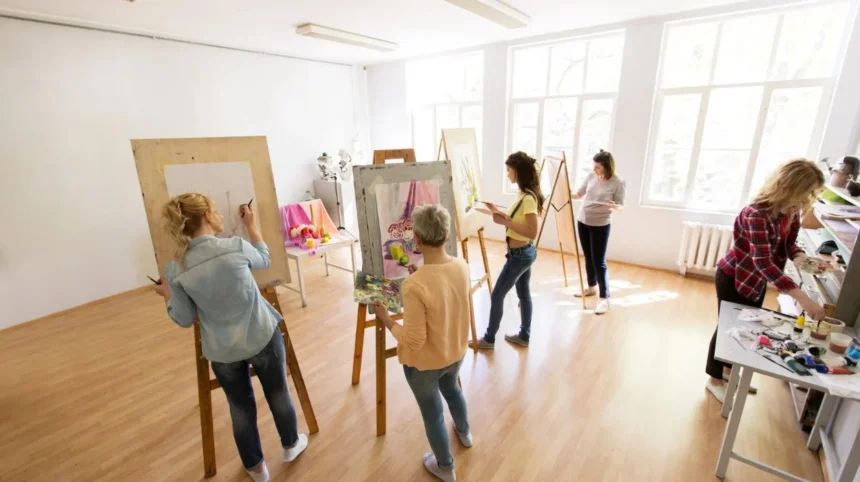
Painting classes in West London are structured art courses that teach practical painting skills through demonstrations, exercises and supervised studio work. They cover media such as watercolour, acrylic and oil while serving beginners, intermediate learners and experienced artists across different neighbourhoods.
Painting instruction focuses on the process of creating images with pigments applied to a surface. A course normally teaches both technical and visual skills. Technical skills include preparing materials, mixing colours and controlling brushes. Visual skills include observation, composition and the organisation of shapes.
West London refers broadly to the western part of Greater London. The area includes boroughs and districts such as uk/local/ealing/">Ealing, fulham/hammersmith/">Hammersmith, Fulham, Kensington, Chelsea, hounslow/chiswick/">Chiswick and Acton. Each area has a different mix of cultural venues and education providers.
Painting classes are available in several formats. These formats include weekly courses, such as an eight-week beginner programme; single workshops, such as a Saturday watercolour session; and intensive courses, such as a multi-day studio programme.
Most classes follow a planned sequence. Early sessions often introduce basic materials and simple exercises. Later sessions develop more complex subjects and independent work. A typical course includes instruction on colour, form, light and composition.
Classes also differ according to subject matter. Students can study still life, such as flowers and household objects; landscape, such as parks and riverside scenes; portraiture, such as studies of the human face; and abstract painting, such as compositions based on colour and shape.
Why are painting classes important for learning art?
Painting classes provide systematic instruction, regular practice and direct feedback, three elements that support technical development. Structured courses also introduce students to artistic vocabulary, established working methods and a wider understanding of visual culture and creative practice.
Learning to paint involves more than purchasing materials and copying an image. Students need to understand how different elements work together. A painting contains relationships between line, shape, colour, tone, texture and space.
Regular practice is an important part of artistic development. A weekly class creates a fixed period for focused work. This structure helps students complete exercises and observe progress over time.
Feedback provides another important learning process. An instructor can identify specific technical issues. Examples include inconsistent perspective, unclear tonal contrast or uncontrolled colour mixing. Direct feedback gives students a clear area for improvement.
Painting classes also introduce artistic terminology. Composition means the arrangement of visual elements within an artwork. Tone describes the relative lightness or darkness of a colour or surface. Perspective is a system for representing three-dimensional space on a two-dimensional surface.
Formal and informal art education have both shaped London’s creative culture. Museums, galleries, schools and community organisations have supported public access to visual arts for generations. Contemporary painting classes continue this tradition through practical adult and community education.
What painting techniques do students learn?
Painting students learn core techniques for drawing, colour mixing, tonal control, composition and surface application. Specific methods depend on the medium and course level, with beginners learning fundamental processes before progressing to complex subjects and individual artistic projects.
How do drawing skills support painting?
Drawing provides a foundation for representational painting. Students learn to observe proportion, shape and spatial relationships. Exercises often begin with simple forms, such as cubes, spheres and cylinders, before moving to more complex subjects.
Contour drawing focuses on the visible edges of a subject. Gesture drawing records movement and overall form. Observational drawing develops accuracy through careful study of real objects.
These skills support painting because the artist needs to organise shapes before applying colour. A strong preliminary drawing establishes the structure of the image.
How is colour used in painting?
Colour theory explains relationships between colours. Students often begin with primary colours, which are basic colours used in many mixing systems. Red, yellow and blue are commonly taught as traditional primary examples.
Secondary colours result from mixing primary colours. Examples include orange from red and yellow, green from blue and yellow, and violet from red and blue.
Students also learn about warm and cool colours. Warm colours include red, orange and yellow. Cool colours include blue, green and violet. These relationships help artists organise visual emphasis and create a sense of spatial depth.
What is tonal painting?
Tone describes relative lightness and darkness. A tonal study reduces a subject to areas of light and dark. This process helps students understand volume and lighting.
Many classes use monochrome exercises at an early stage. A monochrome painting uses variations of one colour. For example, a student can create a study using black, white and grey values before introducing a full colour palette.
Tonal control is important in portraiture, still life and landscape painting because it defines form and separates objects from their surroundings.
Which painting media are taught in West London classes?
West London painting courses commonly teach watercolour, acrylic and oil, alongside mixed-media approaches. Each medium has different drying times, handling characteristics and preparation requirements, so students choose courses according to their preferred techniques and practical working conditions.
What is watercolour painting?
Watercolour uses pigments mixed with water. The paint is usually applied in transparent or semi-transparent layers to paper. Water affects the movement and intensity of the pigment.
Students learn washes, which are broad areas of diluted colour. Examples include a flat wash with consistent colour and a graduated wash that changes in intensity. Other techniques include wet-on-wet painting and dry-brush application.
Watercolour courses often focus on planning because the white surface of the paper contributes to the finished image. Common subjects include landscapes, botanical studies and urban scenes.
What is acrylic painting?
Acrylic paint uses pigments suspended in an acrylic polymer emulsion. It dries relatively quickly and can be applied in thin or thick layers.
Acrylic techniques include glazing, which uses transparent layers; impasto, which applies paint thickly to create texture; and blending, which combines colours directly on the painting surface.
Acrylic is widely used in introductory courses because it works on several prepared surfaces. Examples include canvas, board and heavy paper.
What is oil painting?
Oil paint uses pigments mixed with drying oils. It has a longer working time than standard acrylic paint, allowing artists to blend and adjust areas gradually.
Oil painting classes often teach layering, colour mixing and brush handling. Students also learn about safe studio practice and the proper use of painting mediums.
Traditional oil painting has an important place in European art history. Artists have used oil-based pigments for centuries to create detailed portraits, landscapes and narrative works.
How do beginner painting classes work?
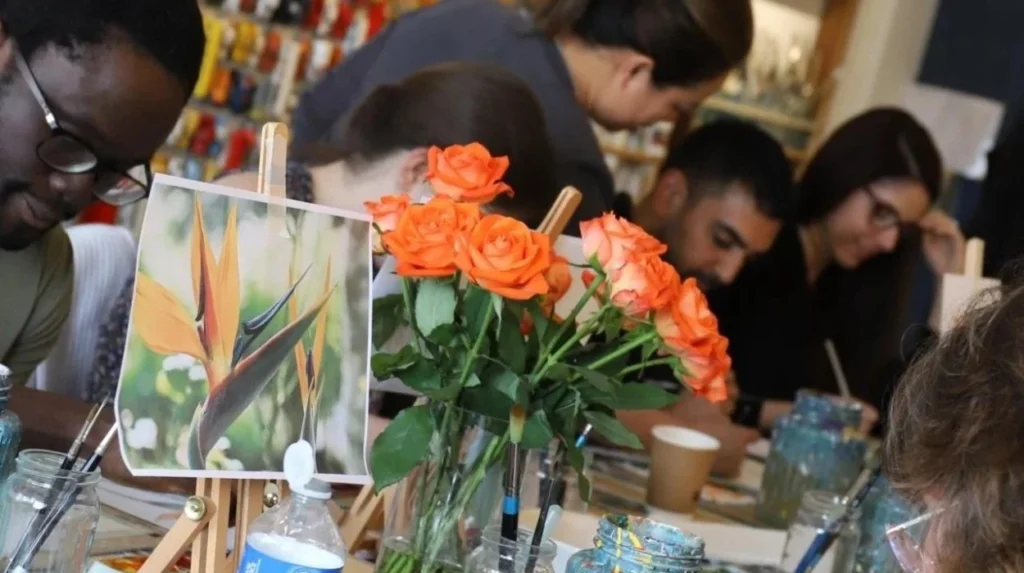
Beginner painting classes introduce essential materials and visual principles through simple, supervised exercises. Students usually learn basic drawing, colour mixing and paint application before completing structured studies that develop confidence and establish reliable working habits.
A beginner does not need previous art training. Entry-level courses are designed to explain basic concepts and provide practical experience.
The first sessions often introduce materials. Students learn the purpose of different brushes, surfaces and paints. A flat brush creates broad marks, while a round brush is commonly used for smaller details.
Exercises usually begin with controlled subjects. A still life arrangement allows students to study shape, proportion and lighting in a fixed setting. Common examples include fruit, cups and bottles.
Instructors also explain the stages of a painting. These stages include observation, planning, drawing, blocking in major shapes and developing detail. The final stage often involves reviewing the overall composition.
Beginner classes place emphasis on process rather than immediate technical complexity. Students build skills through repeated practice and increasingly demanding exercises.
What options are available for intermediate and advanced painters?
Intermediate and advanced painting classes develop specialised techniques, independent decision-making and sustained project work. These courses often focus on subjects such as portraiture, landscape or abstraction while providing detailed critique and opportunities to refine an established practice.
Intermediate students generally understand basic materials and techniques. They need more complex challenges to extend their skills.
An intermediate course can focus on a particular subject. Portrait painting, for example, requires careful study of facial proportion, skin tone and lighting. Landscape painting requires an understanding of distance, weather and natural colour relationships.
Advanced courses often allow greater independence. Students develop personal projects while receiving guidance on technical and compositional decisions.
Critique is an important feature of higher-level instruction. A critique is a structured discussion of an artwork. It examines specific aspects such as composition, technique and visual communication.
Specialist courses also explore historical and contemporary painting practices. Students gain context for their work by studying established artists and artistic movements.
How do painting classes teach composition and visual design?
Painting classes teach composition by showing students how to organise shapes, colours, lines and empty space within an image. Exercises develop visual balance, focal points and directional movement, helping students create clear and structured finished paintings.
Composition determines how the viewer encounters an artwork. Every painting contains decisions about placement and scale.
A focal point is the area intended to receive the strongest visual attention. Artists create focal points through contrast, detail or colour. For example, a bright object against a dark background creates strong visual contrast.
Balance refers to the distribution of visual weight. Symmetrical balance places similar elements on either side of a central point. Asymmetrical balance uses different elements to create stability without exact repetition.
Negative space is the area around and between objects. Studying negative space helps students see the full structure of a composition rather than concentrating only on individual objects.
Courses use practical exercises to teach these principles. Students can rearrange a still life, crop a reference image or create several thumbnail sketches before beginning a larger painting.
What should students look for when choosing a painting class?
Students should compare course level, teaching format, medium, class size, location, timetable and material requirements. A suitable painting class matches the student’s current experience and learning goals while providing sufficient practical instruction and access to appropriate facilities.
Course level is the first consideration. A complete beginner benefits from a foundation course with clear technical instruction. An experienced painter benefits from specialist teaching or project-based studio sessions.
The medium also matters. A student interested in transparent washes should select a watercolour course. A student seeking thick texture should consider acrylic or oil painting.
Class format affects the learning experience. Weekly classes provide continuity over a longer period. One-day workshops focus on a defined technique or subject. Open studio sessions provide time and space for independent work.
Location is important in a large city. West London has major transport connections through London Underground, rail and bus networks. Students should consider travel time when choosing a regular course.
Material requirements should also be checked before enrolment. Some courses provide paints and brushes. Others require students to purchase their own equipment. This information affects the total cost of participation.
Where do painting classes take place in West London?
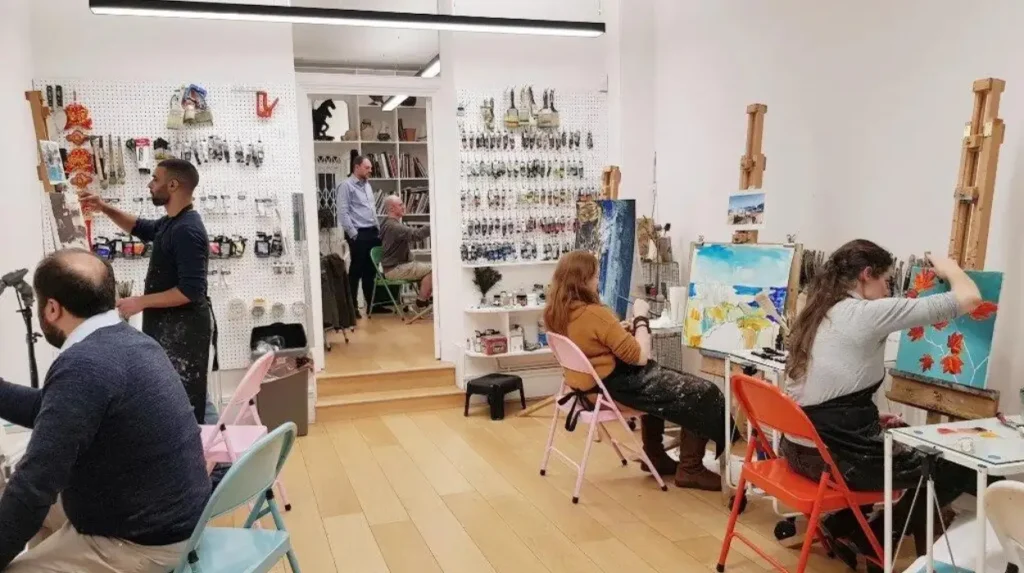
Painting classes in West London take place in adult education centres, community arts venues, independent studios and cultural institutions. These settings provide different learning environments, from structured classrooms with fixed courses to studios offering specialist workshops and practical sessions.
Adult education providers offer organised programmes for people seeking structured learning. Courses often follow a published timetable and have defined learning outcomes.
Community arts venues focus on local participation and access. These organisations can provide classes for adults, families and different experience levels.
Independent studios often offer specialist instruction. Examples include courses focused on portraiture, botanical painting or a particular medium.
Cultural institutions also contribute to visual arts education. Museums and galleries provide access to collections and exhibitions that support art history and practical study.
Students should check current course availability directly with providers. Timetables, fees, instructors and entry requirements change regularly.
How does West London’s cultural environment support painting education?
West London supports painting education through its concentration of galleries, museums, creative organisations and public learning spaces. Access to exhibitions and historic collections gives students direct opportunities to study artworks, materials and visual traditions alongside practical instruction.
London is an important international centre for museums and visual arts. West London contains major cultural districts and institutions connected with art, design and public education.
Studying original artworks provides information that reproductions cannot fully show. Students can observe scale, brushwork, surface texture and the physical relationship between different colours.
Gallery visits also strengthen visual literacy. Visual literacy is the ability to interpret and understand visual information. It helps students identify artistic techniques and understand how images communicate ideas.
The wider creative economy also supports demand for practical skills. London contains artists, designers, illustrators, educators and cultural organisations working across many visual disciplines.
Painting classes connect local learners with this broader cultural environment. A student can combine practical study with visits to exhibitions and public collections.
What equipment is needed for a painting course?
Painting courses require basic materials suited to the chosen medium, including paints, brushes and a working surface. Beginners should follow the provider’s materials list because course requirements vary according to technique, subject and the facilities available at each venue.
Watercolour equipment generally includes paint, brushes, a palette and suitable paper. Watercolour paper is designed to absorb water and support repeated applications of diluted pigment.
Acrylic painting equipment includes acrylic paints, brushes, palettes and a prepared surface. Common surfaces include stretched canvas and painting board.
Oil painting requires paints, brushes and a suitable surface. Courses also establish rules for storing materials and maintaining a safe working environment.
Students should avoid purchasing large quantities of equipment before attending the first session unless the course specifically requires it. An instructor can explain which materials are necessary for the planned activities.
Equipment maintenance is also part of practical learning. Brushes need cleaning after use, and paints need appropriate storage. These habits extend the life of materials and support consistent results.
How do painting classes support wellbeing and lifelong learning?
Painting classes support lifelong learning by providing regular opportunities to acquire skills, complete creative work and participate in organised cultural activity. Research on arts engagement also identifies connections between creative participation, social interaction and individual wellbeing.
Lifelong learning refers to education that continues throughout adult life. Painting provides a practical subject that can be studied at different levels over many years.
A class creates a shared learning environment. Students work alongside others with similar interests while following a common programme. This structure supports social participation as well as individual skill development.
Research institutions, including organisations studying arts and health, have examined the relationship between cultural participation and wellbeing. These studies distinguish between clinical treatment and broader participation in creative activities.
Painting classes also create measurable learning outcomes. Students can develop a portfolio of completed work, improve technical control and progress from introductory exercises to independent projects.
For many adult learners, a course provides a regular cultural activity within the local area. This strengthens the role of community education in maintaining access to the arts.
Explore More Area Guide
Pottery Classes in West London: Courses, Studios and Skills
Craft Workshops in West London: Studios, Classes and Creative Activities
What is the future of painting classes in West London?
The future of painting classes in West London remains connected to lifelong learning, community arts and specialist creative education. Digital resources support independent study, while in-person classes continue to provide direct instruction, practical facilities and immediate feedback from experienced tutors.
Digital technology has expanded access to art education. Online demonstrations, digital reference libraries and virtual courses allow students to study techniques from different locations.
Painting remains a physical practice. Students still need to handle materials, observe surfaces and control the application of paint. In-person classes provide equipment and studio conditions that digital instruction does not replace.
Future courses are likely to continue combining traditional skills with contemporary approaches. Traditional skills include observational drawing and colour mixing. Contemporary approaches include mixed media, experimental processes and interdisciplinary visual practice.
Accessibility will also remain an important issue. Community provision, adult education and flexible course formats help different groups participate in creative learning.
West London’s established cultural infrastructure gives painting education a strong local context. The combination of public institutions, independent studios and community venues creates several routes into practical art study.
How can someone get the most value from a painting class?
Students gain the greatest value from painting classes by attending regularly, practising between sessions and applying instructor feedback to specific technical problems. Clear goals, organised materials and repeated observation help transform individual lessons into sustained artistic development.
Regular attendance creates continuity. Each lesson builds on earlier exercises and introduces new challenges.
Students should keep basic records of their work. A sketchbook can contain preparatory drawings, colour tests and notes from demonstrations. This record shows technical progress over time.
Practice between sessions reinforces class instruction. Short studies of everyday subjects, such as fruit, buildings or plants, develop observation and paint control.
Clear learning goals also improve course selection. A beginner can focus on understanding materials and basic composition. An experienced student can focus on a specialist subject or a coherent body of work.
Painting classes in West London offer a structured route into visual arts education. They combine technical instruction with practical experience and connect students to the wider cultural environment of the capital. By selecting a course that matches their level, preferred medium and learning objectives, students can build skills through regular and focused creative practice.
Are there painting classes for beginners in West London?
Yes. Many painting classes in West London are designed specifically for beginners. These courses introduce essential skills such as drawing, colour mixing, brush control, composition and basic painting techniques. No previous painting experience is usually required for introductory courses.