

Makerspaces in West London provide access to shared tools, specialist equipment, creative workshops and practical learning opportunities. These spaces support people who want to develop new skills, build prototypes, repair objects, manufacture products or explore traditional crafts.
- What Are Makerspaces and How Do They Work?
- Understanding the Makerspace Concept
- How Are Makerspaces Different from Traditional Workshops?
- Who Uses Makerspaces?
- Why Are Makerspaces Important for West London?
- West London’s Creative and Industrial Background
- Supporting Independent Makers and Small Businesses
- Encouraging Practical Learning
- Where Can You Find Makerspaces in West London?
- POW Workshops, Park Royal
- The Invention Rooms, White City
- Create Space London, Kensington
- Maxilla Men’s Shed, North Kensington
- West London Art Factory, Park Royal
- What Equipment and Facilities Do West London Makerspaces Provide?
- Woodworking and Furniture-Making Equipment
- Digital Fabrication and 3D Printing
- Metalworking and Engineering
- Electronics and Technology
- Textiles, Sewing and Creative Production
- How Can Beginners Join a Makerspace in West London?
- Step 1: Choose a Suitable Workshop
- Step 2: Check Membership and Booking Conditions
- Step 3: Complete Safety Inductions
- Step 4: Start With a Small Project
- What Types of Projects Can You Complete in West London Makerspaces?
- Furniture and Interior Products
- Product Design and Prototyping
- Art, Sculpture and Creative Installations
- Repairs and Upcycling
- Educational and STEM Projects
- How Do Makerspaces Support Education and Skill Development?
- How Do Makerspaces Contribute to Sustainability in West London?
- What Should You Consider Before Choosing a West London Makerspace?
- What Is the Future of Makerspaces in West London?
- Growth of Digital Manufacturing
- More Opportunities for Independent Creatives
- Community-Based Innovation
- Connecting Traditional Crafts With New Technology
- Where Are the Main Makerspaces Located in West London?
West London has a growing network of creative workspaces across Park Royal, uk/local/hammersmith-and-fulham/white-city/">White City, Kensington, North Kensington and surrounding neighbourhoods. These facilities serve independent artists, designers, students, engineers, hobbyists, entrepreneurs and local residents.
Some makerspaces focus on professional woodworking and digital fabrication. Others concentrate on science, technology, electronics, textiles and community-based activities. Their facilities give members access to equipment that is expensive, difficult to maintain or impractical to install at home.
Notable examples include POW Workshops in Park Royal, Imperial College London’s Invention Rooms in White City, Create Space London in Kensington and Maxilla Men’s Shed in North Kensington. Each offers a different approach to practical creativity, learning and collaboration.
Understanding the facilities, membership arrangements, available equipment and access requirements helps residents identify the right makerspace for their projects.
What Are Makerspaces and How Do They Work?
Makerspaces are shared creative workshops where people access tools, equipment and practical knowledge to design, repair and manufacture physical objects. They combine workspace, technical resources, education and collaboration, allowing beginners and experienced makers to develop projects without establishing private workshops.
Understanding the Makerspace Concept
A makerspace is a shared environment designed for practical experimentation and production. It brings together people interested in making physical products, exploring technology and learning practical skills.
The concept combines traditional workshops with modern digital manufacturing facilities. Members use shared equipment to complete individual projects, participate in training sessions and exchange technical knowledge.
Makerspaces operate through different arrangements. Some offer monthly memberships, while others provide individual workshop bookings, supervised classes or community sessions.
A typical makerspace includes workbenches, hand tools, machinery, computers and specialist production equipment. Larger facilities also provide dedicated rooms for woodworking, metalworking, electronics and digital fabrication.
How Are Makerspaces Different from Traditional Workshops?
Traditional workshops generally operate as private businesses, educational facilities or professional manufacturing environments. Makerspaces introduce shared access and collaborative learning as central features.
A private woodworking studio normally serves its owner or employees. A community makerspace allows multiple people to use shared facilities under established safety procedures.
Makerspaces also combine different disciplines. A member can design a product digitally, produce a prototype using a 3D printer and complete its construction using traditional tools.
This combination makes makerspaces relevant to independent designers, students, small businesses and people developing personal projects.
Who Uses Makerspaces?
Makerspaces serve several groups of users, including:
- Hobbyists interested in woodworking, electronics and model-making.
- Designers developing furniture, household products and prototypes.
- Entrepreneurs testing physical products before commercial production.
- Students learning engineering, technology and practical manufacturing.
- Artists producing sculptures, installations and mixed-media work.
- Community members interested in repairing objects and developing practical skills.
The facilities differ in their admission policies. Some welcome beginners, while specialist university laboratories require institutional membership or an application.
Why Are Makerspaces Important for West London?
Makerspaces support West London’s creative economy by providing shared infrastructure for practical learning, product development and independent manufacturing. They connect local residents, designers, educational institutions and small businesses with specialist equipment, technical guidance and collaborative working environments.
West London’s Creative and Industrial Background
West London has a long association with manufacturing, engineering, creative industries and commercial production.
Park Royal is particularly important because it developed into one of London’s major industrial areas. Its industrial buildings provide suitable environments for workshops, production facilities and creative businesses.
Neighbourhoods such as White City, Acton, Kensington and North Kensington also support educational institutions, independent artists and creative organisations.
The development of shared workshops reflects the changing relationship between manufacturing and the creative economy. Modern makers combine traditional craftsmanship with computer-aided design, digital fabrication and electronic technology.
Supporting Independent Makers and Small Businesses
Establishing a private workshop requires investment in equipment, workspace, insurance and maintenance. These costs create barriers for independent makers and early-stage businesses.
Shared workshops reduce the need for individual equipment ownership. Members access specialist facilities through memberships, bookings or structured training programmes.
For example, an independent furniture designer can use professional woodworking machinery without purchasing an entire collection of industrial tools.
A product designer can also use digital fabrication equipment to create prototypes before investing in commercial manufacturing.
Encouraging Practical Learning
Makerspaces support learning through direct participation. Users develop technical knowledge by completing practical projects rather than relying exclusively on classroom instruction.
Activities include woodworking, electronics, sewing, digital modelling and basic engineering.
This approach also encourages collaboration between people with different professional backgrounds. An experienced craftsperson can share practical knowledge with a beginner, while a technology specialist can help another member develop an electronic prototype.
Where Can You Find Makerspaces in West London?
West London has several established and developing makerspaces, including POW Workshops in Park Royal, Imperial College London’s Invention Rooms in White City, Create Space London in Kensington and Maxilla Men’s Shed in North Kensington. Their facilities and access arrangements differ.
POW Workshops, Park Royal
POW Workshops is one of the most prominent dedicated makerspaces in West London.
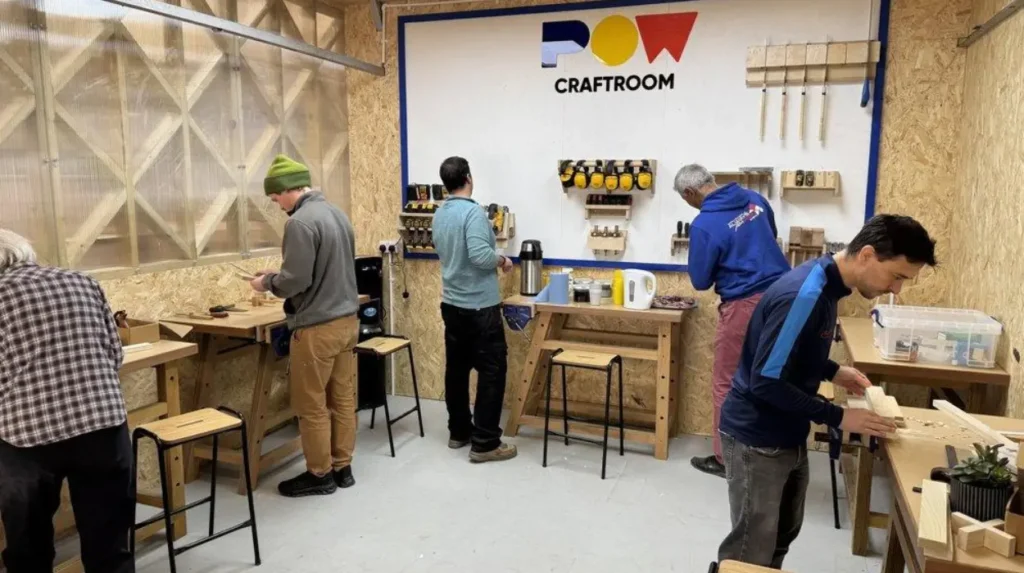
Located at 41–43 Standard Road, Park Royal, London NW10 6HF, the facility occupies approximately 6,000 square feet.
It operates as a not-for-profit open workshop supporting independent makers, creative businesses and people interested in practical skills.
Its facilities include:
- Professional woodworking machinery, including table saws and bandsaws.
- CNC fabrication equipment for computer-controlled cutting.
- Laser-cutting facilities for precision fabrication.
- 3D printing and digital design equipment.
- Workbenches and shared production areas.
- A dedicated spray room for finishing projects.
POW Workshops also provides woodwork classes, practical DIY training, tool instruction and digital fabrication services.
Its membership arrangements include nomadic workshop access and dedicated studios. Published pricing has included nomadic membership from £200 per month and private studios from £600 per month, including VAT. Prices and availability should be confirmed directly before joining.
The facility is particularly relevant to furniture makers, independent designers, product developers and people who need access to professional woodworking equipment.
The Invention Rooms, White City
The Invention Rooms is an innovation and community-making facility operated by Imperial College London.
Located at 68 Wood Lane, White City, the facility connects science, engineering, education and community participation.
Its Dangoor Reach Out Makerspace provides opportunities for practical learning and creative experimentation.
Facilities and activities include:
- 3D printing and digital manufacturing.
- Woodworking and metalworking.
- Laser cutting and scanning.
- Engineering and design activities.
- Educational programmes for young people.
- Community workshops and collaborative projects.
The Invention Rooms also contains an Interaction Zone used for community events, presentations and educational activities.
The Dangoor Reach Out Makerspace is particularly relevant to young people interested in science, technology, engineering and mathematics (STEM).
Access depends on the programme and participant eligibility. Its specialist Advanced Hackspace serves Imperial staff, students, partners and external innovators through separate membership arrangements.
Create Space London, Kensington
Create Space London provides creative workspace, communal facilities and workshop opportunities in Kensington.
Its location at 10 South End, London W8 5BU, is approximately an eight-minute walk from High Street Kensington station.
The organisation brings together artists, designers, craftspeople and independent creative professionals.
Its workshop programme covers several practical disciplines:
- Woodworking, metalworking and plastics fabrication.
- Electronics and interactive technology.
- Fashion and textile production.
- Computer-aided design and manufacturing.
- Creative documentation and product development.
The facility also provides shared studios, desk space, communal areas and an event or gallery space.
Create Space London supports practical education through small-group courses led by artists and makers.
Its published course listings have included beginner sewing, hand-tool woodworking, painting and creative design workshops.
The Kensington location is suitable for people interested in combining practical creative work with studio-based collaboration.
Maxilla Men’s Shed, North Kensington
Maxilla Men’s Shed is a community-based workshop associated with ACAVA’s Maxilla Walk Studios.
It provides a setting for practical activities, informal learning and social interaction.
The project follows the wider Men’s Shed approach, which encourages people to participate in shared practical activities and develop connections within their communities.
Its activities have included free tinkering sessions and hands-on making opportunities.
Participants can explore practical skills, work on small projects and share knowledge with other members.
Unlike professional manufacturing facilities, its main emphasis is community participation and accessible creative activity.
Session availability and timetables should be checked through the organisation before visiting.
The facility is particularly relevant to North Kensington residents seeking community-based creative activities.
West London Art Factory, Park Royal
West London Art Factory is a multidisciplinary creative hub in the Park Royal area.
Its activities connect artists, independent makers and creative professionals through studio facilities and exhibitions.
The organisation provides an environment for creative production, studio-based work and public engagement.
Its activities include artist studios, exhibitions and occasional workshops or events.
Although it is not identical to a fully equipped industrial makerspace, it forms part of West London’s wider creative-workspace network.
What Equipment and Facilities Do West London Makerspaces Provide?
West London makerspaces provide equipment for woodworking, metalworking, electronics, textiles and digital fabrication. Available facilities depend on each organisation’s purpose, membership structure and safety requirements, with specialist machinery generally accessible after training or an approved induction.
Woodworking and Furniture-Making Equipment
Woodworking is an important activity across West London’s shared workshops.
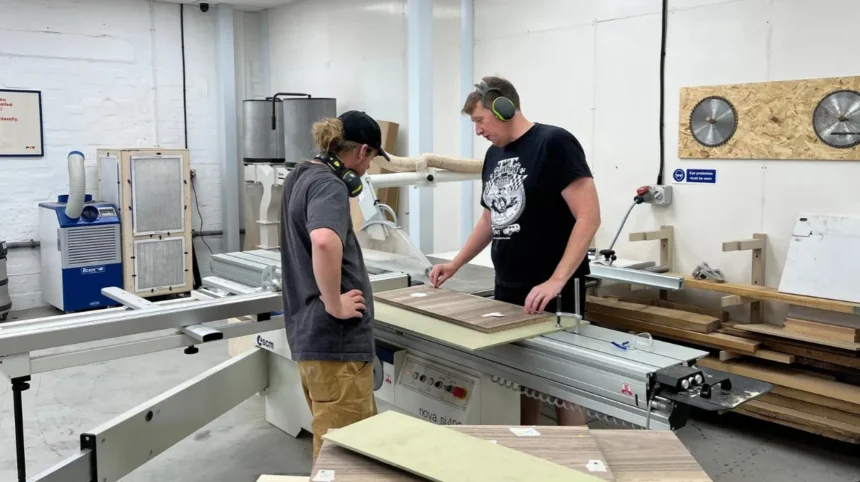
Common equipment includes table saws, bandsaws, drills, sanders, routers and planers. These machines support furniture production, cabinetmaking, model construction and general woodworking.
Hand tools are equally important. Chisels, hammers, measuring instruments, clamps and hand saws allow users to complete detailed work.
POW Workshops is a particularly relevant location for people seeking professional woodworking machinery.
Digital Fabrication and 3D Printing
Digital fabrication uses computer-controlled equipment to manufacture physical objects from digital designs.
Three important technologies are:
3D printing: Additive manufacturing creates objects by depositing material in successive layers. Makers use this technology for prototypes, product components and educational models.
Laser cutting: A focused laser cuts or engraves suitable materials, including selected woods, acrylics and other approved materials.
CNC machining: Computer Numerical Control (CNC) machines follow programmed instructions to cut, drill or shape materials accurately.
These technologies connect computer-aided design with practical manufacturing. They are particularly useful for product designers, engineers, architects and independent manufacturers.
POW Workshops and Imperial College London’s innovation facilities provide examples of digital fabrication infrastructure in West London.
Metalworking and Engineering
Metalworking facilities support projects involving fabrication, shaping, joining and finishing metal components.
Typical equipment includes metal-cutting machinery, bench grinders, welding equipment and drilling tools.
Users develop practical skills through supervised instruction and approved machine access.
Metalworking requires additional safety precautions because machinery generates heat, sparks, sharp edges and potentially hazardous fumes.
Anyone interested in metal fabrication should confirm the available equipment and training requirements before booking a workshop.
Electronics and Technology
Electronics facilities support the development of circuits, interactive devices and technology-based products.
Common equipment includes soldering stations, multimeters, power supplies and electronic testing instruments.
Some facilities also support robotics, microcontrollers and programmable hardware.
The Invention Rooms at White City provides an educational environment for exploring engineering and technology through practical activities.
Electronics workshops are useful for students, inventors and hobbyists developing connected devices or learning circuit design.
Textiles, Sewing and Creative Production
Textile facilities support sewing, garment construction, embroidery and fabric-based design.
Equipment can include industrial sewing machines, cutting tables and specialist textile tools.
These facilities support independent fashion designers, costume makers and people developing small creative businesses.
Create Space London provides textile-related workshop opportunities within its wider creative environment.
How Can Beginners Join a Makerspace in West London?
Beginners can join West London makerspaces by identifying a suitable workshop, checking its membership requirements, attending an introductory session and completing required safety inductions. Some organisations provide supervised classes, while others require membership before granting access to machinery.
Step 1: Choose a Suitable Workshop
Start by identifying the type of project you want to complete.
A beginner interested in furniture-making should prioritise woodworking facilities. Someone developing electronic devices needs access to electronics equipment and technical guidance.
The choice of workshop also depends on location. Park Royal, White City, Kensington and North Kensington offer different facilities and transport connections.
Step 2: Check Membership and Booking Conditions
Makerspaces use different access arrangements.
Some organisations provide monthly memberships, while others accept individual course bookings or programme applications.
Before joining, check:
- Membership costs and payment frequency.
- Workshop opening hours.
- Equipment availability.
- Whether beginners are accepted.
- Whether materials are included.
- Storage and workspace arrangements.
- Cancellation and booking policies.
These details help users compare facilities and avoid paying for services they do not need.
Step 3: Complete Safety Inductions
An induction is an introductory safety and equipment-training session.
It explains how to operate machinery, use protective equipment and follow workshop procedures.
Users learn about emergency stops, safe working distances, material handling and equipment maintenance.
Some facilities require separate assessments for individual machines. Passing a general introduction does not automatically authorise access to every piece of equipment.
Step 4: Start With a Small Project
Beginners benefit from choosing a manageable first project.
Examples include making a wooden storage box, producing a small 3D-printed component or assembling a basic electronic circuit.
A small project helps users understand materials, measurements, equipment and production processes.
It also provides an opportunity to identify the additional skills needed for more complex work.
What Types of Projects Can You Complete in West London Makerspaces?
West London makerspaces support projects ranging from handmade furniture and electronic prototypes to 3D-printed components, textile products and artistic installations. The available machinery, materials and supervision determine which projects users can complete safely.
Furniture and Interior Products
Furniture-making is one of the practical applications of shared woodworking facilities.
Users can develop projects such as:
- Wooden tables and desks.
- Storage units and shelving.
- Cabinets and small furniture.
- Decorative wooden objects.
- Interior design prototypes.
POW Workshops provides professional woodworking equipment and workshop access relevant to these activities.
Product Design and Prototyping
Product prototyping involves creating an early physical version of a proposed product.
Designers use 3D printing, CNC machining and laser cutting to test shape, dimensions and functionality.
For example, an independent entrepreneur developing a household product can produce a prototype before arranging commercial manufacturing.
This process helps identify design problems at an earlier stage.
Art, Sculpture and Creative Installations
Artists use shared workshops to create physical installations, sculptures and experimental objects.
Wood, metal, plastics and electronic components provide different production possibilities.
Creative studios such as Create Space London and West London Art Factory contribute to this wider artistic environment.
Repairs and Upcycling
Repair and upcycling projects extend the useful life of existing materials and objects.
Upcycling means transforming unwanted or unused materials into products with a new function.
Examples include converting reclaimed timber into shelves, repairing household furniture and reusing materials in decorative projects.
These activities connect makerspaces with practical sustainability and resource efficiency.
Educational and STEM Projects
Educational projects introduce participants to engineering, scientific principles and technological design.
Young people can develop simple prototypes, experiment with materials and understand how physical systems operate.
The Invention Rooms provides a particularly relevant example through its educational and community programmes.
How Do Makerspaces Support Education and Skill Development?
Makerspaces support education through practical instruction, supervised experimentation and collaborative projects. They connect classroom learning with real equipment and materials, helping participants develop technical confidence, problem-solving abilities and experience in design, engineering and creative production.
Practical STEM Education
STEM stands for Science, Technology, Engineering and Mathematics.
Makerspaces translate these subjects into practical activities.
For example, building an electronic circuit introduces electrical principles. Producing a 3D-printed model demonstrates digital design and geometry.
These activities give learners a practical understanding of technical concepts.
Imperial College London’s Invention Rooms connects these educational opportunities with its wider science and engineering environment.
Vocational and Professional Skills
Makerspaces also support people developing practical employment skills.
Woodworking, furniture production, digital fabrication and textile manufacturing require technical knowledge that businesses use in professional environments.
Training sessions introduce users to equipment, materials and production methods.
For independent makers, this experience supports the development of portfolios and small commercial projects.
Collaboration and Knowledge Sharing
Shared workshops bring together people with different levels of experience.
Members exchange advice about materials, machinery and project development.
This environment encourages peer learning, particularly when experienced makers support beginners.
Collaboration also helps independent professionals develop connections with potential customers, suppliers and creative partners.
How Do Makerspaces Contribute to Sustainability in West London?
Makerspaces contribute to sustainability by encouraging repair, material reuse, product experimentation and shared equipment ownership. These activities reduce unnecessary purchases, extend product lifespans and help individuals develop practical approaches to resource efficiency.
Repair and Reuse
Repairing existing objects reduces the need to replace functional products.
A shared workshop provides space and tools for practical repairs, furniture restoration and small household projects.
Upcycling also gives discarded materials a new purpose.
Reclaimed wood, selected plastics and reusable components can become useful products when processed safely.
Shared Equipment and Resource Efficiency
Industrial machinery requires investment, maintenance and physical space.
A shared workshop distributes these costs across multiple users.
This arrangement reduces the need for every independent maker to purchase and maintain separate equipment.
However, sustainability also depends on responsible material sourcing, energy consumption and waste management.
Supporting Local Production
Local production connects designers and manufacturers with nearby workshop infrastructure.
A maker developing a small product range can use local facilities for prototyping and limited production.
This arrangement supports practical experimentation without immediately requiring a large manufacturing facility.
West London’s industrial and creative districts provide an important setting for these activities.
What Should You Consider Before Choosing a West London Makerspace?
Choosing a West London makerspace requires comparing location, equipment, pricing, membership conditions, training and project requirements. The most suitable facility is the one that provides the necessary tools, safe working conditions and appropriate access for your experience level.
Location and Transport
Travel time influences how frequently someone uses a workshop.
Park Royal, White City, Kensington and North Kensington have different public transport connections.
POW Workshops is based on Standard Road in NW10. The Invention Rooms is close to White City, Wood Lane and Shepherd’s Bush transport connections.
Create Space London is within walking distance of High Street Kensington station.
Checking the complete journey before joining helps establish whether regular attendance is practical.
Membership and Cost
Membership prices differ according to the type of workspace and equipment access.
POW Workshops has published nomadic membership from £200 per month, while dedicated studios have started from £600 per month, including VAT.
Other organisations operate through courses, programmes, institutional access or community activities.
Always confirm current prices because advertised rates, availability and membership conditions change.
Equipment and Training
A workshop’s equipment list should match your project requirements.
A furniture maker needs woodworking machinery, while a product developer might prioritise 3D printing and CNC fabrication.
Users should also establish whether training is included or charged separately.
Safety and Insurance
Professional workshops operate safety procedures to protect users and equipment.
Before joining, establish whether the facility provides:
- Machine-specific safety inductions.
- Appropriate protective equipment.
- Supervision for beginners.
- Clear emergency procedures.
- Public liability and equipment insurance information.
Users should also check whether personal project insurance is necessary.
Explore More Area Guide
Art Classes for Children in West London: A Parent’s Guide
Music Schools in West London: Lessons, Courses and Training
What Is the Future of Makerspaces in West London?
The future of West London makerspaces is connected to digital manufacturing, creative entrepreneurship, practical education and community participation. Growing interest in accessible production facilities supports opportunities for independent designers, technology learners and small businesses.
Growth of Digital Manufacturing
Digital manufacturing continues to change how products are designed and produced.
3D printing, computer-controlled machining and laser cutting allow makers to develop detailed prototypes without relying exclusively on traditional manufacturing processes.
These technologies support product development, engineering education and small-scale production.
West London’s makerspaces provide an environment where traditional craftsmanship and digital technologies work together.
More Opportunities for Independent Creatives
Affordable workshop access remains important for independent designers and small businesses.
Shared facilities reduce the initial investment required to establish a production workspace.
Organisations such as POW Workshops demonstrate how shared machinery, studio rentals and training programmes support independent manufacturing.
Creative organisations also contribute through exhibitions, workshops and collaborative projects.
Community-Based Innovation
Community makerspaces create opportunities for people to learn practical skills outside formal educational environments.
Facilities such as the Invention Rooms connect local communities with science, engineering and creative activities.
Community workshops also support social participation through collaborative projects and informal learning.
Connecting Traditional Crafts With New Technology
Traditional woodworking, metalworking, sewing and furniture-making remain relevant alongside digital fabrication.
Future creative production increasingly combines these disciplines.
A furniture designer can use computer-aided design to develop a product, CNC equipment to manufacture components and traditional hand tools to complete the final construction.
This combination makes makerspaces valuable resources for West London’s evolving creative economy.
Where Are the Main Makerspaces Located in West London?
Makerspaces in West London provide important facilities for creative production, technical education and independent manufacturing. From professional woodworking at POW Workshops in Park Royal to educational innovation at Imperial College London’s Invention Rooms, these facilities support different interests and experience levels.
Create Space London offers opportunities for artists and creative professionals, while Maxilla Men’s Shed provides a community-focused environment for practical activities.
West London Art Factory adds to the area’s wider network of creative workspaces.
For residents, students, entrepreneurs and independent makers, these organisations provide access to tools, knowledge and collaborative environments. Understanding their equipment, membership arrangements and training opportunities makes it easier to choose a suitable facility.
As digital fabrication and practical education continue to develop, makerspaces remain an important part of West London’s creative and industrial landscape.
What are the best makerspaces in West London?
Some notable makerspaces and creative workshops in West London include POW Workshops in Park Royal, Imperial College London’s Invention Rooms in White City, Create Space London in Kensington and Maxilla Men’s Shed in North Kensington. Each offers different facilities and activities.