

West London contains a dense collection of historic houses, royal sites, designed landscapes, conservation areas, gardens and architectural landmarks. Its heritage reflects medieval estates, Tudor royal connections, Georgian architecture, Victorian expansion, scientific institutions and the transformation of former private estates into public places.
- What are the most important heritage sites in West London?
- How old are the heritage sites in West London?
- Why is Chiswick House important to West London heritage?
- What makes Kew Palace and Kew Gardens historically significant?
- What historic buildings can visitors find around Osterley, Syon and Brentford?
- How does Gunnersbury Park represent the changing history of West London?
- Why is Pitzhanger Manor important for architectural heritage in Ealing?
- How are West London heritage sites protected and preserved?
- Which West London heritage sites are most useful for understanding the area’s wider history?
- How can West London heritage sites remain relevant for future generations?
The area is not defined by a single statutory heritage boundary. In practical terms, West London includes historic districts and sites across boroughs such as uk/local/hounslow/">Hounslow, Ealing, Richmond upon Thames and neighbouring western parts of London. The heritage landscape extends from Chiswick and Brentford through Ealing and Osterley towards Kew and Twickenham.
Several major sites are protected through the National Heritage List for England. Protection categories include listed buildings and registered parks and gardens. Grade I buildings are of exceptional interest, while Grade II* buildings are particularly important buildings of more than special interest. Registered parks and gardens are assessed for their special historic interest.
This combination makes West London significant for architectural history, landscape design, royal history, scientific history and the development of suburban London.
What are the most important heritage sites in West London?
West London’s principal heritage sites include Chiswick House, Kew Palace, Royal Botanic Gardens Kew, Syon House, Osterley Park, Gunnersbury Park, Boston Manor House and Pitzhanger Manor, representing royal, architectural, landscape, scientific and social history.
These sites form the core of a West London heritage itinerary. Each represents a different period or aspect of the area’s development.
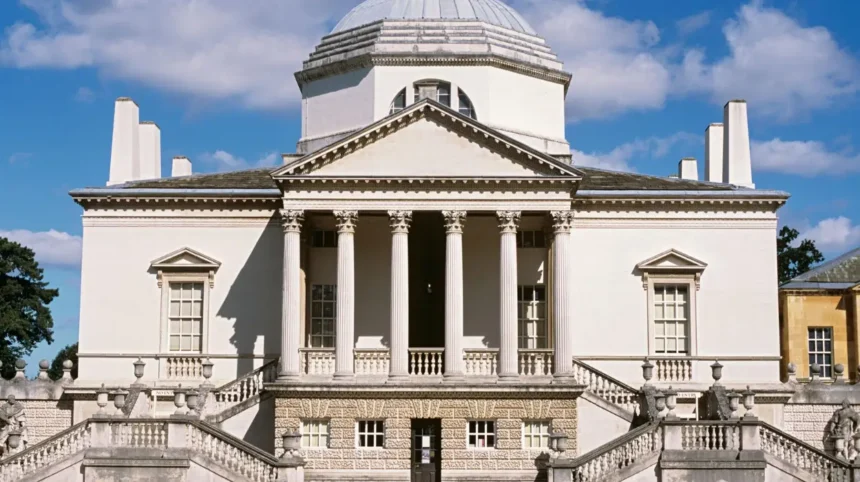
Chiswick House and Gardens is one of the strongest examples of eighteenth-century Palladian architecture and landscape design in London. The house is Grade I listed, while the wider historic landscape is a registered park and garden.
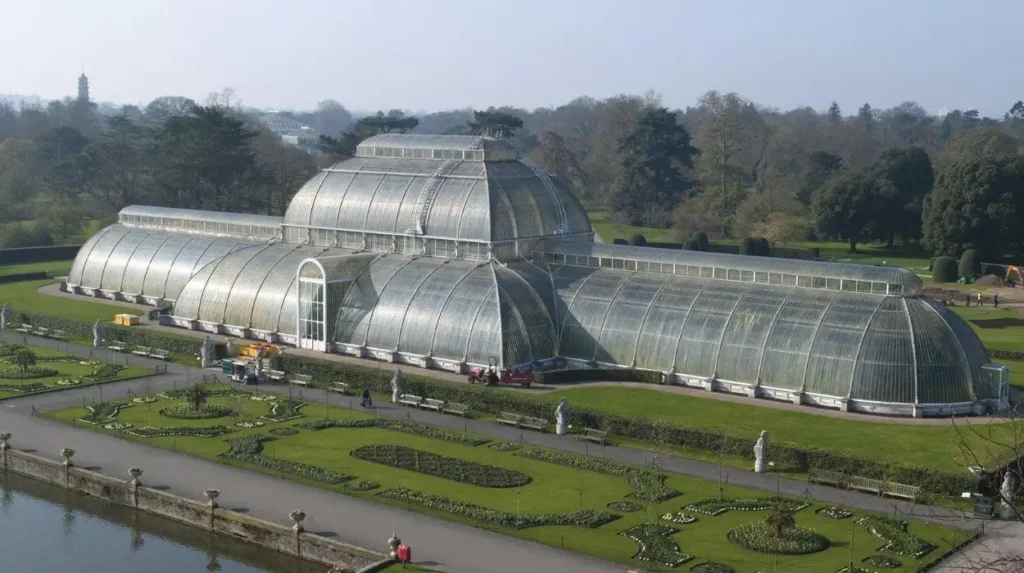
Royal Botanic Gardens, Kew combines royal history, botanical science, landscape design and internationally recognised conservation work. The gardens cover 132 hectares and became a UNESCO World Heritage Site in 2003.
Kew Palace provides a more intimate royal-history experience. The building was constructed in 1631 for wealthy silk merchant Samuel Fortrey before becoming associated with the Georgian royal family.
Syon House and Syon Park represent a long sequence of religious, Tudor, Georgian and nineteenth-century history. The present house incorporates the remains of a fifteenth-century Brigittine nunnery and was substantially reconstructed in the sixteenth century before Robert Adam remodelled it in the eighteenth century.
Osterley Park and House combines Tudor origins with an eighteenth-century transformation by Robert Adam. Its registered historic landscape extends across a large area and retains the relationship between mansion, parkland, water and formal gardens.
Gunnersbury Park demonstrates the transformation of aristocratic estates into public recreational landscapes. Its historic development includes eighteenth-century garden design, nineteenth-century Rothschild ownership and public acquisition in the twentieth century.
Boston Manor House provides an important early seventeenth-century survival. The house dates principally from 1622–23 and is Grade I listed.
Pitzhanger Manor connects West London with the architectural work of Sir John Soane. The present house largely reflects Soane’s rebuilding between 1800 and 1803, while surviving elements record the site’s earlier history.
How old are the heritage sites in West London?
West London heritage spans more than 900 years of documented development, from medieval estates and fifteenth-century religious foundations to seventeenth-century houses, eighteenth-century mansions, Victorian institutions and twentieth-century public parks.
The area’s heritage developed through successive changes in land ownership, architecture, transport and urbanisation.
The medieval period established many of the estates later transformed into country houses. Gunnersbury, Osterley and Syon all have histories that predate their best-known eighteenth-century landscapes.
Syon is particularly important because the present estate developed from a Brigittine nunnery established between 1430 and 1470. The house was substantially reconstructed between 1547 and 1552 under Edward Seymour, Duke of Somerset.
Osterley also has a long estate history. Sir Thomas Gresham acquired the manor in 1562. He developed the estate and replaced an earlier farmhouse with a substantial manor house. The later house was transformed by Robert Adam in the 1760s and 1770s.
Boston Manor House provides another important early survival. Its principal structure dates from 1622–23, with an eighteenth-century north wing. Its interior retains early seventeenth-century ceilings and a carved main staircase.
Kew Palace dates from 1631. It was initially a fashionable private mansion rather than a royal palace. Georgian royalty later adopted Kew as a retreat, linking the site to the domestic history of George III and Queen Charlotte.
The eighteenth century produced some of West London’s most distinctive architectural landscapes. Chiswick House developed under Richard Boyle, third Earl of Burlington, from the 1720s, incorporating ideas associated with William Kent.
The nineteenth century then introduced major institutional and transport changes. Kew became a national botanical institution in 1840, while railway development increased access to western London and accelerated suburban growth.
Why is Chiswick House important to West London heritage?
Chiswick House is important because its Grade I listed villa and registered historic landscape preserve a major eighteenth-century expression of Palladian architecture, classical garden design and aristocratic cultural life associated with Lord Burlington and William Kent.
Chiswick House stands in Chiswick within the London Borough of Hounslow. The house was associated with Richard Boyle, third Earl of Burlington, who lived there from 1729. Burlington was an important patron of architecture and promoted Palladian principles in Britain.
The house represents the eighteenth-century revival of classical architectural ideas. Its design was influenced by Andrea Palladio’s principles and by Italian architectural models.
The gardens are equally significant. Historic England records an early eighteenth-century villa and garden, with Burlington incorporating ideas and designs by William Kent from 1723. Later owners introduced further changes during the eighteenth and nineteenth centuries.
The landscape includes formal compartments, avenues, garden buildings, statuary, the Italian Garden, the Conservatory, the Deer House and other historic structures.
The Chiswick House Conservatory is itself Grade I listed. It was built in 1814 as a hothouse for fruit and became a flower show house by about 1828. Its glazed structure underwent further changes in the nineteenth and twentieth centuries, with major restoration work completed between 2008 and 2010.
The estate also demonstrates how heritage conservation operates in an urban environment. Historic development reduced the original estate, while twentieth-century public ownership prevented further large-scale development. The grounds became a public park in 1929.
A major restoration project between 2005 and 2010 restored gardens and parkland and improved interpretation and visitor facilities. Archaeological excavation undertaken during the project added further evidence about the historic site.
What makes Kew Palace and Kew Gardens historically significant?
Kew Palace and Royal Botanic Gardens Kew combine royal history, Georgian domestic life, eighteenth-century botanical science, Victorian landscape design and international plant research, making Kew one of West London’s most important connected heritage and scientific landscapes.
Kew has an unusual heritage structure because royal history and scientific history developed within the same landscape.
The original botanic garden was founded in 1759 by Princess Augusta, mother of George III. The first garden covered nine acres within the wider royal pleasure grounds.
William Chambers designed the Great Pagoda in 1762. Joseph Banks later became a major influence on Kew’s scientific development. The gardens became increasingly important for plant collecting, horticulture and botanical research.
In 1840, Kew transferred from Crown control to government control and opened as a public national botanical garden. William Hooker became its first director.
The Victorian period produced several defining structures. The Palm House was completed in 1848. The Temperate House opened in 1863 and was completed in its major nineteenth-century form by 1899. The Herbarium was established in 1852 and subsequently expanded to hold millions of specimens.
Kew’s landscape also changed substantially during the nineteenth century. William Nesfield developed major vistas and formal approaches, while Decimus Burton designed important architectural elements.
The arrival of railways increased Kew’s accessibility. Kew Bridge received railway service in 1849, followed by Kew Gardens station in 1869. This strengthened Kew’s role as a visitor destination and connected the historic landscape with the expansion of suburban London.
Kew Palace adds a separate royal dimension. The building dates from 1631 and later became associated with George III and Queen Charlotte. The Royal Kitchens and domestic rooms preserve evidence of Georgian royal life.
The wider Kew site became a UNESCO World Heritage Site in July 2003. Its heritage importance therefore operates at both national and international levels.
What historic buildings can visitors find around Osterley, Syon and Brentford?
Osterley Park, Syon House and Boston Manor House provide three distinct West London architectural histories, combining Tudor estates, Georgian redesign, religious foundations, early seventeenth-century domestic architecture and large historic landscapes around Hounslow and Brentford.
Osterley Park is one of West London’s largest historic landscapes. Historic England records a site of about 217 hectares, with Garden Lake, Middle Lake and North Lake forming important landscape features.
The present Osterley Park House is Grade I listed. Its red-brick structure incorporates the earlier mansion built for Sir Thomas Gresham and the later transformation carried out by Robert Adam for the Child family.
The park itself is registered Grade II*. The designation recognises its historic landscape rather than simply the architectural importance of the house.
Syon House provides a different architectural sequence. The Grade I listed house stands on the site of the former Brigittine nunnery. Its sixteenth-century reconstruction created the basic form of the present building, while Robert Adam remodelled its interior and exterior from 1762 onwards.
Syon Park covers approximately 80 hectares. The River Thames forms its eastern boundary, placing the historic landscape directly within the Thames corridor.
The park also contains historic stables, a riding school and a conservatory. The Syon House Conservatory is Grade I listed.
Boston Manor House is further east in the Brentford area. The Grade I listed house dates from 1622–23. Its surviving interiors include early seventeenth-century ceilings, eighteenth-century wallpaper and a carved main staircase.
The associated stables are separately Grade II listed, demonstrating that heritage value often extends beyond the principal mansion to service buildings, walls, gates and gardens.
Together, these sites show how West London developed from rural and aristocratic estates into an urban region while retaining substantial historic landscapes.
How does Gunnersbury Park represent the changing history of West London?
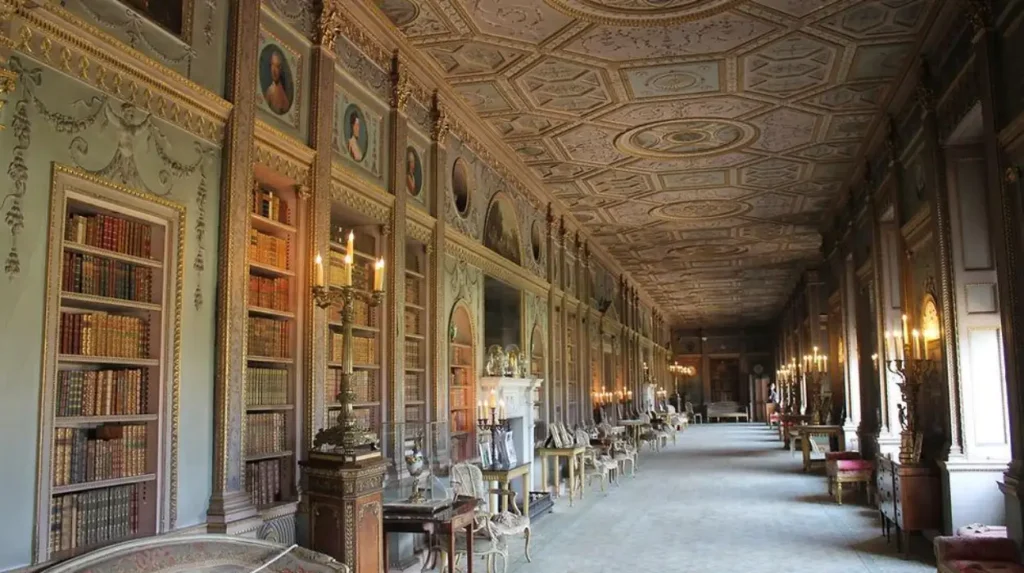
Gunnersbury Park represents West London’s transition from private estate to public landscape, with eighteenth-century gardens, nineteenth-century Rothschild ownership, two historic mansions and a 1920s public park preserving successive layers of social and architectural history.
Gunnersbury Park is a registered Grade II* historic park and garden. Historic England records the site as approximately 75 hectares and places its historic development within the wider estate of Gunnersbury.
The medieval estate was associated with the Bishops of London and formed part of the Manor of Fulham. Sir John Maynard acquired Gunnersbury by 1656.
Henry Furness purchased the estate in 1739. The eighteenth-century landscape included formal gardens, canals and avenues. William Kent is associated with alterations to the estate during this period.
Later ownership by the Rothschild family produced substantial changes. The Large Mansion was built by about 1802 for Alexander Copland and was subsequently remodelled by Sydney Smirke after Nathan Mayer Rothschild acquired it around 1835.
The estate eventually changed from private aristocratic ownership to public use. In 1925, 75 hectares containing the two mansions and garden buildings were purchased for public use by the boroughs of Acton and Ealing, with financial support from Middlesex County Council.
The park officially opened to the public on 21 May 1926.
Gunnersbury therefore demonstrates an important twentieth-century heritage process. Historic estates that were once inaccessible private landscapes became public parks as metropolitan London expanded.
The Large Mansion has housed Gunnersbury Park Museum since 1929. The museum’s social-history collections add another layer to the site’s heritage significance.
The park remains particularly important because its historic landscape survives within a densely developed part of West London.
Why is Pitzhanger Manor important for architectural heritage in Ealing?
Pitzhanger Manor is important because Sir John Soane rebuilt much of the house between 1800 and 1803, creating an important surviving example of his domestic architecture while the surrounding Walpole Park preserves the site’s earlier landscape history.
Pitzhanger Manor stands in Ealing beside Walpole Park. The present building reflects the work of Sir John Soane, one of Britain’s most influential architects of the late Georgian period.
The site had an earlier manor house. Historic England records a substantial building by the mid-seventeenth century. In 1768, George Dance the Younger prepared designs for Thomas Gurnell, leading to alterations and additions.
Soane acquired Pitzhanger Manor in 1800. He demolished most of Dance’s building while retaining the southern extension. He then designed a new main block and worked with landscape designer John Haverfield on the grounds.
The resulting building was used by Soane to display his art collection and entertain guests. The house later passed through several owners before entering public ownership.
Ealing District Council acquired the estate around 1900. The building opened as a public library in 1902. The property later became a museum and developed into the Pitzhanger Manor House and Gallery.
Walpole Park is itself a Grade II registered park and garden. Its landscape records the development of the Pitzhanger estate and later public use.
The entrance archway and gates designed by Soane are separately Grade I listed. The structure dates from 1802 and uses brick, flint and classical architectural details.
Pitzhanger therefore provides an important connection between architectural design, private estate history and the development of public cultural institutions in Ealing.
How are West London heritage sites protected and preserved?
West London heritage sites are protected through national listing, registered park and garden designations, conservation areas and planning controls, with Historic England records providing statutory information about architectural and historic significance.
Heritage protection in England operates through several mechanisms.
Listed buildings are entered on the National Heritage List for England. Historic England maintains this national register and records the architectural and historic reasons for designation.
Listed buildings are graded I, II* or II. Grade I represents exceptional interest. Grade II* identifies particularly important buildings of more than special interest. Grade II covers buildings of special architectural or historic interest.
Chiswick House and Syon House are Grade I listed. Boston Manor House is also Grade I. Gunnersbury Park Museum and the principal mansion at Gunnersbury have Grade II* designations.
Historic parks and gardens have a separate registration system. Osterley Park, Gunnersbury Park and Chiswick House’s historic landscape are examples of registered parks and gardens.
Conservation areas provide another layer of protection. They focus on areas with special architectural or historic interest rather than individual buildings alone. Ealing Town Centre, for example, is designated as a conservation area.
Planning legislation also influences alterations to listed buildings and development within protected historic areas. Listed-building protection operates under the Planning (Listed Buildings and Conservation Areas) Act 1990.
Preservation therefore depends on more than maintaining individual façades. Historic landscapes, garden layouts, walls, gates, conservatories, service buildings and archaeological evidence can all contribute to a site’s significance.
Explore More Area Guide
Cemeteries and Burial Grounds in West London
Historic Churches in West London: St Mary, St Nicholas & More
Which West London heritage sites are most useful for understanding the area’s wider history?
The strongest heritage overview comes from visiting sites with different historical functions, including royal residences, country houses, designed landscapes, botanical institutions, early modern buildings and public parks across Chiswick, Kew, Brentford, Ealing, Osterley and Gunnersbury.
A heritage-focused visit to West London benefits from understanding how the sites relate to one another.
Chiswick demonstrates eighteenth-century architectural patronage and landscape design. Its association with Lord Burlington and William Kent places the site within the history of Palladian architecture and the English landscape movement.
Kew demonstrates the transition from royal pleasure grounds to a national botanical institution. Its history also shows how nineteenth-century science, horticulture, imperial plant collecting and public access influenced the development of a major London landscape.
Syon illustrates the survival of religious foundations and their transformation into aristocratic estates. Its architecture records changes from the fifteenth century through the Tudor and Georgian periods.
Osterley illustrates the transformation of an earlier Tudor estate into a major Georgian country house and landscape.
Gunnersbury demonstrates the twentieth-century conversion of a private estate into a public park. Its history connects aristocratic ownership with municipal recreation and museum development.
Boston Manor provides an earlier architectural reference point, preserving a substantial seventeenth-century house within an urban environment.
Pitzhanger demonstrates the architectural importance of Ealing and the influence of Sir John Soane. Its conversion into a public cultural institution shows how historic buildings can acquire new functions while retaining architectural significance.
These sites collectively explain why West London is more than a collection of individual historic buildings. Its heritage is a connected landscape shaped by estates, rivers, roads, railways, royal residences, scientific institutions and suburban growth.
How can West London heritage sites remain relevant for future generations?
West London heritage sites remain relevant because their historic buildings and landscapes provide protected evidence of architectural design, royal history, science, social change, urban development and public culture while continuing to serve contemporary educational, cultural and recreational purposes.
The future relevance of West London’s heritage depends on maintaining both physical structures and historical meaning.
Historic buildings provide evidence that cannot be recreated once original fabric is lost. Chiswick House, Syon House and Boston Manor House retain architectural elements from different periods, allowing visitors to examine changes in construction, decoration and design.
Historic landscapes provide a second type of evidence. Chiswick, Osterley and Gunnersbury retain relationships between buildings, avenues, water features, gardens and parkland. These relationships form part of the significance of the sites.
Kew demonstrates how heritage can support a modern scientific mission. The gardens combine historic landscape conservation with plant and fungal research, biodiversity conservation and public education. The 132-hectare site continues to operate as both a heritage destination and scientific institution.
Public ownership also plays a significant role. Gunnersbury Park became publicly accessible in 1926, while Pitzhanger and Walpole Park developed into public cultural spaces.
The preservation of West London’s heritage therefore contributes to architectural conservation, historical research, education, tourism and local identity.
For visitors, the principal value lies in the concentration of different historical periods within a relatively compact part of London. A single regional heritage programme can connect medieval estates, Tudor buildings, Georgian architecture, Victorian science and twentieth-century public parks.
West London’s heritage remains an active part of the modern city because these places continue to preserve physical evidence while supporting public access, research, education and cultural activity.
What are the main heritage sites in West London?
The main heritage sites include Chiswick House and Gardens, Royal Botanic Gardens Kew, Kew Palace, Syon House, Osterley Park, Gunnersbury Park, Boston Manor House and Pitzhanger Manor.