West London waterside walks offer access to the River Thames, the Grand Union Canal, historic locks, riverside parks and urban wildlife habitats. These walking routes connect neighbourhoods including uk/local/hammersmith-and-fulham/hammersmith/">Hammersmith, hounslow/chiswick/">Chiswick, Brentford, Ealing, Fulham, Richmond and Little Venice. They provide opportunities for everyday exercise, family outings, heritage exploration, birdwatching and car-free journeys between local destinations.
- What are the best waterside walks in West London?
- Thames Path through Richmond and Chiswick
- Hammersmith and Barnes riverside
- Grand Union Canal around Brentford
- Paddington Basin and Little Venice
- Which riverside paths follow the River Thames in West London?
- Where can walkers explore West London’s canals?
- Grand Union Canal towpath
- Hanwell’s historic canal infrastructure
- Little Venice and the Paddington connection
- How do West London’s waterside walks connect with parks and nature reserves?
- What historical features can walkers see along West London’s waterways?
- How the Grand Union Canal shaped West London
- What makes Hanwell’s locks historically significant?
- Why are historic Thames-side buildings important?
- What wildlife can walkers see along West London’s waterside routes?
- Birds along the Thames and canals
- Aquatic plants and waterside vegetation
- How to practise responsible wildlife watching
- When is the best time to enjoy West London waterside walks?
- Spring walking conditions
- Summer walks and longer daylight
- Autumn and winter considerations
- Why tidal information matters
- How can families and beginners plan a West London waterside walk?
- How can visitors reach West London waterside walks by public transport?
- Reaching Little Venice and Paddington Basin
- Reaching Brentford Lock
- Reaching Hanwell Lock Flight
- Planning a one-way waterside journey
- What safety precautions should walkers follow beside rivers and canals?
- How do West London’s waterside walks benefit local communities?
- Supporting everyday physical activity
- Connecting people with local history
- Encouraging environmental awareness
- Which West London waterside walk should visitors choose?
- What is the future of waterside walking in West London?
The main waterside walking environments in West London are the Thames riverside paths, canal towpaths, dockside promenades and connected green spaces. Each environment has different access conditions, historical features and wildlife. The River Thames provides tidal riverside scenery across much of West London, while the Grand Union Canal follows a managed waterway with locks, bridges and industrial heritage.
What are the best waterside walks in West London?
The best waterside walks in West London include the Thames Path through Richmond and Chiswick, the riverside route between Hammersmith and Barnes, the Grand Union Canal towpath around Brentford, and the Paddington Canal Basin connection towards Little Venice. Each route combines accessible urban walking with distinct waterside scenery and local landmarks.
Thames Path through Richmond and Chiswick
The Thames Path is a long-distance walking route that follows the River Thames through London and beyond. Its West London sections pass residential districts, historic buildings, riverside pubs, parks and open stretches of riverbank.
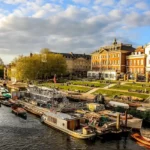
Richmond offers a combination of riverside promenades, historic architecture and views towards the opposite bank. Further east, Chiswick provides access to quieter residential riverside stretches, including sections near Chiswick Mall and Strand-on-the-Green. Some sections become narrow at high tide, so walkers need to check local conditions before setting out.
Hammersmith and Barnes riverside
The River Thames between Hammersmith and Barnes offers a distinctive combination of urban landmarks and residential riverside paths. Hammersmith Bridge is a prominent historic crossing, while the riverside around Barnes includes open views, historic properties and access to local green spaces.
Walkers can plan a shorter out-and-back trip or connect available footpaths with nearby streets. Route continuity depends on the selected bank and local access arrangements, particularly around bridges and private riverside properties.
Grand Union Canal around Brentford
The Grand Union Canal is a major inland waterway linking London with the English canal network. Its Brentford sections connect canal infrastructure, moored boats, industrial heritage and pedestrian towpaths.
Brentford is particularly useful for exploring the relationship between canal transport and the River Thames. The canal meets the Thames at Brentford, creating a natural starting point for a waterside walk that explores both waterways.
Paddington Basin and Little Venice
Paddington Basin is a modern waterside development connected to the Grand Union Canal. Little Venice, near the junction of the Regent’s Canal and Grand Union Canal, is known for its canal basin, narrowboats and waterside paths.
These locations suit shorter urban walks and public-transport-based visits. They offer a different experience from the longer and greener stretches around Richmond or the outer sections of the canal network.
Which riverside paths follow the River Thames in West London?
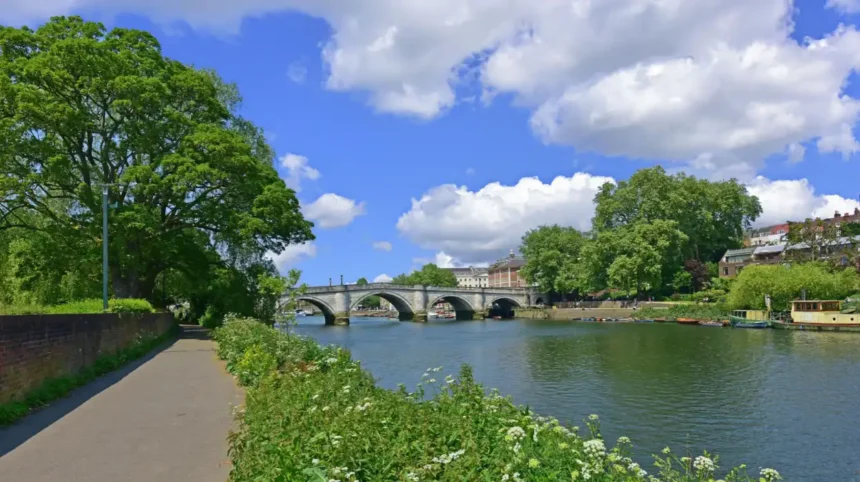
The River Thames provides several West London walking sections, including routes around Richmond, Chiswick, Hammersmith, Barnes and Fulham. The Thames Path links many of these locations, although local diversions, tidal conditions and private access boundaries affect the precise route available.
Richmond riverside walk
Richmond’s riverside is one of West London’s established walking destinations. The area features a pedestrian-friendly riverfront, historic buildings, open views and connections to Richmond Green and nearby streets.
The route is suitable for visitors who want a short walk with cafés, restaurants and transport connections nearby. Walkers seeking a longer outing can connect the riverside with local parks or continue along available sections of the Thames Path.
Chiswick and Strand-on-the-Green
Strand-on-the-Green is a historic riverside area in Chiswick, characterised by traditional buildings and views across the Thames. The waterfront provides opportunities to observe river traffic, changing tides and the architectural character of the area.
The nearby Chiswick Mall section offers another example of West London’s historic relationship with the river. Walkers should remain aware of narrow pavements, residential access points and high-water conditions.
Fulham and Hammersmith
Fulham and Hammersmith contain several riverside sections near residential streets, bridges and local parks. Hammersmith’s riverfront is associated with Hammersmith Bridge, while Fulham’s waterfront connects walking routes with green spaces and local leisure destinations.
Not every riverside section forms one uninterrupted public promenade. Checking a current walking map before departure helps identify public access points and avoid assuming that private riverfront land is open to pedestrians.
Where can walkers explore West London’s canals?
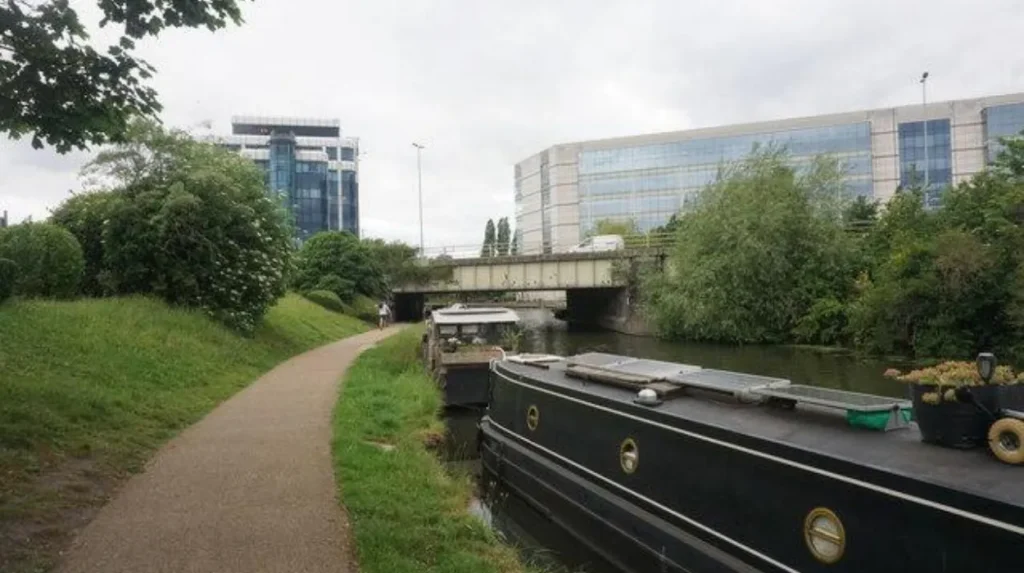
West London’s principal canal-walking areas include the Grand Union Canal near Little Venice, Kensal Green, Ealing and Brentford. The canal towpaths follow a managed inland waterway, passing locks, bridges, moored boats and residential neighbourhoods along sections of the route.
Grand Union Canal towpath
A towpath is a path beside a canal that historically allowed horses to pull boats using ropes. Modern towpaths serve walkers, cyclists and waterway users, subject to local access rules and restrictions.
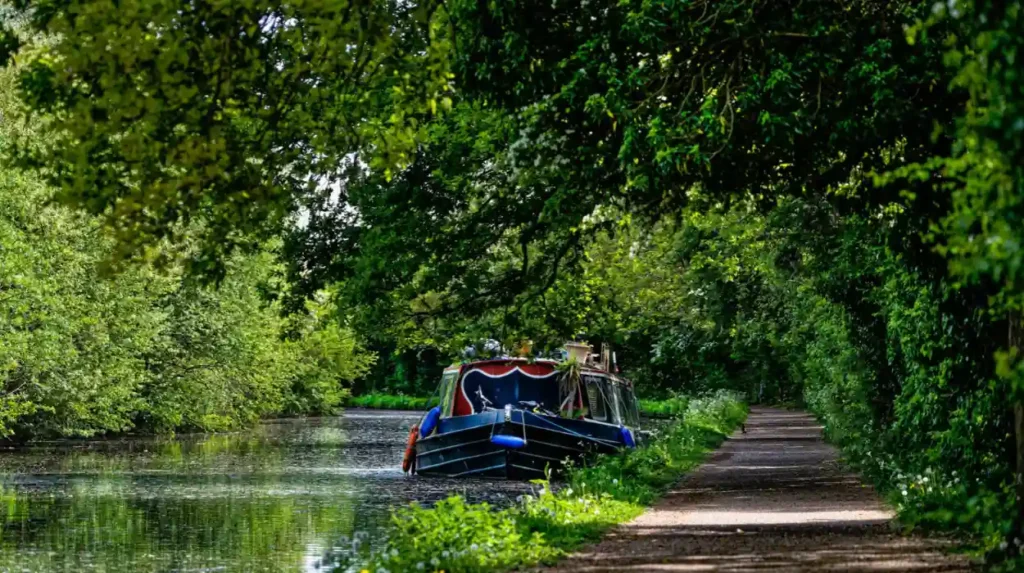
The Grand Union Canal passes through several West London neighbourhoods. Its towpaths provide a linear route through built-up districts, with stretches of vegetation, bridges, lock chambers and moored boats.
The character of the walk changes along the route. Central sections have more urban infrastructure, while outer sections provide longer stretches of greenery and quieter canal-side scenery.
Hanwell’s historic canal infrastructure
Hanwell is associated with a historic section of the Grand Union Canal containing a flight of locks. Locks are water-control structures that raise or lower boats between canal sections at different elevations.
The Hanwell Flight forms part of the canal’s engineering heritage. Walkers can observe how lock gates and chambers manage changes in water level while boats move through the waterway.
The nearby landscape includes green corridors and connections to local parks. These features make Hanwell useful for combining canal walking with an exploration of West London’s historic transport infrastructure.
Little Venice and the Paddington connection
Little Venice is a canal basin in West London near Paddington. It is known for narrowboats, waterside buildings and the junction of canal routes.
The surrounding paths offer shorter walking options than the longer Grand Union Canal corridor. Visitors can explore the basin before following available canal-side paths towards Paddington or other connected sections.
Towpath access, cycling rules and temporary closures vary by location. Walkers should follow displayed signs and give way where paths are narrow or shared.
How do West London’s waterside walks connect with parks and nature reserves?
West London’s waterside paths connect with parks, gardens and wetland habitats that support recreation and wildlife observation. Examples include Syon Park near Brentford, the green spaces around Hanwell, Richmond’s riverside landscape and London Wetland Centre near Barnes. These connections allow walkers to combine waterway exploration with time in nature.
Syon Park and Brentford’s waterways
Syon Park is a historic estate in Brentford, associated with Syon House and landscaped grounds. Its location near the Thames and Grand Union Canal makes the surrounding area useful for combining waterside walking with heritage visits.
The Canal & River Trust identifies a short towpath walk from Brentford Gauging Lock to Thames Lock and another walking connection towards Syon House and Park. These links demonstrate how canal routes connect with established green spaces and historic destinations.
Visitors should distinguish between public canal towpaths and estate grounds with their own opening arrangements. Access to the park and house depends on visitor information and any applicable admission conditions.
Hanwell’s green corridor
Hanwell combines canal infrastructure with a greener suburban landscape. The Grand Union Canal’s Hanwell Lock Flight is a particularly useful destination for walkers who want to see historic engineering within an urban setting.
The Canal & River Trust identifies seven locks along this flight and describes the area as a place for walking. Its towpath provides access to the canal corridor, while nearby streets and green spaces create options for shorter or longer outings.
London Wetland Centre and Barnes
London Wetland Centre is a managed wetland nature reserve in Barnes. It provides opportunities to observe wetland habitats and birds in a purpose-designed conservation setting.
Although it is not simply an open stretch of the Thames Path, it complements nearby riverside walks. Visitors can combine a public riverside route with a separate visit to the reserve, checking admission arrangements and opening hours in advance.
Wetland habitats are important because they provide feeding, nesting and resting areas for wildlife. Observing these habitats also helps explain the ecological role of London’s waterways beyond their use for transport and recreation.
What historical features can walkers see along West London’s waterways?
West London’s waterways preserve evidence of several stages of transport and urban development, including canal construction, industrial trade, historic riverfront housing and lock engineering. Examples include Hanwell’s lock flight, Brentford’s canal junction and the historic riverside buildings at Strand-on-the-Green.
How the Grand Union Canal shaped West London
The Grand Union Canal developed as part of Britain’s inland waterway network, which transported goods before road haulage and modern rail logistics became dominant. Canals connected industrial centres, markets and ports through navigable routes.
The Grand Union Canal now extends approximately 137 miles between London and Birmingham. Its infrastructure includes locks, bridges and branches that support navigation and preserve evidence of historic transport engineering.
In West London, the canal’s relationship with the River Brent and River Thames helped connect inland transport with London’s wider trading network. Brentford’s locks and junctions remain visible reminders of this role.
What makes Hanwell’s locks historically significant?
Hanwell’s canal locks demonstrate how engineers managed differences in water level along a navigable route. A lock uses gates and a chamber to raise or lower a boat between adjoining sections of waterway.
The Canal & River Trust identifies the Hanwell Flight as a historic feature of the Grand Union Canal. The associated lock infrastructure and nearby historic boundary wall form part of a scheduled monument, reflecting the site’s recognised heritage significance.
Walkers can observe the chambers, gates, towpath and associated water-management features from the canal corridor. Visitors should keep clear of lock operating areas and follow signs around the water.
Why are historic Thames-side buildings important?
West London’s riverside settlements developed around water transport, trade, recreation and access to the river. Historic properties at Strand-on-the-Green and Chiswick Mall illustrate how residential architecture became integrated with the Thames waterfront.
These buildings provide a visible connection between local history and the river’s changing role. The Thames served commercial and transport functions, while later riverside development increasingly incorporated housing, leisure facilities and public walking routes.
Walking through these areas reveals how the waterfront evolved without losing all of its historic character.
What wildlife can walkers see along West London’s waterside routes?
West London’s rivers, canals and wetland habitats support wildlife adapted to freshwater, tidal and urban environments. Examples include swans, ducks, herons and other water-associated birds, alongside aquatic plants and waterside vegetation. Sightings vary with season, habitat quality, weather and disturbance.
Birds along the Thames and canals
Swans, ducks and herons are familiar sights along many London waterways. Their presence reflects the availability of water, feeding opportunities and places to rest.
The Thames offers a tidal river environment, while canals have comparatively managed water levels. These differences affect vegetation, water movement and the types of habitats found along the banks.
Walkers should observe birds from a suitable distance, avoid feeding wildlife unsuitable food and keep dogs under control where local signs require it.
Aquatic plants and waterside vegetation
Canal banks and riverside margins support vegetation that provides cover and contributes to habitat structure. Plants along these edges also influence erosion, shelter and the ecological conditions experienced by small animals and insects.
Vegetation varies between managed urban stretches and greener sections. Towpath maintenance, bank engineering, shade and water quality all influence what grows along a particular route.
How to practise responsible wildlife watching
Responsible wildlife watching involves keeping to public paths, avoiding damage to bank vegetation and minimising disturbance near nesting or resting birds. Binoculars allow visitors to observe wildlife without approaching sensitive habitats.
Spring and summer often provide opportunities to observe breeding behaviour and active vegetation. Autumn and winter also offer worthwhile sightings, including birds gathering around accessible water and more open views through deciduous vegetation.
Wildlife sightings are never guaranteed. Visitors should treat observations as part of the walking experience rather than approaching or disturbing animals to obtain photographs.
When is the best time to enjoy West London waterside walks?
Spring and autumn provide comfortable conditions for many West London waterside walks, while summer offers longer daylight and winter provides quieter periods on some routes. The best time depends on weather, daylight, tidal conditions, surface quality and any temporary access restrictions.
Spring walking conditions
Spring brings longer days and renewed plant growth along canal banks and river corridors. Walkers can observe seasonal vegetation and bird activity while enjoying moderate temperatures on many days.
Rainfall leaves some paths muddy or slippery, especially on less developed towpath sections. Appropriate footwear helps maintain grip on wet surfaces.
Summer walks and longer daylight
Summer provides extended daylight for longer outings along the Thames Path and Grand Union Canal. It also supports visits that combine walking with outdoor cafés, parks and other local attractions.
Busy sections near Little Venice, Richmond and popular riverside destinations attract more visitors during favourable weather. Early starts often provide a quieter experience, while shade is limited on some exposed stretches.
Autumn and winter considerations
Autumn offers changing foliage and cooler walking conditions. Fallen leaves create slippery surfaces on some paths, particularly near bridges, steps and damp canal banks.
Winter walks require more attention to daylight, rain, wind and surface conditions. Narrow towpaths can become muddy, and reduced daylight makes route planning especially important.
Why tidal information matters
The River Thames is tidal across much of West London. Water levels change during the tidal cycle, and the difference between high and low water can affect riverside access.
The Canal & River Trust notes that the tidal range at Brentford can reach approximately seven metres during spring tides. This is an important consideration when planning walks close to the tidal Thames and canal junction. Canal & River Trust
Walkers should check local signs, tide information and access notices before travelling. A riverside path that is accessible at one time is not automatically safe or accessible at another.
How can families and beginners plan a West London waterside walk?
Families and beginner walkers can choose short, clearly accessible routes around Little Venice, Brentford Lock or selected Thames-side promenades. A practical plan includes checking distance, toilets, transport, path surfaces and safe stopping points before departure.
Choose a suitable route length
A short out-and-back walk is often easier to manage than a one-way route requiring transport at the finish. Little Venice provides a compact waterside setting, while Brentford Lock offers a defined canal-side starting point.
Families with young children should select a distance based on walking ability, rest requirements and the availability of nearby facilities. Canal edges and riverbanks require constant supervision because not every section has protective barriers.
Check accessibility before leaving
Not every waterside path has the same surface or accessibility standard. Some sections are paved and relatively level, while others have uneven ground, narrow passages, steps or limited passing space.
People using wheelchairs, mobility aids or pushchairs should check the precise route rather than assuming an entire canal or riverside corridor is accessible. Construction work and temporary closures can also affect access.
Plan refreshments and facilities
Little Venice has cafés and nearby public transport, while Brentford offers connections with local streets and businesses. Facilities differ between developed waterfronts and quieter stretches of the canal network.
Visitors should carry drinking water, dress for changing weather and identify suitable stopping points. Dog owners should also check local rules and plan for waste disposal.
How can visitors reach West London waterside walks by public transport?
Public transport provides access to many West London waterside destinations, including Paddington, Little Venice, Richmond, Brentford and Hanwell. Visitors can use nearby railway or Underground stations, then walk to the river or canal using local streets and signed pedestrian routes.
Reaching Little Venice and Paddington Basin
Little Venice is accessible from Warwick Avenue Underground station and Paddington station. Visit London’s area guide also identifies Paddington as a transport hub with Underground, rail and Elizabeth line connections.
Visitors can begin with a short walk around the canal basin before extending their trip along available towpaths. This approach works well for people who prefer an urban waterside outing without committing to a long-distance route.
Reaching Brentford Lock
Brentford railway station is approximately an 11-minute walk from Brentford Gauging Lock, according to the Canal & River Trust. Local streets provide the connection between the station and canal-side walking areas.
Brentford is a useful starting point for visitors interested in the canal’s connection with the River Thames. Check the return journey before departure if the walk finishes in a different neighbourhood.
Reaching Hanwell Lock Flight
Hanwell railway station is approximately a 15-minute walk from the Green Lane area identified by the Canal & River Trust for the lock flight. Bus services also serve the wider area. Canal & River Trust
This destination suits walkers interested in historic canal engineering and greener surroundings. Visitors should check their chosen access point and current travel information, particularly when combining the walk with another destination.
Planning a one-way waterside journey
One-way walks provide a practical way to explore more of the waterway without retracing every step. However, the route must connect to a suitable station, bus stop or other transport option.
Before departure, check the distance between the finish and the nearest transport stop. Also confirm the final service time when walking in winter or visiting areas with less frequent public transport.
What safety precautions should walkers follow beside rivers and canals?
Safe waterside walking requires attention to open water, slippery surfaces, tidal changes, narrow towpaths and shared-use routes. Walkers should remain on public paths, supervise children, follow signs and check current access notices before starting a journey beside the Thames or a canal.
Understand river and canal hazards
Open water presents risks even when the surface appears calm. River currents, cold water, steep banks and submerged obstacles make entering the water dangerous.
The tidal Thames also experiences changing water levels and currents. Walkers should avoid stepping onto exposed mud or attempting to cross waterlogged sections without a clearly safe public route.
Share towpaths considerately
Towpaths are shared spaces in many locations. Walkers, cyclists, dog owners, anglers and boat users need to take account of one another, particularly where the path is narrow.
Stay alert when cyclists approach, avoid blocking the full path and keep dogs close where required. Near locks and moorings, allow boat users room to carry out routine activities.
Check closures and diversions
Canal towpaths and riverside paths sometimes close for maintenance, engineering work, bank repairs or other safety reasons. A familiar route is not necessarily fully open on every visit.
The Canal & River Trust publishes information about its waterways and visitor locations. Its official pages provide local details for destinations such as Brentford, Hanwell Lock Flight and Little Venice.
Check current notices shortly before departure and follow any diversion signs. Do not bypass barriers or enter restricted working areas.
How do West London’s waterside walks benefit local communities?
West London’s waterside walks provide spaces for everyday exercise, access to nature, local recreation and heritage appreciation. Examples include walking beside the Thames in Richmond, exploring the Grand Union Canal in Hanwell and visiting the canal basin at Little Venice. These routes also connect neighbourhoods with public transport and nearby businesses.
Supporting everyday physical activity
Walking requires little specialist equipment and can be incorporated into regular journeys or leisure time. Waterside paths provide alternatives to road-based routes, particularly where continuous pedestrian access is available.
A short canal walk can form part of a daily routine, while longer Thames Path sections support extended recreational outings. Actual accessibility depends on route surfaces, crossings and local conditions.
Connecting people with local history
Waterways help communities understand how transport, trade and settlement shaped West London. Locks, bridges, historic riverfront buildings and former industrial sites provide visible evidence of these changes.
Interpreting these features during a walk makes local history accessible without requiring a visit to a museum. Official canal and heritage information helps distinguish documented historical facts from assumptions about individual buildings or structures.
Encouraging environmental awareness
Walking beside rivers and canals gives residents opportunities to observe water quality, vegetation, wildlife and changes in the built environment. These observations support a practical understanding of urban nature.
Responsible access remains important. Litter, disturbance to wildlife and damage to waterside vegetation reduce the quality of these shared environments. Following local guidance helps maintain routes for future visitors.
Explore More Area Guide
Places to Watch Boats in West London: Best Thames and Canal Spots
Thames Views in West London: Best Riverside Viewpoints
Which West London waterside walk should visitors choose?
Visitors should choose a West London waterside walk according to preferred scenery, walking distance, transport access and interest in wildlife or history. Little Venice suits short urban outings, Hanwell suits canal heritage, Brentford connects two waterways, and Richmond offers established Thames-side walking.
Little Venice
Explore the canal basin, watch narrowboats and follow accessible paths near Paddington. The area has cafés, nearby gardens and public transport connections.
Hanwell Lock Flight
Follow the towpath past historic locks and waterway infrastructure. This route is particularly relevant to visitors interested in London’s industrial and engineering history.
Brentford
Visit Brentford Lock and follow the canal towards Thames Lock. The area shows how the Grand Union Canal connects with the tidal River Thames.
Richmond
Explore the riverfront and connect the walk with nearby streets and green spaces. Check the selected route for tidal access and any local restrictions.
These destinations represent different parts of West London’s waterside network rather than one continuous walking circuit. Visitors should choose the starting point that best matches their available time and confirm access before travelling.
What is the future of waterside walking in West London?
Waterside walking will remain relevant to West London’s urban recreation, active travel and access to green space. Existing routes along the Thames and Grand Union Canal connect residential areas, public transport and heritage destinations, while ongoing maintenance determines how safely and conveniently people use them.
Maintaining routes as urban areas change
West London continues to contain a mixture of historic waterfronts, residential districts, commercial developments and canal-side regeneration. Maintaining public access along waterways is important as surrounding neighbourhoods change.
Path repairs, bridge works, vegetation management and waterway maintenance influence the quality of the walking experience. Checking official access information remains essential for regular users and visitors.
Supporting connected green infrastructure
Green infrastructure refers to connected natural and semi-natural spaces that support recreation, biodiversity and environmental functions within urban areas. In West London, waterways link green spaces and create corridors through densely developed neighbourhoods.
The Thames Path and Grand Union Canal provide examples of how linear routes connect otherwise separate destinations. Their value depends on safe access, responsible management and the continued availability of public walking sections.
Encouraging responsible long-term use
Long-term access requires cooperation between visitors, local authorities, waterway managers, landowners and conservation organisations. Respecting signs, avoiding litter and minimising wildlife disturbance help protect the places people come to enjoy.
For walkers, the practical approach is straightforward: choose a suitable route, check current conditions, use public access paths and leave the waterside environment in good condition.
West London waterside walks bring together the River Thames, the Grand Union Canal, historic locks, riverside architecture and urban wildlife. The Thames Path provides access to established riverside destinations around Richmond, Chiswick, Hammersmith and Barnes, while the canal towpath links Little Venice, Hanwell and Brentford.
Each destination offers a different experience, from short urban strolls to longer walks through historic waterway landscapes. Public transport makes many starting points accessible, although route continuity, surface conditions and facilities vary.
For a successful visit, check local access information, consider the tide on Thames-side routes, wear suitable footwear and remain aware of open water. These simple steps help walkers explore West London’s waterways safely and appreciate their continuing role in the area’s history, recreation and environment.
What are the best waterside walks in West London?
The best waterside walks in West London include Richmond Riverside, the Thames Path near Chiswick and Hammersmith, the Grand Union Canal in Brentford, Hanwell Lock Flight and Little Venice.