

West London offers a range of waterfront photography locations along the River Thames, Grand Union Canal, historic docks, riverside parks and urban waterways. These locations provide opportunities for landscape photography, architectural photography, wildlife images, sunset compositions and travel photography throughout the year.
- What Makes West London a Good Destination for Waterfront Photography?
- Which Waterfront Photography Spots in Richmond Offer the Best Views?
- Where Can Photographers Capture Canal Scenes in Little Venice?
- Which Waterfront Photography Locations in Kew and Brentford Are Worth Visiting?
- Where Are the Best Riverside Photography Spots in Hammersmith and Chiswick?
- Which Waterfront Locations Are Best for Nature and Wildlife Photography?
- What Is the Best Time of Day to Photograph West London’s Waterfront?
- What Photography Equipment Works Best for Waterfront Scenes?
- Wide-Angle Lenses for Landscapes
- Telephoto Lenses for Wildlife and Details
- Tripods, Filters and Smartphone Settings
- How Can Photographers Compose Better Waterfront Images?
- Use Reflections and Leading Lines
- Balance Foreground, Middle Ground and Background
- Control Exposure and Horizon Placement
- How Can Visitors Plan a Waterfront Photography Route in West London?
- Route One: Richmond and Petersham
- Route Two: Kew and Brentford
- Route Three: Little Venice and Paddington
- Route Four: Hammersmith and Chiswick
- What Should Photographers Know About Access, Safety and Permissions?
- Check Access Before Visiting
- Respect Wildlife and Other Visitors
- Understand Commercial Photography Requirements
- Why Does Waterfront Photography Matter for West London’s Local Identity?
- Which Waterfront Photography Spots Should Visitors Prioritise in West London?
The best waterfront photography spots in West uk/london-news/">London combine accessible walking routes with distinctive scenery. Richmond, Kew, hounslow/chiswick/">Chiswick, fulham/hammersmith/">Hammersmith, Brentford and Little Venice each offer different subjects, from historic bridges and riverside buildings to canal boats, reflections, gardens and industrial heritage.
What Makes West London a Good Destination for Waterfront Photography?
West London provides varied waterfront photography opportunities through the River Thames, Grand Union Canal, historic bridges, landscaped riverbanks and residential waterfronts. These settings support landscape, architectural, wildlife and street photography, with accessible viewpoints across Richmond, Kew, Chiswick, Hammersmith, Brentford and Little Venice.
Waterfront photography is the practice of capturing landscapes, buildings, people, boats and natural features beside or across a body of water. In West London, the main subjects include the tidal River Thames, navigable canals, historic bridges, riverside gardens and redeveloped industrial waterfronts.
The River Thames forms a major geographical feature of West London. It connects residential neighbourhoods, historic estates, public parks and riverside commercial districts. The borough of Richmond upon Thames contains an extensive stretch of the river, linking areas around Kew, Richmond and Hampton Court. The official tourism website for Richmond highlights the area’s historic landscapes, river views and green spaces as important visitor attractions.
The Grand Union Canal provides a different photographic environment. Its narrower waterway, towpaths, moored narrowboats and historic infrastructure create opportunities for close-range compositions. Little Venice, where the Grand Union Canal meets the Regent’s Canal, demonstrates how waterways, architecture and everyday boating activity combine within a compact urban setting.
These geographical differences matter when selecting a location. Open riverbanks suit wide landscape images, while canals offer tighter compositions and repeated patterns. Historic bridges establish a sense of place, and riverside vegetation introduces seasonal colour and wildlife.
Which Waterfront Photography Spots in Richmond Offer the Best Views?
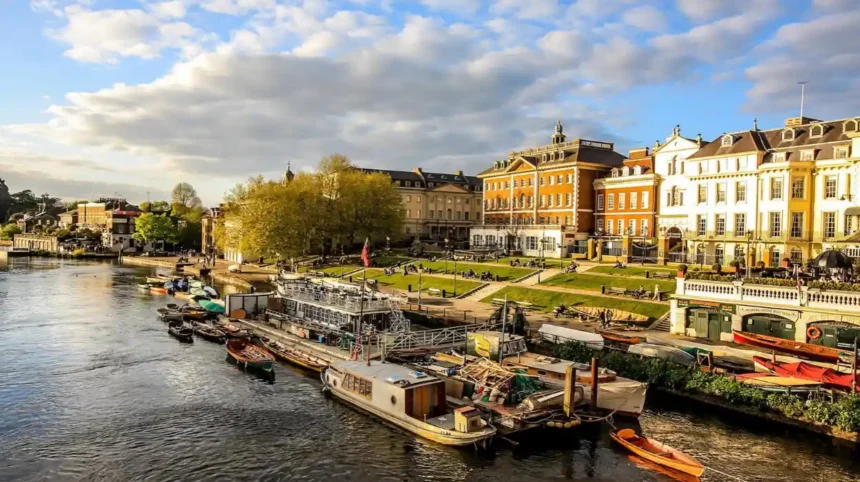
Richmond offers several established waterfront photography locations, including Richmond Riverside, Richmond Bridge, the Thames Path and Petersham Meadows. These places provide river reflections, historic architecture, passing boats and open landscapes, with different compositions available during morning light, late afternoon and sunset.
Richmond is one of the strongest starting points for waterfront photography in West London. The town combines a historic riverside centre with footpaths, bridges and green spaces. Its riverside locations support both wide-angle landscapes and detailed architectural photographs.
Richmond Bridge and Richmond Riverside
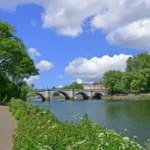
Richmond Bridge is a stone-arched road bridge completed in 1777. It is recognised as London’s oldest surviving Thames bridge, making it a useful subject for architectural and heritage photography. The bridge’s curved arches, stonework and river setting establish a clear focal point. London Borough of Richmond upon Thames+1
Photographers can frame the bridge from the riverside paths, capturing its structure against the water. A wider composition includes boats, riverbanks and nearby buildings. A tighter frame isolates the masonry and the repeated curves of the arches.
Richmond Riverside adds Georgian-style architecture, restaurants, boats and pedestrian activity to the scene. The riverside development was designed by architect Quinlan Terry, whose work gives the area a distinctive traditional architectural character. London Borough of Richmond upon Thames
For balanced compositions, position the river in the foreground and use the bridge or buildings as the main subject. Reflections become more visible when the water is relatively calm.
Petersham Meadows and the Thames Path
Petersham Meadows provides a more open landscape than Richmond’s built-up waterfront. The riverside pasture creates opportunities to combine grassland, river scenery and distant buildings in one frame. Seasonal vegetation changes the colour and texture of the foreground.
The nearby Thames Path connects riverside environments and provides a practical route for photographers exploring the area on foot. Landscape images benefit from including a recognisable foreground feature, such as a riverbank, meadow edge or tree.
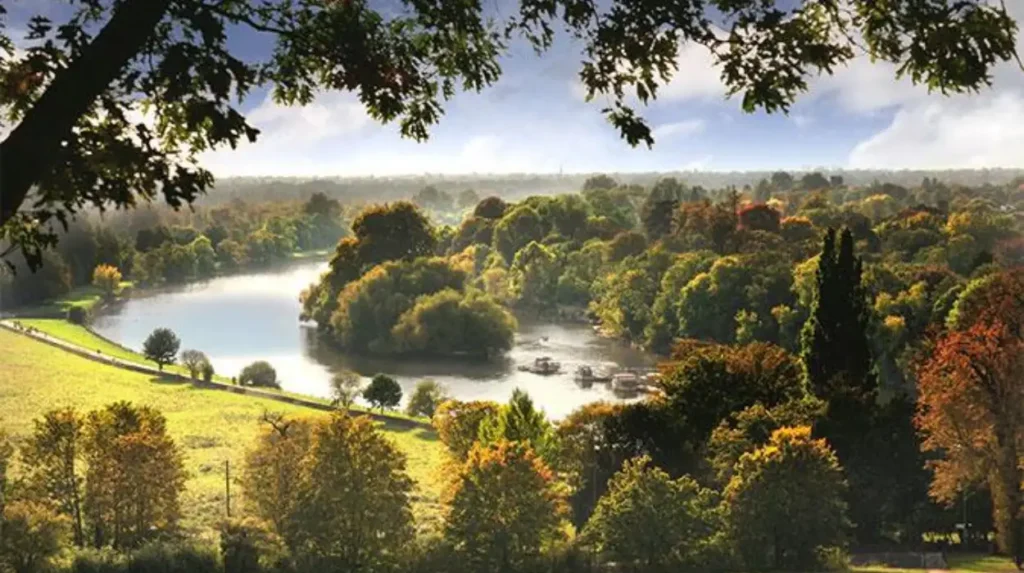
Richmond Hill is another important viewpoint in the wider area. Its protected panorama across Petersham Meadows and the Thames Valley offers an elevated perspective rather than a direct waterside position. It works particularly well for photographs that show the relationship between the river and the surrounding landscape.
Where Can Photographers Capture Canal Scenes in Little Venice?
Little Venice is a canal-side neighbourhood near Paddington where the Grand Union Canal meets the Regent’s Canal. Its narrowboats, waterside cafés, Victorian-era buildings and triangular basin provide compact compositions for travel photography, architectural details, reflections and everyday scenes beside London’s waterways.
Little Venice is among West London’s most recognisable canal photography locations. The Canal & River Trust describes the area as a waterside destination featuring narrowboats, day-trip boats, floating businesses and distinctive residential architecture. Its central basin provides several different viewing angles within a short walk.
Narrowboats and Reflections
Narrowboats are long, narrow vessels designed for Britain’s canals. At Little Venice, their painted hulls, cabin details and decorative features create colourful subjects against the water.
Photographers can use a boat as the foreground subject while including buildings or trees in the background. Alternatively, reflections create a composition built around repeated colours and shapes. Calm conditions improve the visibility of these reflections, while moving water produces more fragmented patterns.
Bridges, Mansions and Willow Tree Island
The basin’s pedestrian bridges provide elevated perspectives across the water. These viewpoints help photographers organise boats, canal edges and buildings within a single composition.
The surrounding mansions introduce architectural detail, including windows, façades and rooflines. Willow Tree Island provides a recognisable natural feature within the canal basin. Photographers can combine these elements to create images that communicate the area’s identity without relying on close-up boat photographs alone.
Rembrandt Gardens, beside the canal, offers a nearby public green space for observing the water and composing photographs from the bank. The towpath is open daily, according to the Canal & River Trust, and the area is accessible on foot from Warwick Avenue and Paddington transport links. Canal & River Trust+1
Little Venice is particularly useful for photographers who want several types of images without travelling between distant locations. A short visit can produce architectural details, canal landscapes, boating scenes and photographs of public space.
Which Waterfront Photography Locations in Kew and Brentford Are Worth Visiting?
Kew and Brentford offer a combination of Thames landscapes, historic river crossings, gardens and former industrial waterfronts. Kew provides river views near botanical gardens and Kew Bridge, while Brentford’s waterways offer opportunities to photograph canal infrastructure, moored boats and the relationship between urban development and water.
Kew and Brentford sit close to one another along the Thames corridor, making them useful locations for a photography route focused on water, architecture and urban history.
Kew Bridge and the River Thames
Kew Bridge connects Kew in the London Borough of Richmond upon Thames with Brentford. The surrounding river offers opportunities to photograph bridge infrastructure, river traffic and the changing relationship between the built environment and open water.
From suitable public riverbank viewpoints, photographers can frame the bridge against the Thames or use the bridge as a structural element within a wider landscape. Passing boats provide scale, while the river’s surface introduces reflections and changing light.
Kew also benefits from its proximity to the Royal Botanic Gardens, Kew, a UNESCO World Heritage Site. The gardens contain botanical collections, historic structures and landscaped grounds. They are a separate destination from the public riverside, and visitors should check admission and photography conditions before planning images inside the gardens. London Borough of Richmond upon Thames+1
Kew Pier provides another connection between the garden area and river travel. Thames River Boats operate services to Kew, although sailing times vary with weather and other operating conditions. A river trip offers a different perspective on the landscape, but photographers should check current schedules before planning around a departure.
Brentford Dock and the Local Waterfront
Brentford has a long association with waterways, transport and industry. Its position near the Thames and Grand Union Canal makes it relevant to photographers interested in working waterways and the evolution of urban waterfronts.
Brentford Dock provides a marina environment with moored boats, residential buildings and views across the water. The boats and built structures create a more contemporary subject than Richmond’s historic riverside architecture.
Photographers should distinguish between public paths and private marina areas. Access to a particular pontoon, residential courtyard or mooring is not guaranteed simply because it is visible from the waterside.
For a wider documentary approach, the Brentford area allows photographers to explore how waterways function alongside housing, transport and commercial development. This perspective expands a portfolio beyond scenic river views.
Where Are the Best Riverside Photography Spots in Hammersmith and Chiswick?
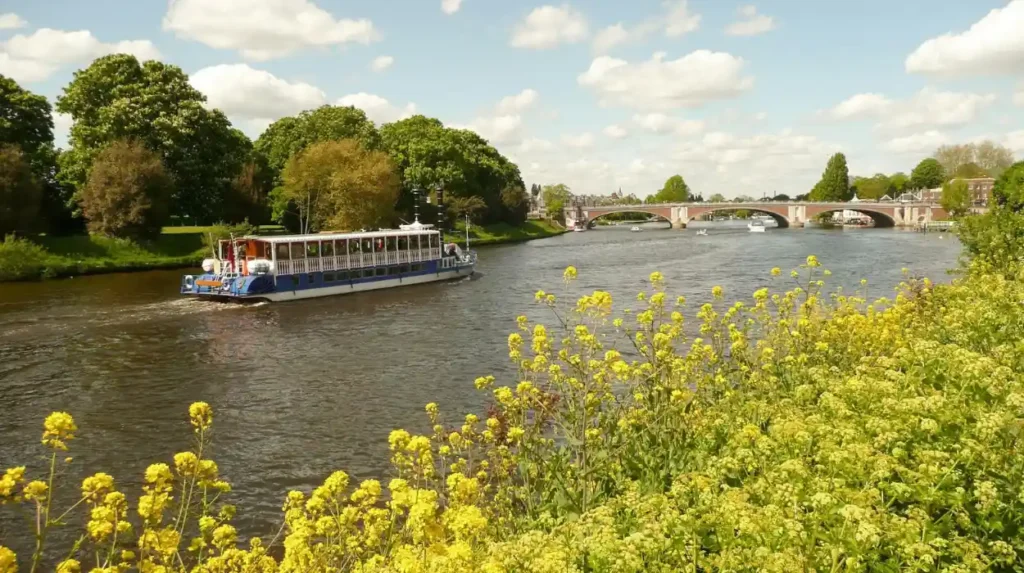
Hammersmith and Chiswick offer Thames-side photography locations with historic bridges, tree-lined paths, riverside buildings and views across the river. Hammersmith suits architectural and urban photography, while Chiswick provides quieter riverbank scenes, landscaped surroundings and compositions featuring boats, vegetation and historic landmarks.
The Hammersmith and Chiswick stretch of the Thames combines built-up riverfronts with residential streets and green spaces. The scenery changes along the river, giving photographers opportunities to move between bridges, buildings and natural features.
Hammersmith Bridge and the Riverside
Hammersmith Bridge is a distinctive suspension bridge crossing the Thames between Hammersmith and Barnes. Its painted metal structure, suspension elements and decorative details create strong architectural subjects.
Photographers can frame the bridge from public riverside paths, using the water as foreground space and the structure as the main focal point. Wider compositions include river traffic and the surrounding banks, while closer images emphasise the bridge’s engineering features.
The bridge’s operational status and access arrangements should be checked before visiting because restrictions can affect how people approach or cross it. Photographers should not assume that a bridge open to pedestrians is also open to vehicles.
Hammersmith’s riverside also provides opportunities for environmental portraits and documentary photography. People walking beside the river, boats moving along the water and buildings lining the bank introduce everyday activity into the scene.
Chiswick Mall and Strand-on-the-Green
Chiswick’s riverside neighbourhoods offer a different atmosphere from central Hammersmith. Chiswick Mall contains historic residential buildings close to the Thames, creating opportunities for architectural images that include the riverbank.
Strand-on-the-Green is known for its riverside houses, traditional pubs, boats and views across the water. The area is especially useful for photographs that combine historic buildings with reflections and passing river traffic.
Tides influence the appearance of the Thames in these locations. At lower water levels, exposed riverbank surfaces become more visible. At higher levels, the water sits closer to the edges of riverside structures. Tide conditions therefore affect both composition and safe access.
The strongest approach is to select a clear main subject before framing the image. A house, boat or bridge provides a focal point, while the river and surrounding architecture establish the location.
Which Waterfront Locations Are Best for Nature and Wildlife Photography?
West London’s riverside parks and waterways support wildlife photography featuring waterbirds, riverside vegetation, insects and changing seasonal habitats. Richmond’s riverbanks, Petersham Meadows, Kew’s surrounding landscape and quieter Thames paths provide different opportunities to photograph natural subjects without treating every waterfront as a built environment.
Waterfront wildlife photography focuses on animals and plants associated with rivers, canals, wetlands and adjoining green spaces. In West London, the Thames provides habitats and feeding areas for birds, while riverside vegetation supports insects and other wildlife.
Birds and River Habitats
Waterbirds are among the most accessible subjects for photographers along the Thames. Swans, ducks and other water-associated birds appear at various points along the river, although their presence changes with location and season.
A telephoto lens helps capture wildlife without approaching animals too closely. Photographers should avoid disturbing birds, entering restricted habitat areas or feeding wildlife to obtain a photograph.
Riverside habitats also provide opportunities to record interactions between wildlife and urban infrastructure. A bird beside a moored boat, for example, connects a natural subject with the built waterfront.
Meadows, Trees and Seasonal Vegetation
Petersham Meadows provides open grassland beside the Thames. Its vegetation and landscape features create opportunities for environmental photography, especially when the foreground contains grasses or seasonal plants.
Trees along the river introduce structure and texture. Their appearance changes throughout the year, from fresh spring growth to summer foliage and autumn colour. Winter photography reveals branches, river contours and architectural features that dense leaves obscure during warmer months.
The wider Richmond area also contains significant natural landscapes. Richmond Park, although not a direct waterfront location, supports wildlife photography and provides protected panoramic views of the surrounding landscape. The Royal Parks advises visitors photographing deer to use a long lens and remain at least 50 metres away.
For wildlife photography, patience and distance produce more responsible results than approaching animals for a closer frame.
What Is the Best Time of Day to Photograph West London’s Waterfront?
The best time for waterfront photography depends on the subject, weather, season and direction of light. Early morning often provides quieter paths, golden hour produces warmer light, overcast conditions reveal architectural detail, and blue hour supports cityscape photography when artificial lights reflect across the water.
Light determines how a waterfront photograph records colour, contrast, texture and reflections. A location that looks different at midday can produce an entirely different image at sunrise or sunset.
Early Morning Photography
Early morning is useful for photographing canals, riverside paths and historic bridges before pedestrian activity increases. The low angle of the sun can create soft shadows and highlight the texture of stonework, brick façades and vegetation.
Little Venice benefits from quieter conditions when boats and reflections are the primary subjects. Richmond’s riverside also offers opportunities to capture the bridge and surrounding buildings without large numbers of people in the foreground.
Mist sometimes forms over water under suitable weather conditions, particularly during cool, humid periods. It is a natural weather effect rather than a guaranteed feature, so photographers should treat it as an occasional opportunity.
Golden Hour and Sunset
Golden hour describes the period shortly after sunrise or before sunset when sunlight is relatively low and warm. It produces long shadows and softer contrast than overhead midday sunlight.
Richmond Riverside and Petersham Meadows are suitable locations for testing sunset compositions because they offer river views and open landscapes. Richmond Hill provides a separate elevated viewpoint across the Thames Valley. The actual direction of the sun and its relationship to the river changes throughout the year, so checking the sunset position helps identify the most suitable viewpoint.
Blue Hour and Overcast Conditions
Blue hour occurs around twilight when the sky takes on deeper blue tones. It suits photographs of illuminated buildings, bridge structures and urban waterfronts.
Overcast weather is useful for architectural details because clouds soften direct sunlight. This reduces harsh shadows on buildings and helps preserve detail in bright stonework.
Photographers should protect equipment from rain and avoid standing close to slippery river edges. A waterproof camera bag and a lens cloth help maintain image quality during changing weather.
What Photography Equipment Works Best for Waterfront Scenes?
Waterfront photography equipment depends on the distance to the subject, available light and intended composition. A versatile zoom lens, stable camera or smartphone, spare battery and lens cloth cover many situations, while a tripod, telephoto lens or wide-angle lens supports more specialised landscape, wildlife and architectural photography.
A professional camera is not essential for photographing West London’s waterways. Modern smartphones capture detailed images in suitable light, while interchangeable-lens cameras provide greater control over focal length, exposure and depth of field.
Wide-Angle Lenses for Landscapes
Wide-angle lenses capture more of the surrounding scene. They are useful at Richmond Riverside, Kew and open sections of the Thames where the composition includes water, buildings and sky.
A wide-angle lens also works at Little Venice, but photographers should avoid placing architectural subjects too close to the frame edges because perspective distortion becomes more noticeable.
Telephoto Lenses for Wildlife and Details
Telephoto lenses magnify distant subjects. They help photographers capture birds, architectural details and boats without entering restricted areas or approaching wildlife.
A moderate telephoto zoom is also useful when the riverbank is crowded and moving closer would disrupt other visitors.
Tripods, Filters and Smartphone Settings
A tripod stabilises the camera for long exposures, especially during twilight or when capturing smooth water. However, some busy public spaces restrict tripod placement, and narrow paths require particular care to avoid blocking pedestrians.
A polarising filter reduces certain reflections on non-metallic surfaces and helps manage glare. Its effect depends on the angle of the light, and removing reflections is not always desirable when reflections form part of the composition.
Smartphone users should clean the lens, tap to focus on the main subject and avoid excessive digital zoom. Keeping the horizon level improves the appearance of river landscapes.
How Can Photographers Compose Better Waterfront Images?
Strong waterfront compositions organise water, architecture, foreground details and background scenery around a clear subject. Photographers can improve results by using reflections, leading lines, natural framing, balanced horizons and deliberate focal points, then adjusting exposure to retain detail in both bright skies and darker riverside areas.
Composition determines how viewers understand a photograph. Waterfront scenes often contain large areas of water, so photographers need to decide whether the water itself is the subject or a supporting element.
Use Reflections and Leading Lines
Reflections create visual repetition between buildings, boats and their images on the water. Calm conditions produce clearer reflections, while ripples introduce movement.
Leading lines guide the viewer’s attention through the photograph. A canal edge, towpath or bridge railing can direct attention towards a boat or distant building.
At Little Venice, the canal’s edges naturally lead into the scene. At Richmond, the riverbank and bridge structure can help guide the viewer towards the main subject.
Balance Foreground, Middle Ground and Background
A foreground element gives a photograph depth. A moored boat, riverside plant or textured stone edge can establish the immediate setting.
The middle ground often contains the main subject, such as a bridge or boat. The background provides context through buildings, trees or the opposite riverbank.
These layers are especially useful in wider Thames landscapes. At narrow canals, a tighter composition often works better because nearby boats and architecture already fill much of the frame.
Control Exposure and Horizon Placement
Bright skies and darker riverside buildings can create a large difference in exposure. Photographers should check highlights to prevent the sky from losing detail and use exposure compensation when the camera renders a scene too brightly or too darkly.
The horizon usually looks balanced when it sits deliberately within the frame rather than cutting through an important subject. Placing the horizon higher gives more importance to the water, while placing it lower emphasises the sky or bridge structure.
Composition improves when every element supports the main subject instead of competing for attention.
How Can Visitors Plan a Waterfront Photography Route in West London?
A practical West London photography route connects nearby riverside and canal locations using public transport and walking paths. Photographers can explore Little Venice separately or plan a Thames-focused outing through Richmond, Kew, Brentford, Hammersmith and Chiswick, checking access, daylight and transport before travelling.
Planning a route reduces unnecessary travel and allows more time for photography. West London has several distinct waterfront areas, so grouping locations by geography helps visitors use their time efficiently.
Route One: Richmond and Petersham
Start at Richmond Riverside and photograph the bridge, boats and historic buildings. Continue along an accessible section of the Thames Path towards Petersham Meadows, then visit Richmond Hill for elevated landscape views.
This route combines architecture, open landscape and river scenery. The walking distance depends on the selected paths and viewpoints, so visitors should check a current map before setting out.
Route Two: Kew and Brentford
Begin around Kew Bridge and the Thames, then explore suitable public paths towards Brentford’s waterfront. Photographers interested in botanical landscapes can also visit Kew Gardens, subject to admission and opening arrangements.
This route suits visitors who want to document the relationship between the river, historic infrastructure and urban development. Check the locations of public entrances and footpaths before planning the order of stops.
Route Three: Little Venice and Paddington
Start at Little Venice, where the canal basin offers narrowboats, reflections and distinctive buildings. Continue along the towpath towards Paddington Basin for a different urban waterside environment.
The Canal & River Trust identifies Little Venice as a walkable canal destination accessible from Warwick Avenue and Paddington. The towpath is open daily, although visitors should follow any local notices or temporary access restrictions.
Route Four: Hammersmith and Chiswick
Explore the public riverside viewpoints around Hammersmith, then travel towards Chiswick for historic houses and quieter Thames-side scenes. Check the walking route and bridge access arrangements before setting off.
This route works well for architectural photography because it combines different bridge designs, residential buildings and riverside landscapes.
What Should Photographers Know About Access, Safety and Permissions?
West London’s riverside paths and canal towpaths provide many public photography opportunities, but access varies between parks, private marinas, gardens and transport structures. Photographers should follow posted rules, respect residents, check temporary closures, avoid unsafe river edges and obtain permission where commercial activity requires it.
The River Thames and canal network are working environments as well as recreational spaces. Water levels, slippery surfaces, moving vessels and changing weather create practical safety considerations.
Check Access Before Visiting
Public riverside paths are generally suitable for casual photography, but individual sections can close for maintenance, construction or other operational reasons. Private gardens, moorings and residential developments have separate access rules.
Kew Gardens is a ticketed attraction, unlike the ordinary public riverside viewpoints outside its grounds. Visitors planning photography within the gardens should review the current visitor conditions and any restrictions on professional equipment or commercial photography.
Respect Wildlife and Other Visitors
Keep a safe distance from river edges and do not enter restricted areas for a better viewpoint. Avoid blocking narrow towpaths with tripods or camera bags, and give way to pedestrians and canal users.
Wildlife photographers should avoid disturbing nesting birds and other animals. The Royal Parks’ guidance to remain at least 50 metres from deer in Richmond Park is a useful example of the importance of keeping a respectful distance from wildlife. The Royal Parks
Understand Commercial Photography Requirements
Casual photography and organised commercial shoots do not always follow the same rules. Paid productions, large crews, lighting equipment and activities that restrict public access can require permission.
Photographers should check the relevant landowner’s or managing authority’s current requirements before undertaking a commercial shoot. Drone operators must also comply with applicable aviation regulations, airspace restrictions and site-specific rules.
Explore More Area Guide
West London Waterside Walks: Thames Path & Grand Union Canal
Places to Watch Boats in West London: Best Thames and Canal Spots
Why Does Waterfront Photography Matter for West London’s Local Identity?
Waterfront photography documents West London’s relationship with its river, canals, architecture, wildlife and public spaces. Images of historic bridges, working boats, residential waterfronts and riverside habitats preserve visual records of local identity while supporting tourism, heritage interpretation, environmental awareness and digital publishing.
Waterfront photographs do more than illustrate a destination. They record how neighbourhoods change and how historic waterways continue to function within a modern city.
Richmond Bridge represents the area’s architectural heritage. Little Venice documents the canal network’s continuing recreational and residential role. Kew and Brentford reveal the relationship between the Thames, green spaces and urban infrastructure, while Hammersmith and Chiswick show how bridges and riverside buildings shape everyday landscapes.
These subjects are relevant to local tourism websites, travel publications, community projects and environmental reporting. A well-captioned photograph can identify a place, describe its setting and help readers understand the relationship between a landmark and its surroundings.
Photography also supports visual records of seasonal change. Images taken repeatedly from the same public viewpoint can document changes in vegetation, river levels, boat activity and the built environment. Consistent framing and dates make these photographs more useful for comparison over time.
For digital publishers, descriptive image filenames, accurate alternative text and relevant captions help explain the image to search engines and readers using assistive technology. A caption such as “Richmond Bridge over the River Thames in West London” communicates more useful information than a generic label such as “London river view.”
Which Waterfront Photography Spots Should Visitors Prioritise in West London?
The best waterfront photography location depends on the intended subject. Richmond suits historic bridges and broad river landscapes, Little Venice offers colourful canal scenes, Kew and Brentford combine nature with urban infrastructure, and Hammersmith and Chiswick provide distinctive Thames-side architecture.
West London’s waterfront locations serve different photography goals, so visitors should select destinations according to their preferred subjects rather than expecting one place to provide every type of image.
- For historic architecture: Richmond Bridge and Hammersmith Bridge provide distinctive bridge structures and riverside settings.
- For canal photography: Little Venice offers narrowboats, reflections, bridges and waterside buildings in a compact area.
- For open landscapes: Petersham Meadows and Richmond’s elevated viewpoints provide wider views across the Thames Valley.
- For urban waterfronts: Brentford offers marina scenes and a connection between waterways and modern development.
- For riverside residential architecture: Chiswick Mall and Strand-on-the-Green provide views of historic houses beside the Thames.
- For nature photography: Richmond’s riverside paths, Petersham Meadows and suitable green spaces around Kew offer opportunities to photograph vegetation, birds and seasonal changes.
The most effective photography plan combines a suitable location with the right light, a clear subject and respect for the surrounding environment. These principles make West London’s waterways useful destinations for beginners, experienced photographers, local residents and visitors documenting the capital’s riverside character.
What are the best waterfront photography spots in West London?
Richmond Riverside, Richmond Bridge, Little Venice, Kew Bridge, Brentford Dock, Hammersmith Bridge and Strand-on-the-Green are excellent waterfront photography locations. They offer river landscapes, canal boats, historic architecture, reflections and riverside wildlife.