


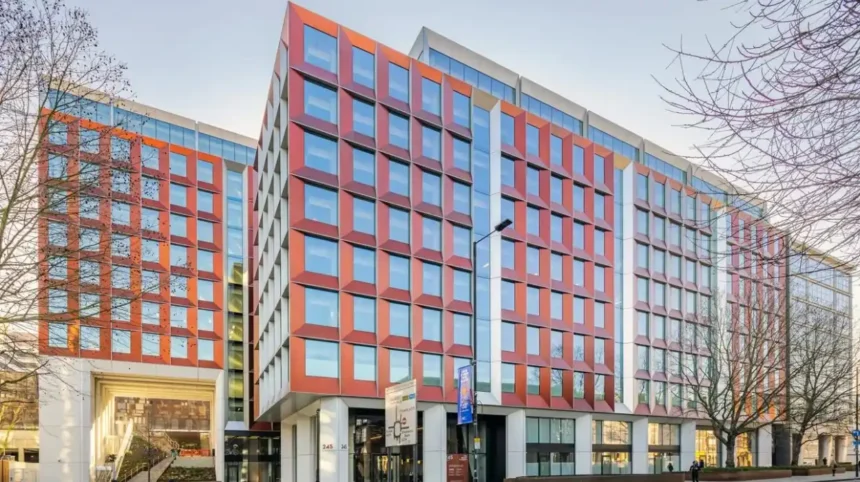
West London has developed into a major flexible-workspace market serving freelancers, startups, small businesses, hybrid employees and established companies. Coworking spaces combine desks, meeting rooms, internet, shared facilities and flexible memberships in locations such as uk/local/hammersmith-and-fulham/hammersmith/">Hammersmith, Shepherd’s Bush, Paddington, hounslow/chiswick/">Chiswick, Fulham, Hounslow and the wider Heathrow corridor.
- What are co-working spaces in West London?
- Why has coworking become important in West London?
- Which areas of West London have coworking spaces?
- What types of coworking spaces are available in West London?
- How much does coworking cost in West London?
- What facilities do West London coworking spaces provide?
- How do coworking memberships work in West London?
- Which businesses use coworking spaces in West London?
- How important is transport access when choosing coworking space?
- How does coworking support startups and small businesses in West London?
- What role does hybrid working play in West London coworking?
- How is the West London coworking market changing?
- What should businesses check before choosing a West London coworking space?
- What is the future relevance of coworking spaces in West London?
London had about 1,200 coworking spaces as of January 1, 2026, representing almost 30% of the UK’s coworking supply. West London itself recorded 374,000 sq ft of available flexible office space, 7,480 available workstations and a median desk rate of £423 per person per month in Q4 2025, according to Rubberdesk market data.
The West London market combines strong transport connections, established commercial centres, residential neighbourhoods and growing demand for flexible working. Hammersmith is particularly important because of its transport interchange, business concentration and proximity to areas including Shepherd’s Bush, Fulham and Kensington.
What are co-working spaces in West London?
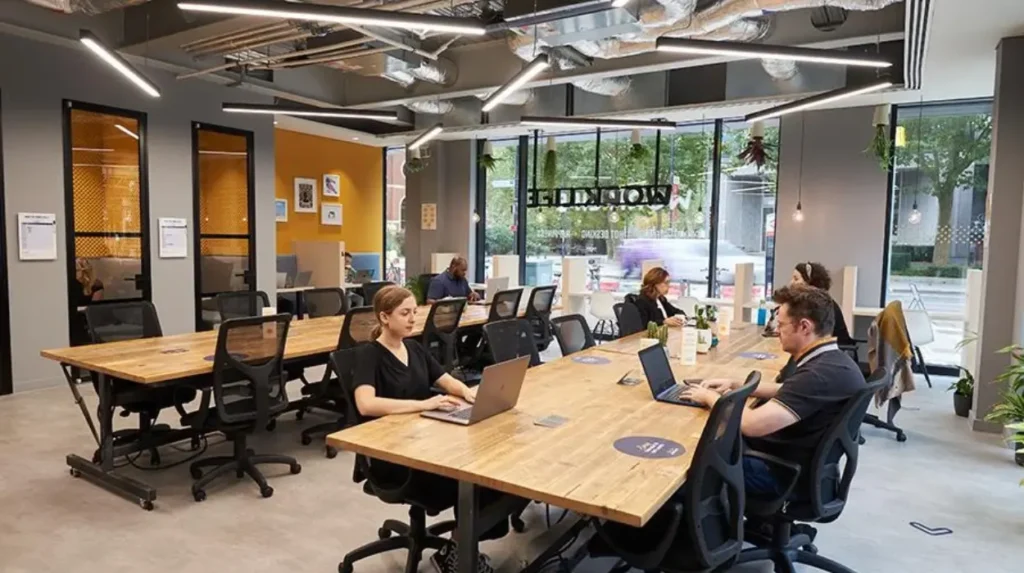
Co-working spaces are shared professional workplaces where individuals and businesses rent desks, offices or meeting facilities without taking a conventional long-term office lease. West London coworking facilities typically provide Wi-Fi, workstations, meeting rooms, communal areas and flexible memberships.
Coworking is different from a traditional leased office because the workspace operator manages the building, shared facilities and services. Members purchase access rather than taking responsibility for an entire commercial property.
Common users include freelancers, consultants, remote employees, entrepreneurs, startups and small companies. Examples include a freelance designer using a hot desk, a technology startup renting a private office and a hybrid employee booking a desk for two days each week.
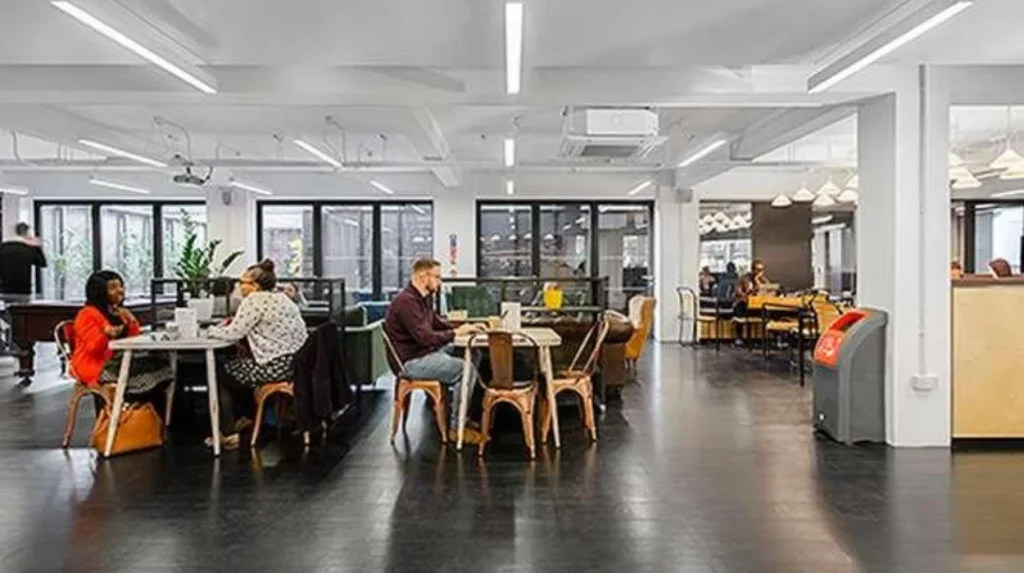
The basic coworking model contains several elements. These include shared workstations, dedicated desks, private offices, meeting rooms and communal areas. Examples of communal facilities include kitchens, lounges, breakout areas and reception spaces.
Membership arrangements also vary. Examples include daily passes, part-time memberships, unlimited coworking memberships and dedicated desks.
West London provides a broad geographic market rather than a single business district. Hammersmith, Shepherd’s Bush, Paddington, Fulham, Chiswick, Hounslow and areas around Heathrow each serve different working patterns and business requirements.
Why has coworking become important in West London?
Coworking has become important because West London combines dense employment centres, strong transport links, small-business demand and hybrid working patterns. Flexible workspace allows businesses to access professional offices while controlling the amount of space, lease commitment and facilities they use.
The growth of flexible workspace reflects changes in how offices are occupied. Employees increasingly divide working time between home, company offices and external workspaces. Coworking provides an intermediate option for people who need a professional workplace without travelling to a central corporate headquarters.
Hammersmith and Fulham provides a clear example of this economic environment. Council documents identify affordable workspace as an important local economic issue and highlight demand from startups, small and medium-sized businesses and other organisations.
The borough also has a substantial business economy. A council report identified around 140,000 jobs and at least 14,000 businesses in Hammersmith and Fulham.
Working patterns have also changed. A 2024 Hammersmith and Fulham ward profile for West Kensington reported that 49% of residents worked mainly from home in 2021, compared with 42% across London.
These conditions create demand for spaces that support occasional office use, regular hybrid working and permanent team operations.
Which areas of West London have coworking spaces?
West London coworking is concentrated around established employment and transport locations including Hammersmith, Shepherd’s Bush, Paddington, Fulham, Chiswick and Hounslow. Each area has different connections, business clusters, property costs and workspace formats for local users.
Hammersmith
Hammersmith is one of the most established coworking locations in West London. Its transport interchange connects the District, Piccadilly, Hammersmith & City and other local transport services.
Current operators include WeWork and Work.Life. WeWork lists its Hammersmith workspace at 184 Shepherds Bush Road, while Work.Life operates at 174 Hammersmith Road.
Shepherd’s Bush
Shepherd’s Bush provides access to Westfield London, transport connections and a large residential and commercial catchment. Its location between Hammersmith and central London makes it relevant for employees and businesses requiring accessible workspace.
Paddington
Paddington is a major transport and commercial hub. Its connection to the Elizabeth line and national rail network makes the area relevant for companies with employees and clients travelling from different parts of London and beyond.
Fulham
Fulham combines residential neighbourhoods with commercial streets and smaller business communities. Coworking facilities in and around Fulham serve freelancers, consultants, creative professionals and small businesses.
Chiswick
Chiswick has a substantial business presence alongside residential areas. The district’s west London location supports companies seeking access to central London without operating directly in the busiest central districts.
Hounslow and the Heathrow corridor
Hounslow provides access to businesses located further west. Its proximity to Heathrow Airport creates a different workspace requirement involving regional business travel, international connections and companies operating around the airport economy.
What types of coworking spaces are available in West London?
West London offers several coworking formats, including hot desks, dedicated desks, private offices, meeting rooms and flexible team suites. Examples include day-pass workstations for occasional users, assigned desks for regular workers and enclosed offices for growing teams.
A hot desk is a workstation that members use without having a permanently assigned position. It suits people who visit an office intermittently.
A dedicated desk provides a specific workstation for one member. It offers greater consistency while retaining the shared-office environment.
A private office is an enclosed workspace rented by an individual or team. It provides greater privacy while retaining access to shared building facilities.
A meeting room is a bookable professional space for discussions, presentations, interviews or video conferences. Meeting rooms are particularly useful for remote businesses that need occasional face-to-face facilities.
A day pass provides temporary access without requiring a long-term membership. WeWork currently lists day-pass coworking in West London, while other operators provide flexible daily or part-time options.
These formats allow companies to match workspace with actual usage rather than renting an entire conventional office.
How much does coworking cost in West London?
Coworking costs in West London depend on location, membership type, office size, contract length and included facilities. Q4 2025 market data recorded a West London median desk rate of £423 per person per month, with significant differences between submarkets and workspace formats.
The £423 median desk rate recorded by Rubberdesk applies to its Q4 2025 West London flexible-office dataset. The same dataset recorded 374,000 sq ft of available floorspace, 7,480 available workstations and 484 available offices.
Prices differ considerably by location. Rubberdesk reported a Q4 2025 median rate of £534 in Hammersmith, while Hounslow was recorded at £250 and Hillingdon at £315.
These figures demonstrate why comparing the exact location and workspace type is important.
Membership prices also differ between operators. For example, WeWork’s West London listings currently show day passes from £45 per day and coworking memberships from £272 per month under a listed promotional 12-month plan.
Work.Life currently lists flexible Hammersmith coworking from £24 per month, although the membership structure and usage conditions differ from a conventional unlimited desk membership.
Published prices change frequently, so users should check the current membership terms before committing.
What facilities do West London coworking spaces provide?
West London coworking facilities typically combine high-speed internet, workstations, meeting rooms, phone booths, kitchens, lounges, printing and staffed reception services. Additional facilities include bike storage, showers, event areas, private offices and business support services.
Internet connectivity is fundamental because coworking users depend on cloud applications, video conferencing and digital communication.
Meeting rooms provide controlled environments for client meetings and internal discussions. Phone booths support private calls and video conferences without disturbing shared-desk users.
Communal areas provide informal working and networking environments. Kitchens, lounges and breakout areas support longer working sessions.
WeWork’s West London facilities include high-speed Wi-Fi, meeting rooms, onsite staff, cleaning services, common areas, phone booths, printers and professional events.
Work.Life’s Hammersmith location provides meeting rooms, breakout spaces, phone booths, bike storage, accessible facilities, kitchen facilities and fast Wi-Fi.
Some workspaces also provide showers, lockers, mail handling and registered business-address services. These features become more relevant for people who use coworking as a regular working base rather than an occasional desk.
How do coworking memberships work in West London?
Coworking memberships normally operate through flexible access plans that determine how often a member can use the workspace and which facilities are included. Plans include day passes, part-time access, unlimited memberships, dedicated desks and private offices.
The process normally starts with selecting a workspace and identifying the required access pattern.
An occasional user can select a day pass or pay-as-you-go arrangement. A hybrid worker can select a limited number of workspace days. A full-time freelancer can choose unlimited access. A growing company can move into a private office.
Work.Life, for example, offers Flex and Unlimited coworking memberships for its West London network and identifies Hammersmith as its West London location.
Membership conditions differ. Some plans include meeting-room credits, while others charge separately for meeting-room use. Some include mail handling or lockers as optional extras.
Businesses should therefore examine the complete membership structure rather than comparing only the headline monthly price.
Which businesses use coworking spaces in West London?
Coworking spaces serve freelancers, startups, consultants, creative professionals, remote employees, small businesses and larger companies. Examples include independent consultants, technology startups, marketing agencies, designers, professional services firms and hybrid corporate teams.
Freelancers use coworking facilities to establish a consistent professional working environment.
Startups use flexible offices because employee numbers can change during early growth. A startup can begin with shared desks and move into private offices as its team expands.
Small businesses use coworking to access meeting rooms, reception services and professional infrastructure without managing a separate office building.
Creative businesses benefit from locations close to established media and commercial clusters. Hammersmith and Fulham’s economic strategy identifies digital and media activity among local business demand considerations.
Larger businesses also use flexible workspace. Private offices and managed workspace allow companies to establish project teams, satellite offices and temporary locations.
This creates a broad user base rather than a coworking market limited to freelancers.
How important is transport access when choosing coworking space?
Transport access is a major practical factor because coworking users often combine home working, office visits, client meetings and commuting. Hammersmith, Paddington and Heathrow-linked locations provide different transport advantages for London-wide and international business travel.
Hammersmith is particularly well connected. WeWork identifies its Shepherds Bush Road location as being close to Hammersmith station, with access to the District, Piccadilly and Hammersmith & City lines.
Work.Life states that its Hammersmith workspace is approximately three minutes from Hammersmith station and around ten minutes from Barons Court.
Paddington serves a different transport profile. Its national rail, Underground and Elizabeth line connections make it useful for people travelling from outside West London.
For Heathrow-linked businesses, western locations provide proximity to one of the world’s major international airports.
Transport therefore influences more than commuting. It affects client access, employee recruitment, meeting arrangements and the practical catchment area of a workspace.
How does coworking support startups and small businesses in West London?
Coworking supports startups and small businesses by reducing the need for large upfront office commitments while providing professional infrastructure. Flexible desks, meeting rooms, private offices and shared services allow businesses to match workspace costs with their operational requirements.
Affordable workspace has been a specific policy issue in Hammersmith and Fulham. The borough’s planning material identifies flexible leases, pay-as-you-use desks, coworking hubs and startup spaces as mechanisms for supporting local business needs.
This approach is relevant to startups because office requirements change during business development.
A two-person company does not need the same space as a 15-person company. Coworking allows the workspace requirement to change as staffing levels change.
Meeting rooms also reduce the need for dedicated conference facilities. Reception and shared services reduce administrative requirements.
The result is a workspace model that separates business operations from responsibility for an entire commercial property.
What role does hybrid working play in West London coworking?
Hybrid working has increased the importance of flexible workspace because employees divide their working time between different locations. Coworking provides a professional base for focused work, meetings and collaboration without requiring every employee to maintain a permanent desk.
Hybrid working involves a combination of locations rather than a single fixed workplace. A worker can spend some days at home, some days at a company office and other days in a coworking facility.
The Hammersmith and Fulham planning framework specifically recognised changing working practices following the Covid-19 pandemic and the need for workspace capable of supporting hybrid arrangements.
This creates demand for flexible membership structures.
A company with a hybrid workforce can use coworking for satellite teams or occasional collaboration. An individual employee can use a nearby workspace when home working is unsuitable.
The model also supports distributed companies that do not require a conventional headquarters for every member of staff.
How is the West London coworking market changing?
West London’s flexible workspace market continues to adjust through changes in pricing, supply and office requirements. Q4 2025 data recorded 374,000 sq ft of available space and a £423 median desk rate, while different submarkets showed contrasting supply and pricing trends.
Rubberdesk reported that West London’s median desk rate fell 6% quarter-on-quarter to £423 in Q4 2025. Available floorspace stood at 374,000 sq ft.
The market also showed differences between serviced and managed offices. Serviced-office rates declined while managed-office rates increased, demonstrating that flexible workspace is not a single uniform category.
Submarket conditions also differed. Hammersmith had higher median rates than Hounslow, while Hillingdon experienced growth in available space and higher rates.
London’s overall coworking market remains large. Data covering January 2026 recorded approximately 1,200 coworking spaces across Greater London.
These figures indicate a mature market with multiple workspace models and geographically differentiated pricing.
Explore More Area Guide
Startups in West London: White City, Hammersmith & Old Oak
Business Districts in West London: Key Commercial Hubs
What should businesses check before choosing a West London coworking space?
Businesses should compare location, total monthly cost, access hours, desk type, meeting-room charges, internet quality, privacy, contract flexibility and transport connections. The correct workspace depends on actual working frequency, team size, client requirements and expected business growth.
Location should be assessed first. A cheaper workspace becomes less practical when employees spend excessive time travelling.
The membership should then be compared with actual usage. A person visiting twice per week needs a different arrangement from someone working five days per week.
Meeting-room requirements also affect the total cost. Businesses that meet clients regularly should check included credits, hourly charges and room availability.
Privacy is important for consultants, legal professionals, financial services and companies handling confidential information. Dedicated desks and private offices provide different levels of separation from communal areas.
Businesses should also inspect internet connectivity, phone booths, accessibility, kitchen facilities and building security.
Contract terms deserve equal attention. A low monthly price with a long commitment produces a different financial obligation from a flexible month-to-month membership.
What is the future relevance of coworking spaces in West London?
Coworking spaces are positioned to remain part of West London’s commercial infrastructure because businesses require flexible accommodation for hybrid teams, startups, project groups and changing office footprints. Transport connectivity and diverse business districts support continued demand for adaptable workspace.
The future of West London coworking is closely connected to the wider transformation of office use.
Businesses increasingly require workspace that can change with employee numbers, working patterns and project requirements. Flexible offices provide this adaptability.
West London also has a strong combination of established business districts and residential communities. Hammersmith and Fulham’s planning policies recognise the importance of flexible and affordable workspace to local economic activity.
The wider London market provides significant scale. Approximately 1,200 coworking locations across Greater London demonstrate that flexible workspace has become an established part of the capital’s office market rather than a niche business model.
West London therefore has an important role within London’s flexible-workspace economy. Hammersmith, Shepherd’s Bush, Paddington, Fulham, Chiswick, Hounslow and the Heathrow corridor provide distinct locations for different professional requirements.
For workers and businesses, the central consideration is not simply finding a desk. It is selecting the combination of location, access, facilities, privacy, pricing and flexibility that matches the way work is actually performed.
What are co-working spaces in West London?
Co-working spaces in West London are shared professional workplaces offering desks, private offices, meeting rooms, Wi-Fi and communal facilities. They serve freelancers, startups, remote employees, consultants and established businesses.