

West London’s industrial heritage is a major part of the area’s urban history. It includes factories, transport infrastructure, breweries, utilities, workshops, canals, railway works, warehouses, and industrial estates that shaped communities across uk/local/hammersmith-and-fulham/hammersmith/">Hammersmith, hounslow/brentford/">Brentford, Acton, Park Royal, ealing/southall/">Southall, Hayes, Hanwell, and nearby districts.
- What is West London’s industrial heritage?
- How did the River Thames shape industry in West London?
- Why was the Grand Junction Canal important to West London’s industrial development?
- How did railways transform West London industry?
- Why is Park Royal central to West London’s industrial heritage?
- What industrial history is associated with Hayes?
- What was Brentford’s industrial role?
- How did brewing contribute to West London’s industrial heritage?
- What industries developed along the Great West Road?
- How did Acton contribute to West London’s industrial history?
- How did Southall develop as an industrial area?
- What role did aviation and engineering play in West London’s industrial heritage?
- How did industrialisation change West London’s communities?
- How is West London’s industrial heritage protected today?
- Why does West London’s industrial heritage still matter?
- What are the best places to understand West London’s industrial heritage?
- How can West London’s industrial heritage be researched today?
- How has West London’s industrial landscape changed?
- What is the future of West London’s industrial heritage?
The industrial development of West London accelerated during the nineteenth century as canals, railways, roads, and access to the River Thames connected manufacturing districts with London markets. The Grand Junction Canal, opened in 1798, provided an important industrial transport route. The Great Western Railway, founded in 1833 and opened between London and Maidenhead in 1838, strengthened the area’s connection with national markets.
West London’s industrial landscape later expanded around aviation, engineering, food production, chemicals, brewing, motor manufacturing, electrical engineering, and distribution. Park Royal became one of the largest industrial areas in London. Hayes developed major manufacturing operations, including the EMI complex. Brentford became associated with water transport, gas, breweries, and engineering. Southall developed manufacturing and food-processing industries alongside its railway connection.
Today, many industrial sites have disappeared, been converted, or been incorporated into mixed-use developments. Surviving buildings, canals, railway structures, listed industrial sites, archives, museums, and historic street patterns preserve evidence of this transformation.
Understanding West London’s industrial heritage explains how the area’s transport networks, employment centres, housing districts, waterways, and commercial landscapes developed.
What is West London’s industrial heritage?
West London’s industrial heritage is the surviving physical and historical evidence of manufacturing, transport, engineering, utilities, food production, brewing, aviation, and distribution that developed across the area from the eighteenth century onward.
Industrial heritage includes both buildings and infrastructure. Factories form one part of this heritage. Canals, railway stations, bridges, warehouses, gasworks, electricity infrastructure, workshops, industrial estates, wharves, and workers’ housing also form part of the historical landscape.
West London became particularly important because of its location between central London and the western counties. The River Thames provided water transport. Canals connected London with the national canal network. Railways later provided faster movement of people, raw materials, and finished goods.
The industrial landscape therefore developed around transport corridors rather than in isolation.
Several parts of West London became specialised industrial districts. Park Royal developed into a large-scale industrial and manufacturing area. Hayes became associated with electrical engineering, chemicals, and manufacturing. Brentford developed around the Thames, the Grand Junction Canal, breweries, and engineering. Acton became associated with engineering and manufacturing.
This heritage also includes social history. Industrial employment influenced population growth, housing development, migration, local institutions, and transport demand.
How did the River Thames shape industry in West London?
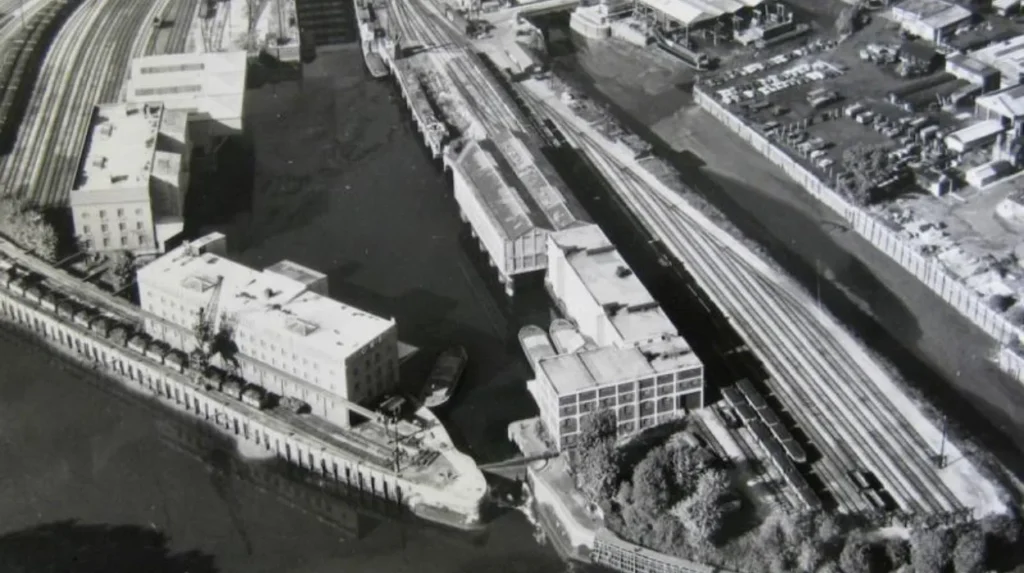
The River Thames provided West London with a major transport route for raw materials and finished goods, supporting wharves, breweries, water-related industries, warehouses, engineering works, and other businesses along Brentford, Chiswick, and neighbouring riverside districts.
The Thames was one of London’s most important commercial transport routes before modern road freight and rail distribution expanded.
Brentford occupies an important position at the mouth of the River Brent, where the river meets the Thames. This location connected water transport with inland routes. Brentford’s industrial history therefore developed around waterways, trade, manufacturing, and transport.
The riverside also supported breweries and other industries that required reliable transport and water supplies.
The relationship between industry and the Thames extended beyond individual factories. Wharves provided loading and unloading facilities. Warehouses stored materials. Roads connected riverside businesses with surrounding communities.
The Thames also influenced industrial land use because large sites requiring transport access often developed along or near the river.
The river remains an important part of West London’s industrial geography. Former industrial areas have experienced substantial redevelopment, but historic wharves, warehouses, industrial buildings, and surviving waterfront structures continue to provide evidence of earlier commercial activity.
Why was the Grand Junction Canal important to West London’s industrial development?
The Grand Junction Canal, opened in 1798, connected London with the Midlands canal network and transformed West London by providing a dependable route for coal, building materials, agricultural goods, and industrial products moving between regional markets.
The Grand Junction Canal was one of the defining infrastructure projects in West London’s industrial history.
The canal connected the River Thames at Brentford with the wider canal system. Its route linked London with important industrial and agricultural regions to the west and north-west.
Coal was particularly important. London required enormous quantities of coal for domestic heating, manufacturing, brewing, gas production, and other industrial processes. Canal transport provided a cost-effective method for moving heavy materials.
Brentford became a strategic industrial location because the canal connected directly with the Thames.
Canal-side land also attracted warehouses, workshops, wharves, and other businesses. Industrial activity therefore expanded along transport corridors.
The canal’s importance continued after the arrival of railways, although rail transport increasingly changed the movement of goods.
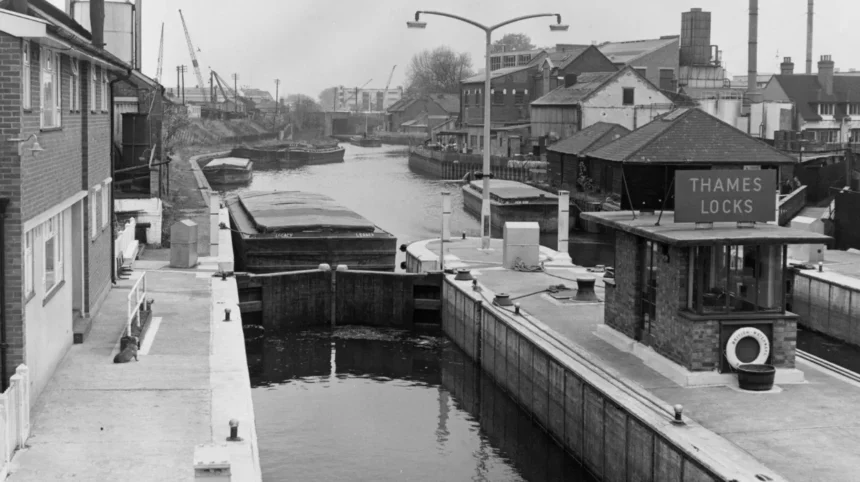
Today, the Grand Union Canal, the modern name for the canal system incorporating the former Grand Junction Canal, remains one of the clearest surviving elements of West London’s industrial landscape. Its towpaths, bridges, locks, waterways, warehouses, and surrounding development preserve the physical geography of industrial transport.
How did railways transform West London industry?
Railways transformed West London industry during the nineteenth century by connecting factories and workers with national markets, accelerating freight movement, supporting suburban expansion, and encouraging manufacturing around stations, sidings, goods yards, and railway corridors.
The Great Western Railway became particularly important.
The railway was incorporated in 1833 and opened its first London-to-Maidenhead section in 1838. Its main route passed through West London before continuing westward.
Railways offered major advantages for industry. Heavy materials could travel faster over longer distances. Factories gained access to national markets. Workers gained easier access to employment.
Railway stations also became catalysts for urban growth.
Industrial businesses frequently located close to railway infrastructure because proximity reduced transport costs. Goods yards, sidings, warehouses, workshops, and distribution facilities formed part of the railway-industrial landscape.
The Great Western Railway also strengthened the development of Hayes, Southall, Hanwell, Acton, and other locations along its route.
The railway network contributed to the transformation of West London from semi-rural districts into densely developed suburbs and industrial areas.
Many railway structures remain visible today. Stations, bridges, embankments, railway arches, goods facilities, and historic alignments provide important evidence of this transformation.
Why is Park Royal central to West London’s industrial heritage?
Park Royal became one of West London’s most significant industrial districts through large-scale manufacturing, food production, engineering, brewing, vehicle-related businesses, and distribution, supported by extensive transport infrastructure and its strategic position near major London routes.
Park Royal covers a large industrial area around the western part of London. Its development accelerated during the twentieth century.
The area gained importance because of its proximity to railway connections, roads, canals, and central London markets.
The Royal Agricultural Society of England held its exhibition at Park Royal in 1903. The area subsequently developed as a major industrial district.
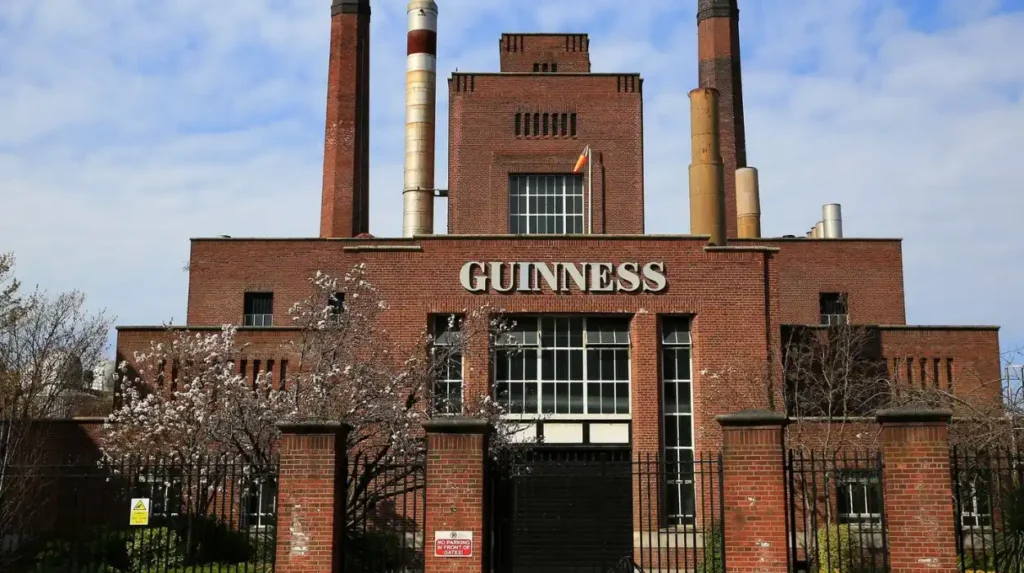
Manufacturing became a defining characteristic of Park Royal. Food and drink production formed an important part of its industrial identity. Guinness operated a major brewery at Park Royal, which became one of the area’s best-known industrial establishments.
Other businesses developed in engineering, food processing, vehicle production, and distribution.
Park Royal also illustrates the transition from traditional manufacturing to modern industrial and commercial uses. Some historic factories have disappeared, while industrial estates, logistics facilities, food businesses, creative enterprises, and commercial premises occupy the wider area.
Its industrial significance remains visible in the scale of buildings, road layouts, estate design, railway connections, and surviving historic structures.
What industrial history is associated with Hayes?
Hayes developed into a major manufacturing and engineering centre through railway access, industrial estates, electrical engineering, chemicals, plastics, records, and consumer technology, with the EMI complex becoming one of its most historically significant industrial sites.
The arrival of the Great Western Railway strengthened Hayes’s industrial development.
Hayes became particularly important for manufacturing during the twentieth century. The area attracted large companies because it offered land, railway access, road connections, and proximity to London.
Electric and Musical Industries, commonly known as EMI, established a major manufacturing and research presence in Hayes. EMI became internationally significant in electrical engineering, recording technology, electronics, and entertainment technology.
The Hayes EMI complex included manufacturing and research facilities. Its work contributed to technological developments associated with sound recording, broadcasting, and electronics.
The area also supported chemical and plastics manufacturing.
Industrial development changed the surrounding landscape. Employment generated demand for housing, shops, schools, public transport, and community facilities.
Hayes therefore demonstrates the connection between industrial employment and suburban urbanisation.
The former industrial landscape has changed substantially. Some historic buildings have been redeveloped, while surviving structures and local records continue to document Hayes’s manufacturing history.
What was Brentford’s industrial role?
Brentford became an important industrial and transport centre because it combined access to the River Thames, the Grand Junction Canal, the River Brent, railways, breweries, warehouses, and manufacturing businesses within a strategically connected West London location.
Brentford’s geography explains much of its industrial history.
The district sits at the junction of major waterways. The River Brent reaches the Thames at Brentford, while the Grand Union Canal terminates at the Thames.
This created a natural transport advantage.
Brentford developed wharves, warehouses, breweries, engineering businesses, and other industries. The town’s historic market and commercial functions also supported its wider economy.
The arrival of railways added another transport connection.
The Great West Road later strengthened Brentford’s relationship with motor transport and industrial development. The road became a major western route into London and supported commercial and manufacturing activity.
Brentford’s industrial heritage therefore reflects several transport eras. Water transport came first. Canals and railways expanded connectivity. Roads later became increasingly important.
Surviving industrial buildings, canal infrastructure, railway features, and historic street patterns provide evidence of these overlapping phases.
How did brewing contribute to West London’s industrial heritage?
Brewing became an important West London industry because breweries required large sites, reliable water supplies, transport connections, storage facilities, and access to London’s growing consumer market, with major operations developing in Brentford, Park Royal, and neighbouring districts.
Brewing required substantial industrial infrastructure.
Raw materials such as malt, hops, and fuel had to reach breweries efficiently. Finished beer also required distribution networks.
West London’s waterways and railways therefore provided valuable logistical advantages.
Brentford developed a long association with brewing. The area had access to water transport and connections with London.
Park Royal later became home to the large Guinness brewery. Its scale reflected twentieth-century industrial production, modern transport, and mass-market consumption.
Breweries also created employment beyond brewing itself. Workers were needed for production, maintenance, packaging, transport, administration, and distribution.
The physical remains of brewing include brewery buildings, warehouses, storage areas, transport infrastructure, and workers’ facilities.
Although major brewery operations have changed or disappeared, brewing remains an important component of West London’s industrial history.
What industries developed along the Great West Road?
The Great West Road became a major twentieth-century industrial corridor linking West London with the wider national road network, attracting engineering, motor manufacturing, chemicals, food production, electronics, and other businesses requiring large sites and strong transport connections.
The Great West Road formed part of the A4 route connecting central London with western England.
Industrial development accelerated around the route during the twentieth century. Large plots of land allowed businesses to establish factories and headquarters.
The road became strongly associated with manufacturing and engineering.
Factories and commercial buildings appeared across Brentford, Isleworth, Hounslow, and neighbouring areas. Businesses benefited from access to road freight and London’s consumer market.
The corridor became especially associated with modern industrial architecture. Large factory buildings, office blocks, showrooms, and purpose-built premises reflected the expansion of mass production.
Road transport gradually reduced the dependence of many industries on canals and railways.
The Great West Road therefore represents a major stage in West London’s industrial transition from water-based logistics and railway freight towards road-based distribution.
How did Acton contribute to West London’s industrial history?
Acton developed as a manufacturing and engineering centre through railway access, road connections, workshops, factories, and specialist businesses, helping transform a formerly rural district into an important industrial and residential area during the nineteenth and twentieth centuries.
Acton’s industrial development was closely linked to transport.
Railways reached the area during the nineteenth century, creating new connections with central London and western districts.
Acton became associated with engineering and manufacturing. The area supported numerous workshops and factories rather than relying on a single dominant industry.
The growth of industry encouraged population growth. Workers needed housing close to employment, leading to rapid urban development.
Acton’s industrial history also demonstrates the close relationship between industrial and residential land uses in West London.
Many former industrial buildings have been converted into other uses. Others have been demolished as land values and planning priorities changed.
Historic maps, railway infrastructure, surviving factory buildings, and street patterns remain important evidence for understanding Acton’s industrial development.
How did Southall develop as an industrial area?
Southall’s industrial development was shaped by railway connectivity, food manufacturing, engineering, factories, warehouses, and its position within the wider West London transport network, creating employment and contributing significantly to the area’s twentieth-century urban growth.
The Great Western Railway played a major role in Southall’s development.
Railway access connected Southall with London and western markets. Industrial businesses benefited from freight transport and access to workers.
Manufacturing expanded around railway infrastructure and major roads.
Southall also developed a strong food-processing identity. Food manufacturing and distribution became important components of its industrial economy.
The arrival and growth of Southall’s diverse communities also influenced local business activity. Industrial employment formed part of the wider economic environment in which these communities developed.
Southall’s industrial landscape has changed substantially. Some factories and warehouses have disappeared, while commercial premises and residential developments have replaced older uses.
The railway remains a visible reminder of the infrastructure that supported industrial expansion.
What role did aviation and engineering play in West London’s industrial heritage?
Aviation and engineering strengthened West London’s industrial importance through aircraft production, research, mechanical engineering, electrical technology, and specialist manufacturing, particularly around Hayes, Acton, Park Royal, and nearby industrial districts connected to London’s transport network.
West London’s engineering economy included both large factories and smaller specialist workshops.
Engineering businesses produced machinery, electrical equipment, vehicles, components, and other manufactured products.
Hayes became particularly important for electrical engineering and technological research through EMI.
Aircraft-related activity also formed part of the wider industrial economy of West London and surrounding Middlesex. London’s western districts provided access to large sites and transport infrastructure needed for industrial operations.
Engineering created skilled employment and encouraged technical training.
The sector also contributed to the development of industrial estates designed specifically for manufacturing.
The heritage of engineering is often less visible than historic residential architecture because factories are frequently redeveloped. Industrial archaeology therefore plays an important role in identifying former manufacturing sites.
How did industrialisation change West London’s communities?
Industrialisation changed West London by increasing employment, population, housing demand, transport use, commercial activity, and migration, turning many former villages and semi-rural districts into densely connected urban communities with strong industrial and working-class histories.
Factories required workers.
Workers required housing.
Housing growth therefore followed industrial development.
Railways and tramways expanded access to employment and allowed workers to travel longer distances. Streets became denser as new homes, shops, schools, churches, public houses, and community buildings developed.
Industrial employment also encouraged migration into West London.
Southall, Hayes, Acton, Brentford, and Park Royal demonstrate different forms of industrial urbanisation. Each developed according to its specific transport connections, land availability, industries, and surrounding population.
Industrial communities also developed social institutions. Trade unions, sports clubs, community organisations, religious institutions, and local associations formed part of the wider social history of industrial districts.
This human dimension is essential to understanding industrial heritage. Factories were not isolated structures. They influenced entire communities.
How is West London’s industrial heritage protected today?
West London’s industrial heritage is protected through listed buildings, conservation areas, planning policies, historic records, archaeological assessment, museums, archives, and heritage organisations that identify and preserve significant buildings, structures, landscapes, and historical evidence.
Historic England maintains the National Heritage List for England, which records nationally protected listed buildings, scheduled monuments, registered parks and gardens, and other designated heritage assets.
Local authorities also protect historic environments through conservation areas and planning policies.
Industrial buildings often require specialist assessment because their historical value is linked to architecture, technology, engineering, transport, and social history.
The Greater London Authority’s planning framework also recognises London’s industrial land as an important component of the city’s economy.
Industrial heritage protection therefore involves more than preserving individual buildings. It can include protecting historic industrial areas, transport corridors, waterways, archaeological remains, and characteristic streetscapes.
Adaptive reuse has become another important approach. Former industrial buildings can accommodate offices, cultural facilities, commercial uses, housing, studios, and other activities while retaining historic architectural elements.
Why does West London’s industrial heritage still matter?
West London’s industrial heritage explains the area’s modern geography, transport network, employment centres, communities, architecture, and redevelopment patterns, providing essential evidence for understanding how the western part of London evolved from rural districts into a major metropolitan industrial landscape.
Industrial heritage connects past development with present urban structure.
Park Royal remains a major employment area. Hayes remains an important business and industrial location. Brentford retains its canal and riverside connections. Southall continues to function as a major commercial centre. Acton remains a highly connected part of West London.
These modern characteristics developed from earlier infrastructure and land-use decisions.
Industrial heritage also supports archaeological research. Historic buildings and infrastructure provide evidence about technology, manufacturing processes, labour, transport, and urban development.
The subject is therefore relevant to planning as well as history.
Preserving industrial heritage helps maintain evidence of West London’s economic development while allowing historic structures to serve new purposes.
What are the best places to understand West London’s industrial heritage?
The strongest places for understanding West London’s industrial heritage include Park Royal, Brentford, the Grand Union Canal corridor, Hayes, Southall, Acton, and the Great West Road, where surviving infrastructure and historic landscapes reveal different phases of industrial development.
Park Royal provides evidence of large-scale twentieth-century manufacturing, food production, brewing, engineering, and distribution.
Brentford provides a concentrated example of water-based industrial development. The Grand Union Canal, River Brent, Thames waterfront, locks, bridges, and historic commercial areas demonstrate the importance of waterways.
Hayes illustrates railway-led manufacturing and electrical engineering, particularly through its historic association with EMI.
Southall demonstrates the relationship between railway transport, manufacturing, food production, commerce, and community growth.
Acton demonstrates the development of railway-connected workshops and manufacturing within an expanding suburb.
The Great West Road provides evidence of twentieth-century road-based industrial development.
Together, these locations show that West London’s industrial heritage is not represented by one building or industry. It is a network of places connected by transport, production, labour, and urban growth.
How can West London’s industrial heritage be researched today?
West London’s industrial history can be researched through Historic England records, local authority archives, historic maps, census records, railway records, business archives, museum collections, archaeological reports, planning documents, and surviving industrial buildings and infrastructure.
Historic maps are particularly useful for identifying former factories, warehouses, railway sidings, wharves, gasworks, and industrial estates.
The National Library of Scotland’s historical map collection provides digitised historic maps covering London and surrounding areas.
Historic England’s records provide information about designated heritage assets and historic buildings.
Local archives provide additional evidence. Borough archives can contain planning records, photographs, maps, business records, and local studies material.
The London Metropolitan Archives is another major source for researching London’s historical development.
Business archives can reveal information about companies, products, employees, buildings, and technological development.
Industrial archaeology adds another layer. Archaeologists examine surviving structures, foundations, machinery, transport infrastructure, and landscape patterns to reconstruct former industrial activity.
This evidence allows researchers to connect individual sites with the wider history of West London’s industrial economy.
Explore More Area Guide
Abandoned and Forgotten Places in West London
Lost Buildings of West London: Historic Sites That Disappeared
How has West London’s industrial landscape changed?
West London has shifted from heavy manufacturing and traditional industrial production towards logistics, technology, services, creative industries, mixed-use development, and modern manufacturing while retaining important industrial estates and transport infrastructure.
The change reflects broader economic transformation across London.
Large factories often occupied extensive sites. Redevelopment pressures increased as land values rose and manufacturing patterns changed.
Some industrial buildings were demolished. Others were converted.
Former factories have become offices, studios, commercial premises, housing, cultural venues, and mixed-use developments.
However, industrial activity has not disappeared.
Park Royal remains one of London’s major industrial and employment areas. Hayes retains significant employment land. Industrial estates across West London continue to support manufacturing, food production, storage, logistics, repair businesses, and distribution.
The current landscape therefore represents continuity as well as change.
Modern planning policy increasingly recognises the importance of protecting industrial capacity within London. This creates an ongoing relationship between economic development, employment land, heritage conservation, and urban regeneration.
What is the future of West London’s industrial heritage?
The future of West London’s industrial heritage depends on balancing redevelopment with conservation, protecting significant industrial buildings and landscapes while retaining employment land, adapting historic structures, documenting lost sites, and maintaining the area’s long industrial identity.
Industrial heritage will continue to change as West London grows.
The strongest preservation strategy combines documentation with practical reuse.
Historic buildings require accurate records before redevelopment. Historic maps, photographs, archaeological assessments, architectural surveys, and oral histories provide permanent evidence when physical structures cannot be retained.
Adaptive reuse offers another route. Retaining façades, structural elements, machinery, canal infrastructure, railway features, or historic layouts can preserve connections with earlier industrial activity.
Employment land also remains important. West London’s industrial economy continues to require locations for logistics, manufacturing, repair, storage, food production, and related businesses.
The future of West London’s industrial heritage therefore involves both preservation and continued economic activity.
The area’s factories, canals, railway infrastructure, industrial estates, warehouses, breweries, engineering sites, and transport corridors form a connected historical record. Understanding that record provides a clearer explanation of how modern West London developed.
What is West London’s industrial heritage?
West London’s industrial heritage includes historic factories, breweries, warehouses, canals, railways, engineering works, industrial estates, wharves, and manufacturing sites that shaped the area’s economy and communities.