West London has an established design community shaped by independent creative businesses, freelance designers, educational institutions, cultural organisations and commercial design studios. The area’s creative identity extends across graphic design, interior design, architecture, fashion, digital design, product development and visual communication. Kensington, uk/local/hammersmith-and-fulham/hammersmith/">Hammersmith, Ealing, Richmond, Brent and Hounslow contribute to this wider creative network.
- How Is the West London Design Community Defined?
- What Activities Are Included in the Design Sector?
- Why Does West London Have a Distinct Creative Identity?
- What Is the History of Design and Creative Industries in West London?
- How Did Manufacturing Influence West London Design?
- How Did Cultural Institutions Strengthen the Design Community?
- Which Areas Are Important to the West London Design Community?
- Kensington: Contemporary Design and Cultural Exhibitions
- Hammersmith: Independent Artists and Creative Businesses
- Ealing: Graphic Design and Creative Education
- Brent, Harrow and Hounslow: Commercial and Creative Connections
- Richmond and Hillingdon: Creative Businesses and Regional Networks
- What Role Do Universities and Design Schools Play in West London?
- How Do Designers and Creative Professionals Collaborate in West London?
- Independent Design Studios and Freelancers
- Exhibitions and Creative Events
- Professional Networking and Knowledge Exchange
- How Does the West London Design Industry Contribute to the Local Economy?
- What Do the Creative Industries Statistics Reveal?
- Why Are Small Businesses and Freelancers Important?
- How Does Design Support Other Industries?
- What Challenges Does the West London Design Community Face?
- Business Costs and Workspace Availability
- Competition and Client Acquisition
- Digital Skills and Technological Change
- Access to Professional Opportunities
- How Is Sustainability Influencing West London Design?
- Sustainable Architecture and Interior Design
- Circular Product Design
- Responsible Graphic and Digital Design
- How Can People Become Part of the West London Design Community?
- Visit Design and Cultural Institutions
- Participate in Local Artist Groups
- Study Design and Develop a Professional Portfolio
- Build Relationships with Local Businesses
- What Is the Future of the West London Design Community?
The West London design community operates within one of the UK’s largest creative economies. It connects local businesses with London’s wider design industry while providing opportunities for collaboration, professional development, exhibitions and creative entrepreneurship.
How Is the West London Design Community Defined?
The West London design community is a network of designers, creative businesses, educational institutions, cultural organisations and independent professionals working across visual communication, architecture, interiors, fashion and digital design. It connects local creative talent with commercial clients, public organisations and London’s wider creative economy.
Design communities develop through professional relationships, shared workspaces, education, exhibitions and commercial projects. They bring together people who create visual identities, physical environments, products, digital experiences and communication materials.
In West London, this community includes established design agencies, independent studios, self-employed designers, creative graduates and organisations that support cultural production.
The term design community covers both professional and public participation. A graphic designer developing a business identity, an architect planning a residential development and an independent maker producing furniture all contribute to the wider design environment.
What Activities Are Included in the Design Sector?
The design sector includes several connected professional disciplines. Examples include:
- Graphic design: Branding, typography, editorial layouts and visual identities.
- Interior design: Residential interiors, commercial spaces and hospitality environments.
- Architecture: Building design, urban planning and sustainable construction.
- Fashion design: Clothing, textiles, accessories and fashion communication.
- Digital design: Website interfaces, user experience and digital products.
- Product design: Furniture, consumer products and industrial objects.
- Motion design: Animation, moving graphics and visual effects.
These disciplines frequently overlap. An interior design project requires spatial planning, graphic communication and material selection. A digital product requires interface design, research and technical development.
This multidisciplinary structure allows West London designers to work with businesses across retail, property, technology, hospitality, entertainment and education.
Why Does West London Have a Distinct Creative Identity?
West London combines residential neighbourhoods, commercial centres, cultural venues and educational institutions. These environments create different professional opportunities.
Kensington provides an important cultural and design destination through the Design Museum. Hammersmith has a substantial creative and commercial business presence. Ealing supports independent businesses and local cultural activity, while Richmond contributes through its cultural institutions, creative professionals and design-related services.
The region also benefits from its transport connections to Central London, Heathrow Airport and other parts of the South East.
A 2022 research report by Brunel University London’s Creative Industries Hub examined creative and cultural industries across Brent, Harrow, Ealing, Hammersmith and Fulham, Hillingdon, Hounslow and Richmond upon Thames. It identified small and medium-sized enterprises and freelancers as the majority of creative businesses in the researched area.
This research provides an important foundation for understanding the region’s creative structure.
What Is the History of Design and Creative Industries in West London?
West London’s design development reflects its industrial, commercial, architectural and cultural history. Manufacturing, publishing, fashion, broadcasting and education contributed to the area’s creative economy. These established industries helped create the professional networks that support contemporary designers and independent creative businesses.
West London developed through several economic and cultural changes. Industrial activity, commercial expansion and suburban growth influenced the types of businesses operating across the region.
Historically, areas around Hammersmith, Ealing, Acton and Brent supported manufacturing, workshops, printing and other commercial activities. These industries created demand for product development, advertising, packaging, architecture and visual communication.
The growth of London’s advertising, publishing, broadcasting and fashion sectors also strengthened demand for professional design services.
How Did Manufacturing Influence West London Design?
Manufacturing created practical demand for design expertise. Businesses required product drawings, packaging, technical illustrations, commercial interiors and promotional materials.
Industrial districts provided opportunities for craftspeople, engineers, artists and designers to work alongside manufacturers.
Although the structure of employment has changed, the relationship between design and production remains important. Contemporary product designers continue to work with manufacturers, suppliers, material specialists and engineering professionals.
The development of digital production methods has also expanded design opportunities. Computer-aided design, digital fabrication and 3D modelling support modern product development.
How Did Cultural Institutions Strengthen the Design Community?
Cultural institutions provide places where designers, students, researchers and visitors encounter design history and contemporary creative practice.
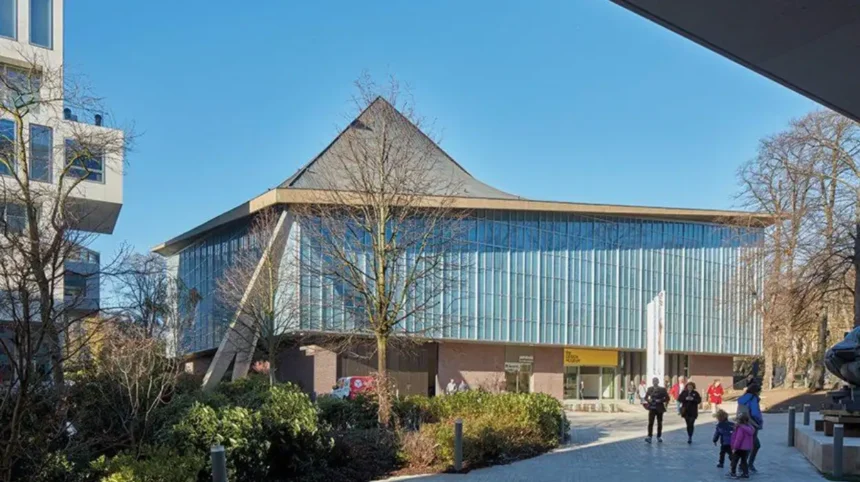
The Design Museum is particularly important. Founded in 1989 by Sir Terence Conran, it relocated to its current Kensington building in 2016. The museum focuses on contemporary design across different disciplines and connects public education with professional industry. Design Museum+1
Its location strengthens Kensington’s position as a destination for design exhibitions, professional learning and cultural engagement.
The museum also demonstrates how historic buildings can acquire new cultural functions. Its Kensington home is a former 1960s building that received a major architectural transformation led by John Pawson.
Which Areas Are Important to the West London Design Community?
West London’s design activity extends across Kensington, Hammersmith, Ealing, Brent, Hounslow, Richmond and Hillingdon. Each area contributes through different combinations of educational facilities, creative businesses, cultural venues, commercial clients and independent design professionals.
The creative network does not operate from one central district. Designers work across residential neighbourhoods, business centres, university campuses and cultural venues.
Kensington: Contemporary Design and Cultural Exhibitions
Kensington is one of West London’s most recognisable design destinations. The Design Museum provides public access to exhibitions covering architecture, fashion, product development, graphic design and contemporary visual culture.
Its location on Kensington High Street connects design education with London’s wider cultural environment.
The museum also provides a platform for understanding how design influences everyday products, buildings, technology and public spaces.
Nearby cultural and educational institutions contribute to an environment where visitors encounter historical and contemporary creative work.
Hammersmith: Independent Artists and Creative Businesses
Hammersmith has an established creative and commercial environment. Its businesses operate across media, advertising, visual arts, professional services and cultural production.
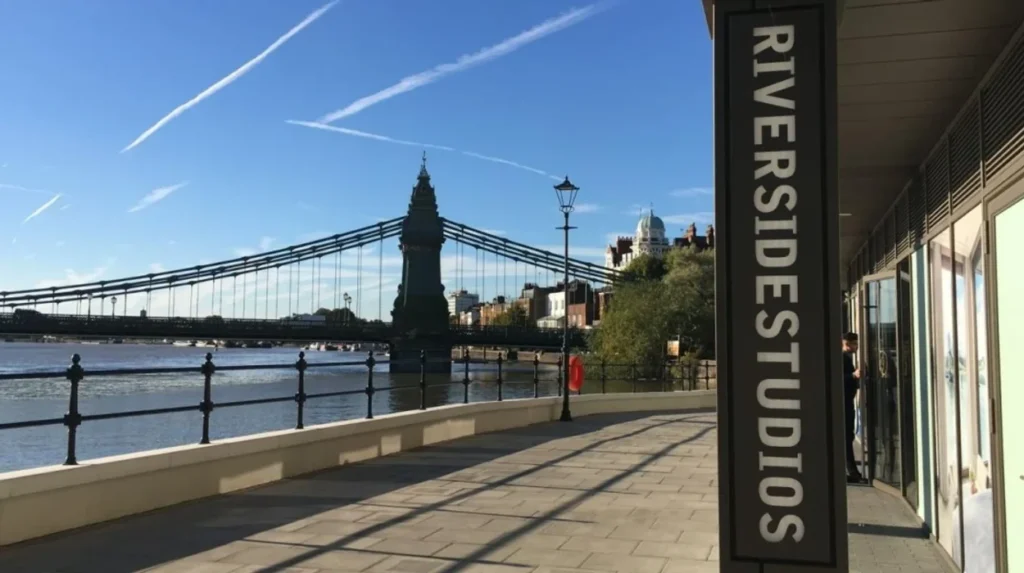
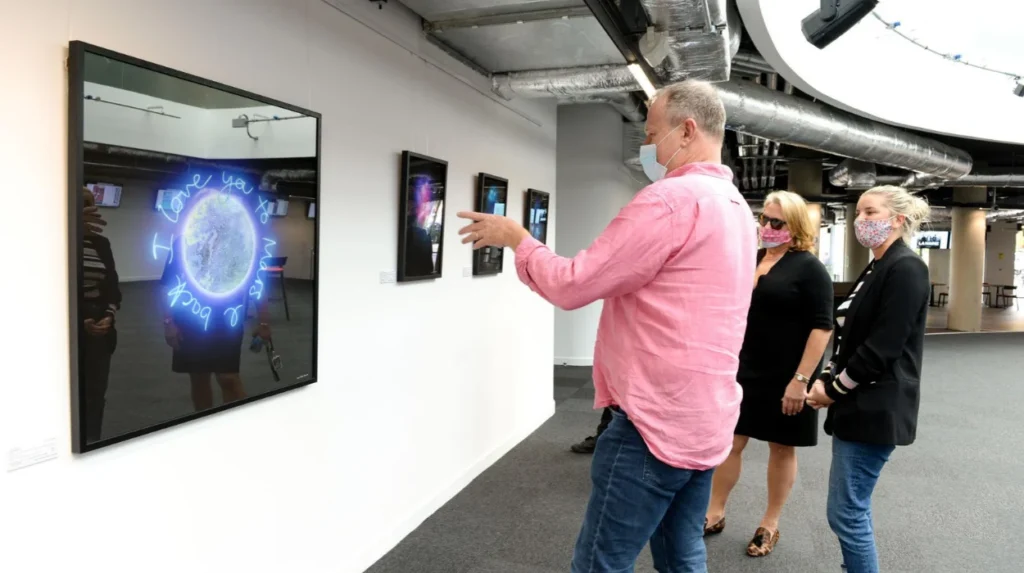
The Riverside Artists Group is one example of organised creative participation in the area. The group exhibits members’ work at venues including Riverside Studios and the Polish Social and Cultural Association (POSK).
In 2025, more than 30 members participated in two group exhibitions. Its activities demonstrate how independent artists collaborate through exhibitions, exhibition design, promotional graphics and artists’ talks.
Hammersmith also provides access to transport connections, commercial clients and professional networks.
Ealing: Graphic Design and Creative Education
Ealing contributes to West London’s design environment through independent businesses, creative professionals and higher education.
The University of West London has its main campus in Ealing. Its Graphic Design (Visual Communication and Illustration) programme covers typography, illustration, print design, motion graphics, animation, interaction design and web design.
The programme combines practical studio work with conceptual and contextual design education. Students develop portfolios that demonstrate their creative and professional capabilities.
This educational presence connects emerging designers with London’s wider creative employment market.
Brent, Harrow and Hounslow: Commercial and Creative Connections
Brent, Harrow and Hounslow contribute to the region through small businesses, commercial services, manufacturing connections and creative professionals.
Brent’s business environment includes organisations requiring branding, advertising, packaging and digital communication.
Harrow supports creative activity through education, independent businesses and professional services. Hounslow benefits from its position near Heathrow Airport and its connections to international commerce.
These areas are important because design services do not depend exclusively on galleries or cultural districts. Local retailers, construction companies, manufacturers and hospitality businesses also require design expertise.
Richmond and Hillingdon: Creative Businesses and Regional Networks
Richmond upon Thames has an established cultural environment, with galleries, independent businesses and arts organisations contributing to local creative activity.
Hillingdon provides commercial connections across West London and the wider metropolitan area. Its proximity to Heathrow supports businesses serving international clients.
Both areas demonstrate how creative professionals operate beyond traditional central London design districts.
What Role Do Universities and Design Schools Play in West London?
Universities and design schools strengthen West London’s creative community through specialist education, practical workshops, research, professional placements and industry partnerships. Brunel University London and the University of West London provide important pathways into contemporary design careers.
Higher education supports the development of technical knowledge and professional experience. It also creates opportunities for students to meet potential employers, collaborate on projects and develop portfolios.
West London’s educational institutions connect traditional design principles with digital production and modern commercial requirements.
Brunel Design School
Brunel University London is based in Uxbridge and operates Brunel Design School.
Its programmes cover industrial design, product design engineering, digital design, motion graphics and visual effects.
The Design School combines creative development with engineering, technology and practical production. Students work with physical and digital design processes, specialist workshops and digital fabrication facilities.
Its undergraduate programmes include:
- Design BSc, covering physical and digital product development.
- Industrial Design BA, focusing on visual design and practical experimentation.
- Digital Design BSc, covering interactive digital products and experiences.
- Product Design Engineering BSc, combining design principles with engineering.
- Visual Effects and Motion Graphics BSc, covering creative media production.
Brunel also offers postgraduate study in areas such as design strategy, innovation and integrated product design.
University of West London
The University of West London contributes to visual communication education through its Graphic Design programme.
Its curriculum covers both traditional and contemporary design methods. Students study typography, illustration, print production, animation, web design and interaction design.
Practical studio sessions help students develop visual communication skills. The programme also connects classroom learning with exhibitions, lectures and professional opportunities in London.
This approach supports graduates entering graphic design agencies, branding studios, publishing, advertising and digital media.
How Does Design Education Support Local Businesses?
Design education supports the local economy by developing skilled professionals and encouraging collaboration between academic institutions and commercial organisations.
Students create portfolios, participate in project-based learning and develop technical skills that businesses require.
Local businesses benefit from access to emerging talent. Educational institutions also contribute research, specialist equipment and opportunities for knowledge exchange.
For example, a product design student develops a prototype using computer-aided design (CAD). A graphic design student creates a brand identity for a commercial brief. Both projects demonstrate how education connects design theory with real business requirements.
How Do Designers and Creative Professionals Collaborate in West London?
West London designers collaborate through independent studios, professional associations, university projects, exhibitions, creative events and commercial partnerships. These connections allow freelancers, agencies, artists and businesses to exchange expertise, share resources and develop projects across different design disciplines.
Collaboration is an important part of professional design practice. Many projects require knowledge from more than one specialist.
A business launching a new product needs more than an attractive logo. It also requires packaging, product photography, website design, marketing materials and a consistent visual identity.
West London’s professional network supports these connected services.
Independent Design Studios and Freelancers
Independent studios provide specialised services to businesses and individuals.
Their work includes brand development, website creation, interior planning, illustration, product design and commercial photography.
Freelancers operate independently or join temporary project teams. This structure allows businesses to access specialist skills without maintaining a permanent in-house design department.
A typical branding project involves a graphic designer, copywriter, photographer and marketing professional. Each person contributes a different skill to the finished identity.
Exhibitions and Creative Events
Exhibitions provide opportunities for designers and artists to present their work to the public.
The Riverside Artists Group demonstrates this model through its annual exhibitions and collaborative programmes.
The group’s 2026 exhibition programme includes Pull Focus at Riverside Studios from 17 March to 3 May 2026 and its annual exhibition at POSK Gallery from 18 to 29 October 2026, according to its published programme. riversideartistsgroup.com
These events connect independent artists with audiences and other creative professionals.
Design exhibitions also encourage discussions about materials, visual communication, artistic techniques and contemporary cultural issues.
Professional Networking and Knowledge Exchange
Networking helps designers identify clients, collaborators and professional opportunities.
Useful networking environments include university events, public exhibitions, industry conferences and local business associations.
Designers also exchange knowledge through digital portfolios, professional communities and online platforms.
For independent professionals, these connections provide access to project referrals and specialist advice.
How Does the West London Design Industry Contribute to the Local Economy?
The West London design industry contributes to economic activity through employment, professional services, product development, advertising, architecture and digital production. Its economic role connects creative businesses with retail, property, manufacturing, hospitality, technology and cultural organisations.
Design has an economic function beyond the production of visual materials. It helps businesses develop products, communicate with customers and improve commercial services.
A well-developed brand identity supports recognition. Effective website design improves digital communication. Product design influences manufacturing decisions, usability and material selection.
These activities create demand for skilled professionals and specialist businesses.
What Do the Creative Industries Statistics Reveal?
The Department for Culture, Media and Sport (DCMS) publishes official statistics measuring the economic contribution of creative industries.
Its 2024 provisional estimates placed UK creative industries gross value added (GVA) at £145.8 billion, representing 5.5% of UK GVA.
London generated approximately 52.4% of this creative industries GVA in 2024. This demonstrates the capital’s importance to the national creative economy.
A separate Skills England assessment, using Business Register and Employment Survey data for 2024, reported that creative industries accounted for 10.7% of employment in London.
Within the West London Alliance Local Skills Improvement Plan geography, the corresponding proportion was 7.7%. The geography covers Barnet, Brent, Hammersmith and Fulham, Harrow, Hillingdon and Hounslow.
These figures measure the wider creative industries, not design professionals alone. They should not be interpreted as the percentage of West London’s workforce employed specifically in graphic, interior or product design.
Why Are Small Businesses and Freelancers Important?
Small businesses and freelancers provide much of the flexibility within the regional creative economy.
The 2022 Brunel University London research identified SMEs and freelancers as the majority of creative businesses across its seven-borough West London research area.
The report also identified film, television, radio and photography as prominent creative activities, followed by design, graphics and fashion, advertising and marketing, and IT software and computer services. |
This structure supports a diverse supplier network.
A small retailer can hire an independent graphic designer. A property developer can appoint an architectural practice. A technology company can contract a user experience designer.
These commercial relationships allow smaller creative businesses to serve different industries.
How Does Design Support Other Industries?
Design professionals contribute to several parts of the regional economy.
In property development, architects and interior designers shape buildings and commercial environments.
In retail, branding specialists develop packaging, signage and promotional materials.
In technology, digital designers improve websites, applications and user interfaces.
In hospitality, interior designers and graphic designers develop customer-facing environments and communication systems.
This cross-sector contribution makes design an important professional service for businesses throughout West London.
What Challenges Does the West London Design Community Face?
West London’s design community faces challenges involving business costs, competition, access to commercial opportunities, digital transformation and professional development. Independent designers and smaller studios need sustainable business models, reliable networks and continuous technical training to remain competitive.
The creative economy provides opportunities, but professional success requires more than artistic ability. Designers must manage finances, communicate with clients, understand commercial requirements and maintain relevant technical skills.
Business Costs and Workspace Availability
Operating a design business in London involves expenses such as workspace rental, software subscriptions, equipment, insurance and professional services.
Independent designers frequently manage these costs without the financial support available to larger agencies.
Access to affordable workspaces is particularly important for designers who need physical facilities. Product designers require equipment and prototyping facilities, while visual artists need suitable studios and exhibition spaces.
Shared workspaces and university facilities provide potential solutions through resource sharing and collaborative working.
Competition and Client Acquisition
West London designers compete with agencies and freelancers across Greater London and international markets.
Digital communication allows businesses to appoint designers from different locations. This expands potential client markets but increases competition.
Independent professionals therefore need strong portfolios, clear service descriptions and reliable client relationships.
Specialisation also helps designers establish professional identities. A studio focusing on sustainable packaging, hospitality interiors or digital branding can communicate its expertise to specific customer groups.
Digital Skills and Technological Change
Design technology continues to change professional workflows.
Computer-aided design, artificial intelligence, 3D modelling, digital illustration and collaborative software influence how projects are developed.
Designers need to understand these technologies while maintaining fundamental skills in research, visual communication, composition and problem-solving.
Artificial intelligence also creates new questions about intellectual property, originality, human involvement and responsible creative production.
Professional development helps designers adapt to changing software and industry expectations.
Access to Professional Opportunities
New graduates and independent designers need access to commercial projects, exhibitions and experienced professionals.
Educational institutions provide a starting point through placements, project work and industry partnerships.
However, building a sustainable career also requires professional networking and consistent portfolio development.
Local exhibitions, university events and independent creative organisations provide practical opportunities to establish relationships.
How Is Sustainability Influencing West London Design?
Sustainability is influencing design through material selection, energy efficiency, product durability, reuse and circular production. West London’s designers apply these principles to buildings, interiors, packaging and consumer products to reduce environmental impacts throughout product and project lifecycles.
Sustainable design considers environmental consequences during planning, production, use and disposal.
It encourages designers to consider the complete lifecycle of a product rather than concentrating only on appearance or initial manufacturing costs.
Sustainable Architecture and Interior Design
Architects and interior designers incorporate environmental considerations into buildings and commercial spaces.
Important design considerations include:
- Energy-efficient lighting and heating.
- Natural ventilation and daylight.
- Recycled and responsibly sourced materials.
- Efficient water systems.
- Durable construction materials.
- Adaptable building layouts.
For example, an office refurbishment can incorporate energy-efficient lighting, recycled furniture and improved insulation.
These decisions influence operational costs and environmental performance.
Circular Product Design
Circular design focuses on keeping materials and products in use for longer.
It encourages repair, reuse, refurbishment and recycling instead of unnecessary disposal.
A furniture designer can select replaceable components and durable materials. A packaging designer can reduce unnecessary material and improve recyclability.
Brunel Design School’s educational offering includes design for sustainability and circular economy, reflecting the growing importance of environmental considerations in contemporary design education.
Responsible Graphic and Digital Design
Sustainability also applies to communication and digital services.
Graphic designers can reduce unnecessary print production by using efficient layouts and responsibly sourced printing materials.
Digital designers can improve website performance through efficient coding, optimised images and accessible interfaces.
These decisions demonstrate how environmental responsibility extends beyond architecture and manufacturing.
Explore More Area Guide
West London Artists: Painters, Sculptors and Creative Studios
Creative Markets in West London: Best Craft and Artisan Markets
How Can People Become Part of the West London Design Community?
People can join West London’s design community through university programmes, independent creative groups, exhibitions, professional networking, volunteering and collaborative projects. Students, experienced designers, business owners and emerging artists can develop connections by participating in local creative activities.
Participation does not require membership of a large design agency. Independent professionals and students can build relationships through public events and local organisations.
Visit Design and Cultural Institutions
The Design Museum in Kensington is a useful starting point for people interested in contemporary design.
Its exhibitions introduce visitors to different creative disciplines, including product development, fashion, architecture and visual communication.
Visitors can explore design history, examine contemporary projects and learn about the relationship between creativity and technology.
Its public programmes also provide opportunities to engage with current design discussions.
Participate in Local Artist Groups
Independent artist organisations provide opportunities for creative participation.
The Riverside Artists Group in Hammersmith is an example of an established organisation that presents members’ work through group exhibitions and public events.
Its exhibitions demonstrate how artists collaborate on curation, exhibition presentation, promotional materials and public engagement.
People interested in joining should consult the organisation’s current membership information and exhibition announcements.
Study Design and Develop a Professional Portfolio
Students and aspiring professionals can explore courses at Brunel Design School and the University of West London.
A professional portfolio should demonstrate practical ability and the development of design ideas.
Useful portfolio material includes:
- Original branding and graphic design projects.
- Website and application interface concepts.
- Product prototypes and technical drawings.
- Interior design plans and visualisations.
- Illustration and motion graphics.
- Research, development and project outcomes.
A strong portfolio explains the design problem, the creative process and the final result.
Build Relationships with Local Businesses
Designers can also approach local businesses to identify professional opportunities.
Independent retailers need branding and promotional materials. Restaurants require menu design and visual identities. Property companies need architectural visualisations and marketing assets.
These projects provide practical experience and help creative professionals develop relationships with commercial clients.
What Is the Future of the West London Design Community?
The future of West London’s design community depends on digital innovation, sustainable production, creative education, business collaboration and access to professional opportunities. Universities, independent studios and cultural institutions will remain important in developing skills and connecting creative talent with industry.
The region’s creative economy is connected to wider changes in technology, employment and consumer behaviour.
Design professionals increasingly work across physical and digital environments. Product development involves digital modelling, while graphic design includes animation, interactive content and artificial intelligence-assisted workflows.
Growth of Digital and Interactive Design
Digital design continues to expand across commercial and cultural industries.
Businesses require accessible websites, mobile applications, interactive services and digital marketing materials.
This creates opportunities for professionals specialising in user experience (UX), user interface (UI), digital branding and motion graphics.
Brunel’s digital design programmes reflect these changing professional requirements through subjects involving interactive products, immersive media and visual effects. Brunel University of London+1
Greater Integration Between Design and Technology
Design and technology increasingly operate together.
Product designers use digital models to test product forms before physical production. Architects use computer-based visualisation to communicate building proposals. Digital designers develop interactive experiences that combine visual communication and software.
This integration requires professionals to understand both creative principles and technical systems.
Stronger Links Between Education and Industry
Educational institutions will continue to support the development of West London’s design workforce.
Industry projects, placements, specialist workshops and research partnerships help students understand commercial requirements.
Brunel Design School and the University of West London provide established educational routes in product design, engineering, graphic design and digital media.
These institutions contribute to the region’s ability to develop emerging creative talent.
Greater Focus on Inclusive and Sustainable Design
Accessibility and environmental responsibility are increasingly important design considerations.
Inclusive design considers the needs of people with different abilities, ages and levels of digital experience.
Sustainable design addresses material consumption, energy efficiency and product longevity.
Both principles influence the development of buildings, public spaces, consumer products and digital services.
Designers who incorporate these considerations into their work contribute to more responsible commercial and public environments.
What is the West London design community?
The West London design community is a network of creative professionals, independent designers, design agencies, educational institutions and cultural organisations working across graphic design, architecture, fashion, interiors and digital media.