

West London contains a substantial collection of listed buildings that record royal history, aristocratic estates, religious development, Georgian architecture, industrial growth, and suburban expansion. These buildings range from major country houses and former palaces to churches, villas, lodges, commercial premises, walls, gates, and other historic structures.
- What is a listed building in West London?
- How does the listed building system work in England?
- Why does West London have so many listed buildings?
- Which historic buildings are listed in Kew?
- What makes Chiswick House important?
- Why is Syon House significant?
- What is important about Osterley House?
- Why is Ham House one of West London’s important historic buildings?
- Is Fulham Palace a listed building?
- What does listing protect on a West London building?
- Does a listed building need special permission for alterations?
- How can you check whether a West London building is listed?
- Can a modern building in West London become listed?
- What happens when an unlisted West London building is at risk?
- How does listing affect West London’s future?
Listing is a form of statutory heritage protection in England. A listed building is recognised for special architectural or historic interest and receives legal protection through the planning system. The National Heritage List for England (NHLE), maintained by Historic England, provides the official record of nationally protected historic buildings and sites.
West London has particularly strong concentrations of historic buildings around places such as uk/local/richmond-upon-thames/kew/">Kew, Richmond, Ham, hounslow/chiswick/">Chiswick, Hounslow, Isleworth, Ealing, Osterley and Fulham. Examples include Kew Palace, Ham House, Syon House, Osterley House, Chiswick House and Fulham Palace. Each reflects a different period and architectural tradition.
The heritage character of West London is closely connected with the River Thames, royal estates, country houses, landscaped parks and the historic villages that were gradually absorbed into Greater London. Listing protects important physical evidence of this development while allowing many historic buildings to continue serving modern residential, cultural, religious, commercial and community uses.
What is a listed building in West London?
A listed building in West London is a structure recognised for special architectural or historic interest and entered on the National Heritage List for England. Listing gives the building statutory protection and controls alterations that affect its special character.
Listing does not simply mean that a building is old. Historic England assesses special architectural or historic interest when considering whether a building should be listed. Architectural interest covers the design, construction, materials and craftsmanship of a building. Historic interest includes important connections with people, events, social history and national development.
Listed buildings include many different building types. Examples include houses, churches, shops, banks, factories, bridges, garden structures and walls. Historic England states that listing is not restricted to castles and large country houses.
West London illustrates this variety particularly well. Kew Palace represents royal residential history. Fulham Palace represents the long ecclesiastical history of the area. Chiswick House represents eighteenth-century architectural and landscape design. Syon House records centuries of aristocratic occupation and later architectural remodelling.
A building does not have to be open to the public to be listed. Many listed buildings remain private homes or serve commercial and institutional purposes.
How does the listed building system work in England?
England uses three listed building grades: Grade I, Grade II and Grade II. Examples include Kew Palace at Grade I, Gunnersbury Park Museum at Grade II, and numerous West London houses and structures at Grade II.**
The three grades indicate the level of architectural or historic importance attached to a listed building. Grade I identifies buildings of exceptional interest. Grade II* identifies particularly important buildings of more than special interest. Grade II covers buildings of special interest that warrant every effort to preserve them. Historic England states that nearly 92% of listed buildings are Grade II.
West London contains examples across the grading system.
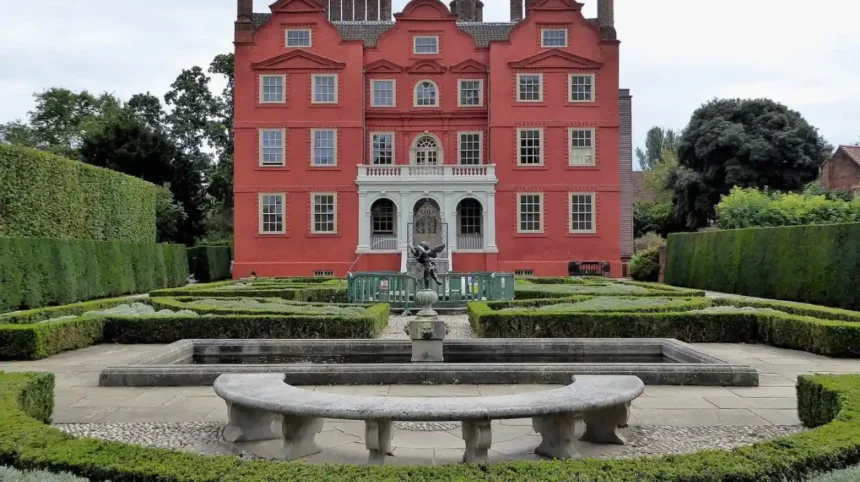
Kew Palace is Grade I. Its official NHLE entry records its royal residential history and dates its first listing to 10 January 1950.
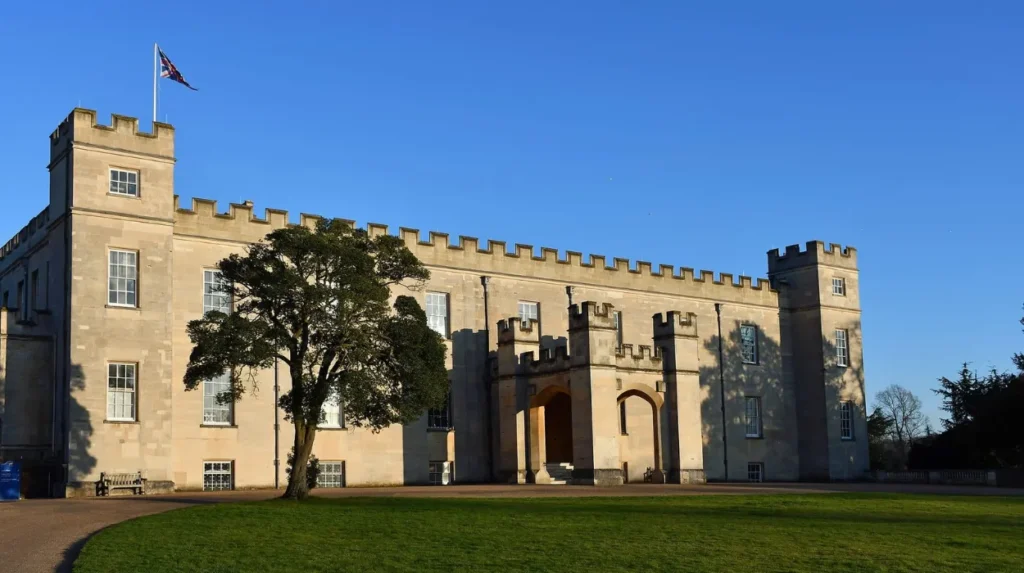
Syon House is also Grade I. Historic England records its first listing date as 15 June 1951 and identifies the building as a nationally protected historic structure in Hounslow.
Osterley House is Grade I and was first listed in 1973.
Gunnersbury Park Museum is Grade II*. Its official listing records the building at Gunnersbury Park House in W5 and confirms its Grade II* status.
Grade does not replace the individual assessment of a building. The official list entry remains important because it identifies the building, its statutory address and the reasons for designation.
Why does West London have so many listed buildings?
West London has many listed buildings because its historic development included royal residences, aristocratic estates, riverside settlements, country houses, landscaped gardens, religious institutions and expanding suburban communities with nationally significant architecture.
The River Thames played a major role in the historical development of West London. Settlements along the river developed connections with agriculture, transport, estates and royal activity. Richmond, Twickenham, Ham, Kew, Isleworth and Chiswick retain evidence of these historical patterns.
Royal associations are particularly important. Kew developed as a royal landscape and residential centre. Kew Palace became a royal residence and remained associated with the royal household into the early nineteenth century. Historic England records that George III and Queen Charlotte lived at Kew Palace and that Queen Charlotte died there in 1818.
Aristocratic estates also shaped the landscape. Syon House developed from a former Bridgettine nunnery site and was substantially reconstructed during the sixteenth century before being remodelled by Robert Adam from the 1760s.
Chiswick became an important centre for eighteenth-century architectural and landscape design. The present Chiswick House was created as a Palladian villa associated with Richard Boyle, the third Earl of Burlington, and architectural ideas influenced by William Kent.
This combination of royal, aristocratic, religious and suburban development produced a wide range of historic structures across the region.
Which historic buildings are listed in Kew?
Kew contains several nationally protected historic buildings, with Kew Palace being a Grade I listed royal residence. Other protected structures around the Royal Botanic Gardens include historic buildings associated with the former royal estate and its eighteenth-century development.
Kew Palace is one of West London’s most significant listed buildings. The building stands within the Royal Botanic Gardens, Kew, and has a Grade I designation. Historic England records its statutory address on Kew Green and its first listing date as 10 January 1950.
The palace developed as part of a wider royal presence at Kew. Its history includes eighteenth-century royal occupation, nineteenth-century decline and later restoration.
The historic environment around Kew Palace extends beyond the main building. Kew Palace Flats, for example, are also Grade I listed. Historic England identifies the structure as a former detached kitchen block associated with the royal palace and dates its construction to the mid-1730s.
Kew therefore demonstrates an important principle of heritage protection. A historic estate can contain several separately designated structures. Their significance can relate to their individual architecture and their relationship with the principal building.
The Royal Botanic Gardens, Kew also has separate heritage designations. Kew Palace remains a listed building, while other heritage assets around the site have different statutory categories.
What makes Chiswick House important?
Chiswick House is an important West London historic building because its Grade I-listed architecture represents eighteenth-century Palladian design and its surrounding landscape records major developments in English garden design, architecture and estate planning.
Chiswick House stands in Chiswick within the London Borough of Hounslow. The house is Grade I listed, while Chiswick House and Gardens is separately registered as a Grade I park and garden. Historic England records the garden registration from 1987.
The present villa was created in the eighteenth century under Richard Boyle, third Earl of Burlington. Colen Campbell was associated with the architectural design, while William Kent contributed to the landscape development.
The site demonstrates how a historic building can be inseparable from its wider setting. The house, gardens, gates, avenues, conservatory and other structures form part of a larger historic landscape.
The Chiswick House Conservatory is itself Grade I listed. Historic England records its construction as a hothouse for fruit species in 1814, followed by later changes to its glazing and heating systems.
The site therefore contains several layers of architectural and horticultural history. Visitors can see how an eighteenth-century villa, nineteenth-century horticultural development and later conservation work exist within one historic landscape.
Why is Syon House significant?
Syon House is a Grade I listed building in Isleworth that combines medieval religious associations, Tudor reconstruction, seventeenth-century history and eighteenth-century Robert Adam interiors within a major historic estate beside the River Thames.
Syon House stands in the London Borough of Hounslow. Historic England lists it as Grade I and records its first listing date as 15 June 1951.
The site’s history extends beyond the present mansion. Historic England records the remains of a Bridgettine nunnery dating from approximately 1430 to 1470. The mansion was substantially reconstructed between 1547 and 1552 and subsequently remodelled by Robert Adam from 1762 onwards.
The estate contains additional listed structures. Examples include the Gate Lodges to Syon House and the Syon Park entrance lodges and gates. The entrance structures are listed separately and form part of the historic architectural composition associated with Syon House.
This arrangement demonstrates how heritage value operates across an estate. The principal house, entrances, lodges, gardens and other structures can each have individual statutory entries while contributing to a wider historic setting.
What is important about Osterley House?
Osterley House is a Grade I listed country house in West London that represents the architectural transformation of an earlier estate into an eighteenth-century mansion associated with Robert Adam and the historic development of the Osterley landscape.
Osterley House stands on Jersey Road in the London Borough of Hounslow. Historic England lists it as Grade I and records its first listing date as 21 May 1973.
The building forms part of a historic estate landscape rather than functioning as an isolated architectural object. Its significance includes its architectural character, historic fabric and relationship with the surrounding estate.
Osterley is also important for understanding the development of country houses within the expanding London region. Estates that once occupied rural landscapes gradually became surrounded by suburban development.
This transformation is a recurring feature of West London heritage. Historic buildings that were originally located outside the metropolitan core now sit within a dense urban environment.
Listing provides a mechanism for managing change while retaining significant historic characteristics.
Why is Ham House one of West London’s important historic buildings?
Ham House is a Grade I listed Jacobean mansion in Richmond upon Thames, completed in 1610 and substantially altered in the seventeenth century, with important surviving interiors, fittings and architectural features.
Ham House stands on Ham Street in the London Borough of Richmond upon Thames. Historic England lists it as Grade I and records its first listing date as 10 January 1950.
The house was completed in 1610 and later enlarged and refurbished between 1672 and 1675. Its official description identifies it as an important Jacobean mansion with a three-storey brick structure and significant surviving interior features.
The surrounding historic landscape also has separate heritage recognition. Ham House’s gardens are registered at Grade II*. Historic England records the gardens as a historic landscape associated with the seventeenth-century house and subsequent restoration.
Ham House demonstrates the importance of interior survival in heritage assessment. Listing is not concerned only with external appearance. Historic fabric, fittings, plan form and internal features can contribute significantly to special architectural or historic interest.
Is Fulham Palace a listed building?
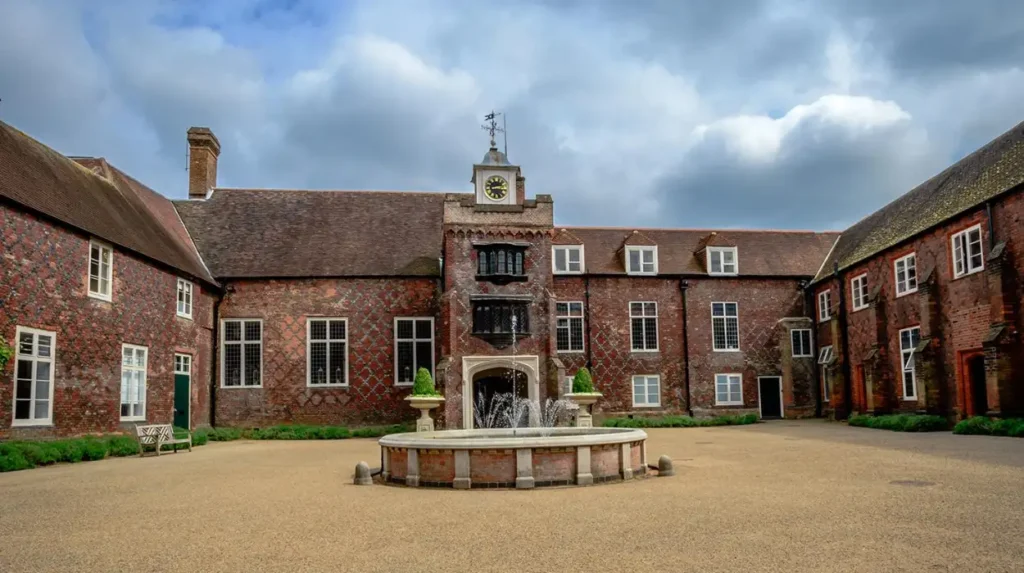
Fulham Palace is a Grade I listed building in Fulham and represents more than 1,000 years of ecclesiastical history associated with the Bishops of London, alongside archaeological and landscape heritage within its historic riverside setting.
Fulham Palace is listed at Grade I on the National Heritage List for England. Historic England records its first listing date as 7 May 1954.
The site also contains a scheduled monument. The Fulham Palace moated site is separately recorded on the NHLE as a scheduled monument, demonstrating that different forms of statutory heritage protection can apply to different elements of one historic place.
Fulham Palace is significant for understanding the historical relationship between Fulham, the River Thames and the Bishops of London. Its long institutional history gives the site a different character from the royal and aristocratic houses found elsewhere in West London.
The combination of listed architecture, archaeology and landscape makes Fulham Palace an important example of layered heritage protection.
What does listing protect on a West London building?
Listing protects the special architectural or historic interest identified through the statutory designation. The protection can extend beyond the main structure to fixed features and, where applicable, associated structures within the listed building’s curtilage.
The precise scope of protection depends on the individual NHLE list entry. Historic England states that, unless a list entry says otherwise, protection includes the structure itself and objects or structures fixed to it, whether inside or outside. It can also include qualifying structures within the building’s curtilage.
This distinction matters for owners and developers.
A listed building is not simply a protected façade. Interior features, architectural details and associated historic structures can fall within the scope of designation.
The list entry should therefore be read before planning works. The statutory address, description and reasons for designation provide essential information about what makes the building significant.
Examples include historic gates, lodges and other structures associated with larger West London estates. Syon House provides a clear example because its entrance lodges and gates have their own listing entries and form part of the historic group associated with the principal house.
Does a listed building need special permission for alterations?
Alterations that affect the character of a listed building as a building of special architectural or historic interest generally require listed building consent. Demolition of a listed building or part of it also requires listed building consent.
Listed building consent is separate from ordinary planning permission. Government guidance states that works involving demolition or alteration or extension that affect the character of a listed building require listed building consent.
The legal framework is primarily established by the Planning (Listed Buildings and Conservation Areas) Act 1990. Under Section 16, the decision-maker must give special regard to preserving the building, its setting and features of special architectural or historic interest.
Planning permission and listed building consent address different legal issues.
A proposal can therefore require both forms of approval. The need depends on the nature of the proposed work.
Common projects requiring careful heritage assessment include extensions, structural alterations, replacement windows, changes to historic interiors, roof alterations, demolition and changes to significant external features.
The appropriate local planning authority should be contacted before work begins.
Unauthorised work to a listed building can create significant legal and conservation problems. Property owners should establish the designation and consent requirements before commissioning building work.
How can you check whether a West London building is listed?
The National Heritage List for England is the official searchable register for nationally protected historic buildings in England. Users can search by building name, location, list entry number, heritage category, local authority and other criteria.
Historic England describes the NHLE as the only official up-to-date register of nationally protected historic buildings and sites in England. The database provides searchable information about listed buildings and other designated heritage assets.
A property search should begin with the exact address. Building names can produce duplicate results because the same name appears in different parts of England.
Users can also search by location and local authority. This is useful when researching West London boroughs and neighbourhoods.
The list entry should then be read in full. Important information includes the list entry number, grade, statutory address, date of listing, official description and reasons for designation.
Historic England also provides downloadable listing data. Its latest data update recorded listed-building geographic datasets updated on 15 September 2026.
For property owners, developers, researchers and local historians, the NHLE is the primary starting point for verifying statutory designation.
Can a modern building in West London become listed?
A building does not have to be centuries old to qualify for listing. Historic England assesses special architectural or historic interest, although buildings less than 30 years old are not normally considered for listing.
Age is one factor within heritage assessment, but it is not the sole test.
Historic England states that buildings can be listed because of architectural interest, historic interest or a combination of both. The assessment can also recognise important connections with nationally significant people, groups or events.
This approach explains why the national listing system contains a wide range of building types and historical periods.
Anyone can recommend an eligible building for inclusion on the National Heritage List for England. Historic England assesses the application and makes recommendations, while the Department for Culture, Media and Sport is responsible for the final decision where the Secretary of State is involved.
Listing is therefore not restricted to famous royal buildings or major monuments.
West London’s architectural heritage includes ordinary buildings and structures whose significance comes from their design, historical associations, survival or contribution to the understanding of a particular period.
Explore More Area Guide
Historic Buildings in West London: Houses, Palaces & Heritage
Historic Villages in West London: Hanwell, Chiswick & Northolt
What happens when an unlisted West London building is at risk?
An unlisted building at risk of demolition or damaging development can receive temporary protection through a Building Preservation Notice while Historic England assesses whether it should be added to the National Heritage List for England.
A Building Preservation Notice, or BPN, is a statutory planning tool available to local planning authorities. Historic England states that a BPN protects a potentially significant unlisted building for up to six months while the listing assessment proceeds.
During the protection period, the building receives the same protection powers that apply to a listed building.
The system provides an important safeguard where an unlisted building faces an immediate development threat.
Historic England also operates a separate Certificate of Immunity from Listing process. A Certificate of Immunity provides certainty that a building will not be listed for five years, subject to the statutory framework.
These mechanisms are relevant to West London because development pressure and historic buildings frequently overlap. The procedures provide a formal way to address uncertainty over national listing status.
Local heritage policies and conservation-area controls can provide additional protection where national listing does not apply.
How does listing affect West London’s future?
Listed buildings help retain physical evidence of West London’s development while allowing carefully managed adaptation. Their future depends on conservation, appropriate maintenance, informed planning decisions and continued understanding of their architectural and historic significance.
West London’s historic buildings remain part of an active urban environment. They are not isolated museum objects.
Historic houses function as visitor attractions, museums, cultural venues and private residences. Other listed structures remain churches, homes, commercial buildings, community facilities and estate buildings.
Their continued use requires adaptation. Modern requirements include accessibility, energy efficiency, fire safety, structural maintenance and building services. Each intervention must account for the significance identified through the heritage designation.
The statutory planning system provides the framework for managing these changes. Historic England’s guidance emphasises that listing does not prevent all change. Instead, changes that affect special interest must be managed through the planning system.
West London’s listed buildings therefore remain relevant to both heritage conservation and modern urban planning.
The strongest understanding of the area’s heritage comes from viewing individual buildings within their wider historical settings. Kew Palace connects to the royal history of Kew. Chiswick House connects architecture with landscape design. Syon House connects medieval religious history with Tudor and Georgian rebuilding. Ham House preserves Jacobean and seventeenth-century domestic history. Fulham Palace combines ecclesiastical, archaeological and riverside heritage.
Together, these sites demonstrate the historical depth of West London and explain why listed buildings remain an important part of the region’s identity, planning framework and built environment.
Historic England’s National Heritage List remains the authoritative starting point for checking the current designation, grade and statutory details of any individual building. Listing records can be amended, so property owners and researchers should always consult the current entry before making decisions about a historic property.
What is a listed building in West London?
A listed building in West London is a structure recognised for special architectural or historic interest and included on the National Heritage List for England. Listing provides statutory protection through the planning system.