

West London contains former villages that preserve evidence of medieval settlement, agricultural life, parish communities, coaching routes, river trade, canals, country estates and railway expansion. Places such as uk/local/ealing/hanwell/">Hanwell, Northolt, Perivale, Greenford, Acton, Ealing, hounslow/chiswick/">Chiswick, Brentford, Cranford and Heston developed from rural settlements into parts of modern London. Their historic identity remains visible in village greens, churches, conservation areas, historic houses, old roads and surviving open spaces.
- What are the historic villages in West London?
- Which West London villages have the oldest recorded histories?
- How did farming shape the historic villages of West London?
- What can visitors see in historic Hanwell?
- Why is Northolt important to West London’s village history?
- What makes Perivale different from other historic West London villages?
- How did Greenford change from village to suburb?
- What is the historic significance of Acton and Ealing?
- Why is Chiswick considered one of West London’s historic settlements?
- What historic villages can be found around Brentford, Heston and Cranford?
- How did railways, canals and roads transform West London’s historic villages?
- How are historic village areas protected in West London today?
- Why do historic villages matter to West London’s identity today?
What are the historic villages in West London?
Historic villages in West London are former rural settlements that developed before modern suburban London. Hanwell, Northolt, Perivale, Greenford, Acton, Ealing, Chiswick, Brentford, Cranford and Heston retain evidence of their earlier village structures.
The term “historic village” describes a settlement with identifiable historical origins, buildings, landscapes, roads or community institutions. It does not mean that every place remains a legally defined village today.
Much of modern West London belonged historically to Middlesex. Before twentieth-century suburban expansion, settlements were separated by farmland, commons, meadows, orchards and waterways. Agriculture formed an important part of local economic life.
Ealing Council records that Ealing, Hanwell, Acton and Southall stood on the principal road between London and Oxford, while Greenford, Perivale and Northolt were more rural and remained small villages until after the First World War.
The historic geography changed substantially during the nineteenth and twentieth centuries. Railways, roads, trams, canals and industrial development connected the former villages more closely to London.
Today, the historic character survives unevenly. Some areas retain village greens and medieval churches. Others preserve historic street patterns within dense residential districts.
Which West London villages have the oldest recorded histories?
Northolt, Greenford, Hanwell, Perivale, Acton and Chiswick have particularly deep recorded histories. Their documentary evidence includes Domesday references, medieval churches, agricultural records, ancient roads, parish structures and surviving historic landscapes.
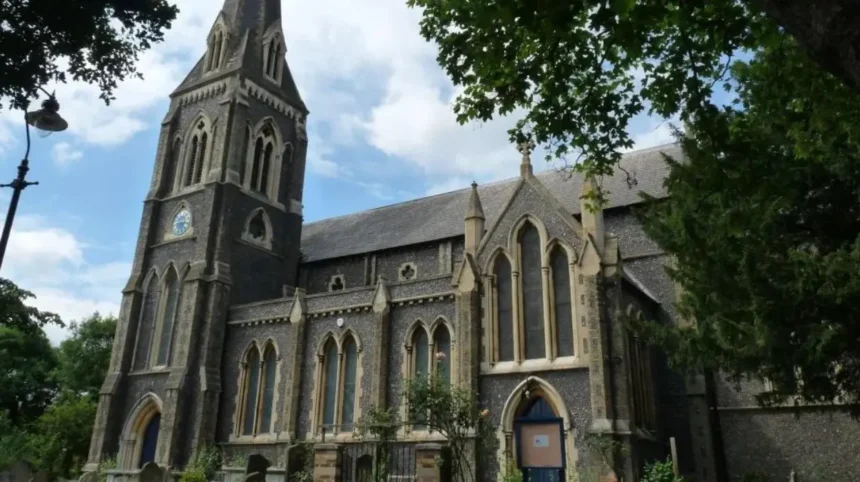
Northolt was recorded as Northala in the Domesday Book of 1086. The settlement had a priest, villagers, cottagers and enslaved people, alongside pasture and woodland. The present parish church contains medieval fabric dating from the thirteenth and fourteenth centuries.
Greenford also appears in the Domesday Book of 1086. Its population was about 130, with farming forming the principal occupation. The settlement developed around Holy Cross Church, which has medieval origins.
Hanwell has a similarly long history. Ealing Council describes it as an ancient village dating from the fifth or sixth centuries. The settlement appears in the Domesday Book, which records farmland, meadowland, a mill and a population of about 100.
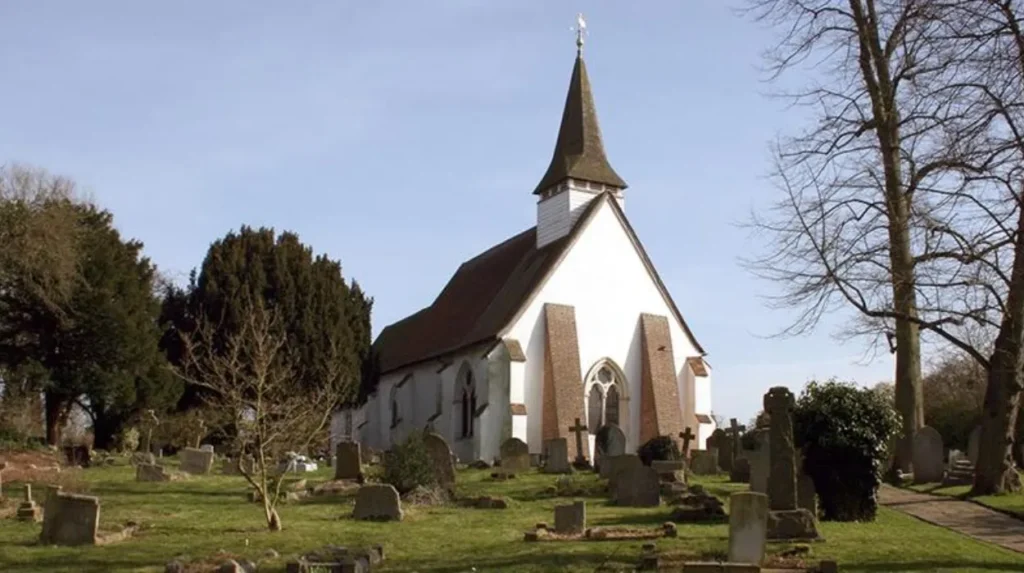
Perivale developed as a very small agricultural parish. It had only 633 acres and fewer than 100 residents for much of its early recorded history. St Mary’s Church dates to at least the early thirteenth century.
Acton’s name derives from Anglo-Saxon and means “Oak Town”. Its first recorded documentary mention dates to 1181. The medieval settlement developed around the Uxbridge Road and St Mary’s parish church.
Chiswick has several historic settlement cores rather than a single original village centre. Hounslow’s historical assessment identifies Old Chiswick, Strand-on-the-Green, Turnham Green, Little Sutton and Stamford Brook as distinct historic locations.
How did farming shape the historic villages of West London?
Farming shaped West London’s early villages through fields, pasture, market gardens, mills, farmhouses and parish land. Greenford, Perivale, Northolt and Hanwell remained agricultural communities for centuries before railways, roads and industrial development transformed their landscapes.
Agriculture was central to West London’s pre-industrial economy. Villagers produced crops, raised livestock and worked in occupations connected with farming.
Greenford’s medieval population was predominantly involved in agriculture. The settlement remained a rural farming parish through much of the nineteenth century.
Perivale provides particularly clear evidence of this agricultural landscape. Wheat was an important crop during the sixteenth and seventeenth centuries. By 1839, much of the land had shifted towards grass production for hay supplied to the London market.
Perivale had only five inhabited buildings in both 1664 and 1841 according to Ealing Council’s local history record. These buildings were farmhouses, including Horsenden Farm, Grange Farm, Church Farm, Manor Farm and Alperton Farm.
Northolt also remained strongly agricultural during the medieval period. Arable farming dominated, supported by woodland and meadow. In 1921, the settlement still had only 904 residents before rapid twentieth-century expansion.
Hanwell’s historic landscape also included farmland and meadow. Its Domesday description records agricultural land and a mill, illustrating the relationship between settlement, farming and local water resources.
These agricultural origins explain why some West London neighbourhoods still contain open landscapes, village greens, old farm names, ancient field patterns and churches surrounded by later development.
What can visitors see in historic Hanwell?
Hanwell retains a strong historic identity through St Mary’s Church, the former village landscape, old roads, canal infrastructure and surviving heritage buildings. Its history extends from early medieval settlement through agriculture, coaching, railways and rapid nineteenth-century urban growth.
Hanwell is one of West London’s clearest examples of a former village transformed into a suburban district.
Its name is thought to derive from Old English elements associated with a cock and a stream. Ealing Council describes Hanwell as an ancient village with origins in the fifth or sixth centuries.
The Domesday Book records agricultural land, meadowland and a mill at Hanwell. The settlement had about 100 people, most of whom worked as agricultural labourers, alongside a small number of craftsmen.
St Mary’s Church is another important historical landmark. The present church dates from 1842, although the parish itself is considerably older. The churchyard also contains the grave of Jonas Hanway, the eighteenth-century traveller and writer associated with promoting the use of umbrellas.
Transport transformed Hanwell. A railway station opened in 1838, while electric trams began operating through Hanwell in 1901. Improved transport encouraged housing development and increased the population.
The scale of change is visible in population figures. Hanwell had 817 residents in 1801 but 20,485 residents by 1921. Much of the increase occurred between 1891 and 1921.
Hanwell therefore demonstrates how a small agricultural village became a substantial suburban community while retaining elements of its historic identity.
Why is Northolt important to West London’s village history?
Northolt is important because its medieval settlement, Domesday reference, historic parish church and surviving Village Green document its transformation from agricultural village to twentieth-century suburb. Its history shows how roads, housing and transport changed rural West London.
Northolt was recorded as Northala in the Domesday Book in 1086. The modern name appeared later, towards the end of the sixteenth century.
The settlement had a church by the Domesday period because a priest was recorded. The current St Mary’s Church contains medieval elements, including parts dating from the thirteenth century.
Northolt remained rural well into the twentieth century. In 1921, only 904 people lived there. During the following decade, its population tripled. By 1961, the population had reached almost 26,000.
Western Avenue, constructed through the area in 1934, helped accelerate suburban development. Housing construction during the 1920s and 1930s replaced parts of the earlier rural landscape.
Northolt’s historic Village Green remains particularly important because it provides a visible connection with the area’s earlier village character. Ealing Council identifies it as a surviving reminder of Northolt’s former rural identity.
The Northolt example demonstrates that historic village character can survive even after extensive twentieth-century housing development.
What makes Perivale different from other historic West London villages?
Perivale was one of Middlesex’s smallest historic parishes, with fewer than 100 residents for centuries. Its medieval church, former farmhouses, agricultural landscape, canal infrastructure and later factories reveal a dramatic transition from rural parish to industrial suburb.
Perivale’s small scale distinguishes it from larger historic settlements.
The parish covered only 633 acres and had fewer than 100 residents until the twentieth century. In 1801, only 28 people lived there. By 1901, the population was just 60.
St Mary’s Perivale is the area’s principal medieval landmark. The church dates from at least the early thirteenth century and provides direct evidence of the parish’s medieval community.
The Grand Junction Canal’s Paddington branch reached the parish in 1801. The canal changed the local economic landscape and supported connections between West London and wider markets.
The twentieth century brought a major transformation. Western Avenue and improved transport encouraged industrial and residential development.
Factories were built across Perivale between 1930 and 1939, particularly around Western Avenue, Horsenden Lane and the canal. The area therefore shifted rapidly from farmland to an industrial landscape.
Perivale demonstrates how transport infrastructure can transform an exceptionally small historic parish without completely removing its older landmarks.
How did Greenford change from village to suburb?
Greenford developed from a medieval farming settlement into an industrial and residential suburb. Its Domesday history, Holy Cross Church, village green, William Perkin’s dye works and twentieth-century factories document the transition from agricultural parish to modern West London district.
Greenford is first recorded in the Domesday Book of 1086. The settlement had about 130 residents, with farming dominating economic activity. Westminster Abbey owned the manor at that time.
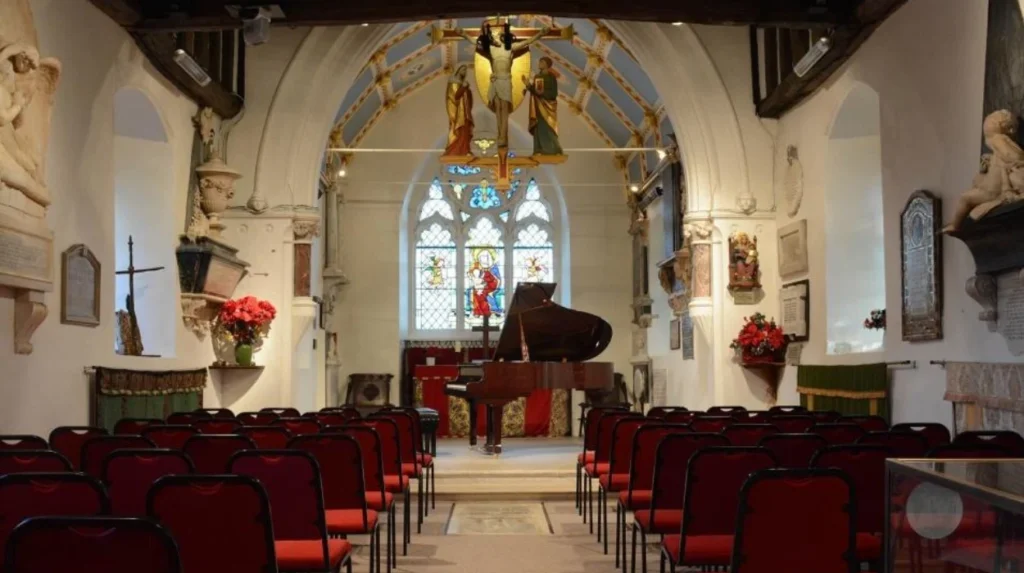
Holy Cross Church formed an important centre of the historic village. Medieval remains and later additions demonstrate the long continuity of parish life.
Greenford also became associated with industrial innovation. William Henry Perkin established a dye factory near Greenford Green in 1857. Perkin had developed synthetic mauveine, an early commercially successful synthetic dye, in 1856.
The factory changed the area’s economic profile. The works expanded during the nineteenth century before closing in 1880. A later phase of industrial development took place during the twentieth century.
Ealing Council’s historic records show that Greenford’s population increased rapidly during the 1920s and 1930s. The area ceased to function primarily as an agricultural village and became a suburban and industrial district.
Today, historic features such as Holy Cross Church and the Greenford village area provide evidence of the earlier settlement.
What is the historic significance of Acton and Ealing?
Acton and Ealing developed from historic Middlesex settlements along important routes into London. Coaching, wealthy country residences, railways, trams and suburban housing transformed both areas while historic churches, roads, conservation areas and buildings preserved elements of their earlier identities.
Acton developed along the Uxbridge Road, one of the important routes west from London. Its medieval settlement concentrated around the road and St Mary’s parish church.
During the seventeenth and eighteenth centuries, Acton attracted members of the gentry and minor court circles. Acton Wells also became known for mineral water associated with health claims of the period.
Transport again drove change. Stagecoach services connected Acton with London during the eighteenth century. Horse trams followed in the nineteenth century, while electric trams operated along the Uxbridge Road from 1901 to 1936.
Ealing was also a small settlement for much of its history. Ealing had only 428 residents in 1598, according to Ealing Council’s historical account.
The arrival of railways in 1838 contributed to wider growth across the district. By the late nineteenth century, improved railway, tram and bus connections allowed increasing numbers of residents to travel between West London and central London.
Modern Ealing retains substantial heritage. The council identifies almost 600 listed buildings and 30 conservation areas across the borough, including areas containing remnants of ancient villages.
Why is Chiswick considered one of West London’s historic settlements?
Chiswick developed from several historic settlement centres beside the River Thames. Old Chiswick, Strand-on-the-Green, Turnham Green, Little Sutton and Stamford Brook grew through fishing, farming, river transport, estates, railways and residential development.
Chiswick’s historical structure is more complex than a single village centre. Hounslow’s historical assessment identifies five distinct early locations: Old Chiswick, Strand-on-the-Green, Turnham Green, Little Sutton and Stamford Brook.
The medieval economy included fishing, water transport, boat building and farming. Its position beside the Thames gave the settlement access to river transport and food resources.
Chiswick House provides one of the area’s most important historic landmarks. The early eighteenth-century villa was designed by Richard Boyle, 3rd Earl of Burlington, and became an important example of English neo-Palladian architecture. English Heritage describes its gardens as an important early development in the English landscape garden tradition.
Chiswick was still described as a country village around the end of the seventeenth century, when fields separated Chiswick House from the River Thames.
Railways brought another major transformation. Hounslow’s historical assessment identifies the railway’s arrival in 1849 as a major factor behind population growth and residential expansion.
The district retains historic riverfront buildings, conservation areas, Chiswick House and Gardens, historic churches and older street patterns.
What historic villages can be found around Brentford, Heston and Cranford?
Brentford, Heston and Cranford represent important historic settlements in the western part of the modern London Borough of Hounslow. Their heritage includes river crossings, village centres, historic churches, estates, agricultural landscapes and surviving conservation areas.
Brentford developed around the River Brent’s meeting with the Thames. Its historic importance was closely connected with transport, water and the route west from London.
The settlement has very old origins. Archaeological evidence from the Brentford area includes prehistoric material, while the name was recorded in Anglo-Saxon documentation.
The English Civil War also affected Brentford. A battle took place there in November 1642 during the conflict between Royalist and Parliamentarian forces.
Heston and Cranford retain different forms of village heritage. Hounslow Council maintains conservation area appraisals for Heston Village and Cranford Village, recognising their historic character within the modern borough.
Hounslow currently has 29 conservation areas. Conservation-area designation recognises areas of special architectural or historic interest and introduces additional planning controls intended to preserve and enhance their character.
These settlements demonstrate that West London’s historic village network extends beyond Ealing’s boundaries into the wider Hounslow area.
How did railways, canals and roads transform West London’s historic villages?
Railways, canals, trams and major roads transformed West London’s villages by improving movement, encouraging factories and housing, increasing commuting and connecting rural settlements with central London. Hanwell, Perivale, Northolt, Greenford and Chiswick show this transformation clearly.
Transport was one of the strongest forces behind West London’s suburbanisation.
The railway reached Hanwell in 1838 and Ealing in the same period. Chiswick gained railway connections in 1849. These links reduced the practical separation between historic villages and central London.
Canals also played an important role. The Grand Junction Canal system connected parts of West London with national waterways. Its Paddington branch passed through Perivale from 1801.
Trams expanded local connectivity. Electric trams operated through Hanwell from 1901, while Acton’s Uxbridge Road received electric tram services between 1901 and 1936.
Road construction accelerated twentieth-century growth. Western Avenue was built during the 1930s and contributed to development in Northolt, Greenford and Perivale.
The result was a fundamental change in settlement structure. Agricultural villages became commuter districts, industrial centres and residential suburbs.
Explore More Area Guide
History of West London: Roman Roads, Royals, Wembley & Heathrow
Hayes Restaurants: Best Places to Eat in West London
How are historic village areas protected in West London today?
Historic village character is protected through conservation areas, listed buildings, heritage policies, archaeological designations and local planning controls. Ealing and Hounslow both use conservation-area frameworks to manage development around historic buildings and landscapes.
Conservation areas are legally defined areas of special architectural or historic interest where preserving or enhancing character is considered desirable under the Planning (Listed Buildings and Conservation Areas) Act 1990.
Ealing currently has 30 conservation areas. The council states that these include nineteenth- and early twentieth-century residential development, open spaces, industrial and transport heritage, and remnants of ancient villages.
Hounslow has 29 conservation areas. Its conservation-area system covers historic places including Cranford Village, Heston Village, Chiswick and other areas with significant architectural or historical character.
fulham/hammersmith/">hammersmith-and-fulham/">Hammersmith and Fulham also contains historic village centres. The borough identifies archaeological priority areas around the historic centres of Hammersmith, Fulham and Walham Green.
Listed buildings receive additional statutory protection. Ealing identifies almost 600 listed buildings across the borough, while Hammersmith and Fulham identifies around 500 designated buildings and structures.
These systems do not freeze neighbourhoods in time. They provide planning mechanisms for managing change while retaining important historic character.
Why do historic villages matter to West London’s identity today?
Historic villages matter because they explain how West London developed from rural Middlesex settlements into a major part of Greater London. Their churches, greens, roads, waterways, conservation areas and historic buildings preserve evidence of centuries of social and economic change.
West London’s historic villages provide a chronological record of urban development.
Medieval settlements such as Northolt, Greenford and Hanwell show the importance of agriculture, parish institutions and local land ownership. Perivale demonstrates the scale of small rural parishes before suburbanisation.
Chiswick and Brentford illustrate the importance of rivers and waterways. Acton and Ealing demonstrate how roads, coaching and transport connections encouraged growth.
The nineteenth century introduced railways and industrialisation. The twentieth century brought extensive housing construction, road infrastructure, factories and metropolitan expansion.
The administrative map also changed. Hanwell, Greenford and Perivale were incorporated into Ealing in 1926, while Northolt joined in 1928. In 1965, Ealing, Acton and Southall became part of the newly created London Borough of Ealing.
The same period saw historic Middlesex settlements absorbed into Greater London’s expanding urban structure.
Their historic importance therefore extends beyond individual buildings. The surviving pattern of streets, churches, village greens, waterways, estates and open spaces explains the development of West London as a whole.
For visitors, residents and researchers, these places provide opportunities to understand London’s growth through physical evidence rather than through modern boundaries alone.
West London’s historic villages are therefore best understood as surviving layers within a continuously changing metropolitan landscape. Their medieval origins, agricultural past, transport history, industrial development and modern conservation status connect today’s neighbourhoods with the settlements that existed before Greater London became the dominant urban landscape.
What are the historic villages in West London?
Historic villages in West London are former rural settlements that existed before modern suburban development. Important examples include Hanwell, Northolt, Perivale, Greenford, Acton, Ealing, Chiswick, Brentford, Heston and Cranford. Their heritage includes medieval churches, village greens, historic roads, farms, waterways and conservation areas.