

Ealing restaurants form one of West London’s most varied dining landscapes, combining independent restaurants, international cuisines, cafés, casual dining venues, pubs, takeaways and food outlets within a borough shaped by migration, transport growth and expanding town centres.
- What types of restaurants can you find in Ealing?
- Where are the main restaurant areas in Ealing?
- Why is Ealing known for international food?
- What can you eat at Ealing Broadway restaurants?
- What food is Southall known for?
- How does Ealing’s history influence its restaurant culture?
- How are Ealing restaurants regulated for food safety?
- How should visitors choose restaurants in Ealing?
- What is the future of Ealing’s restaurant scene?
uk/local/ealing/">Ealing is a London Borough in West London. Its restaurant scene reflects the area’s residential character, commercial centres and culturally diverse communities. Ealing Broadway provides a concentrated shopping and dining destination, while Southall has a particularly strong South Asian food identity.
The history of Ealing also helps explain its food culture. Ealing developed around an important east-west road that later became the Uxbridge Road. Historic inns served travellers along this route, while the surrounding parish remained largely agricultural for centuries.
Modern Ealing is significantly more urban. Railways arrived in 1838, improving connections with London and contributing to population growth. Ealing became a borough in 1901, while the modern London Borough of Ealing was created in 1965 through the combination of Ealing, Acton and Southall boroughs.
That transformation created the conditions for a restaurant market serving residents, commuters, shoppers, families, visitors and evening customers.
What types of restaurants can you find in Ealing?
Ealing has restaurants covering Indian, Pakistani, Punjabi, Japanese, Pan-Asian, Lebanese, Caribbean, Italian and British food, alongside cafés, bakeries, casual dining venues, vegetarian choices, takeaways and international food outlets across Ealing Broadway, Southall and surrounding districts.
The restaurant offer is distributed across several commercial areas rather than concentrated in one street.
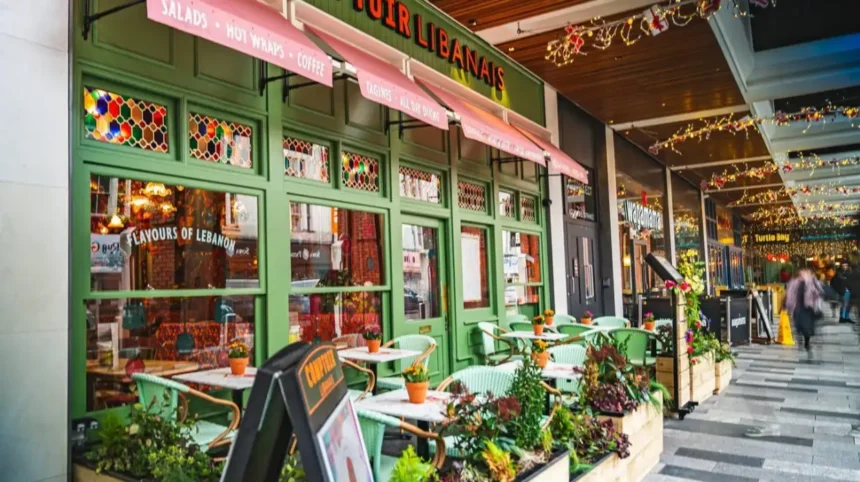
Ealing Broadway is one of the most prominent dining hubs. Its official food directory lists restaurants and food outlets including Wagamama, Turtle Bay, Wasabi, itsu, Comptoir Libanais, Ichimaru Udon and other cafés and specialist food businesses.
This creates a broad choice within a relatively accessible shopping environment. Japanese food is represented through sushi, noodles and other Japanese dishes. Pan-Asian dining is represented by restaurants such as Wagamama. Lebanese cuisine adds a Middle Eastern option, while Caribbean food is available through established restaurant brands.
Southall provides a different food environment. Visit London identifies the area as having strong Indian and Pakistani roots and highlights Punjabi, Sri Lankan, Pakistani and South Indian restaurants. Vegetarian food is also widely represented.
The distinction between these areas is useful for visitors. Ealing Broadway is strongly associated with shopping, mainstream restaurants, cafés and convenient dining. Southall provides a more specialised South Asian food environment with restaurants, bakeries, sweet shops and food stalls.
Other Ealing neighbourhoods add independent cafés, pubs, local restaurants and smaller food businesses. The result is a dining market that works for quick meals as well as longer restaurant visits.
Where are the main restaurant areas in Ealing?
The main restaurant areas include Ealing Broadway, Ealing town centre, Southall Broadway, Uxbridge Road and neighbourhood high streets, with different districts offering distinct combinations of restaurants, cafés, takeaways, bakeries and specialist international food businesses.
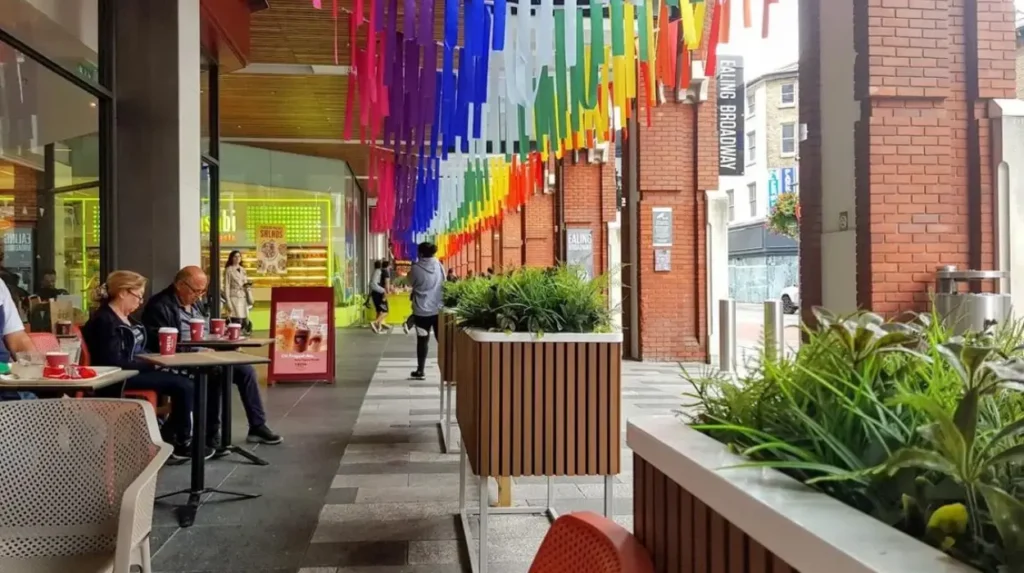
Ealing Broadway is the most recognisable central dining destination for visitors. The shopping centre and surrounding streets contain restaurants, cafés and quick-service food outlets. The official Ealing Broadway directory currently lists businesses across areas including The Broadway, High Street, Broadway Circle, The Colonnades and Town Square.
The concentration around Ealing Broadway makes the area suitable for visitors who want to combine food with shopping and other town-centre activities.
Southall Broadway has a different commercial identity. The main shopping area follows Uxbridge Road, and Visit London describes the district as a major destination for Indian, Pakistani, Punjabi, Sri Lankan and South Indian food.
Uxbridge Road itself has historical significance. Ealing Council records that the road originally connected London and Oxford and was lined with inns where travellers could change horses and refresh themselves.
The modern restaurant landscape therefore sits on top of a long-established transport and commercial corridor.
Neighbourhood centres outside the major destinations provide another layer. These smaller areas typically combine restaurants with cafés, pubs, shops and everyday services. They are particularly relevant to residents who want local dining without travelling to a major shopping centre.
For visitors, identifying the dining district first helps narrow the search. Ealing Broadway suits a broad range of cuisines and convenient dining. Southall suits visitors specifically looking for South Asian food and associated sweets, bakeries and snacks.
Why is Ealing known for international food?
Ealing’s international restaurant scene reflects decades of migration and community development, particularly after the Second World War, when Caribbean, Indian, Pakistani, Polish and other communities contributed to the borough’s changing population, businesses and cultural identity.
Food diversity in Ealing has a documented historical foundation.
Ealing Council records that Caribbean communities moved into Ealing after the Second World War as people arrived to help rebuild Britain. The council also records larger-scale immigration during the 1960s from India, Pakistan, Poland and other countries.
These demographic changes affected local commerce as well as residential communities. Restaurants, bakeries, grocery businesses and specialist food shops became part of the commercial landscape.
Southall is particularly important within this history. Its Indian and Pakistani heritage has helped establish a restaurant economy strongly associated with Punjabi, South Indian, Pakistani and Sri Lankan cuisine. Visit London also identifies vegetarian dining as a significant part of the local food offer.
International food in Ealing therefore represents more than a collection of restaurant categories. It is connected to the borough’s post-war social history and the development of communities across West London.
The variety also extends beyond South Asian cuisine. Ealing Broadway currently lists Japanese, Pan-Asian and Lebanese restaurants alongside cafés and other international food businesses.
This diversity creates different dining patterns. A visitor can choose between a shopping-centre restaurant, an independent neighbourhood business, a South Asian restaurant on Southall Broadway or a specialist café.
For search users, terms such as “Indian restaurants Ealing,” “Japanese restaurants Ealing,” “restaurants near Ealing Broadway” and “restaurants in Southall” represent different forms of dining intent even though they fall within the broader Ealing restaurant category.
What can you eat at Ealing Broadway restaurants?
Ealing Broadway restaurants provide Japanese, Pan-Asian, Lebanese, Caribbean, international fast-casual and café food, with options ranging from sushi and noodles to Lebanese dishes, brunch, coffee, desserts, snacks and quick meals for shoppers and commuters.
Ealing Broadway has a particularly broad commercial food mix.
The official centre directory lists Wagamama, Ichimaru Udon, Wasabi and itsu among Japanese and Pan-Asian-oriented choices. Comptoir Libanais provides Lebanese cuisine. Turtle Bay provides Caribbean-inspired dining. Other listed businesses cover coffee, desserts, snacks and quick-service food.
Japanese food appears in several formats. Wasabi provides sushi, hot dishes, noodles, salads and related Japanese food, while Ichimaru Udon focuses on Japanese comfort food including noodles, katsu curry, tempura and bento.
This illustrates an important feature of the Ealing Broadway restaurant market: cuisine categories often contain different formats.
A visitor looking for Japanese food can therefore choose between quick-service sushi and a dedicated noodle restaurant. Someone looking for a casual international meal can choose from several established chains and food outlets.
Cafés provide another part of the offer. The current Ealing Broadway directory includes businesses such as Blank Street Coffee, Jamaica Blue, Chantal Café and other food and drink outlets.
The centre also provides options for desserts and snacks. The directory includes Lola’s Cupcakes, Hotel Chocolat, Auntie Anne’s and Bubble Magik.
The result is a dining environment that accommodates several visit lengths. Customers can stop for coffee, eat a quick lunch, meet for brunch, have an evening meal or choose a dessert after shopping.
Opening times vary between individual businesses. Ealing Broadway specifically advises customers to check individual restaurant websites for current opening times.
What food is Southall known for?
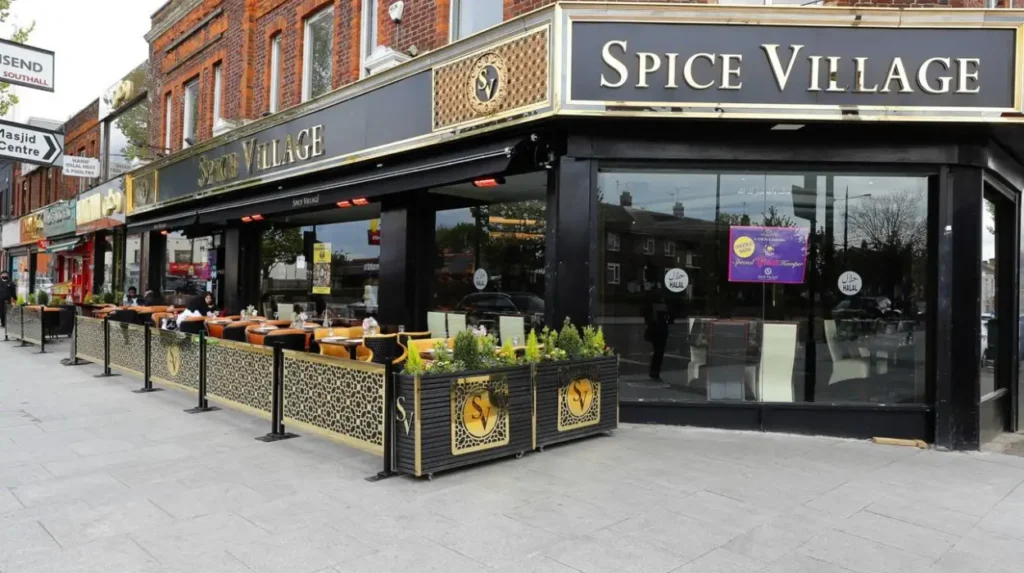
Southall is particularly associated with Indian, Pakistani, Punjabi, Sri Lankan and South Indian food, alongside vegetarian dishes, Indian sweets, bakeries, street food and specialist food shops concentrated around Southall Broadway and Uxbridge Road.
Southall is one of the most distinctive food destinations within the London Borough of Ealing.
Visit London describes Southall as an area with strong Indian and Pakistani roots and highlights its Punjabi, Sri Lankan, Pakistani and South Indian restaurants.
The food environment extends beyond conventional restaurants. Visitors can find samosas, Indian sweets, bakeries and street food alongside sit-down dining. Traditional jalebi is specifically highlighted as a local food experience.
Vegetarian food is also an important part of the area’s restaurant offer. This is relevant for visitors searching specifically for vegetarian South Asian dining.
Southall’s food culture connects directly with its wider commercial identity. Shops, market stalls, restaurants and specialist businesses operate together along the main commercial streets.
The area also has an important Sikh cultural presence. Sri Guru Singh Sabha Gurdwara on Havelock Road is one of the largest Sikh temples outside India, according to Visit London.
This cultural environment contributes to the character of Southall as a destination for food and community-based tourism.
Visitors should distinguish between restaurant dining and street or market food. Restaurants provide table-service environments and structured menus, while bakeries, food stalls and specialist shops provide snacks, sweets and takeaway food.
Southall is therefore particularly relevant for searches involving Indian restaurants, Punjabi food, Pakistani restaurants, vegetarian South Asian food, Indian sweets and Southall food markets.
How does Ealing’s history influence its restaurant culture?
Ealing’s restaurant culture developed alongside transport expansion, urbanisation and migration. The Uxbridge Road, railway arrival in 1838, post-war immigration and the creation of the modern borough in 1965 all contributed to today’s diverse commercial and dining environment.
Ealing was not always an urban restaurant destination.
Ealing Council records that the historic parish consisted largely of countryside and agricultural land. Farming produced crops including rye, wheat and maslin, while livestock included cows, sheep and chickens.
The Uxbridge Road was an important early transport route. Inns along the road provided food and refreshment for travellers. This established an early connection between movement through Ealing and commercial hospitality.
Rail transport changed the area’s development. The railway arrived in 1838, and improved transport helped Ealing develop from a village environment into a growing town.
By the late nineteenth century, trams, buses and trains made travel between Ealing and central London easier. Ealing became increasingly residential, while neighbouring Acton and Southall developed major industrial activity.
This transport-led development created a larger customer base for shops and hospitality businesses.
Post-war migration then added a major cultural dimension. Caribbean communities arrived in Ealing after the Second World War, followed by larger migration from India, Pakistan, Poland and other countries during the 1960s.
The modern London Borough of Ealing was created in 1965 when Ealing, Acton and Southall boroughs were combined.
The restaurant landscape reflects these overlapping historical layers: historic transport routes, suburban development, industrial growth, international migration and modern retail centres.
How are Ealing restaurants regulated for food safety?
Ealing restaurants are subject to UK food safety law and local authority enforcement. Ealing Council conducts food hygiene inspections, publishes Food Hygiene Rating Scheme results and can take enforcement action when businesses fail to meet legal food safety requirements.
Food safety is a legal requirement for restaurant operators.
Ealing Council states that food operators have a legal duty to ensure food is safe to eat, of acceptable quality and properly labelled. Operators must also protect customers and staff from hazards arising from their activities.
Ealing Council participates in the national Food Hygiene Rating Scheme. Ratings range from 5 to 0, with 5 representing very good hygiene standards and 0 representing urgent improvement requirements.
The rating covers several operational areas. These include food handling, food storage, food preparation, cleanliness and food safety management. It does not assess food taste, culinary skill, presentation or customer service.
This distinction is important when researching restaurants. A hygiene rating is a regulatory snapshot rather than a restaurant review.
Inspections can be conducted without prior notice. Ealing Council states that inspection frequency depends on the risk level of the premises and its previous record. Restaurants, cafés, takeaways, bakeries, pubs serving food and several other food businesses are identified as higher-risk premises for inspection purposes.
Where problems are identified, enforcement can include informal requests for improvements, improvement notices, emergency prohibition notices and prosecution in serious cases.
Some businesses handling products of animal origin for supply to other businesses require specific approval from Ealing Council. Approved establishments must comply with applicable hygiene, traceability, sampling, labelling and allergen requirements.
Restaurant licensing also covers certain activities. Premises selling alcohol, providing regulated entertainment or supplying late-night refreshment require licensing under the Licensing Act 2003, subject to the applicable rules.
Explore More Area Guide
Job Opportunities in West London: Jobs, Careers and Skills
Major Employers in West London: Heathrow, Sky, NHS & Universities
How should visitors choose restaurants in Ealing?
Visitors can choose Ealing restaurants by matching the location, cuisine, dining format, dietary requirements, opening hours and hygiene information with their specific needs, then checking the individual restaurant’s current menu, facilities, booking arrangements and operating times.
Restaurant selection in Ealing depends heavily on location and purpose.
Visitors staying near Ealing Broadway have a large concentration of restaurants and cafés within the central shopping district. The official Ealing Broadway directory provides current listings and locations for food businesses within the centre.
Visitors specifically seeking South Asian food have a different starting point. Southall Broadway provides access to Indian, Pakistani, Punjabi, Sri Lankan and South Indian restaurants, as well as bakeries, sweets and food stalls.
Cuisine should therefore be the first filter when the restaurant choice is driven by a particular food tradition.
The second filter is dining format. Quick-service restaurants suit short breaks and commuter schedules. Cafés suit coffee, breakfast and lighter meals. Full-service restaurants suit longer lunches and dinners. Bakeries and food stalls suit snacks and takeaway purchases.
Dietary requirements require direct menu checking. Restaurant menus change, and ingredient information differs between businesses. Customers with allergies should communicate directly with restaurant staff and check allergen information before ordering.
Opening hours also require verification. Ealing Broadway states that customers should consult individual restaurant websites for current opening times.
Food hygiene information provides another objective source. The Food Hygiene Rating Scheme gives customers access to inspection-based ratings from 5 to 0.
Restaurant reviews can provide information about service and menu experiences, but regulatory hygiene ratings measure different factors. The two types of information should not be treated as interchangeable.
For visitors planning a food-focused day, combining Ealing Broadway with Southall creates access to two different restaurant environments within the same London borough. The first centres on a major retail destination, while the second has a strong South Asian commercial and cultural identity.
What is the future of Ealing’s restaurant scene?
Ealing’s restaurant market remains connected to population growth, transport accessibility, town-centre development, cultural diversity and changing consumer demand, while established districts such as Ealing Broadway and Southall continue to provide distinct dining environments.
The future restaurant landscape will continue to reflect changes in the borough’s commercial centres and population.
Ealing has a long history of transport-led urban development. Railways, buses and trams helped transform the area from agricultural villages into connected suburban communities.
The restaurant economy now operates within a much more developed town-centre network.
Ealing Broadway continues to provide a structured retail and dining environment, with an active directory covering restaurants, cafés, fast food and specialist food outlets.
Southall continues to function as a distinctive food and cultural destination. Its South Asian restaurant identity is closely connected to the area’s wider commercial and community history.
Regulation will remain another constant. Restaurants must comply with food safety requirements, while the Food Hygiene Rating Scheme provides publicly available information from inspections.
For consumers, this creates several useful information layers: location, cuisine, menu, opening hours, dietary information and food hygiene records.
For businesses, the changing restaurant market creates a need to maintain food safety, licensing compliance and clear customer information. Ealing Council’s licensing framework covers activities including alcohol, regulated entertainment and late-night refreshment.
Ealing’s food scene is therefore likely to remain diverse because its underlying drivers are structural rather than temporary. Transport connectivity, established town centres, migration history and international communities all contribute to the borough’s restaurant identity.
For West London visitors, Ealing restaurants provide access to both mainstream town-centre dining and highly specialised international food cultures. The combination gives Ealing a broad restaurant ecosystem that serves everyday residents, commuters, shoppers and leisure visitors throughout the year.
What types of restaurants are available in Ealing?
Ealing has a diverse restaurant scene featuring Indian, Pakistani, Punjabi, Japanese, Pan-Asian, Lebanese, Caribbean and British food. Ealing Broadway provides a broad international selection, while Southall is particularly known for South Asian cuisine.