



West London has one of the most diverse employment economies in Greater London. The area combines Heathrow Airport, media and technology campuses, universities, NHS organisations, local government, hospitality, aviation services, retail, professional services and established manufacturing businesses.
- Why is West London an important employment area?
- Which major employer is based at Heathrow?
- Which NHS organisations are major employers in West London?
- Which universities are major employers in West London?
- Is Sky a major employer in West London?
- Which local authorities are major employers in West London?
- How important is the aviation supply chain to West London employment?
- Which traditional employers remain important in West London?
- How has West London’s employment economy changed historically?
- What role does Ealing play in West London’s employment market?
- What makes West London attractive to major employers?
- How does Heathrow influence employment across neighbouring boroughs?
- What should job seekers know about major employers in West London?
- What is the future of employment in West London?
- What are the major employers in West London?
The employment geography extends across boroughs including uk/local/hillingdon/">Hillingdon, Hounslow, Ealing, Brent, fulham/hammersmith/">hammersmith-and-fulham/">Hammersmith and Fulham, Richmond upon Thames, and parts of Harrow and nearby areas. Major employment centres include Heathrow, Uxbridge, Hounslow, Brentford, Osterley, Ealing, Chiswick and Hammersmith.
Heathrow Airport is the most significant employment hub in the area by workforce scale. More than 80,000 people work across the airport site, including employees of airlines, ground handlers, retailers, security companies, hospitality businesses and specialist suppliers. Heathrow Airport Limited directly employs about 10% of that workforce.
West London also has major institutional employers. Imperial College Healthcare NHS Trust has more than 16,000 staff across its services and hospitals, while West London NHS Trust has more than 5,000 healthcare workers. Brunel University London has more than 1,200 academic staff, supported by professional and operational teams.
The region’s employment structure is therefore broader than a conventional business district. Airports, universities, hospitals, media companies, councils, hospitality groups and technology organisations all contribute to employment in West London.
Why is West London an important employment area?
West London is an important employment area because Heathrow, hospitals, universities, media companies, councils and business districts create jobs across aviation, healthcare, education, technology, professional services, retail and hospitality, connecting local residents with major regional and international economic networks.
West London’s economic importance comes from its combination of infrastructure and established employment centres. Heathrow provides international transport connections and supports a large workforce. Ealing provides a substantial commercial base. Hammersmith and Fulham has major office, healthcare, media and professional-services activity. Hounslow combines aviation, business, retail and public-sector employment.
Ealing Council describes Ealing as the largest commercial borough in West London, with more than 11,000 businesses and around 140,000 people working in the borough. Its economy includes professional services, financial services, ICT, media, creative industries, retail and public-sector organisations.
Employment also crosses borough boundaries. Heathrow workers live across Hounslow, Hillingdon, Ealing and neighbouring authorities. The airport’s 2024 sustainability reporting identified more than 80,000 people working across the airport and estimated that Heathrow supported 105,000 jobs across nine neighbouring local authorities through direct, indirect and induced employment.
This makes West London an employment ecosystem rather than a single business district.
Which industries employ the most people?
The largest employment concentrations include aviation, healthcare, education, public administration, professional services, media, technology, retail, hospitality, logistics and transport.
Aviation has an exceptional concentration around Heathrow. Healthcare has large institutional workforces at NHS trusts and hospitals. Education contributes through universities and schools. Media and technology employment is concentrated around locations such as Osterley and Hammersmith.
Which major employer is based at Heathrow?
Heathrow Airport is West London’s largest employment hub, with more than 80,000 people working across the airport. The workforce includes direct Heathrow employees and staff employed by airlines, ground handlers, retailers, hospitality businesses and specialist airport companies.
Heathrow Airport is located in the London Borough of Hillingdon and is closely connected with Hounslow and neighbouring West London boroughs. It is the UK’s largest single-site employment location according to Heathrow’s published economic and sustainability information.
The workforce structure is unusual because Heathrow is not operated by one employer alone. Heathrow Airport Limited directly employs approximately 10% of the airport workforce. The remaining employees work for Team Heathrow organisations.
These organisations include airlines, airport retailers, ground-handling companies, security providers, catering businesses, logistics operators and specialist contractors. Heathrow therefore represents an employment cluster containing hundreds of employers rather than a single corporate workforce.
Heathrow’s employment significance extends beyond airport operations. The airport commissioned economic analysis showing that its activity supported approximately 105,000 jobs across nine neighbouring local authorities. In 2023, more than 80,000 people worked at the airport itself.
What types of jobs are available at Heathrow?
Heathrow employment covers security, aviation operations, engineering, technology, finance, customer service, retail, catering, logistics, cleaning, facilities management, safety, construction and administration.
The airport’s careers information identifies technology, health and safety, sustainability, finance, IT and operational roles among its career areas.
Heathrow also operates an Employment and Skills Academy that connects local residents with employment and training opportunities. The airport reports that more than 35,000 Heathrow workers live in its nine neighbouring boroughs.
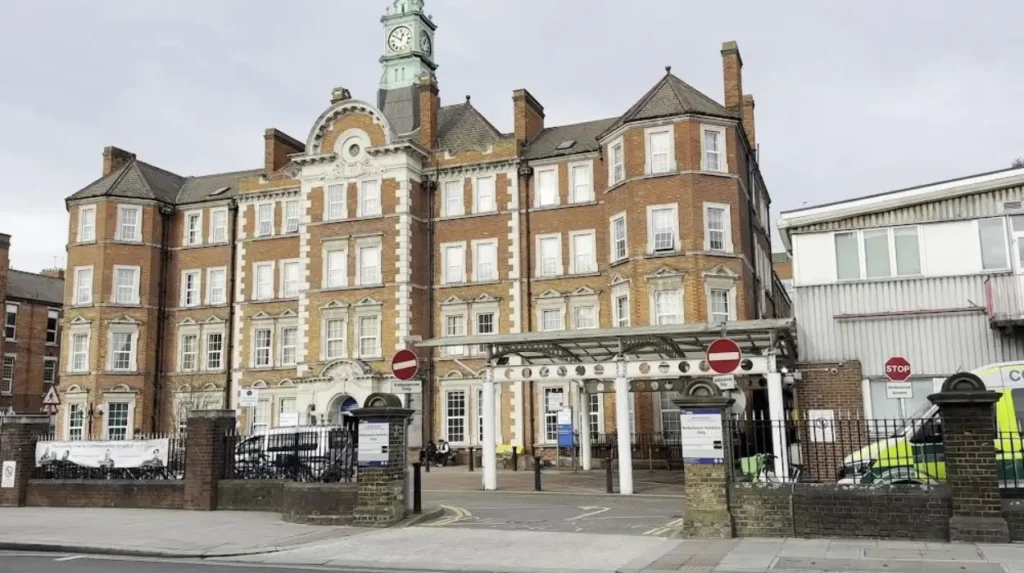
Which NHS organisations are major employers in West London?
NHS organisations are among West London’s largest institutional employers, with Imperial College Healthcare NHS Trust employing more than 16,000 staff and West London NHS Trust employing more than 5,000 healthcare workers across hospitals, community services and specialist care.
Healthcare employment is distributed across hospitals, mental health services, community facilities, laboratories, administrative centres and specialist clinical services.
Imperial College Healthcare NHS Trust operates five hospitals in central and west London: Charing Cross Hospital, Hammersmith Hospital, Queen Charlotte’s & Chelsea Hospital, St Mary’s Hospital and The Western Eye Hospital. The Trust states that it has more than 16,000 staff and provides acute and specialist healthcare to more than one million people each year.
West London NHS Trust is another major healthcare employer. Its services include mental health, community and specialist services, including Broadmoor Hospital. The Trust reported more than 5,000 healthcare workers in 2025.
These organisations employ people across a wide range of occupations. Clinical roles include doctors, nurses, midwives, healthcare assistants, pharmacists, healthcare scientists and allied health professionals. Non-clinical employment includes administration, finance, estates, information technology, communications, procurement and management.
Healthcare therefore provides employment opportunities at different qualification levels and across many professional disciplines.
Why are NHS employers important to the West London economy?
Large NHS organisations provide stable institutional employment and support related sectors such as medical education, research, facilities management, catering, construction, technology and professional services.
Imperial College Healthcare describes itself as one of the country’s largest NHS trusts and an academic healthcare organisation with a strong relationship between clinical care, education and research.
The Trust also operates extensive training programmes. Its career pathways cover nursing, medicine, allied health professions, pharmacy, healthcare science, corporate services, apprenticeships and other occupations.
Which universities are major employers in West London?
Universities are major West London employers because they combine academic, research, professional, technical and operational jobs. Brunel University London and the University of West London provide substantial employment alongside their wider contributions to education, skills, research and the local economy.
Brunel University London is based in Uxbridge and has a large academic workforce. Its current people information identifies more than 1,214 academic staff. The university also employs professional and operational staff supporting teaching, research, student services, estates, libraries, technology and administration.
Brunel’s 2024–25 facts and figures use a staff population measured in full-time equivalent terms as of July 2025, demonstrating that staff numbers are formally tracked as part of its institutional reporting.
The University of West London is based in Ealing and has an important role in the local employment economy. Ealing Council identifies the university among the borough’s larger employers alongside public-sector organisations and NHS employers.
Universities also generate secondary employment. Students create demand for accommodation, transport, hospitality, retail, food services and leisure. Universities therefore contribute to employment beyond their own payrolls.
What jobs do West London universities provide?
University employment includes lecturers, professors, researchers, laboratory staff, librarians, student-support professionals, IT specialists, estates teams, finance staff, administrators, security workers, facilities teams and senior management.
Brunel operates academic colleges covering business, arts, law, social sciences, engineering, design, physical sciences, health, medicine and life sciences.
The University of West London also operates within a broader higher-education ecosystem linked to Ealing’s professional, creative and service economies.
Is Sky a major employer in West London?
Sky is a major West London employer through its Osterley campus, which supports technology, broadcasting, media, engineering, production, commercial and corporate functions and forms an important part of West London’s television and digital-media employment cluster.
Sky’s main West London campus is in Osterley, within the London Borough of Hounslow. The company operates studios, technology facilities and corporate functions from the site.
In 2022, Sky opened a new Innovation Centre at its Osterley campus. The facility was designed to accommodate 600 staff and support technology and software development. Sky stated that it employs tens of thousands of people across the UK and has continued investing in technology and talent.
The Osterley site represents the relationship between media and technology employment. Modern broadcasting requires software engineering, data management, cloud infrastructure, cybersecurity, product development, content production and digital distribution.
Sky’s West London presence therefore extends beyond traditional television production.
Why is Osterley important for media employment?
Osterley has developed into an important media and technology location because major broadcasting operations require large campuses, specialist infrastructure and access to London’s professional workforce.
Sky describes its Osterley location as a West London campus where teams work across studio production and technology.
This creates employment across creative, technical and corporate disciplines.

Which local authorities are major employers in West London?
West London’s borough councils are major public-sector employers, providing jobs in administration, education, housing, planning, social care, environmental services, transport, public health, finance, legal services, community services and economic development.
Local authorities employ people across essential public services. Major councils in West London include Hillingdon Council, Hounslow Council, Ealing Council, Hammersmith & Fulham Council and Richmond upon Thames Council.
Council employment differs from private-sector employment because it covers statutory and locally delivered public services. Roles include planning officers, social workers, housing officers, environmental health professionals, accountants, lawyers, procurement specialists, customer-service staff and operational teams.
Ealing’s economic research identifies Ealing Council and the NHS among the larger employers in Ealing town, alongside schools and higher-education institutions.
Local authorities also influence employment indirectly. Planning decisions determine where offices, industrial premises, housing and infrastructure are developed. Skills programmes connect residents with employers. Business support programmes assist companies that create local employment.
How important is the aviation supply chain to West London employment?
The aviation supply chain is a major component of West London’s employment economy because Heathrow supports airlines, logistics firms, ground handlers, retailers, hospitality businesses, engineering companies, security providers and specialist contractors operating around the airport.
Heathrow’s economic impact extends well beyond the terminal buildings. In 2024, Heathrow reported that more than 1,100 businesses supplied the airport and that over 60% of suppliers were small and medium-sized enterprises.
These companies provide construction, maintenance, engineering, technology, catering, security, logistics, professional services and specialist equipment.
The airport invested more than £1.1 billion in its supply chain during 2024, according to Heathrow’s published expansion documentation.
The employment effect therefore reaches companies located outside the airport perimeter. Businesses in Chiswick, Hounslow, Hillingdon, Ealing and surrounding areas supply products and services to the airport.
This creates a regional network of employment connected to aviation demand.
Which traditional employers remain important in West London?
West London’s employment economy also includes long-established businesses in brewing, hospitality, food, retail and manufacturing. Chiswick’s Griffin Brewery represents the area’s industrial heritage, while hospitality and retail businesses continue to provide substantial employment across major town centres.
Chiswick has a long association with brewing. Fuller, Smith & Turner developed its Griffin Brewery in Chiswick and traces its formal partnership history to 1845. The brewing operation remains part of the area’s industrial heritage.
In 2019, Fuller’s sold its beer business to Asahi Europe, which continues brewing Fuller’s beers at the Griffin Brewery in Chiswick under the arrangements described by Fuller’s.
West London’s hospitality economy also includes pubs, restaurants, hotels and event businesses. Heathrow provides an especially large concentration of hospitality and retail jobs because airport passengers require food, accommodation, shopping and customer services.
Town centres such as Ealing Broadway, Hammersmith, Chiswick, Hounslow and Uxbridge add further employment in retail, leisure, food and professional services.
How has West London’s employment economy changed historically?
West London’s employment economy has shifted from manufacturing, brewing and industrial activity toward aviation, healthcare, education, media, technology, professional services, retail and logistics while retaining important industrial and transport functions around Heathrow and established business locations.
Historically, West London developed around transport routes, manufacturing, markets and river-based commerce. Industrial activity grew around the Thames and major transport corridors.
Chiswick’s brewing history provides one example. The Fuller, Smith & Turner partnership was formally established in 1845, building on earlier brewing activity in the area.
Heathrow later transformed the employment geography. The airport became an international transport hub and generated large-scale employment across aviation, logistics, retail and services.
The growth of television and media also changed West London’s economy. Osterley became an important location for Sky, while Hammersmith developed significant office and media activity.
Higher education and healthcare expanded the area’s institutional employment base. Brunel University London established its campus in Uxbridge, while large NHS trusts developed extensive hospital and community-service workforces.
The result is a diversified economy rather than dependence on a single historical industry.
What role does Ealing play in West London’s employment market?
Ealing is a major commercial centre in West London, with more than 11,000 businesses and around 140,000 people working in the borough. Its economy includes professional services, financial activity, technology, media, creative industries, retail, healthcare and education.
Ealing Council identifies Ealing as the largest commercial borough in West London by business activity. Its economic evidence records more than 11,000 businesses and approximately 140,000 workers.
Ealing town itself contains a significant concentration of offices, shops, professional services and public-sector employers. Council research states that approximately 39,600 jobs are located in Ealing town, including around 5,000 in financial and professional services.
The borough also benefits from transport connections to central London and Heathrow. These connections support commuting, business travel and recruitment across a large geographic area.
Ealing’s employment structure therefore combines local services with sectors linked to London’s wider economy.
What makes West London attractive to major employers?
Major employers locate in West London because the area combines Heathrow Airport, strong rail and Underground connections, access to central London, established business districts, universities, skilled workers, commercial premises and extensive supply-chain networks.
Transport is one of West London’s strongest economic assets. Heathrow provides global aviation connections. The Elizabeth line provides rapid links between Heathrow, West London and central London. The Piccadilly line connects Heathrow with locations including Hounslow, Ealing and Hammersmith.
The area’s road network also supports commercial activity. The M4, M25 and M40 provide connections between West London, Heathrow, the Thames Valley and wider UK markets.
Universities add a skilled workforce and research capacity. Brunel University London’s Uxbridge campus is accessible by road, rail, Underground and bus networks and sits close to the M4, M40 and M25.
The combination of infrastructure and workforce availability supports employment in sectors that require regional, national and international connections.
How does Heathrow influence employment across neighbouring boroughs?
Heathrow influences employment across neighbouring boroughs because its workforce extends beyond airport boundaries and includes thousands of residents from Hounslow, Hillingdon, Ealing and surrounding authorities who work directly or indirectly within the airport economy.
Heathrow’s 2025 expansion documentation states that more than 35,000 people working at the airport live in its nine local boroughs.
Ealing Council has previously reported that approximately one in 50 Ealing residents worked directly at Heathrow, with additional residents employed in related activities.
This relationship makes Heathrow significant to housing, transport and skills planning across West London.
Airport employment also produces demand for buses, rail services, taxis, hotels, restaurants, shops, childcare, training and commercial property.
The airport’s influence therefore operates at a regional scale rather than being confined to its physical site.
What should job seekers know about major employers in West London?
Job seekers in West London have access to employment across aviation, healthcare, education, technology, media, professional services, public administration, retail, hospitality, logistics and engineering, with major employers operating different recruitment systems and qualification requirements.
Heathrow offers direct recruitment through its careers system and also hosts hundreds of partner employers. Its careers information covers operational, technology, finance, health and safety, sustainability and other professional areas.
NHS employers recruit through clinical and non-clinical pathways. Imperial College Healthcare provides routes into medicine, nursing, allied health professions, pharmacy, healthcare science, corporate services and apprenticeships.
Universities recruit academic and professional staff. Brunel’s careers information covers employment across its Uxbridge campus and highlights opportunities for different staff groups.
Media employers such as Sky recruit across technology, content, production and corporate functions. Local authorities provide additional opportunities across public administration and community services.
For job seekers, the main feature of West London’s employment market is its occupational diversity.
Explore More Area Guide
Networking Events in West London: Business Guide 2026
Co-Working Spaces in West London: Hubs, Costs and Guide
What is the future of employment in West London?
West London’s employment future is closely connected to Heathrow investment, healthcare demand, higher education, digital technology, media production, professional services, transport infrastructure, housing development and the continuing diversification of the region’s commercial economy.
Heathrow remains a major driver of future employment. Its expansion programme includes planning for additional infrastructure, supply-chain activity, construction and airport operations. Heathrow states that expansion would create additional employment and investment opportunities.
Healthcare employment remains significant because large NHS organisations continue to operate major hospitals and community services. Imperial College Healthcare’s current workforce exceeds 16,000 staff, demonstrating the scale of healthcare employment in the wider West London and North West London area.
Technology and media also remain important. Sky’s Osterley campus includes technology and innovation functions, while West London’s universities produce graduates and research that support knowledge-intensive industries.
Ealing’s economic strategy identifies high-growth sectors, skills development, business growth and a dynamic entrepreneurial economy as important priorities for 2024–2029.
West London’s employment structure is therefore shaped by several long-term economic systems rather than one dominant corporate sector.
What are the major employers in West London?
The major employment organisations and employment hubs in West London include Heathrow Airport, Imperial College Healthcare NHS Trust, West London NHS Trust, Sky’s Osterley campus, Brunel University London, the University of West London, local authorities and large aviation, retail, hospitality and professional-services employers.
Heathrow is the largest employment hub by site-wide workforce, with more than 80,000 people working across the airport ecosystem.
Imperial College Healthcare NHS Trust is one of the area’s largest institutional employers, with more than 16,000 staff.
West London NHS Trust employs more than 5,000 healthcare workers.
Brunel University London employs more than 1,200 academic staff in addition to professional and operational employees.
Sky’s Osterley campus provides major employment in broadcasting, technology and media. Ealing also has a large commercial workforce distributed across professional services, public administration, retail, education and creative industries.
Together, these employers demonstrate why West London has a broad and resilient employment base spanning international transport, public services, education, technology, media and local commerce.
What are the major employers in West London?
Major employers in West London include Heathrow Airport, Imperial College Healthcare NHS Trust, West London NHS Trust, Sky, Brunel University London, University of West London and local councils. Aviation, healthcare, education, media, technology, retail and professional services are major employment sectors.