

Kensington is one of West London’s most established dining districts, combining restaurants, cafés, hotel dining rooms, traditional British venues and international kitchens across Kensington High Street, South Kensington, Kensington Church Street and surrounding streets. Its food scene is closely connected with the area’s museums, royal heritage, shopping streets and residential neighbourhoods.
- What makes Kensington restaurants different from other West London dining areas?
- Where are the main restaurant areas in Kensington?
- What types of food can you find in Kensington restaurants?
- Which Kensington restaurants are associated with fine dining?
- Are there affordable and casual Kensington restaurants?
- Which Kensington restaurants are suitable after visiting the museums?
- How does Kensington’s history influence its restaurant culture?
- How should visitors choose a Kensington restaurant?
- What is the future of Kensington’s restaurant scene?
The district sits within the Royal Borough of Kensington and Chelsea, a London borough recognised for its historic architecture, conservation areas, cultural institutions and commercial centres. The borough covers about five square miles, with 70% of its area within conservation areas.
Kensington also has an unusually strong concentration of cultural attractions. Visit London identifies the Victoria and Albert Museum, Science Museum, Natural History Museum, Kensington Palace and Kensington Gardens among the area’s principal attractions. Restaurants therefore serve several overlapping audiences, including museum visitors, residents, workers, hotel guests and leisure travellers.
What makes Kensington restaurants different from other West London dining areas?
Kensington restaurants combine international cuisine, modern British cooking, established neighbourhood institutions and fine dining within a compact West London area shaped by museums, royal heritage, shopping streets and residential communities.
Kensington’s restaurant identity comes from its location and history. The area developed around Kensington Palace, major roads and expanding residential districts. Kensington Palace became a royal residence in 1689 when William III and Mary II selected the former Nottingham House as a country retreat.
The surrounding district subsequently developed into an important residential and cultural part of London. South Kensington became particularly significant after the Great Exhibition of 1851 and the development of major cultural institutions.
This history created a distinctive urban pattern. Restaurants operate beside Georgian squares, Victorian terraces, museums, hotels, retail streets and modern commercial premises.
Kensington High Street provides one of the area’s principal commercial corridors. South Kensington has a strong museum-related visitor economy. Kensington Church Street connects the area with Notting Hill and provides a different neighbourhood environment.
The current restaurant market reflects this diversity. The Michelin Guide’s Kensington selection includes Japanese, Indian, French, Greek, Portuguese, Italian, seafood, traditional British and modern British restaurants, demonstrating the breadth of cuisines available in the area.
Kensington restaurants therefore cannot be defined by one cuisine or one price level. The district contains casual cafés, mid-range restaurants, hotel dining, neighbourhood bistros and internationally recognised fine-dining establishments.
Where are the main restaurant areas in Kensington?
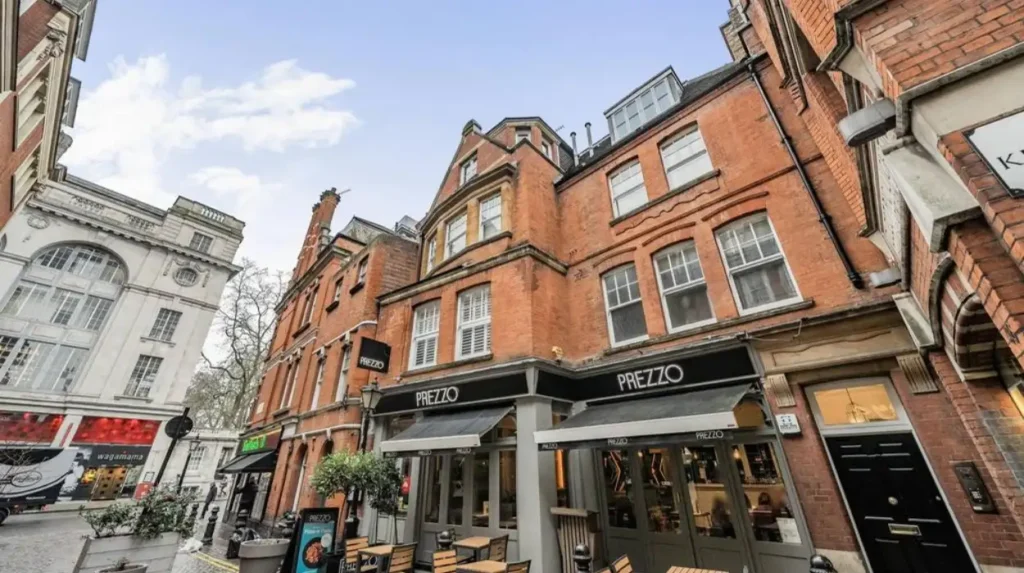
The principal dining areas include Kensington High Street, South Kensington, Kensington Church Street, Kensington Square and streets around Gloucester Road and Earls Court, with each area offering a different mix of restaurants and food businesses.
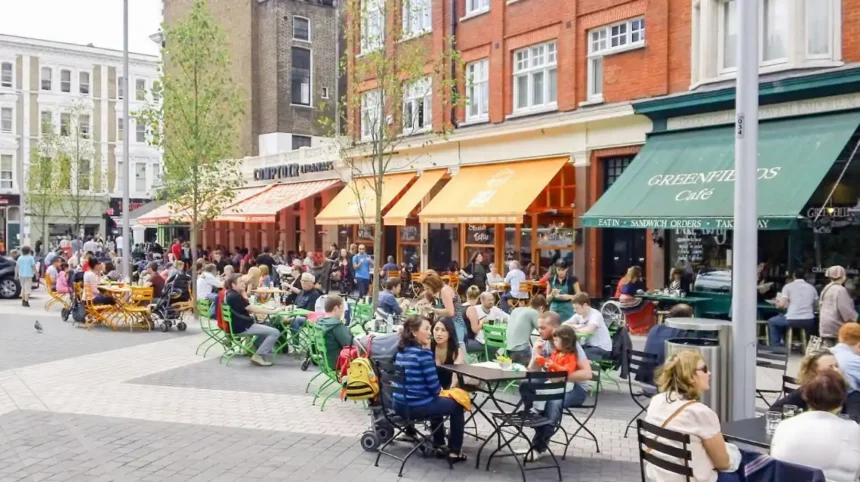
Kensington High Street is one of the most useful starting points for visitors because it combines restaurants with shops, hotels and transport connections. The street links the wider Kensington district with areas towards Notting Hill and central London.
South Kensington has a particularly strong visitor-focused food economy. The Natural History Museum, Science Museum and Victoria and Albert Museum attract large numbers of visitors, creating demand for lunch, coffee, early dinner and post-museum dining. Visit London specifically highlights brunch, sushi, afternoon tea and restaurants near the Natural History Museum as part of the area’s food offer.
Kensington Church Street provides another important dining corridor. It has a more neighbourhood-oriented character and connects Kensington with Notting Hill Gate.
Kensington Square is one of the area’s historic squares. The Royal Borough identifies it as one of London’s oldest squares and an area with particular historical importance.
Gloucester Road and nearby streets also serve residents, hotel guests and museum visitors. Their restaurant mix includes international food, cafés, casual dining and established hospitality businesses.
These areas are close enough to combine during a walking itinerary. A visitor can therefore explore a museum, walk through Kensington Gardens and finish with food around South Kensington or High Street Kensington without crossing large parts of London.
What types of food can you find in Kensington restaurants?
Kensington restaurants cover British, French, Italian, Indian, Japanese, Greek, Portuguese, Mediterranean, seafood and contemporary international cuisines, alongside cafés, bakeries, hotel restaurants and casual food businesses serving local residents and visitors.
International cuisine is a major characteristic of Kensington dining. The Michelin Guide’s current Kensington listings include Japanese restaurants such as Akira and Sumi, Indian restaurants such as Zaika and Pravaas, Greek restaurant Mazi, Portuguese restaurant Volta Do Mar and French restaurant La Palombe.
British cooking also remains an important part of the area’s identity. Modern British restaurants and traditional British venues operate alongside international restaurants, providing options ranging from contemporary menus to familiar dishes.
Italian food is another established category across the wider Kensington area. Restaurants serving pasta, regional Italian dishes and contemporary Italian cooking contribute to the area’s European dining profile.
Japanese cuisine has a particularly visible presence around South Kensington and nearby districts. The area’s international visitor population and proximity to cultural institutions support demand for sushi, contemporary Japanese dishes and formal Japanese dining.
Indian restaurants form another important part of the Kensington food landscape. The area includes both established Indian restaurants and contemporary Indian dining concepts.
Mediterranean cuisine appears across several formats, including Greek, French, Portuguese and broader Mediterranean menus.
Seafood is also represented within the local fine-dining market. The Michelin Guide currently lists specialist seafood establishments alongside modern British and international restaurants.
The result is a restaurant district where cuisine choice extends well beyond traditional British food.
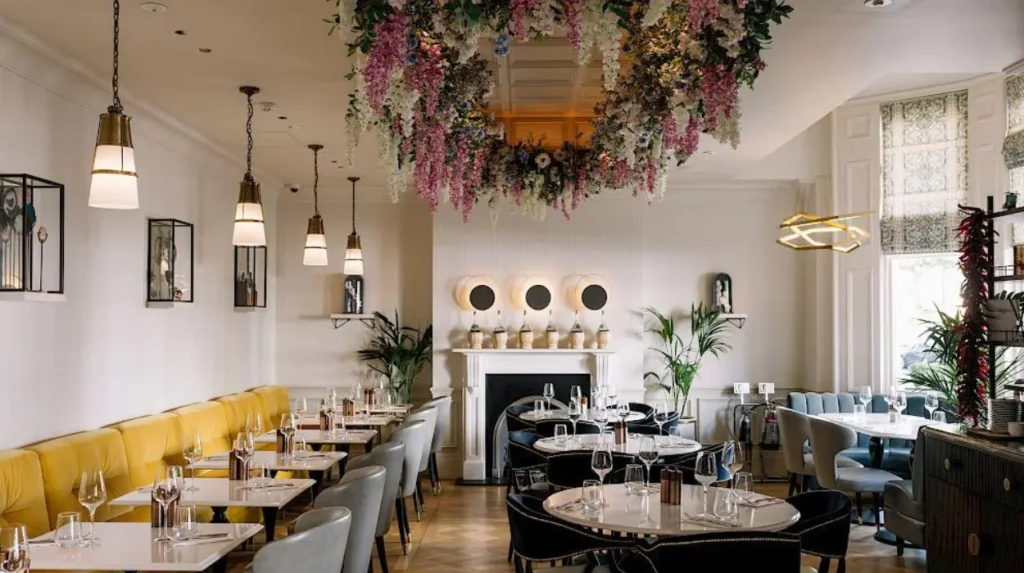
Which Kensington restaurants are associated with fine dining?
Kensington has a significant fine-dining sector, including Michelin-recognised restaurants, contemporary British establishments, international restaurants and luxury hotel dining rooms serving formal meals and carefully structured menus.
Fine dining forms an important part of Kensington’s hospitality economy. The Michelin Guide currently lists restaurants across Kensington and its surrounding area at different levels of distinction, including Michelin-starred establishments, Bib Gourmand restaurants and Michelin-selected venues.
Kitchen W8 is one of the area’s recognised restaurants and appears in the Michelin Guide’s Kensington listings. The restaurant focuses on modern cuisine and has an established position within the local fine-dining landscape.
CORE by Clare Smyth is another major name associated with the wider Kensington and West London dining area. It represents the area’s connection with internationally recognised modern British fine dining.
The Michelin Guide’s 2026 London overview records 84 restaurants in the capital holding one, two or three Michelin Stars following the 2026 Michelin Guide Ceremony. Kitchen W8 is included among London’s starred restaurants.
Fine dining in Kensington extends beyond Michelin stars. Restaurants also distinguish themselves through seasonal British produce, specialist cuisines, chef-led menus, tasting experiences and formal service.
Luxury hotels contribute another layer to the market. Hotel restaurants serve both staying guests and external diners, particularly around South Kensington and Kensington High Street.
For visitors seeking fine dining, the relevant distinction is therefore between Michelin recognition, formal restaurant service and premium hotel dining. These categories overlap but are not identical.
Are there affordable and casual Kensington restaurants?
Kensington has casual and mid-range restaurants as well as luxury dining, with cafés, neighbourhood restaurants, bakeries, pubs and informal international food businesses providing alternatives to expensive tasting menus and formal restaurant experiences.
Kensington’s reputation for luxury property and high-end shopping does not mean every meal requires fine-dining prices. The local food economy includes a broad range of casual businesses.
Cafés provide breakfast, coffee, pastries, sandwiches and light lunches. They are particularly useful around museum districts where visitors often require short breaks between attractions.
Mid-range restaurants provide another significant category. These venues offer table service without the formal structure of high-end tasting-menu restaurants.
Pubs also contribute to Kensington’s food culture. Traditional British pub food provides options such as fish and chips, pies, Sunday roasts and other familiar dishes, depending on the individual venue.
The Royal Borough’s local food and drink guide identifies restaurants across different price levels. Its Kensington listings include La Palombe as a higher-priced modern French restaurant and Maggie Jones’s as a mid-range British restaurant.
Maggie Jones’s is an established Kensington institution that reopened in November 2025 following a two-year closure caused by a fire. The restaurant is located at Old Court Place near High Street Kensington and focuses on British cooking.
The presence of different price categories makes Kensington suitable for different types of dining occasions. Visitors can choose a quick café meal, casual lunch, mid-range dinner or formal restaurant experience without leaving the district.
Which Kensington restaurants are suitable after visiting the museums?
Restaurants around South Kensington are particularly convenient after visiting the Natural History Museum, Science Museum or Victoria and Albert Museum because the cultural quarter has restaurants, cafés and bars within walking distance of the major museums.
South Kensington is one of London’s strongest museum districts. The Natural History Museum, Science Museum and Victoria and Albert Museum are located close together, creating a concentrated cultural destination.
This concentration directly influences restaurant demand. Museum visitors commonly combine cultural activities with lunch, coffee, afternoon refreshments or dinner.
Restaurants around Exhibition Road and the surrounding streets provide convenient options for visitors who want to remain close to the museums.
The timing of a meal is also important. A café or casual restaurant works well for a short break during a museum visit. A full-service restaurant suits visitors finishing their sightseeing for the day.
South Kensington also connects with Gloucester Road and High Street Kensington, widening the available food choice.
Visitors should distinguish between eating immediately beside a museum and eating elsewhere in Kensington after a short walk. The latter provides access to a broader range of neighbourhood restaurants.
The area is especially useful for family trips because museum visits can be combined with flexible meal times. Restaurants, cafés and food businesses provide alternatives when visitors need shorter or longer dining breaks.
Visit London specifically promotes food and drink options around South Kensington and Kensington High Street, including restaurants, brunch venues, sushi restaurants, pubs and bars.
How does Kensington’s history influence its restaurant culture?
Kensington’s restaurant culture reflects centuries of royal, residential, cultural and commercial development, with Kensington Palace, historic squares, Victorian architecture, museums and later transport growth shaping where people live, work, visit and eat.
Kensington’s modern dining environment is closely linked to its historical development.
The area was settled before its integration into London’s expanding urban structure. A Royal Borough historical study records Anglo-Saxon settlement and explains that Kensington and Chelsea were gradually absorbed into London from the late seventeenth century.
Kensington Palace became a royal residence in 1689. William III and Mary II transformed the former Nottingham House into a royal residence, and later monarchs continued to use it. Queen Victoria was born and raised at the palace before moving to Buckingham Palace after her accession in 1837.
Royal connections increased the area’s importance and helped shape its architecture and social geography.
The eighteenth and nineteenth centuries brought substantial residential expansion. The Royal Borough’s historical research records large-scale development, with the north of the borough developing largely during the nineteenth century. Mansion blocks began appearing towards the end of that century.
South Kensington later became a major cultural district. The Great Exhibition of 1851 played a significant role in the area’s development, supporting the creation of institutions that eventually became major museums.
The result is an urban environment where restaurants operate within a highly historic landscape. Dining streets sit beside listed buildings, conservation areas, museums, gardens and royal sites.
This historical setting continues to influence visitor behaviour. People do not visit Kensington only for food. Restaurants form part of wider cultural, retail, residential and tourism journeys.
Explore More uk/area-guide/">Area Guide
Notting Hill Restaurants: Best Dining in West London
Shepherd’s Bush Restaurants: West London’s Complete Dining Guide
How should visitors choose a Kensington restaurant?
Visitors should choose a Kensington restaurant according to location, cuisine, dining time, budget, occasion and proximity to attractions, because the district contains casual cafés, mid-range restaurants, pubs, hotel dining and fine-dining venues across several distinct neighbourhoods.
Location should be the first consideration. Visitors spending the day in South Kensington should look around Exhibition Road, Gloucester Road and nearby streets. Visitors exploring Kensington High Street have a different group of restaurants within easy walking distance.
Cuisine is the second consideration. Kensington supports international dining, including Indian, Japanese, French, Italian, Greek and Portuguese food, alongside British restaurants.
Dining time also affects the best location. Breakfast and coffee are strongly represented by cafés and bakeries. Lunch is available across casual and full-service restaurants. Dinner provides the widest range, from informal restaurants to formal dining rooms.
Budget is another practical factor. Michelin-recognised restaurants and luxury hotel dining occupy the premium end, while cafés, pubs and mid-range restaurants provide less formal alternatives.
The purpose of the meal also matters. A museum visitor needs convenience and predictable timing. A business meal requires suitable seating and service. A special occasion often requires a reservation and a formal setting.
Visitors should also check current opening hours and booking requirements before travelling. Restaurant businesses change menus, operating hours and reservation policies over time.
What is the future of Kensington’s restaurant scene?
Kensington’s restaurant sector is positioned around continued demand from residents, international visitors, museum audiences, hotel guests and workers, while new restaurants and changing consumer preferences continue to diversify the area’s food and drink economy.
Kensington has structural advantages as a restaurant district. It combines a large residential population with internationally recognised attractions, major museums, hotels, shopping streets and excellent public transport connections.
The cultural economy is particularly important. Visit London describes Kensington and South Kensington as destinations combining sightseeing, food and drink, accommodation, shopping, museums and royal attractions.
Restaurant turnover is therefore supported by several different customer groups rather than a single visitor market.
The area’s dining scene also continues to change. The Royal Borough’s current food and drink listings include new restaurant entries alongside long-established local institutions. La Palombe is identified as a new Michelin-recognised neighbourhood bistro, while Maggie Jones’s represents a longstanding Kensington restaurant that reopened in 2025.
This combination of new openings and established businesses gives Kensington a continuously changing restaurant landscape.
The Michelin Guide’s current Kensington coverage also demonstrates the scale and diversity of the surrounding market, with hundreds of restaurants listed across the Kensington search area and cuisines ranging from British and French to Japanese, Indian, Greek, Portuguese and contemporary international cooking.
Kensington’s restaurant identity therefore remains connected to its broader role in West London. Food is integrated with culture, tourism, retail, residential life and hospitality.
For visitors, this means Kensington functions as more than a place to find a single meal. It provides a complete dining environment across South Kensington, High Street Kensington, Kensington Church Street, Kensington Square and nearby streets.
Its combination of historic surroundings, major attractions, international cuisine, neighbourhood restaurants and fine dining makes Kensington one of the most established food destinations in West London.
What are the best areas for restaurants in Kensington?
Kensington High Street, South Kensington, Kensington Church Street, Kensington Square and the streets around Gloucester Road are major dining areas. They offer British, Italian, French, Indian, Japanese, Greek, Portuguese and international restaurants.