

West London contains a concentrated collection of historic houses that document more than 500 years of architectural, political, royal, artistic and social history. The area includes Tudor survivals, Georgian villas, aristocratic mansions, royal residences and houses associated with major cultural figures.
- What are the most important historic houses in West London?
- How old are the historic houses in West London?
- Why is Chiswick House important to West London history?
- What makes Osterley Park House historically significant?
- What can visitors learn at Gunnersbury House?
- Why is Syon House important in West London?
- What is special about Boston Manor House?
- Why is Hogarth’s House important?
- What is the historical role of Kew Palace?
- Why is Marble Hill House important?
- How did West London’s historic houses influence architecture?
- How are historic houses in West London protected today?
- Why are historic houses important to West London today?
- Which historic houses should visitors include in a West London heritage itinerary?
- How can the historic houses of West London be understood as one heritage landscape?
The historic-house landscape extends across uk/local/hounslow/chiswick/">Chiswick, Hounslow, Ealing, Brentford, Kew, Richmond and surrounding districts. These properties developed when West London was substantially more rural than it is today. Estates occupied large areas of land beside the River Thames, while wealthy families established country retreats within reach of central London.
Several surviving houses now operate as museums, heritage attractions or publicly accessible historic estates. Others remain privately occupied or form part of protected heritage landscapes. Their preservation is supported through organisations including English Heritage, the National Trust, local authorities and specialist heritage trusts.
Historic England records heritage designations through the National Heritage List for England. Listed buildings receive statutory protection because of their special architectural or historic interest. Historic parks and gardens can also receive registration where their landscape history has national significance.
West London’s historic houses therefore provide more than individual buildings. They form a connected record of changing architecture, land ownership, royal influence, Georgian culture, industrial expansion and suburban development.
What are the most important historic houses in West London?
The most important historic houses in West London include Chiswick House, Osterley Park House, Gunnersbury House, Syon House, Boston Manor House, Hogarth’s House, Kew Palace and Marble Hill. Together they represent Tudor, Georgian, Victorian and royal histories across the region.
These properties differ significantly in age, architecture and historical purpose.
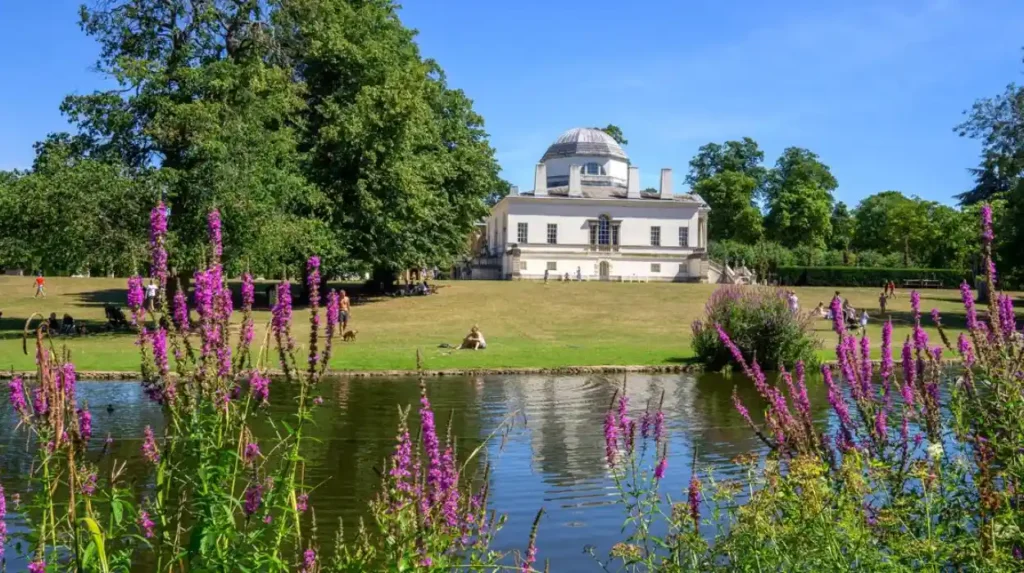
Chiswick House is an internationally important example of early eighteenth-century neo-Palladian architecture. Richard Boyle, 3rd Earl of Burlington, developed the villa between 1726 and 1729. Its design drew heavily on Italian Renaissance architecture and the work of Andrea Palladio.
Osterley Park House represents the transformation of an earlier Tudor estate into a major Georgian mansion. Sir Thomas Gresham acquired the Osterley estate in 1562, while the present mansion was extensively remodelled by Robert Adam during the 1760s and 1770s.
Gunnersbury contains two historic mansions within a large public park. Gunnersbury House is a Grade II listed Georgian mansion, while the estate also contains the Grade II* listed Large Mansion. The site became a public park during the twentieth century.
Syon House has an older foundation. The house occupies the site of medieval Syon Abbey and was built in the sixteenth century. The Percy family, Dukes of Northumberland, acquired the property in 1594.
Marble Hill provides an important example of Georgian architecture designed for Henrietta Howard, Countess of Suffolk. Its history also demonstrates the importance of heritage campaigns in preventing historic landscapes from being replaced by development.
How old are the historic houses in West London?
West London’s historic houses date from several periods, with surviving examples ranging from sixteenth-century Syon House and Tudor-era Osterley to eighteenth-century Chiswick House, Marble Hill, Gunnersbury and later Victorian additions. Their different construction dates reflect changing wealth, architecture and land ownership.
The sixteenth century produced several important surviving foundations. Syon House stands on the site of Syon Abbey and developed into a major aristocratic residence after the Dissolution of the Monasteries. Osterley also has sixteenth-century origins through Sir Thomas Gresham’s ownership and development of the estate.
The eighteenth century produced some of West London’s most distinctive houses. Georgian architecture introduced classical proportions, symmetrical elevations and Palladian principles to elite residential design.
Chiswick House was constructed between 1726 and 1729. Its architecture represented an ambitious interpretation of classical Roman and Italian Renaissance forms. The house became a major influence on British architectural taste.
Marble Hill began in the 1720s as a riverside villa for Henrietta Howard. English Heritage identifies it as a rare example of a Georgian house built for and by a woman.
The age of these properties is important because their architecture reflects different historical priorities. Medieval and Tudor estates were strongly connected to landholding and status. Georgian villas increasingly emphasised classical learning, cultural life, landscape design and fashionable social networks.
Why is Chiswick House important to West London history?
Chiswick House is important because it introduced an influential neo-Palladian architectural model to eighteenth-century Britain and helped establish the surrounding gardens as a major landmark in the development of the English landscape garden tradition.
Chiswick House stands on Burlington Lane in Chiswick. The villa was developed by Richard Boyle, 3rd Earl of Burlington, a major eighteenth-century patron of architecture and art.
Burlington designed the building as a Roman-inspired villa rather than a conventional country mansion. He drew inspiration from his travels in Italy and from architectural studies of Andrea Palladio and Inigo Jones. The principal villa was built between 1726 and 1729.
William Kent worked with Burlington and contributed to the interiors, furniture and garden design. The relationship between architecture, art collections and landscape was central to the property’s identity.
The surrounding gardens have exceptional historical importance. English Heritage describes them as the birthplace of the English Landscape Movement. The landscape incorporated open vistas, water features, statues and garden buildings rather than relying exclusively on formal geometric planting.
The estate later experienced major changes. The western parkland was partly sold for housing during the nineteenth century. In 1929, the ninth Duke of Devonshire sold the estate to Middlesex County Council to prevent further development. The house subsequently came under public heritage protection and was transferred to English Heritage in 1984.
Chiswick House therefore connects eighteenth-century architecture with twentieth-century conservation.
What makes Osterley Park House historically significant?
Osterley Park House is historically significant because it combines a sixteenth-century estate founded under Sir Thomas Gresham with an extensive eighteenth-century transformation by Robert Adam, producing one of West London’s major surviving Georgian country-house interiors and landscapes.
Osterley began as an estate associated with earlier medieval landholding. Sir Thomas Gresham acquired it in 1562 and developed a substantial manor house in the following years. The estate included gardens, woodland, fishponds and a heronry.
The property was substantially transformed during the eighteenth century. Robert Adam redesigned the mansion for Sir Francis Child and later Robert Child. Much of the original ground plan survived, but the external fabric and interiors underwent extensive architectural change.
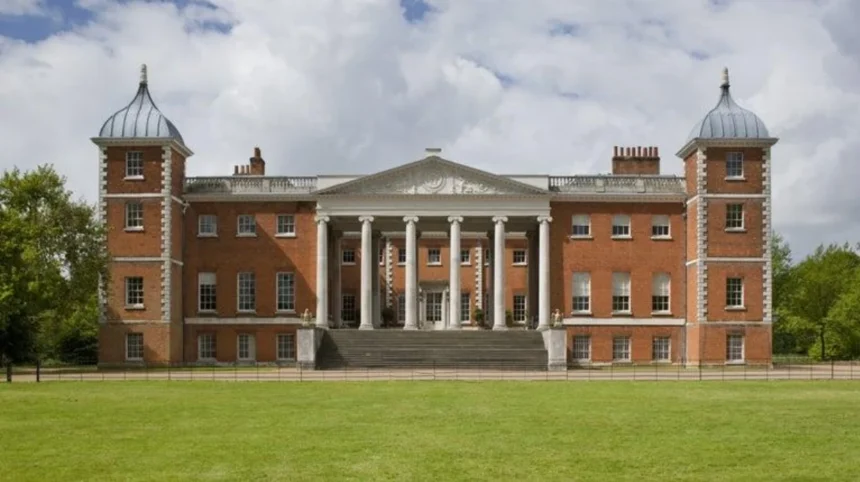
The resulting house became a major example of Adam’s approach to Georgian country-house design. The mansion features red-brick wings, a central courtyard, corner towers and a prominent Ionic portico. Historic England records the principal building as Grade I listed.
The landscape also forms an important part of the property’s history. The eighteenth-century pleasure grounds developed over an earlier formal garden. Later tree planting and changes during the nineteenth and twentieth centuries altered the appearance of the park.
Osterley also demonstrates the effect of twentieth-century heritage conservation. The ninth Earl of Jersey gave the house and 57 hectares of the estate to the National Trust in 1949. A further 77 hectares were acquired by the Trust in 1990.
What can visitors learn at Gunnersbury House?
Gunnersbury House provides insight into Georgian elite life, West London estate development and local social history, while Gunnersbury Park preserves a large historic landscape containing two mansions and museum collections documenting the area’s changing communities.
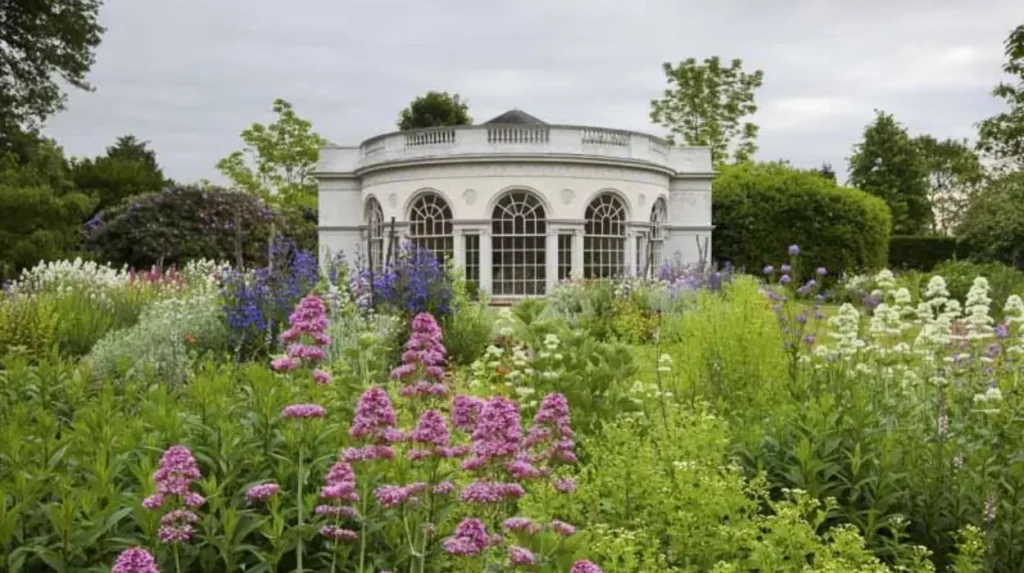
Gunnersbury Park covers more than 75 hectares and contains two major Georgian mansions. The estate is jointly owned by the London Boroughs of Hounslow and Ealing. A community interest company operates the park and museum.
The history of the estate reaches back to the medieval period, when the land formed part of the Manor of Fulham associated with the bishops of London.
Sir John Maynard purchased Gunnersbury in 1656. He commissioned John Webb, a pupil and relative of Inigo Jones, to build a new manor house. The estate subsequently passed through several owners before Henry Furness acquired it in 1739.
William Kent is associated with alterations to the estate during the eighteenth century. Later, Baron Lionel de Rothschild expanded the grounds during the nineteenth century.
After the death of Leopold de Rothschild in 1917, the estate was broken up and gradually sold. In 1925, the former boroughs of Acton and Ealing purchased 75 hectares for public use. Gunnersbury Park formally opened to the public on 21 May 1926.
The museum now holds more than 40,000 objects connected with local history. This makes Gunnersbury important not only for architectural heritage but also for understanding West London’s communities and social development.
Why is Syon House important in West London?
Syon House is important because it combines medieval religious history, sixteenth-century aristocratic development and the long history of the Percy family, Dukes of Northumberland, within an extensive riverside estate beside the River Thames.
Syon House stands in Brentford near the River Thames. The property occupies the former site of Syon Abbey, a medieval religious foundation.
The present house was built in the sixteenth century. The Percy family acquired the property in 1594, establishing a long association that continues through the modern ownership of the estate. The London Borough of Hounslow identifies Syon House as the London home of the Duke of Northumberland.
Syon Park forms a substantial historic landscape. Historic England records the registered park and garden as approximately 80 hectares. The River Thames forms the eastern boundary, while the site lies close to Kew and other major West London heritage landscapes.
The estate demonstrates how historic houses were often inseparable from their surrounding landscapes. Formal gardens, woodland, avenues, boundary walls and pleasure grounds formed part of the architectural experience.
Syon also illustrates the continuing role of private ownership in historic-house conservation. Unlike properties that became public museums, Syon remains associated with the Percy family and operates as a heritage and visitor destination within a privately owned estate.
What is special about Boston Manor House?
Boston Manor House is a significant Jacobean house in Brentford that represents an earlier phase of West London domestic architecture and provides an important link between seventeenth-century estate life and the area’s later urban development.
Boston Manor House stands within Boston Manor Park in Brentford. Its architectural character distinguishes it from the later Palladian and neo-classical villas found elsewhere in West London.
The house is associated with the Jacobean period, when domestic architecture increasingly incorporated decorative brickwork, symmetrical planning and elaborate interiors. Its survival is significant because large-scale urban development transformed much of the surrounding landscape.
Boston Manor later became part of the evolving suburban landscape of West London. The house and park now provide a physical record of an earlier estate environment within a densely developed metropolitan area.
Its importance is therefore both architectural and geographical. The property demonstrates how historic houses that once stood within rural or semi-rural estates became incorporated into London’s expanding urban structure.
The house also belongs to a wider network of heritage properties managed or promoted by the London Borough of Hounslow. The borough identifies Boston Manor House alongside Chiswick House, Osterley House, Syon House, Gunnersbury House and Hogarth’s House as major historic-house assets.
Why is Hogarth’s House important?
Hogarth’s House is important because it preserves the former home of William Hogarth, one of eighteenth-century Britain’s most significant artists, and connects West London with the development of British printmaking, satire and visual social commentary.
Hogarth’s House is located in Chiswick and is associated with William Hogarth, the eighteenth-century painter and printmaker.
Hogarth became particularly known for works that examined contemporary society through detailed visual compositions. His prints reached a broad audience and contributed to the development of satirical art in Britain.
The house provides a domestic setting for understanding Hogarth’s life and work. Its significance extends beyond the building because it connects a specific West London location with Britain’s wider cultural history.
The property also demonstrates the role of historic houses as biographical sites. Such buildings preserve information about the everyday environments occupied by notable historical figures, complementing museum collections and written records.
Hogarth’s House forms part of Hounslow’s collection of historic properties and contributes to the borough’s wider heritage landscape alongside Chiswick House, Osterley and Gunnersbury.
What is the historical role of Kew Palace?
Kew Palace is a historic royal residence within the Royal Botanic Gardens at Kew and provides a direct connection between West London and Georgian royal history, particularly the domestic lives of members of the British royal family.
Kew developed as an important royal location during the eighteenth century. Its position beside the River Thames and its extensive gardens made it attractive to the royal family.
Kew Palace is substantially smaller than the grand aristocratic mansions at Chiswick and Osterley. Its importance comes from its association with royal domestic life rather than monumental scale.
The wider Kew landscape also contains important historic buildings, gardens and botanical collections. The Royal Botanic Gardens, Kew is internationally significant for plant science, horticulture and landscape history.
Kew’s royal history is therefore connected to a much wider scientific and cultural landscape. Historic buildings and gardens developed together, creating a heritage environment in which architecture, royal patronage and botanical research intersect.
The proximity of Kew Palace to Syon Park also illustrates the concentration of major historic estates along this section of the Thames. Historic England records Syon Park approximately 250 metres west of the Royal Botanic Gardens across the river.
Why is Marble Hill House important?
Marble Hill House is important because it is a rare Georgian Palladian villa created for Henrietta Howard and because its survival demonstrates how historic landscape protection prevented a significant Thames-side estate from being replaced by twentieth-century housing.
Marble Hill stands beside the River Thames at Twickenham. The house was created in the 1720s for Henrietta Howard, Countess of Suffolk.
Howard was a prominent figure within Georgian political and cultural society. Her connections included writers and intellectuals such as Alexander Pope, John Gay and Horace Walpole. The house became a social and cultural meeting place.
Architecturally, Marble Hill represents Palladian principles. Palladianism refers to an architectural tradition inspired by the work of Andrea Palladio and based on classical proportions, symmetry and Roman architectural forms.
The estate also demonstrates the importance of designed landscapes. Alexander Pope and Charles Bridgeman contributed advice associated with the garden’s development.
By the late nineteenth century, the property faced a major development threat. The Cunard family acquired Marble Hill in 1898 with plans connected to housing development.
A public campaign helped secure the site’s protection. Parliament passed legislation in 1902 to preserve the historic landscape because of its relationship with the celebrated view from Richmond Hill. Marble Hill has remained a public park since then.
A major restoration project returned the house and gardens to public use in 2022. The restored estate now provides access to both the historic villa and its 66-acre riverside parkland.
How did West London’s historic houses influence architecture?
West London’s historic houses influenced British architecture by introducing and developing Palladian, neo-classical, Georgian and landscape-design principles that shaped elite residential architecture and garden design during the eighteenth and nineteenth centuries.
Chiswick House represents one of the clearest examples. Burlington’s design drew directly from Italian Renaissance architecture and classical Roman forms. English Heritage identifies the villa as an early and influential example of neo-Palladian architecture in England.
Marble Hill demonstrates a more compact Palladian model. Its scale differs from the large country houses associated with extensive rural estates, but its classical design became influential.
Osterley illustrates another architectural process. Robert Adam transformed an earlier mansion rather than constructing an entirely new estate from scratch. This approach preserved elements of an earlier building while introducing new Georgian architectural language.
Landscape design also developed alongside architecture. Chiswick’s gardens became associated with the English Landscape Movement. The emphasis on open vistas and naturalistic composition represented a significant change from earlier formal garden traditions.
These houses therefore provide physical evidence of changing architectural tastes. They show how British designers adapted classical ideas into residential buildings suited to aristocratic and wealthy families.
How are historic houses in West London protected today?
Historic houses in West London are protected through listed-building legislation, registered parks and gardens, conservation programmes, public ownership, charitable management and private stewardship, with organisations such as Historic England, English Heritage, the National Trust and local councils playing major roles.
Historic England maintains the National Heritage List for England. Listed buildings receive legal protection because of their special architectural or historic interest. Gunnersbury House, for example, is Grade II listed.
Different grades indicate different levels of national significance. Grade I buildings are of exceptional interest. Grade II* buildings are particularly important buildings of more than special interest. Grade II buildings are nationally important and of special architectural or historic interest.
Historic parks and gardens receive separate recognition. Osterley Park is registered because of its special historic interest, while Syon Park and Gunnersbury Park also have registered landscape significance.
Ownership models vary. The National Trust manages Osterley Park. Chiswick House and Gardens are managed through the Chiswick House and Gardens Trust in partnership with English Heritage and Hounslow Council. Gunnersbury is jointly owned by Hounslow and Ealing councils.
Conservation requires ongoing maintenance because historic buildings contain vulnerable materials, decorative interiors, landscapes and archaeological features. Restoration projects therefore involve research, building conservation, landscape management and public interpretation.
Why are historic houses important to West London today?
Historic houses remain important because they preserve architectural evidence, local history, cultural heritage and historic landscapes while providing museums, parks and educational resources within one of London’s most heavily developed metropolitan areas.
West London has experienced extensive residential, commercial and transport development. Historic houses provide surviving evidence of landscapes that existed before modern suburban expansion.
The properties also connect local history with national events. Royal residences demonstrate the relationship between West London and the monarchy. Chiswick illustrates Britain’s architectural engagement with Italy and classical antiquity. Osterley records the transformation of Tudor estates into Georgian mansions. Marble Hill demonstrates the cultural life of Georgian London and the development pressures affecting historic landscapes.
Public access also gives historic houses an educational role. Visitors can examine architectural details, interiors, gardens, collections and surviving estate structures.
The surrounding parks provide additional value. Gunnersbury’s 75 hectares, for example, combine historic buildings, museum collections and public open space.
Historic-house conservation also contributes to local identity. Properties such as Chiswick House, Hogarth’s House, Osterley Park and Gunnersbury create recognisable heritage landmarks within modern West London neighbourhoods.
Explore More Area Guide
West London’s Royal Connections: Kew, Richmond and Hampton Court
Georgian Architecture in West London: Kew, Chiswick & Richmond
Which historic houses should visitors include in a West London heritage itinerary?
A strong West London heritage itinerary includes Chiswick House, Gunnersbury Park, Osterley Park, Syon House, Hogarth’s House and Marble Hill because these sites collectively cover Georgian architecture, royal history, aristocratic estates, artistic heritage and historic landscape conservation.
Chiswick House provides the strongest introduction to eighteenth-century neo-Palladian architecture. Its gardens add important landscape history and its location makes it easy to combine heritage with Chiswick’s wider attractions.
Gunnersbury Park provides a different experience because its historic estate now operates as a major public park and museum. Its two mansions and extensive grounds demonstrate the scale of former West London estates.
Osterley Park is particularly significant for visitors interested in Robert Adam and Georgian country-house interiors. The estate also demonstrates the long transition from Tudor ownership to eighteenth-century architectural transformation.
Syon House offers a connection with medieval religious history and the Percy family. Its Thames-side landscape adds another dimension to the visit.
Hogarth’s House provides an artistic perspective on eighteenth-century London, while Marble Hill connects Georgian culture with riverside landscape conservation. Marble Hill’s restored interiors and historic park make it particularly relevant to visitors studying Georgian social history.
Together, these properties show that West London heritage is not concentrated in one architectural period. The area’s historic houses form a chronological sequence from Tudor and early modern estates through Georgian architecture to modern conservation.
How can the historic houses of West London be understood as one heritage landscape?
West London’s historic houses form an interconnected heritage landscape along the Thames and its surrounding districts, where royal residences, aristocratic estates, Georgian villas, artists’ homes and public parks preserve different stages of London’s physical and social development.
The geographical relationship between the properties is significant. Chiswick House lies close to Gunnersbury Park. Syon Park sits near the Thames opposite Kew. Osterley lies farther west but remains connected to the same historic network of estates. Marble Hill extends the heritage landscape towards Twickenham and Richmond.
The River Thames played an important role in this development. Riverside locations offered access to open landscapes while remaining within reach of London. This combination encouraged the construction of villas, country retreats and aristocratic estates.
Over time, urban growth surrounded these properties. Roads, railways, housing and commercial development transformed the landscape around them. The surviving houses now function as historic islands within a modern metropolitan environment.
Their preservation demonstrates the long-term value of heritage protection. Chiswick House was protected from further estate development in the early twentieth century. Marble Hill was saved through parliamentary intervention in 1902. Gunnersbury became public parkland in the 1920s.
The result is a diverse heritage network that allows residents and visitors to study West London’s history through buildings, landscapes, collections and public spaces.
Historic houses in West London therefore remain important sources of architectural and social evidence. Chiswick House demonstrates neo-Palladian innovation. Osterley records the transformation of a Tudor estate into a Georgian mansion. Gunnersbury preserves two Georgian houses and extensive public parkland. Syon connects medieval religious history with aristocratic ownership. Hogarth’s House preserves an artistic legacy. Kew Palace records royal domestic history. Marble Hill demonstrates Georgian culture and successful landscape conservation.
Together, these properties provide a detailed record of how West London changed from estates and riverside retreats into a major part of modern London. Their continued preservation ensures that architectural styles, historic landscapes, personal histories and local communities remain connected to the physical places where that history developed.
What are the most famous historic houses in West London?
The best-known historic houses in West London include Chiswick House, Osterley Park House, Gunnersbury House, Syon House, Hogarth’s House, Kew Palace and Marble Hill House. They represent royal, aristocratic, Georgian, artistic and architectural history.