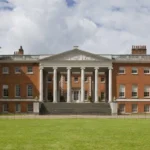


West London has one of the strongest concentrations of royal history in the capital. uk/local/richmond-upon-thames/kew/">Kew, Richmond, Hampton, Bushy, Twickenham, hounslow/brentford/">Brentford and nearby districts contain royal palaces, hunting parks, gardens, residences and historic estates. These places connect the area with monarchs including Henry VII, Henry VIII, Elizabeth I, Charles I, George III, Queen Charlotte and Queen Victoria.
- Why does West London have so many royal connections?
- How did Richmond become a centre of royal power?
- What is the royal connection between Richmond Palace and Elizabeth I?
- How did Richmond Park become a royal hunting landscape?
- What royal landmarks can visitors see in Richmond Park?
- Why is Kew important to West London’s royal history?
- Who were King George III and Queen Charlotte at Kew Palace?
- What is the royal connection between Kew Gardens and botanical science?
- What is the royal history of Hampton Court and its connection with West London?
- How is Bushy Park connected to Henry VIII and Hampton Court?
- What is the royal connection to Syon Park in Brentford?
- How did royal estates shape West London’s parks and landscapes?
- What royal connections can still be seen in West London today?
- Why are West London’s royal connections still important?
- How can visitors explore West London’s royal heritage?
The royal character of West London developed over many centuries. Medieval monarchs used the Thames corridor for travel, residence and hunting. Tudor monarchs expanded royal estates around Richmond and Hampton. Stuart rulers created major deer parks. Georgian royalty used Kew as a private family retreat. Later monarchs helped transform royal landscapes into public parks, gardens and heritage attractions.
Today, these connections remain visible in surviving buildings, park boundaries, historic roads, gardens, monuments and archaeological remains. Kew Palace, Richmond Park, Bushy Park, Hampton Court Palace and Syon Park provide some of the clearest examples.
The area’s royal history is therefore not limited to palaces. It also includes landscapes created for royal hunting, estates developed around royal residences, public spaces that evolved from Crown land and communities shaped by centuries of royal activity.
Why does West London have so many royal connections?
West London has a long royal tradition because monarchs established residences, hunting grounds and estates along the Thames corridor, particularly around Richmond, Kew and Hampton. Royal use of these landscapes shaped local settlement, architecture, parks and transport routes for centuries.
The River Thames was central to London’s medieval and early modern royal geography. It provided a practical route between central London and estates farther west. Royal households travelled by water, while surrounding countryside provided opportunities for hunting, recreation and agricultural supply.
Richmond became particularly important because of its royal manor and palace. The settlement was historically known as Sheen. Royal associations in the area extend back to the medieval period. The London Borough of Richmond upon Thames records around 900 years of royal associations, beginning with monarchs including Edward I.
Henry VII rebuilt the royal residence after a major fire in 1497 and renamed the settlement Richmond in 1501. The new Richmond Palace became a major Tudor residence. Henry VII died there in 1509, while Elizabeth I used the palace regularly and died there in 1603.
Royal connections expanded beyond individual buildings. The surrounding countryside became part of an extensive royal landscape. Hunting parks gave monarchs controlled access to deer, woodland, pasture and open land.
The result is a distinctive West London heritage landscape in which royal history survives through both built heritage and open space.
How did Richmond become a centre of royal power?
Richmond became a major royal centre through its medieval manor, Tudor palace and extensive hunting landscapes. Henry VII rebuilt Richmond Palace after the 1497 fire, renamed the settlement Richmond in 1501, and successive monarchs used the palace and surrounding parks.
The history of Richmond began before the Tudor period. The settlement was known as Sheen and contained a royal manor associated with medieval monarchs. Edward I stayed at Sheen in 1299, while Richard II later selected it as an important royal residence.
The palace was rebuilt during the reigns of Henry V and Henry VI. A major fire on 23 December 1497 destroyed much of the complex. Henry VII subsequently rebuilt the palace on a grander scale.
In 1501, Henry VII renamed the manor Richmond. The name reflected his title as Earl of Richmond in Yorkshire. The rebuilt palace became one of the most important royal residences of the Tudor period.
Henry VIII used Richmond Palace frequently. Catherine of Aragon stayed there, and several important Tudor events occurred in the surrounding royal estate. Jane Seymour died at Richmond in 1537, shortly after giving birth to Edward VI at Hampton Court.
Elizabeth I developed an especially strong association with Richmond. She regularly spent autumn and winter periods there. The palace became one of her preferred residences, and she died there on 24 March 1603.
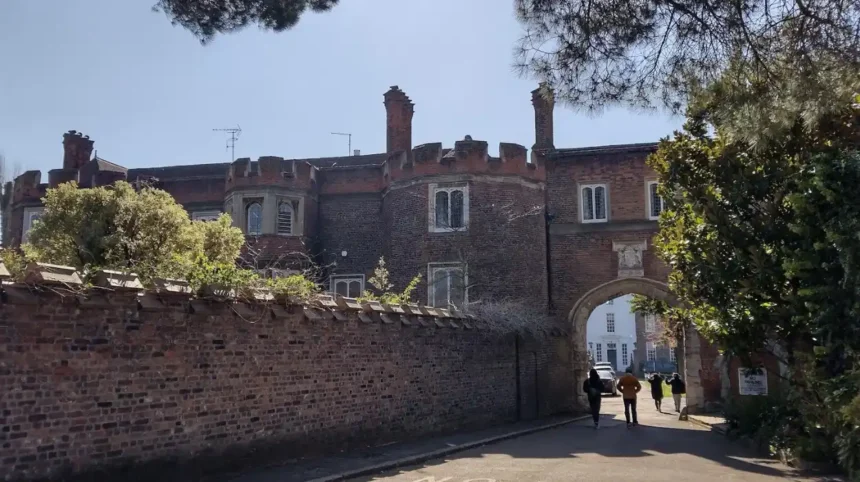
The palace itself was largely dismantled after the execution of Charles I in 1649. However, parts of the historic complex and archaeological remains survive. The surviving Gate House and Wardrobe provide physical evidence of the former royal palace.
What is the royal connection between Richmond Palace and Elizabeth I?
Richmond Palace was one of Elizabeth I’s favourite residences and the place where she died on 24 March 1603. She used Richmond as a winter court, received diplomats there, conducted government business and spent extended periods at the palace.
Elizabeth I used Richmond for both private and political purposes. The palace provided a comparatively compact royal residence and a base outside central London.
The queen frequently stayed at Richmond during the colder months. The London Borough of Richmond upon Thames records that she often stayed there twice a year and regularly spent Christmas at the palace.
Richmond also functioned as a political centre. Important diplomatic discussions took place there. During the Spanish Armada crisis of 1588, Elizabeth’s court was at Richmond while officials monitored developments involving the Spanish fleet.
Royal entertainment was also an important part of palace life. Historical records document plays, masques, music and other court performances at Richmond Palace. Records between 1575 and 1603 identify nine occasions when the company associated with William Shakespeare appeared at Richmond, although surviving records do not establish which individual plays were performed.
Elizabeth’s final months were spent largely at Richmond. She died at the palace in the early hours of 24 March 1603. Her death ended the Tudor dynasty and brought James VI of Scotland to the English throne as James I.
This makes Richmond one of the most important surviving royal-history locations in West London.
How did Richmond Park become a royal hunting landscape?
Richmond Park became a royal hunting park under Charles I in the 17th century. Charles enclosed the landscape in 1637, introduced large herds of red and fallow deer and created a protected royal hunting ground that remains a major London landscape today.
Richmond Park has roots in medieval royal landholding. The surrounding area was associated with the Manor of Sheen and royal hunting before the formal creation of the park.
Charles I transformed the landscape in the 17th century. In 1625, he moved his court to Richmond to escape the plague in London. The rural setting also offered valuable hunting opportunities.
The king enclosed the park in 1637. The enclosing wall originally extended for approximately eight miles. Much of the historic boundary survives, although sections have been repaired and renewed over time.
Charles I introduced approximately 2,000 red and fallow deer. Deer remain one of the defining features of Richmond Park, although the current herd is substantially smaller. The Royal Parks currently records a herd of around 630 red and fallow deer.
The park covers more than 2,500 acres and is London’s largest Royal Park. It is also a National Nature Reserve, a Site of Special Scientific Interest and a European Special Area of Conservation.
The royal hunting landscape therefore became an important environmental asset. Historic grazing, ancient trees, ponds, woodland and grassland now support substantial biodiversity.
What royal landmarks can visitors see in Richmond Park?
Richmond Park contains several landmarks connected with its royal history, including King Henry’s Mound, historic boundary walls, Richmond Gate, Pembroke Lodge and long-established deer landscapes. These features connect the modern public park with its Tudor and Stuart royal past.
King Henry’s Mound is one of Richmond Park’s best-known historic viewpoints. The mound provides views across London and is traditionally associated with Henry VIII, although the exact historical circumstances surrounding the mound remain distinct from its later name and interpretation.
Richmond Gate forms another important connection. The present gates and lodge date from the late 18th century and are associated with architect Sir John Soane. Historic England lists the gates, lodge and associated structures at Grade II.
Pembroke Lodge provides another historic landmark. The Georgian building occupies a prominent position overlooking the Thames Valley.
The park also preserves its historic enclosure. Historic England identifies Richmond Park as a Grade I registered historic landscape. The park’s surviving structure reflects its development as a royal deer park from the 17th century.
The modern landscape combines heritage and conservation. Ancient trees, grassland, ponds and deer habitats occupy the same broad landscape that developed from royal hunting use.
Why is Kew important to West London’s royal history?
Kew became a major royal centre during the Georgian period when George III and Queen Charlotte used Kew Palace as a family retreat. Kew Gardens developed from royal pleasure grounds into a national botanical institution with global scientific importance.
Kew’s royal history predates George III. Princess Augusta, mother of George III, established a nine-acre botanic garden at Kew in 1759. The garden formed part of a wider royal landscape.
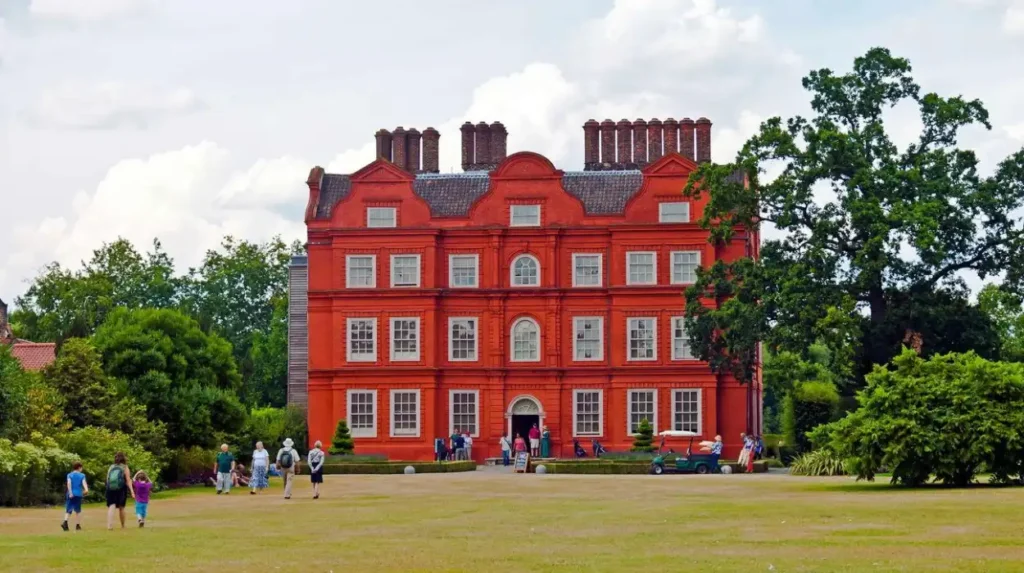
Kew Palace itself is older. The building was constructed in 1631 for Flemish merchant Samuel Fortrey and was originally known as the Dutch House. It later became a royal residence.
George III and Queen Charlotte used Kew Palace extensively during the 18th century. The palace became a family retreat where the royal couple spent periods with their 15 children.
The royal presence also influenced the development of Kew’s gardens. Plant collecting, botanical experimentation and landscape design expanded during the Georgian period.
The Great Pagoda was completed in 1762 by architect William Chambers. Joseph Banks became a major figure in Kew’s scientific development after returning from Captain Cook’s first voyage. Kew’s collections subsequently expanded through plant exploration and international exchange.
In 1802, George III united the Richmond and Kew estates. In 1840, Kew Gardens transferred from Crown ownership to government control and opened to the public.
This transition illustrates an important feature of West London’s royal history. Former royal landscapes became public institutions while retaining their historic identity.
Who were King George III and Queen Charlotte at Kew Palace?
George III and Queen Charlotte used Kew Palace as a private family retreat during the Georgian era. Queen Charlotte arrived in Britain in 1761, aged 17, and became an important figure in the royal household and cultural history of Kew.
Queen Charlotte was born in 1744 in the Duchy of Mecklenburg-Strelitz. She married George III in 1761 at the age of 17.
Kew became closely associated with the royal couple and their family. The palace provided a quieter environment away from the formal pressures of court life.
George III also had a strong interest in science, agriculture and natural history. These interests fitted closely with Kew’s developing botanical culture.
The royal family used Kew during periods of George III’s mental illness. His first major episode occurred in 1788–89, and he experienced repeated episodes over subsequent decades. A regency was established in 1811.
Kew Palace therefore has an unusually personal royal history. Its rooms preserve domestic details connected with George III, Queen Charlotte and their children.
Today, Kew Palace and Queen Charlotte’s Cottage form part of the historic royal story within the Royal Botanic Gardens, Kew. Kew currently states that these royal buildings are closed until spring 2027, making current visitor planning important.
What is the royal connection between Kew Gardens and botanical science?
Kew Gardens developed from an 18th-century royal garden into a leading botanical institution. Princess Augusta founded its first botanic garden in 1759, while later royal support helped create the collections, landscapes and scientific foundations associated with modern Kew.
The original royal garden covered nine acres. Princess Augusta established it in 1759 within the wider pleasure grounds at Kew.
The garden quickly developed an international focus. Joseph Banks became one of the most influential figures in Kew’s botanical history. Plant collectors travelled overseas and sent specimens and seeds back to Britain.
Francis Masson became Kew’s first plant collector in 1772 and travelled to South Africa. In 1788, two Kew gardeners travelled on HMS Bounty to collect breadfruit plants from Tahiti.
Kew’s royal identity therefore became closely linked with scientific exploration. The garden was not simply a decorative royal landscape. It became a centre for plant introduction, classification and research.
The transfer to government ownership in 1840 marked a major institutional change. Kew subsequently developed into a scientific organisation with international responsibilities for plant and fungal research.
Its origins remain visibly connected to the royal estate that preceded the modern institution.
What is the royal history of Hampton Court and its connection with West London?
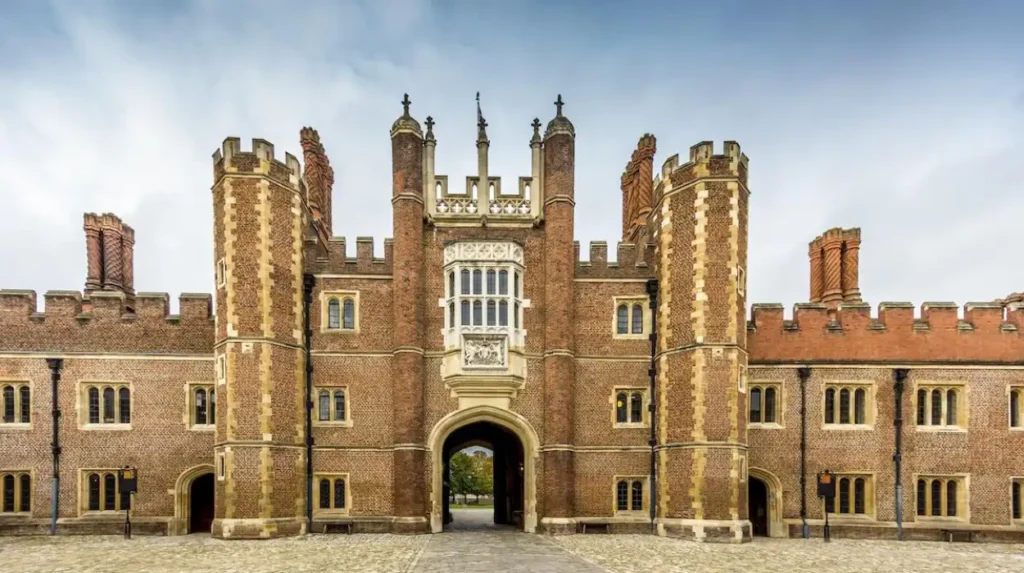
Hampton Court Palace is a major royal landmark on the western edge of Greater London. Henry VIII made it his principal palace, while later monarchs including William III, Mary II, George I and George II reshaped the complex.
Hampton Court began as a residence developed by Cardinal Thomas Wolsey in the early 16th century. Henry VIII eventually acquired the palace and transformed it into one of the most impressive royal residences in England.
Henry VIII used Hampton Court for government, entertainment and court life. All six of his wives visited the palace, while extensive accommodation housed courtiers and servants.
The palace could support an enormous royal household. Historic Royal Palaces records that up to 800 courtiers could accompany Henry VIII, while the kitchens were designed to support the preparation of around 1,600 meals per day.
The palace later changed substantially. William III and Mary II commissioned Sir Christopher Wren to create a new Baroque section after taking the throne in 1689.
George II and Queen Caroline were the final king and queen to live at Hampton Court. Their final stay took place in 1737. After this period, the palace ceased to function as a regular royal residence.
Hampton Court opened to the public in 1838 under Queen Victoria. It subsequently became one of Britain’s most significant historic visitor attractions.
Its proximity to Richmond, Bushy Park and the Thames makes Hampton Court an essential part of the wider West London royal landscape.
How is Bushy Park connected to Henry VIII and Hampton Court?
Bushy Park developed alongside Hampton Court as a royal hunting and leisure landscape. Henry VIII acquired the surrounding parkland in the 16th century, while Charles I later created major water features including the Longford River and Diana Fountain.
Bushy Park is immediately north of Hampton Court Palace in Richmond upon Thames. Its royal history developed partly because the monarch needed extensive hunting grounds close to the palace.
The park’s origins reach back to the Tudor period. Henry VIII acquired Hampton Court and its surrounding parklands after Cardinal Wolsey’s fall from power. Bushy Park subsequently became part of the royal hunting landscape.
Charles I significantly reshaped the park in 1638. He commissioned the Longford River, an artificial watercourse approximately 12 miles long, to supply water to Hampton Court Palace.
The Diana Fountain also dates from Charles I’s period. Sir Christopher Wren later became associated with the design of the fountain that visitors see today.
Bushy Park covers approximately 445 hectares, or 1,100 acres, making it London’s second-largest Royal Park.
Its royal character remains visible through the deer, avenues, water gardens, historic buildings and relationship with Hampton Court.
What is the royal connection to Syon Park in Brentford?
Syon Park in Brentford has royal connections through its former Bridgettine abbey, Tudor history and association with royal families. Queen Anne stayed at Syon in 1692, while the estate later became the London home of the Percy family.
Syon Park occupies a historic Thames-side site in Brentford. Its royal history began before the current house.
The site was home to the Bridgettine Abbey of Syon, founded by Henry V in 1415. It became the only Bridgettine house in England and developed close links with the Tudor monarchy.
The abbey was dissolved during the reign of Henry VIII. Syon subsequently returned to royal control before passing into private aristocratic ownership.
The site’s Tudor connections remained strong. The funeral procession of Henry VIII stopped at Syon while travelling from London towards Windsor after his death in 1547.
Syon also became associated with the Stuart court. Queen Anne gave birth while staying at Syon in 1692.
The estate later passed to the Percy family. Its present landscape reflects major 18th-century redesigns associated with Lancelot “Capability” Brown, while Robert Adam created important interiors within Syon House.
Syon therefore connects West London’s royal story with religious history, Tudor monarchy, Stuart royalty and aristocratic estate development.
How did royal estates shape West London’s parks and landscapes?
Royal estates shaped West London by preserving large areas of woodland, pasture, gardens and parkland around residences. Richmond Park, Bushy Park, Kew Gardens and Hampton Court demonstrate how royal land management created landscapes that remain important public and ecological assets.
Royal hunting required extensive open land. Deer needed grazing areas, while monarchs also required woodland, water, gardens and roads.
Richmond Park demonstrates this process particularly clearly. Charles I’s enclosure created a large protected deer park. Its boundary walls, gates and historic landscape remain part of modern London.
Bushy Park developed through repeated phases of royal land management. Tudor enclosure, Stuart water engineering and later landscape design created the structure that remains visible today.
Kew followed a different model. Its royal pleasure grounds became a botanical garden, with scientific collections replacing purely courtly functions.
Hampton Court’s gardens also demonstrate changing royal priorities. Tudor gardens focused on display and recreation, while later monarchs introduced formal and landscape-style designs.
These landscapes now provide public access to historic environments. They also support biodiversity, recreation and conservation.
The Royal Parks manages eight historic Royal Parks across London, covering approximately 5,000 acres. Its work combines heritage management with conservation and public access.
What royal connections can still be seen in West London today?
West London’s royal history survives through palaces, parks, gardens, gates, monuments, archaeological remains and historic street patterns. Kew Palace, Richmond Park, Bushy Park, Hampton Court and Syon Park provide distinct examples of royal heritage still visible today.
Richmond preserves the physical and archaeological legacy of Richmond Palace. The surviving Gate House and Wardrobe provide evidence of the former royal complex, while Richmond Green and surrounding streets retain the historic setting.
Richmond Park preserves one of London’s most important royal landscapes. Its walls, gates, deer, historic viewpoints and parkland maintain the character of a former royal hunting ground.
Kew Palace preserves the domestic side of Georgian royalty. Its rooms provide evidence of the family life of George III, Queen Charlotte and their children.
Kew Gardens adds another dimension. Its royal origins remain part of the institution’s identity, while its botanical collections represent more than two centuries of scientific development.
Bushy Park retains royal landscape features including the Diana Fountain, Chestnut Avenue, water gardens and deer.
Hampton Court provides the most substantial architectural expression of royal power in the western London area. Its Tudor and Baroque sections demonstrate different periods of monarchy and architectural taste.
Syon Park adds a religious and aristocratic dimension through its former abbey, royal associations and later Percy ownership.
Together, these sites create a connected royal heritage network rather than a collection of unrelated attractions.
Explore More Area Guide
Georgian Architecture in West London: Kew, Chiswick & Richmond
Victorian Architecture in West London: Heritage, Houses and Styles
Why are West London’s royal connections still important?
West London’s royal connections remain important because historic royal landscapes now function as public parks, heritage attractions, scientific institutions and conservation areas. Their surviving buildings and landscapes connect modern London with more than 900 years of royal history.
The significance of West London’s royal heritage extends beyond tourism.
Richmond Park demonstrates how a former royal hunting ground can become a major ecological resource. Its National Nature Reserve status reflects the importance of its habitats, while its historic structure provides evidence of 17th-century royal land management.
Kew demonstrates how a royal garden can evolve into an internationally significant scientific institution. Its history connects monarchy, botanical exploration, plant collecting and modern research.
Hampton Court demonstrates the architectural and political importance of royal residences. Its surviving buildings preserve evidence of Tudor government, court culture and later Georgian transformation.
Bushy Park demonstrates the long-term impact of royal landscape engineering. The Longford River and Diana Fountain remain prominent features of a public park that began as royal hunting land.
The history also influenced local settlement. Richmond’s growth was strongly connected to its palace and royal court. The presence of royalty attracted courtiers, servants, craftsmen and other residents, helping shape the town’s development.
The continuing preservation of these sites ensures that West London’s royal history remains part of the city’s physical environment.
How can visitors explore West London’s royal heritage?
Visitors can explore West London’s royal heritage by linking Richmond Palace remains with Richmond Park, then continuing towards Kew, Bushy Park, Hampton Court and Syon Park. Each site represents a different phase of royal residence, hunting, landscape design or public heritage.
Richmond provides the strongest starting point for understanding the area’s royal history. Visitors can explore Richmond Green, the former palace area and Richmond Gate before entering Richmond Park.
Richmond Park provides the landscape context. King Henry’s Mound, historic gates, deer habitats and park boundaries show how royal hunting shaped the area.
Kew provides a different experience. Kew Palace and the historic gardens explain the Georgian royal connection and the transition from royal pleasure grounds to botanical science.
Bushy Park can then be understood in relation to Hampton Court. The park’s historic landscape was developed to serve the royal palace and remains physically connected to it.
Hampton Court provides the most extensive palace experience, covering Tudor, Stuart and Georgian royal history.
Syon Park adds another site further east along the Thames. Its abbey origins and later royal associations broaden the story beyond palaces and hunting grounds.
The most important point is the continuity between these places. West London’s royal heritage developed through connected estates, riverside routes, hunting landscapes and residences.
For modern visitors, the same geography provides a way to understand how royal power influenced the development of western London.
What are the main royal places in West London?
The main royal places include Richmond Palace, Richmond Park, Kew Palace, Royal Botanic Gardens, Kew, Bushy Park, Hampton Court Palace and Syon Park. Each site represents a different part of West London’s royal history.