

Key Points
- Formal Opposition: Harrow Council has officially voted in favor of an objection to the draft London Plan from the Mayor of London, after discussions within a full council meeting.
- Meeting Date: The formal motion to object to the draft London Plan was passed during a meeting held on Thursday, October 1, 2026.
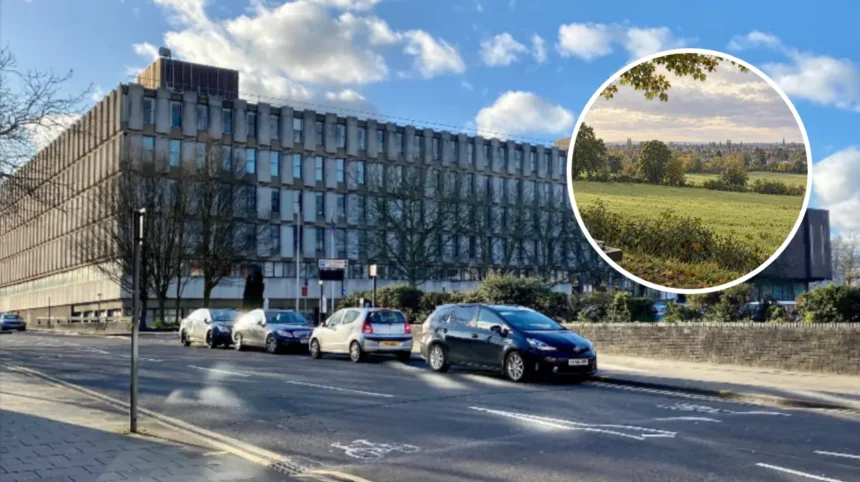
- Green Belt Protections: The motion opposes any plan that would adversely affect the borough’s Green Belt, and encourages the Mayor of London to protect the borough’s open spaces, supporting the green spaces in the area.
- Housing Target Increase: The motion is concerned about the borough’s housing target increase by almost 50 percent in the next ten years, taking into account 3,150 homes to be built on greenfield sites in accordance with the draft plan.
- Proposed Growth at Northwood Broad Location: Councillors have been very keen on the issue of the Northwood Broad Location for Growth – a broad location that comprises parts of Harrow (including most of Hatch End, Headstone, Pinner, Pinner South, and part of Harrow Weald) and Hillingdon.
- Defeated Alternative Proposal: Another amendment that called for increased collaboration between parties and a common stand by the political party leaders was defeated before the adoption of the substantive motion.
- Deadline for Consultation: The deadline for consultation on the draft London Plan will be 5 pm, Thursday, October 15, 2026. The council is preparing to make representations during the public inquiry set to be held in 2027.
uk/local/harrow/">Harrow (West London Times) October 5, 2026 — Harrow Council has formally committed to opposing the Mayor of London’s contentious draft London Plan after a high-stakes full-council debate centered heavily on the preservation of local green spaces. The substantive motion, passed during a meeting on Thursday, October 1, officially records the borough’s strict objection to the metropolitan planning strategy, invites the Mayor of London to inspect Harrow’s threatened Green Belt firsthand, and demands stronger safeguards for regional open land.
- Key Points
- Why Did Harrow Council Oppose the Draft London Plan?
- What Are the Implications of Broad Locations for Growth?
- How Did the Political Debate Unfold Within the Council Chamber?
- What Are the Next Steps in the Planning Process?
- Background of the Particular Development
- Prediction: How This Development Can Affect Harrow Residents and Local Stakeholders
Why Did Harrow Council Oppose the Draft London Plan?
The primary catalyst for the council’s formal pushback stems from the immense scale of housing development outlined in the draft planning framework. As detailed by LDN Editor of London Daily News, the resolution highlights a “nearly 50 per cent rise in Harrow’s housing target over the next decade,” a projection that factors in approximately 3,150 homes built on greenfield sites. While authorities note that these figures are currently part of a consultative draft rather than active planning permission for immediate execution, local representatives remain deeply alarmed by the trajectory of the policy.
The debate zeroed in on the controversial Northwood Broad Location for Growth, a designated zone stretching across both the London Borough of Harrow and the London Borough of Hillingdon. According to reporting from London Daily News, the specific locations identified within Harrow include the vast majority of Hatch End, Headstone, Pinner, and Pinner South, alongside a portion of Harrow Weald. LDN Editor of London Daily News noted that the council’s motion argues these specific wards contain “almost all of the borough’s Green Belt” and cautions that the structural design of the draft plan could dangerously ease future boundary adjustments or direct releases from protected Green Belt designations.
What Are the Implications of Broad Locations for Growth?
To understand the scope of the controversy, it is vital to examine how Broad Locations for Growth function within municipal planning. As outlined by LDN Editor of London Daily News, these designations are fundamentally intended to identify areas surrounding well-established public transport connections where future residential and commercial development could potentially be evaluated.
Crucially, the mere inclusion of an area in the draft plan does not instantly dictate what will be built, the exact footprints of structures, or timelines for construction. LDN Editor of London Daily News emphasized that any detailed proposals would still have to navigate the standard, rigorous planning process, which mandates public consultation and the formal assessment of individual planning applications. Despite these administrative safeguards, Harrow’s leadership maintains that the framework’s overarching tone significantly weakens historical protections.
Explore More Harrow News
1,058-Home Civic Centre Redevelopment Granted Permission in Harrow 2026
Harrow Officers Back 104-Room Co-Living Plan and Housing Contribution 2026
How Did the Political Debate Unfold Within the Council Chamber?
The path to passing the resolution was marked by distinct political friction. During the meeting, councillors debated not only the core text of the motion but also an alternative proposal. As reported by LDN Editor of London Daily News, an amendment was brought forward that sought to retain the core objections regarding the Green Belt while simultaneously encouraging tighter cross-party collaboration and a unified, joint approach among the leaders of the council’s various political groups.
However, this cross-party amendment was ultimately defeated. Following its rejection, the main substantive motion was put to the vote and successfully carried, sealing Harrow’s official stance just weeks ahead of the consultation deadline.
What Are the Next Steps in the Planning Process?
The passing of the resolution secures a definitive political posture for Harrow before the consultation window officially slams shut. As highlighted by LDN Editor of London Daily News, the borough has already confirmed plans to submit formal representations and intends to participate actively in the examination in public, which is widely anticipated to take place in 2027.
The draft London Plan itself represents the Mayor of London’s comprehensive vision for the capital’s structural growth leading up to 2050, touching on essential pillars such as housing availability, transport networks, employment opportunities, environmental standards, and public spaces. With the public and organizational consultation scheduled to conclude sharply at 5:00 PM on Thursday, October 15, 2026, feedback gathered during this timeframe will directly shape the subsequent drafting phase. While the council vote does not unilaterally alter current Green Belt boundaries or authorize construction work, it firmly cements local political opposition at a critical juncture for London-wide spatial strategy.
Background of the Particular Development
The dispute between local outer-London authorities and the Greater London Authority (GLA) over housing targets and green space preservation is part of a long-standing tension in metropolitan planning. Successive London Plans have attempted to balance the capital’s severe, well-documented housing crisis with the desire to maintain suburban character and environmental buffers.
Outer-London boroughs like Harrow—characterized by substantial suburban residential tracts and significant proportions of protected metropolitan Green Belt—frequently clash with centralized targets that mandate higher residential densities and outward or greenfield expansion. The current iteration of the draft London Plan has reignited these debates, as boroughs scrutinize how regional growth directives intersect with local environmental preservation policies and community identity.
Prediction: How This Development Can Affect Harrow Residents and Local Stakeholders
For Harrow residents, property owners, and local community groups, this formal council objection serves as a significant marker of political intent, though it does not provide immediate legal immunity against future development. By establishing a firm opposition stance before the October 15 consultation deadline, the council increases political pressure on the Mayor of London to reevaluate housing distribution models in outer-London boroughs.
If successful during the upcoming examination in public in 2027, this advocacy could result in lowered mandatory greenfield housing targets, safeguarding local wards such as Hatch End, Pinner, and Harrow Weald from accelerated urban sprawl and preserving the integrity of the borough’s vital Green Belt assets. Conversely, should the draft plan remain unmodified, residents in these designated Growth Locations may face intensified developer interest, increased pressure on local public infrastructure and transport networks, and prolonged legal and planning battles over suburban land use.