Butterfly watching in West London offers opportunities to observe native butterflies, seasonal migrants and pollinating insects across parks, gardens, woodlands and nature reserves. Areas such as uk/local/richmond-upon-thames/richmond/">Richmond Park and Gunnersbury Triangle provide different habitats that support butterfly feeding, breeding and seasonal activity.
- What Is Butterfly Watching in West London?
- Where Are the Best Places for Butterfly Watching in West London?
- Which Butterfly Species Can You See in West London?
- Peacock butterfly
- Comma butterfly
- Holly blue butterfly
- Orange-tip butterfly
- Red admiral butterfly
- Painted lady butterfly
- Small copper butterfly
- When Is the Best Time to Watch Butterflies in West London?
- What Weather Conditions Help You Spot Butterflies?
- How Do Butterflies Develop Through Their Life Cycle?
- Which Habitats Support Butterfly Watching in West London?
- Meadows and grassland
- Woodland edges and clearings
- Gardens and community green spaces
- Wetland margins and riverside vegetation
- How Can Beginners Identify Butterflies in West London?
- How Does Butterfly Watching Help Wildlife Conservation?
- What do UK butterfly statistics reveal?
- How can local sightings contribute to research?
- How can residents protect butterflies?
- How Can You Plan a Responsible Butterfly-Watching Visit?
- How Will Butterfly Conservation Shape West London’s Green Spaces?
What Is Butterfly Watching in West London?
Butterfly watching in West London is the observation and identification of butterflies in parks, gardens, meadows and nature reserves. It combines wildlife observation, seasonal nature exploration and conservation awareness across green spaces in boroughs such as Richmond upon Thames, Hounslow, Ealing and Hillingdon.
Butterfly watching, also called butterfly spotting, involves identifying species by their wing colours, patterns, size, flight behaviour and habitat. Observers record sightings without capturing or disturbing the insects. The activity is suitable for beginners, families, photographers, wildlife enthusiasts and people interested in local biodiversity.
West London contains a mixture of urban parks, riverside habitats, woodland, grassland and managed gardens. These environments provide food and shelter for different butterfly species. Flowering plants supply nectar for adults, while particular host plants provide food for caterpillars.
The region’s green spaces are important because butterflies depend on connected habitats throughout their life cycles. A flower-rich garden supports feeding, while nearby grassland, hedgerows and woodland edges provide additional resources. Different habitats support different species, making West London a useful area for seasonal wildlife observation.
London Wildlife Trust provides a butterfly identification resource covering familiar species found in the capital, including the orange-tip, peacock, ringlet, red admiral, comma, painted lady and holly blue. These species help beginners learn the differences between common butterflies.
Where Are the Best Places for Butterfly Watching in West London?
Richmond Park, Gunnersbury Triangle and Ruislip Woods are useful West London-area destinations for butterfly watching. Their grasslands, woodland edges, flowering vegetation and sheltered habitats support different wildlife communities, although the species visible on each visit depend on season, weather and local conditions.
West London has several locations suitable for observing butterflies. The best choice depends on whether visitors want open grassland, woodland, a small urban nature reserve or a landscaped garden.
Richmond Park
Richmond Park is a major wildlife destination with ancient trees, acid grassland, meadows and woodland. The Royal Parks reports that the park supports 29 butterfly species, including comma, Essex skipper, small copper and purple hairstreak.
Best areas to explore include grassland margins, meadow habitats and suitable woodland edges. Stay on permitted paths and avoid trampling vegetation.
Gunnersbury Triangle
This three-hectare London Wildlife Trust reserve in Chiswick contains wet woodland, ponds and acid grassland. Its compact landscape provides an opportunity to observe wildlife within an urban setting. The reserve is accessible throughout the year, with April to November identified as a recommended visiting period.
Ruislip Woods National Nature Reserve
Ruislip Woods contains woodland, open water and lowland grassland across four principal areas: Mad Bess Wood, Bayhurst Wood, Park Wood and Copse Wood. These habitats offer opportunities to look for butterflies around sunny clearings, woodland margins and flowering plants.
Other local parks, allotments, community gardens and riverside green spaces also support butterfly watching. Small sites are worth visiting when they contain flowering plants, sheltered areas and vegetation suitable for caterpillars.
Visitors should check opening hours, access restrictions and seasonal management notices before setting out. Not every green space provides the same habitat, and a large park does not guarantee more butterfly sightings than a smaller flower-rich reserve.
Which Butterfly Species Can You See in West London?
West London supports familiar British butterflies, including peacock, comma, holly blue, orange-tip, small copper, red admiral and painted lady. Each species has distinctive markings, habitat preferences and seasonal patterns that help observers identify it accurately in parks, gardens and nature reserves.
The exact species present depend on habitat, time of year and local conditions. Some butterflies prefer open grassland, while others use woodland, hedgerows or gardens. Learning a few identifying features makes wildlife observation more productive.
Peacock butterfly
The peacock butterfly (Aglais io) has reddish-brown wings with prominent eyespots. These markings help distinguish it from many other British species. Adults visit flowering plants in gardens, parks and open habitats. Look for them feeding on nectar during suitable weather.
Comma butterfly
The comma butterfly (Polygonia c-album) has deeply scalloped wing edges and orange-brown colouring. Its irregular outline resembles a dry leaf when its wings are closed. Woodland edges, gardens and sheltered areas provide useful places to search.
Holly blue butterfly
The holly blue (Celastrina argiolus) is a small butterfly with blue upper wings and pale undersides marked with dark spots. It frequents gardens, parks and woodland edges. London Wildlife Trust identifies it as a familiar butterfly of local green spaces.
Orange-tip butterfly
The orange-tip (Anthocharis cardamines) is an early-season butterfly. Males have conspicuous orange patches on their forewings, while females lack the bright orange tips. Both have patterned undersides that provide camouflage among vegetation. Look for this species around flowering plants and suitable breeding habitats in spring.
Red admiral butterfly
The red admiral (Vanessa atalanta) has black wings with red bands and white markings near the tips. It visits gardens, parks and flowering plants. Some individuals migrate into Britain, while others remain or overwinter locally, so sightings are not restricted to one short summer period.
Painted lady butterfly
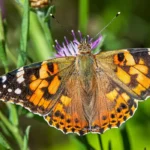
The painted lady (Vanessa cardui) is a migratory butterfly recognised by its orange, black and white wing pattern. It travels into Britain from warmer regions and can appear in gardens, parks and open countryside. Numbers vary between years, making seasonal records particularly useful.
Small copper butterfly
The small copper (Lycaena phlaeas) has bright copper-orange wings marked with dark spots and darker borders. It is associated with open, sunny habitats, including grassland. Richmond Park is one of the local places where the species is recorded.
These examples provide a starting point rather than a complete local species inventory. Butterfly Conservation’s identification resources help observers compare wing markings and distinguish similar species.
When Is the Best Time to Watch Butterflies in West London?
Spring and summer are the principal seasons for butterfly watching in West London. April to September offers opportunities to see early spring species, summer grassland butterflies and migratory visitors, while warm, sunny and relatively calm conditions generally improve the chances of observing active adults.
Butterfly activity follows seasonal changes in temperature, daylight, plant growth and the availability of nectar. Different species emerge at different times, so repeated visits across the year reveal more than a single summer walk.
Spring: March to May
Spring brings early butterfly activity as temperatures rise and flowers begin to appear. The orange-tip is a characteristic spring species, while the holly blue also appears early in the season.
Look around flowering hedgerows, woodland margins and sheltered gardens. Spring sightings depend heavily on local temperatures and weather. A sunny afternoon generally offers better viewing opportunities than a cold, windy morning.
Summer: June to August
Summer is a productive period for butterfly watching because many species are active and a wider range of flowering plants supplies nectar. Grasslands, meadow edges and flower-rich parks provide useful observation areas.
Peacock, red admiral, small copper, comma and painted lady butterflies are among the species to look for, depending on their local flight periods. Richmond Park’s grasslands and Gunnersbury Triangle’s mixed habitats provide different settings for summer wildlife observation.
Autumn: September to November
Autumn sightings often include red admirals and other butterflies feeding on late flowers or fallen fruit. The number of active adults gradually decreases as temperatures fall, although warm autumn weather can extend the viewing season.
Search sunny garden borders, sheltered park edges and flowering plants. Gunnersbury Triangle identifies April to November as a recommended visiting period, making it a useful reserve for seasonal nature observation beyond midsummer.
Winter: December to February
Winter generally offers fewer opportunities to observe active adult butterflies. Some species survive the cold season as eggs, caterpillars, pupae or adults, depending on their life cycle.
Winter visits remain useful for understanding habitat management and preparing for spring observations. Look for sheltered vegetation and undisturbed areas, but do not handle overwintering insects or remove bark and leaf litter in an attempt to find them.

What Weather Conditions Help You Spot Butterflies?
Butterflies are ectothermic insects, meaning their body temperature depends largely on external conditions. Sunny, warm and sheltered weather usually supports greater flight activity, while cold temperatures, strong winds and heavy rain reduce the likelihood of seeing adults flying.
Butterflies use external warmth to reach the temperatures needed for effective movement. Sunlight helps many species warm their bodies, particularly when they rest with their wings positioned to absorb heat.
On a suitable day, observe open grassland, sunny woodland margins and flower beds sheltered from strong winds. Butterflies often visit nectar-rich flowers repeatedly, giving observers more time to identify their markings.
Cloud cover does not automatically mean that every butterfly disappears. Some individuals rest on vegetation, and sightings depend on the species and immediate conditions. However, a bright period after rain often creates better viewing opportunities than continuous wet weather.
Time of day also influences activity. Late morning through the afternoon is often productive when the sun has warmed the surrounding habitat. During very hot weather, butterfly activity varies with shade, moisture and the species involved.
Check the forecast before travelling, but use actual conditions at the site to guide the visit. A sheltered garden or woodland edge provides a different microclimate from an exposed grassland.
How Do Butterflies Develop Through Their Life Cycle?
Butterflies develop through complete metamorphosis, a process involving four stages: egg, caterpillar, pupa and adult. Each stage has a different role, from reproduction and feeding to transformation and dispersal, and suitable host plants and habitat conditions are essential for successful development.
The butterfly life cycle explains why conservation requires more than planting flowers for adult insects. A site also needs appropriate vegetation for egg-laying and caterpillar development.
Egg
An adult female lays eggs on or near a suitable host plant. The correct plant depends on the butterfly species. The eggs contain the developing embryo and provide the first stage of the life cycle.
Caterpillar
The caterpillar, also called a larva, emerges from the egg and feeds on suitable plant material. Caterpillars grow through successive stages and shed their skins as they increase in size.
For example, peacock caterpillars feed on stinging nettles. Removing every nettle patch from a garden eliminates a valuable food source for this species.
Pupa
The caterpillar transforms into a pupa, commonly called a chrysalis in butterflies. During this stage, the insect undergoes substantial internal changes as its adult structures develop.
Pupae remain vulnerable to disturbance, habitat clearance and extreme environmental conditions. Leaving suitable vegetation undisturbed supports this stage of development.
Adult
The adult butterfly emerges from the pupa, expands and dries its wings, and begins flying when conditions allow. Adults feed on nectar, seek mates and reproduce.
The time required to complete the life cycle varies with the species, temperature and season. Some British butterflies produce more than one generation in a year, while others have a single generation or a more complex seasonal pattern.
Which Habitats Support Butterfly Watching in West London?
Butterflies rely on habitat features that provide nectar, host plants, shelter and suitable breeding conditions. West London’s woodland edges, meadows, acid grassland, gardens and wetland margins support different ecological needs, allowing observers to find different species across a varied urban landscape.
Habitat diversity is central to butterfly conservation. Nectar plants supply energy for adults, while host plants provide food for caterpillars. Shelter from strong winds and areas exposed to sunlight also influence butterfly activity.
Meadows and grassland
Flower-rich meadows provide nectar and open spaces for butterflies to fly, feed and bask. Grassland also supports plants that serve as caterpillar food sources.
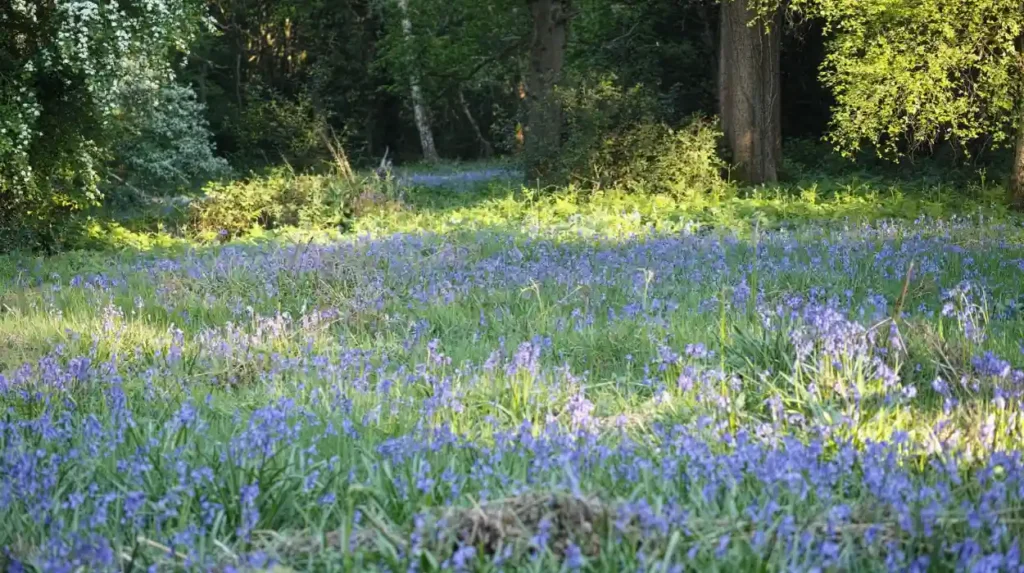
Richmond Park contains extensive lowland acid grassland, an increasingly uncommon habitat in the capital. Its mixture of grassland, woodland and meadow areas supports a diverse wildlife community.
Woodland edges and clearings
Woodland edges combine sunlight with shelter and flowering vegetation. These conditions support butterflies that use both open and wooded habitats.
Gunnersbury Triangle contains wet woodland, ponds and acid grassland within a compact urban reserve. Its habitat variety makes it suitable for observing how wildlife uses different environments within a small area.
Gardens and community green spaces
Gardens provide nectar, host plants and resting places for butterflies. Even a small outdoor space contributes resources when it includes suitable flowers and avoids unnecessary pesticide use.
Butterfly Conservation states that a well-planned garden can attract more than 20 butterfly species. The result depends on planting, local conditions and the surrounding landscape.
Wetland margins and riverside vegetation
Ponds, damp ground and nearby flowering plants create additional habitat features. Wetland margins also support other insects and wildlife, increasing the ecological value of a green space.
Visitors should focus on permitted paths and avoid entering sensitive vegetation. Observing habitat boundaries often provides better opportunities to see insects without disturbing them.
How Can Beginners Identify Butterflies in West London?
Beginners can identify butterflies by comparing wing colour, markings, shape, size, flight behaviour and habitat. Photographing an insect from a respectful distance and checking a recognised identification guide improves accuracy, especially when distinguishing similar white butterflies, small blue species and orange-brown butterflies.
Identification becomes easier when observers focus on several features rather than colour alone. Wing patterns, the shape of the wing edges and markings on the underside often provide useful evidence.
Start with common, distinctive species. The peacock’s eyespots, the orange-tip male’s bright forewing patches and the comma’s ragged wing edges are useful recognition features.
Observe the butterfly while it rests on a flower or leaf. When its wings close, the underside often reveals markings that are not visible during flight. Avoid chasing it, because repeated disturbance makes identification and photography more difficult.
Use a camera or phone to capture a clear image without touching the insect. Compare the image with London Wildlife Trust’s butterfly spotter guide or Butterfly Conservation’s identification resources.
Record the date, location, weather, habitat and identification confidence. If a photograph does not show enough detail, record the sighting as an unidentified butterfly rather than assigning an uncertain species name.
Repeat visits help observers recognise seasonal patterns. A species seen in a flower-rich garden in spring does not necessarily use the same habitat in the same way during late summer.
How Does Butterfly Watching Help Wildlife Conservation?
Butterfly watching supports conservation by encouraging habitat awareness, species recording and public participation in biodiversity monitoring. Reliable sightings help researchers understand distribution and seasonal activity, while responsible garden management provides nectar, caterpillar food plants and shelter for local butterfly populations.
Butterflies are important components of food webs and act as pollinators when they visit flowers. Their dependence on particular plants and environmental conditions also makes them useful indicators of changes in habitats and climate.
What do UK butterfly statistics reveal?
The UK Butterfly Monitoring Scheme has collected systematic data since 1976. It uses repeated counts along defined routes, known as transects, to measure changes in butterfly abundance. The scheme is organised by Butterfly Conservation, the UK Centre for Ecology & Hydrology, the British Trust for Ornithology and the Joint Nature Conservation Committee.
The Department for Environment, Food & Rural Affairs reported that the long-term index for all resident butterfly species in England declined by 19% between 1976 and 2024. The short-term index showed no overall change from 2014 to 2024. These national statistics provide context for conservation but do not measure West London’s individual parks separately.
Butterfly Conservation’s April 2025 report also found that 51 of the UK’s 59 species declined in abundance in 2024 compared with 2023. Annual fluctuations are not the same as long-term trends, but they demonstrate the value of continued monitoring.
How can local sightings contribute to research?
Members of the public can contribute observations through recognised recording schemes, including the Big Butterfly Count and the UK Butterfly Monitoring Scheme, where the relevant survey method is appropriate.
Structured surveys use consistent methods so records can be compared across locations and years. Casual sightings also help observers learn about wildlife, although an isolated observation does not establish a population trend.
Accurate identification, complete dates and locations, and repeated observations make records more useful. Photographs help validate uncertain records when they show the features required for identification.
How can residents protect butterflies?
Residents can support butterflies by planting nectar-rich flowers, retaining suitable host plants, reducing pesticide use and leaving some areas of vegetation undisturbed. Examples include allowing a small nettle patch to remain in a suitable location for caterpillars and growing flowers that provide nectar across different seasons.
Local councils, land managers and community groups also influence butterfly habitats through mowing schedules, planting schemes, hedgerow management and the protection of green corridors.
Explore More Area Guide
Biodiversity Sites in West London: Nature Reserves and Wildlife
Rivers and Streams of West London: A Complete Guide
How Can You Plan a Responsible Butterfly-Watching Visit?
A responsible butterfly-watching visit combines suitable timing, careful observation, respect for wildlife and preparation for local conditions. Visitors should remain on permitted paths, avoid catching butterflies, leave caterpillars and pupae undisturbed, and follow the access rules established by each park or nature reserve.
Planning starts with choosing a suitable destination and checking its current visitor information. Richmond Park offers extensive grassland and woodland, while Gunnersbury Triangle provides a smaller nature reserve with managed paths and varied vegetation.
Wear comfortable walking shoes and carry water, a phone or camera, and a butterfly identification guide. Binoculars are useful for observing butterflies resting higher in trees, although they are not essential for beginners.
Keep a respectful distance from insects and avoid touching their wings. Butterfly wings contain delicate scales that are easily damaged through handling. Do not remove plants, collect caterpillars or disturb pupae for photographs.
Check accessibility before travelling. Gunnersbury Triangle has natural-surface paths, decked walkways and uneven sections, including steep steps that restrict wheelchair access to some areas. Visitors with mobility requirements should consult the reserve’s current access information.
For families, butterfly watching provides an opportunity to teach children about insect development, native plants and biodiversity. Encourage children to observe quietly, photograph sightings and leave wildlife in its natural habitat.
How Will Butterfly Conservation Shape West London’s Green Spaces?
Butterfly conservation in West London depends on protecting connected habitats, maintaining flowering vegetation and preserving plants required by caterpillars. Sustainable park management, wildlife recording and biodiversity-friendly gardens help maintain suitable conditions for butterflies as urban development and environmental changes affect green spaces.
Urban development can divide natural habitats into smaller areas. Roads, buildings and intensively managed land reduce the continuity of vegetation that wildlife uses for food, shelter and movement.
Green corridors, including vegetated railway margins, hedgerows and connected parks, help maintain links between habitats. Gunnersbury Triangle illustrates the conservation value of an urban wildlife site: local campaigning helped protect the area from development in the early 1980s, and the reserve opened to the public in 1985.
Future conservation work requires consistent monitoring and practical habitat management. Recording butterfly sightings helps establish where species occur, while long-term monitoring reveals whether their abundance changes over time.
Weather patterns also influence seasonal activity. Temperature, sunshine and rainfall affect adult flight, caterpillar development and the availability of flowers. Maintaining varied habitats provides different resources across the year rather than relying on a single type of planting.
Residents can contribute through small actions, such as growing nectar-rich flowers, avoiding unnecessary pesticides and allowing suitable host plants to remain. When these actions are combined with responsible management of larger parks and nature reserves, they support a wider network of habitats across West London.
Butterfly watching therefore provides both a recreational activity and a practical introduction to urban nature conservation. Richmond Park, Gunnersbury Triangle and other local green spaces offer opportunities to observe seasonal changes while learning how habitat quality affects wildlife.
Where are the best places for butterfly watching in West London?
Richmond Park, Gunnersbury Triangle Nature Reserve and Ruislip Woods are useful places to observe butterflies in grasslands, woodland clearings and flower-rich habitats.