Birdwatching in West London offers opportunities to observe wild birds across wetlands, reservoirs, rivers, parks, gardens and nature reserves. The region includes internationally important wetland habitats, historic green spaces and urban waterways that support resident birds, winter visitors and seasonal migrants. From the London Wetland Centre in Barnes to the reservoirs around uk/local/hounslow/brentford/">Brentford and the riverside habitats along the Thames, West London provides birdwatching locations for beginners, experienced birders, families and wildlife photographers.
- What makes West London a useful area for birdwatching?
- Where are the best places for birdwatching in West London?
- Which birds can you see in West London?
- What is the best time of year for birdwatching in West London?
- What equipment do you need for birdwatching in West London?
- How can beginners identify birds in West London?
- Are there free birdwatching locations in West London?
- How can families enjoy birdwatching in West London?
- How can you protect birds while birdwatching in West London?
- How does birdwatching contribute to West London’s urban environment?
- How should you plan a birdwatching trip in West London?
This guide explains where to go birdwatching in West London, which birds to look for, when to visit, what equipment to bring and how to observe wildlife responsibly.
What makes West London a useful area for birdwatching?
West London supports birdwatching because its wetlands, reservoirs, rivers, parks and gardens provide feeding, nesting and resting habitats for different bird species. The Thames corridor connects urban green spaces with wider natural landscapes, while managed nature reserves protect habitats for resident birds and seasonal migrants.
The area’s ecological value comes from its varied landscape. Wetlands provide shallow water, reedbeds and muddy margins. Parks offer mature trees, lawns, scrub and ponds. Rivers supply feeding areas for waterbirds, while gardens support smaller species through trees, hedges and bird feeders.
West London’s location within the wider Thames Valley also makes it relevant to seasonal bird migration. Birds moving between breeding and wintering grounds use suitable stopover habitats to rest and feed. Wetlands with reliable food supplies are particularly important during these journeys.
Urban birdwatching also provides opportunities to study how wildlife adapts to developed environments. Species such as wood pigeons, magpies, blackbirds and blue tits regularly occupy residential areas, while herons, cormorants and several duck species use waterways and ponds.
The availability of accessible public green spaces makes birdwatching practical without requiring travel into remote countryside. Visitors should check access arrangements before visiting fenced reservoirs, private land or managed nature reserves.
Where are the best places for birdwatching in West London?
The London Wetland Centre in Barnes, Richmond Park, Bushy Park and suitable Thames-side public spaces provide distinct birdwatching habitats across West London. Each location supports different bird communities, including waterbirds, woodland species, garden birds and seasonal migrants, making habitat choice important when planning a visit.
1. London Wetland Centre
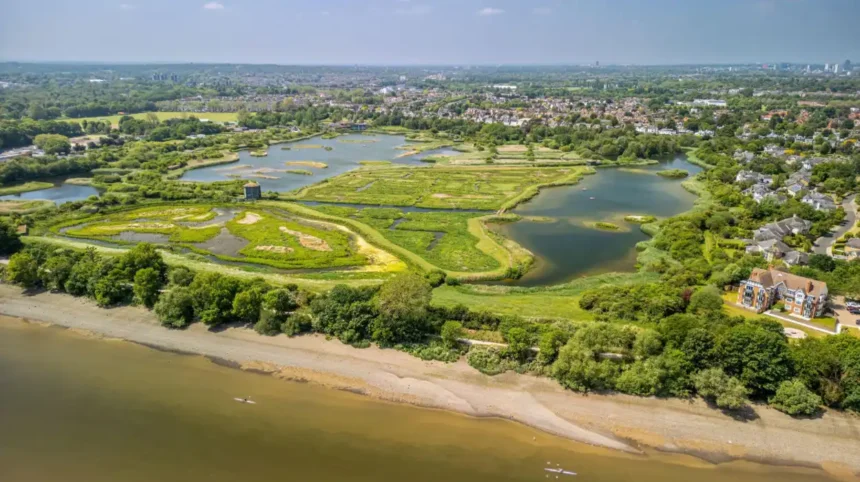
This managed wetland reserve is a key destination for birdwatching in West London. Its lakes, reedbeds, muddy margins and wildlife hides support species such as bitterns, water rails, shoveler ducks, gadwalls and common terns. The reserve has six wildlife hides and accessible pathways.
2. Richmond Park
Richmond Park covers approximately 2,500 acres and contains woodland, grassland, ponds and mature trees. Birdwatchers can look for woodpeckers, tits, thrushes, waterbirds and birds of prey. The park’s varied habitats support birdwatching alongside its well-known deer population.
3. Bushy Park
Bushy Park provides woodland, open grassland and water habitats. Visitors can observe common parkland birds, including robins, blackbirds, woodpeckers and waterfowl, while listening for birds calling from trees and hedgerows. Its large landscape suits longer wildlife walks.
Thames-side paths around Barnes and Chiswick
Public riverside paths offer opportunities to watch gulls, cormorants, swans, ducks and grey herons. Muddy river edges exposed at low tide also attract birds searching for food. Keep to public paths and avoid approaching nesting birds or disturbing feeding areas.
Other public parks, canal paths and local nature reserves across Hounslow, Ealing, fulham/hammersmith/">hammersmith-and-fulham/">Hammersmith and Fulham provide additional opportunities. Bird numbers and species vary with habitat management, weather, water levels and season. Check local access notices before travelling, particularly when a location borders a reservoir or protected conservation area.
Which birds can you see in West London?
Birdwatchers in West London can encounter resident garden birds, wetland specialists, woodland species and migratory visitors. Common sightings include blue tits, robins, blackbirds, mallards and grey herons, while suitable reserves support less frequently observed species such as bitterns, water rails and black-tailed godwits.
The species present at a location depend on its food supply, vegetation, water depth and disturbance levels. Identifying these habitat relationships helps birdwatchers search effectively rather than relying on chance encounters.
Wetland and water birds
Wetlands are among the most productive habitats for observing water-associated birds. At the London Wetland Centre, suitable sightings include:
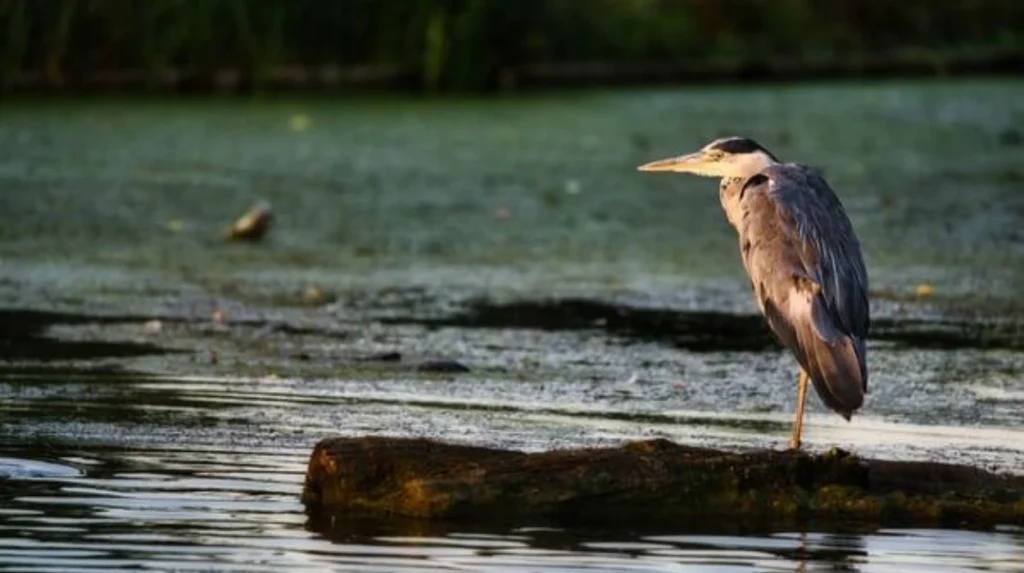
- Grey heron: A tall wading bird that hunts fish and other aquatic prey in shallow water.
- Mallard: A familiar duck found on ponds, lakes and rivers.
- Northern shoveler: A surface-feeding duck recognised by its broad, spoon-shaped bill.
- Gadwall: A dabbling duck frequently associated with freshwater wetlands.
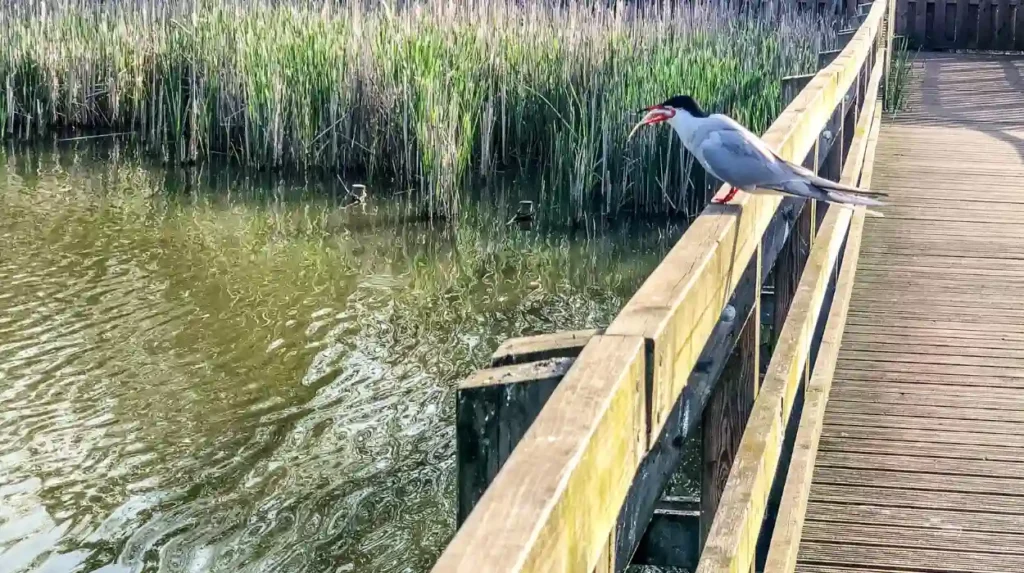
- Common tern: A fish-eating bird that catches prey by diving into water.
- Water rail: A secretive wetland bird that moves through dense reeds.
- Bittern: A heron relative with striped brown plumage that provides camouflage among reeds.
- Black-tailed godwit: A long-legged wading bird that probes mud and shallow water for invertebrates.
The London Wetland Centre identifies bitterns, water rails, shoveler ducks, gadwalls and other wetland birds among its seasonal wildlife highlights. Its latest sightings reports help visitors establish which species have recently been recorded.
Woodland and parkland birds
Woodlands and mature parks support birds that feed on insects, seeds, fruit and other small animals. Species to look and listen for include:
- Great spotted woodpecker: Recognised by its black-and-white markings and red details.
- European robin: Often seen in gardens, woodland edges and park vegetation.
- Blue tit: A small, colourful bird that searches branches for insects and spiders.
- Blackbird: A familiar garden and woodland bird known for its clear song.
- Song thrush: A spotted-breasted bird whose repeated phrases help with identification.
- Great tit: A woodland and garden species with a distinctive black central breast stripe.
Woodpeckers often reveal their presence through drumming or calls before they become visible. Tits move rapidly through branches, while blackbirds frequently feed on lawns and leaf litter.
Migratory birds and unusual sightings
Migration adds seasonal variety to West London’s birdlife. Birds move between breeding and non-breeding grounds to access suitable food, nesting conditions and weather. Wetlands provide feeding and resting opportunities along these routes.
The London Wetland Centre reports spring sightings of species such as wheatears, yellow wagtails and sand martins. Autumn brings migrating waders and additional waterfowl, while winter attracts larger numbers of ducks, including teal, wigeon and shoveler.
Rare sightings are possible, but they are not guaranteed. A reported visitor from a previous season does not establish that the same bird remains at the site. Always check recent sightings before travelling specifically to see an unusual species.
What is the best time of year for birdwatching in West London?
Birdwatching in West London is productive throughout the year, but each season offers different opportunities. Spring brings returning migrants and breeding activity, summer supports nesting birds, autumn features migration, and winter attracts waterfowl to suitable wetlands and lakes.
Summer: June to August
Summer provides opportunities to observe breeding birds, fledglings and aerial feeders such as swallows and sand martins. Common terns and reed warblers are among the species highlighted by the London Wetland Centre. Keep a respectful distance from nests and young birds.
Autumn: September to November
Autumn migration brings opportunities to observe waders, passing songbirds and changing waterfowl populations. Green sandpipers, black-tailed godwits and greenshanks feature among the London Wetland Centre’s autumn highlights. Seasonal vegetation changes also improve visibility in some areas.
Winter: December to February
Winter is particularly useful for observing ducks and other waterbirds. Wigeon, teal, gadwall and shoveler gather on suitable wetlands, while bitterns and water rails remain difficult to spot among dense reeds. Leaf loss also improves views of some woodland birds.
These seasonal periods are general guides rather than fixed arrival dates. Weather, temperature, water conditions and migration patterns influence sightings each year. The official provides seasonal information and links to recent sightings.
What equipment do you need for birdwatching in West London?
Beginners need comfortable walking shoes, weather-appropriate clothing, a notebook or bird identification app, and binoculars for birdwatching in West London. A camera, field guide and reusable water bottle improve longer outings, but expensive equipment is unnecessary for identifying common birds in local parks.
Binoculars and identification tools
Binoculars help distinguish field marks, bill shapes, plumage patterns and behaviour without approaching birds. An entry-level pair with 8x magnification is a practical choice for general park and woodland observation. Higher magnification is not automatically better because it often makes moving birds harder to follow.
A bird identification guide or reputable mobile application helps compare size, colour, calls, habitat and flight patterns. Record several characteristics rather than relying on a single colour, especially when observing birds at a distance or in poor light.
Clothing and practical supplies
Wear footwear suitable for wet paths and uneven ground. Waterproof outerwear is useful because open wetlands offer limited shelter from rain and wind. Bring water, snacks and a charged phone for longer visits.
A notebook makes it easier to record species, locations, times and behaviour. A camera with a telephoto lens is useful for photography, but the priority is observing wildlife without causing disturbance.
The London Wetland Centre provides wildlife hides and scopes, and its official visitor information describes accessibility facilities and equipment options. Check current arrangements before travelling.
How can beginners identify birds in West London?
Beginners identify birds more accurately by observing size, shape, colour patterns, calls, feeding behaviour and habitat. Start with familiar species, compare several features before naming a bird, and record sightings in a notebook. Repeated observations in the same park improve identification skills.
Observe the bird’s shape and behaviour
Begin by estimating the bird’s size and overall shape. Notice whether it has a long neck, short tail, slender bill, broad wings or long legs. These features help distinguish a heron from a duck or a small songbird from a larger thrush.
Next, examine movement. A bird feeding on a lawn behaves differently from one searching tree bark or diving for fish. Behaviour provides useful clues when plumage is difficult to see.
Listen to bird calls
Birdsong is particularly useful in spring, when many species become more vocal. A chiffchaff produces a repeated two-part song, while a great spotted woodpecker drums against wood. Learning a few common calls helps locate birds hidden in trees or reeds.
Keep a personal bird list
Record the date, location, habitat and identifying features of each observation. Include photographs when possible, but label uncertain identifications honestly. Reviewing records over several months reveals seasonal changes and helps distinguish regular residents from occasional visitors.
The London Wetland Centre offers wildlife hides, bird identification resources and opportunities to learn from staff and volunteers. These facilities make it suitable for beginners developing their observation skills.
Are there free birdwatching locations in West London?
West London has public parks, riverside paths and other green spaces where visitors can watch birds without purchasing admission to a dedicated wildlife attraction. Richmond Park and Bushy Park provide extensive outdoor habitats, while publicly accessible Thames-side routes offer opportunities to observe common waterbirds and riverside species.
Free access depends on the location and the activities available. Public parks generally allow casual wildlife observation, but some conservation areas, gardens and managed facilities charge admission or impose specific access restrictions.
Richmond Park and Bushy Park are managed by The Royal Parks. Their extensive landscapes contain woodland, grassland, ponds and mature trees that support birdlife. Check official park information for current access arrangements, vehicle restrictions and visitor guidance.
The London Wetland Centre is a managed attraction with admission charges. Its facilities include wildlife hides, information resources and accessible paths, making it a different option from an ordinary public park. Current ticket prices and opening arrangements are available on the official visitor information page.
For a free outing, choose a public park close to home, follow permitted paths and focus on birds already visible around ponds, lawns and trees. Confirm whether any enclosed reserve requires a ticket before setting out.
How can families enjoy birdwatching in West London?
Families can enjoy birdwatching by choosing accessible paths, setting simple identification challenges and allowing time for quiet observation. Public parks suit short outings, while the London Wetland Centre provides dedicated wildlife hides, educational resources and facilities for visitors exploring wetland habitats with children.
A family birdwatching session does not need a long itinerary. Children can begin by finding a robin, counting ducks or listening for different bird calls. A short checklist gives younger visitors a clear objective without requiring specialist knowledge.
At the London Wetland Centre, wildlife hides provide sheltered observation points. The centre also offers educational experiences and accessible routes, although families should check current activity schedules, entry prices and facility availability before visiting.
Choose routes with suitable toilets, seating and rest points when visiting with young children. Bring snacks and warm clothing, and avoid promising sightings of rare species. A successful family outing focuses on careful observation and respect for wildlife rather than the number of birds recorded.
How can you protect birds while birdwatching in West London?
Responsible birdwatching protects wildlife by minimising noise, maintaining distance from nests, following marked paths and avoiding disturbance to feeding or resting birds. Visitors should never chase birds for photographs, handle wild chicks or enter restricted habitat areas. These practices reduce stress and help preserve the ecological value of local green spaces.
Birds expend energy when repeatedly flushed from resting or feeding areas. Nesting birds are particularly vulnerable to disturbance because adults need to incubate eggs and feed their young. Approaching too closely for a photograph can interrupt these activities.
Follow these principles during every visit:
- Stay on authorised paths and respect reserve boundaries.
- Observe nesting birds from a safe distance.
- Keep dogs under control and follow site-specific rules.
- Never feed birds unless the site explicitly permits it.
- Avoid playing recorded bird calls to attract wildlife.
- Take litter home and leave vegetation undisturbed.
- Follow photography restrictions and instructions from reserve staff.
The London Wetland Centre has specific visitor rules to protect its wildlife, including restrictions on pets other than trained assistance dogs. Check each location’s current policies before visiting.
Birdwatchers also contribute to conservation by recording sightings accurately. Sharing observations with established bird recording organisations helps researchers and conservation groups understand distribution, seasonal movement and changes in local bird populations. Records are most useful when they include a reliable identification, date and location.
Explore More Area Guide
Nature Reserves in West London: Wildlife, Walks and Green Spaces
Wildlife in West London: Parks, Nature Reserves and Native Species
How does birdwatching contribute to West London’s urban environment?
Birdwatching helps people recognise the ecological value of West London’s parks, wetlands and waterways. Regular observations reveal seasonal changes in bird populations and encourage interest in habitat protection, while reliable records help conservation organisations understand where species occur and how urban environments support wildlife.
Urban habitats face pressure from development, pollution, recreational disturbance and changes in water conditions. Wetlands, mature trees, hedgerows and natural river margins provide feeding, breeding and resting opportunities within a heavily developed region.
The London Wetland Centre demonstrates how managed wetland habitats support wildlife within a major city. Its conservation work combines habitat management with public education and opportunities for visitors to learn about birds and other wildlife.
Birdwatching also encourages environmental awareness at a local level. Residents who recognise common birds become better equipped to notice changes in their neighbourhoods, including the disappearance of familiar species or the arrival of seasonal visitors.
Long-term bird records are more informative than isolated sightings. Consistent observations from the same location, recorded at different times of year, help distinguish normal seasonal variation from potential changes in bird distribution.
How should you plan a birdwatching trip in West London?
Plan a West London birdwatching trip by selecting a habitat, checking recent sightings, confirming access arrangements and allowing enough time for quiet observation. Choose a wetland reserve for waterbirds, a large park for woodland species or a public riverside path for common birds associated with the Thames.
For a first visit, the London Wetland Centre is a practical option because its hides, pathways and wildlife information support structured observation. Richmond Park and Bushy Park provide alternatives for visitors seeking extensive parkland and a longer walk.
Before leaving home, check the following details:
- Recent sightings: Consult the reserve’s latest reports to understand which birds have been observed.
- Opening arrangements: Verify entrance times, admission charges and seasonal restrictions.
- Transport: Check public transport connections, parking information and walking distances.
- Weather: Prepare for rain, wind and changing temperatures.
- Accessibility: Review path conditions, seating and available facilities.
- Equipment: Carry binoculars, a field guide or identification app, and a notebook.
Allow at least one to two hours for a focused session at a suitable site. Longer visits provide more opportunities to observe different habitats and notice birds that emerge after periods of quiet.
Birdwatching in West London combines accessible outdoor recreation with opportunities to understand urban wildlife. Wetlands, reservoirs, woodland, public parks and Thames-side habitats support a range of resident birds and seasonal visitors.
The London Wetland Centre is a key destination for wetland species, while Richmond Park and Bushy Park offer extensive parkland habitats. Public riverside routes and neighbourhood green spaces provide additional opportunities to observe familiar birds without planning a full-day excursion.
Choose the right habitat, visit during a suitable season, learn a few common species and follow responsible wildlife-watching practices. Regular observation builds identification skills and helps people appreciate the biodiversity that exists across West London.
Where are the best places for birdwatching in West London?
The London Wetland Centre in Barnes, Richmond Park and Bushy Park are popular birdwatching destinations. Thames-side public paths also offer opportunities to observe waterbirds and common urban bird species.