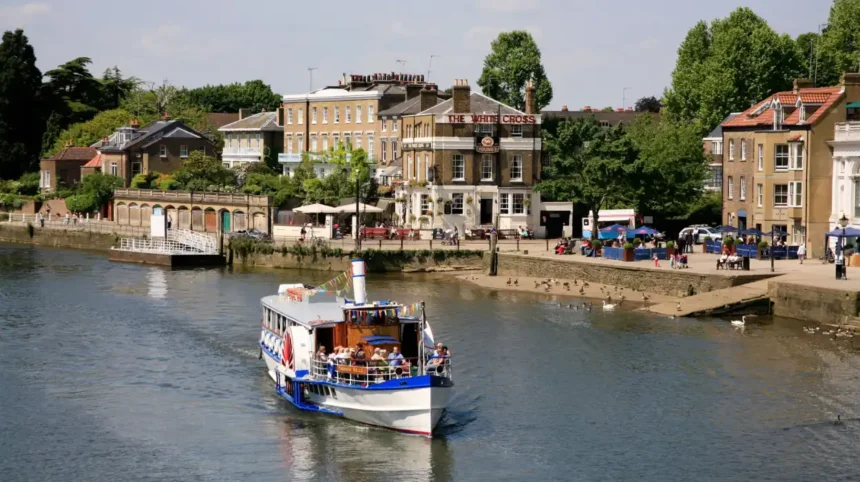
Key Points
- Richmond upon Thames has been named Britain’s happiest place to live in 2026, securing the top spot in Rightmove’s annual Happy at Home Index for the second time in three years.
- The findings are based on a comprehensive survey of more than 24,000 residents across 221 locations in Great Britain.
- Harrogate in North Yorkshire claimed second place, while Cirencester in Gloucestershire secured third.
- The south-west London borough excelled across multiple metrics, including access to green spaces, essential local services, community spirit, employment opportunities, and local pride.
- Despite regional variations showing Greater London holding the lowest average regional happiness score overall, Richmond bucked the trend alongside other capital entries like Kensington and Chelsea and Kingston upon Thames.
- Property market data highlights that living in the borough comes at a significant cost, with the average asking price for a home in Richmond exceeding £1 million.
London (West London Times) November 11, 2026 — Richmond upon Thames has reclaimed its crown as Britain’s happiest place to live, capturing first place in Rightmove’s national survey after evaluating responses from over 24,000 participants across 221 areas.
- Key Points
- What Makes Richmond upon Thames the Happiest Place in Britain for 2026?
- How Did Other Regions and Towns Perform Across Great Britain?
- What Are the Contrasting Realities Within the Capital?
- What Are the Financial Realities of Living in the Winning Borough?
- Background of the Particular Development
- Prediction
What Makes Richmond upon Thames the Happiest Place in Britain for 2026?
As reported by PropertyWire, the south-west London borough climbed back to the pinnacle of the rankings after previously securing the top position in 2023 and finishing as runner-up last year. The annual study evaluates locations based on a variety of happiness factors, including residents’ sense of pride, availability of green spaces, local amenities, restaurant selection, and employment prospects.
Elaborating on the appeal of the winning location, Colleen Babcock, property expert at Rightmove, stated that
“uk/local/richmond-upon-thames/richmond/">Richmond stands out for offering a combination many people value: easy access to nature and green spaces, without having to give up local services, places to eat and shop, or employment opportunities”.
Babcock further noted that
“this year’s results suggest that the places people rate most highly aren’t simply urban or rural, but often bring together some of the best elements of both”.
How Did Other Regions and Towns Perform Across Great Britain?
Behind the victorious London borough, Harrogate in North Yorkshire achieved second place, while Cirencester in Gloucestershire was positioned third. Meanwhile, last year’s reigning champion, Skipton in North Yorkshire, remained a strong contender in the upper tier, placing seventh nationally. Commenting on Skipton’s performance, Ian Rigarlsford, group public affairs and campaigns lead at Skipton Building Society, noted that the location continues to hold strong appeal for residents due to its active community and proximity to countryside.
Across the devolved nations, Monmouth took top honours in Wales, whereas Kirkcaldy captured the leading position in Scotland. Regionally, data compiled by Rightmove indicated that the South West recorded the highest overall happiness scores across Britain.
What Are the Contrasting Realities Within the Capital?
While Richmond upon Thames celebrated its national triumph, broader figures show that Greater London as a wider region recorded the lowest average happiness rating of any area in the country, with gaps between regions remaining relatively narrow overall.
Nevertheless, a select few other London pockets managed to break into the national top 20 rankings. According to findings covered by the Evening Standard, Kensington and Chelsea secured 12th place, while Kingston upon Thames followed closely behind in 13th position. At the opposite end of the capital’s spectrum, Barking and Dagenham was recorded as the least happy London borough, placing 221st nationally, alongside Lewisham, Havering, Harrow, and Croydon, which completed the capital’s bottom five.
What Are the Financial Realities of Living in the Winning Borough?
Securing top tier lifestyle metrics in the Greater London area comes with steep financial demands. Local real estate reporting highlights that the average asking price for a residential property within Richmond upon Thames now stands at £1,021,256, alongside an average monthly rent of £3,298. This economic barrier underscores a complex dynamic where high community satisfaction and picturesque local surroundings coexist with demanding affordability constraints.
Nationwide, demographic trends within the index demonstrated that reported happiness levels generally increase alongside age. Statistics showed that more than a third of respondents aged 75 and above rated their local area with a flawless 10 out of 10, compared to just 16 per cent of younger adults aged 18 to 24. Overall, approximately 81 per cent of all surveyed participants across Britain expressed satisfaction with their current place of residence, contrasted with only 9 per cent who reported feelings of unhappiness.
Background of the Particular Development
The annual Happy at Home Index, administered by property portal Rightmove, has tracked community well-being and resident satisfaction across Great Britain for 15 years. The survey measures distinct indicators covering community belonging, physical environment, recreation, and local services to capture how residents truly feel about their neighbourhoods.
Richmond upon Thames has historically performed strongly in these metrics due to its unique geographic positioning—combining expansive royal parks and the River Thames corridor with swift commuter connectivity into central London.
However, successive indices continue to spotlight the widening economic divide within the housing market, where top-ranking suburban and urban environments increasingly command seven-figure property values, presenting both opportunities and accessibility challenges for prospective residents.
Prediction
This development highlights a growing polarisation in the UK property and lifestyle sectors, which will directly affect prospective homebuyers, local authorities, and urban planners. For property seekers and younger demographics, the soaring average house prices exceeding £1 million in Richmond upon Thames signal that top-tier “happiest” locations are becoming increasingly exclusive, potentially accelerating demographic ageing in these areas as older, established homeowners remain while younger buyers are priced out. For local councils and regional developers, the survey serves as a clear indicator that future urban strategies must prioritise the delicate integration of green infrastructure and local amenities if they hope to foster community satisfaction, serving as a benchmark for municipal planning across the UK property market.