


Key Points
- Personal Experience: In a recent revelation, former winner of Strictly Come Dancing, Ore Oduba, shared his struggle of being addicted to pornography for three decades, starting from the age of just nine years.
- Public Health Crisis: While speaking on ITV’s show ‘Good Morning Britain’, the 40-year-old presenter referred to the effect of pornography on young people as a “public health crisis”.
- Danger of Not Saying Anything: According to a report by the PA News Agency, Oduba said that in case parents do not tell their children about pornography, “pornography will educate our children for us.”
- Incidents of Accidental Exposure: Quoting the statistics from the Children’s Commissioner, Ore Oduba pointed out that 80% of children have been exposed to pornography through social media and 60% of this exposure has occurred incidentally.
- Charity Collaboration: Currently, Oduba is working with Ian Henderson, the founder and CEO of The Naked Truth Project, to raise awareness of the dangers of digital media content.
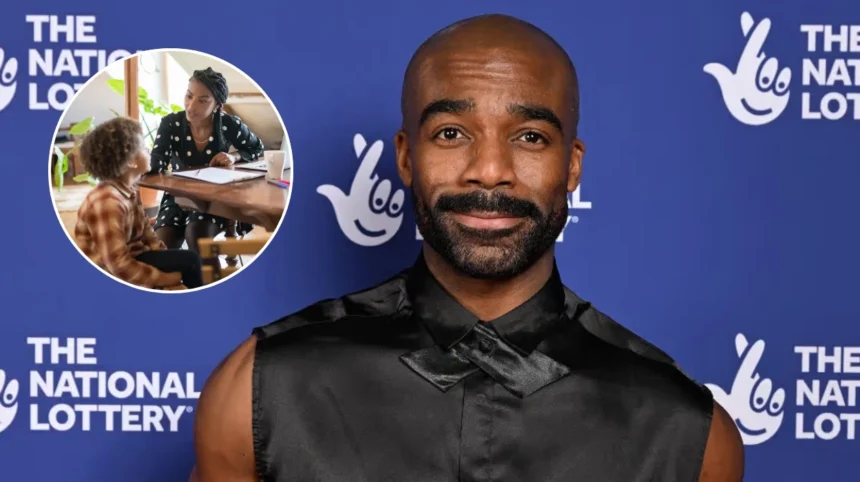
London (West London Times) September 14, 2026— Broadcaster and television personality Ore Oduba has warned that pornography risks dictating the sexual education of children unless parents and guardians take immediate steps to intervene.
- Key Points
- Why Is Early Exposure to Pornography Considered a Growing Crisis by Experts?
- How Has Ore Oduba’s Personal Battle Shaped His Advocacy Work?
- What Role Does the Naked Truth Project Play in Supporting Recovery?
- Background of the Particular Development
- How This Development Can Affect Parents and Children
Appearing on ITV’s Good Morning Britain on Monday, the 40-year-old presenter opened up about the severe risks digital accessibility poses to modern youth, labelling the situation a “public health crisis”. As reported by the PA News Agency, the discussion followed comments from co-host Susanna Reid regarding the hesitation many parents feel when approaching such sensitive topics with their children.
Addressing this parental reluctance, Ore Oduba stated that:
“So many parents will have those thoughts – the idea we are protecting children’s interests by not talking about it. But if we don’t intervene, pornography will educate our children for us.”
He further emphasised the pervasiveness of explicit media in modern youth culture, noting that it has effectively become a normalised “language between children now”. According to Oduba, adults must proactively provide youngsters with the context needed to make informed choices, explaining that pornography carries tangible psychological and relational harms.
“Have the conversation now, because if they don’t, pornography will do it for us. And that’s not the sort of world we want for our young people,”
Oduba urged viewers during the broadcast segment.
Why Is Early Exposure to Pornography Considered a Growing Crisis by Experts?
Drawing attention to statistical findings from the Children’s Commissioner, the presenter pointed out alarming metrics regarding digital exposure among minors. He noted that 80% of children have encountered pornographic material via social media platforms, with 60% of those instances occurring entirely by accident.
Questioning the broader societal cost of these digital trends, Ore Oduba asked: “What is the cost, and are we happy the effect pornography happening on our world, on our mental health, our sexual health today? Are we happy that 80% of young people think pornographic sex is a realistic version of what sex and relationships look like?”
He additionally raised concerns over whether the public is willing to tolerate the correlation between youth exposure to extreme online material and rising instances of harmful behavior within adolescent relationships.
How Has Ore Oduba’s Personal Battle Shaped His Advocacy Work?
The television star, who won the fourteenth series of Strictly Come Dancing in 2016 and formerly hosted CBBC’s Newsround, has used his platform to speak candidly about his own history with addiction. Last year, while appearing on the We Need To Talk podcast hosted by Paul C Brunson, Oduba first disclosed that he struggled with a pornography addiction for nearly three decades, originating when he was only nine years old.
Reflecting on how the technological landscape has transformed since his childhood, Oduba noted that children today face an entirely different environment. Speaking on Good Morning Britain, he remarked: “As a child you don’t understand you’re going through something. And by the way, let’s remember: 30 years ago, we didn’t have smartphones, we didn’t have broadband, we didn’t have the access that we have now.”
He explained that modern content is constantly “flooding children’s timelines”, which fundamentally warps how developing minds interact with themselves and form interpersonal relationships. Having opened up to his own family about his struggles roughly a year prior, Oduba admitted that he wished he had sought support much sooner.
What Role Does the Naked Truth Project Play in Supporting Recovery?
Oduba appeared on the morning television programme alongside Ian Henderson, the founder and chief executive of the Naked Truth Project. Henderson noted that despite a decade of operating the charity—which focuses on educating individuals about the harms of pornography and providing recovery frameworks—the topic remains heavily stigmatised as a “taboo subject”.
According to Oduba, the early consumption of such material acts as an unhealthy “sexual script” and forces premature “socio-sexual mapping” onto young brains. By joining forces with organisations like the Naked Truth Project, Oduba aims to dismantle this silence, pushing for strategic, public health-led interventions to safeguard future generations from the mental and sexual health costs associated with unregulated digital consumption.
Explore more uk/local/richmond-upon-thames/richmond/">Richmond News:
New Specialist SEND Dance Classes Launch in Richmond 2026
South Circular Crash Shuts Upper Richmond Road West in Richmond 2026
Background of the Particular Development
The public discussion surrounding youth access to online pornography has intensified significantly across the United Kingdom in recent years, driven by widespread smartphone adoption and the ubiquity of social media algorithms. Regulatory bodies, children’s charities, and advocacy groups—including the Children’s Commissioner and organisations like the Naked Truth Project—have repeatedly published findings indicating that minors are encountering explicit content at increasingly younger ages.
High-profile disclosures from public figures like Ore Oduba have helped transition the issue from a private parental dilemma into a broader national conversation regarding public health, digital safety legislation, and the responsibilities of technology platforms to protect underage users from accidental exposure.
How This Development Can Affect Parents and Children
Increased public discourse and media coverage regarding childhood pornography exposure are likely to prompt significant shifts in household dynamics and educational policy. For parents and guardians, these warnings serve as an urgent catalyst to break traditional taboos, encouraging more proactive, open dialogues about digital boundaries, online safety, and healthy relationships before children encounter explicit material independently.
Consequently, schools and family support networks may see a rising demand for structured guidance materials, digital literacy resources, and mental health interventions aimed at mitigating the psychological and relational impacts of early digital exposure on young people.