

Key Points
- Appeal to the Public: The Royal Botanic Gardens, Kew has begun an appeal to the public for another £1 million towards the restoration of the historic Palm House.
- Cost: The entire cost of this major renovation project is expected to be £66 million, but almost half of the amount required has already been raised through grants, philanthropists, and individual contributions.
- Match Funding: Contributions worth £300,000 will be matched for the purpose of funding the restoration project.
- Scientific & Environmental Importance: The glasshouse is home to rare, endangered, and extinct species of plants such as coffee, banana, and the Neem tree, which facilitate important research into biodiversity decline, conservation, and food security.
- Timeline: The Palm House will be closed temporarily in February as part of the last phase of plant evacuation. The Palm House will reopen temporarily in summer to show its bare structure to visitors before shutting down permanently from autumn 2027 to begin its restoration process that will take between three to four years.
- Objectives of Modernisation: Glazing, rainwater harvesting tanks, and renewable energy-based heating will be introduced to create the world’s first carbon-neutral glasshouse of its kind.
- Celebrity Support: Celebrity endorsement by an appeal ambassador such as Dame Judi Dench has been gained to promote the heritage and future of the building.
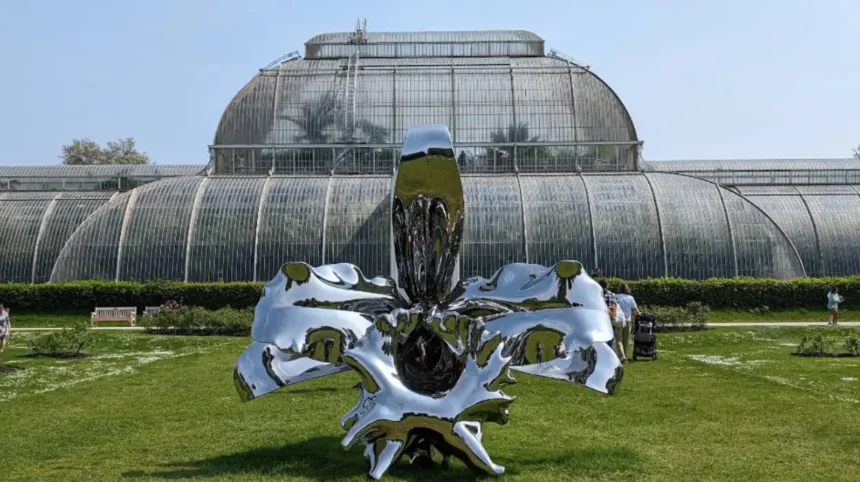
uk/local/richmond-upon-thames/kew/">Kew (West London Times) October 6, 2026 – As reported by Aileen O’Sullivan of Hits Radio 00s, the Royal Botanic Gardens, Kew has officially launched a public fundraising appeal to save its historic Palm House and protect its globally significant tropical plant collection. The Victorian glasshouse, which has stood as a defining architectural masterpiece at the heart of the west London gardens since the 1840s, is now displaying severe signs of structural deterioration that demand a massive £66 million renovation project, as announced by Kew on Tuesday.
- Key Points
- Why is Kew’s historic Palm House facing a major crisis?
- What rare plant species and scientific research are housed inside the Palm House?
- How can the public support the £66 million renovation project?
- What is the timeline for the closure and future modernization of the Palm House?
- Background of the Development
Why is Kew’s historic Palm House facing a major crisis?
Constructed in the 1840s, the Victorian landmark is widely recognised as one of the world’s most famous glasshouses. However, decades of exposure to the elements have taken a heavy toll on the structure. As detailed by Aileen O’Sullivan of Hits Radio 00s, the building is now showing serious signs of deterioration, necessitating a comprehensive £66 million restoration program to preserve its structural integrity for future generations.
The institution has already successfully secured approximately half of the required funds through contributions from individual donors, grants, and philanthropists. To close the remaining gap, the organisation launched a public fundraising appeal on Tuesday, aiming to raise an additional £1 million directly from the public. To incentivize contributions, officials confirmed that donations of up to £300,000 will be matched, with every penny directed toward the renovation project and the protection of its fragile ecosystem.
What rare plant species and scientific research are housed inside the Palm House?
Behind its iconic curved glass walls, the Palm House sustains an internationally significant collection of flora sourced from around the globe, offering visitors an authentic experience of a tropical rainforest within the capital. As noted by Aileen O’Sullivan of Hits Radio 00s, the conservatory is home to species that are rare, threatened, and even extinct in the wild.
Furthermore, the building houses plants vital to human survival and industry, including coffee, the rattan palm, the banana, the Madagascan periwinkle, and the Neem tree. This diverse botanical collection is not merely decorative; it actively underpins Kew’s ongoing scientific research into preventing biodiversity loss, enhancing food security, championing conservation, and discovering novel ways to safeguard the future of the planet.
Emphasizing the historical and cultural gravity of the structure, Richard Deverell, director of Royal Botanic Gardens, Kew, stated:
“For generations, the Palm House has been a place where people encounter the extraordinary diversity of life on Earth.”
He added, as reported by Aileen O’Sullivan of Hits Radio 00s,
“It is a building that has inspired wonder for almost 180 years, but its future cannot be taken for granted. Every donation, however large or small, will help protect this extraordinary building and the collection within it for generations to come.”
How can the public support the £66 million renovation project?
Members of the public looking to contribute to the preservation efforts have multiple avenues to get involved. According to Aileen O’Sullivan of Hits Radio 00s, supporters can make direct financial donations, sponsor an individual pane of glass, or sponsor specific tropical plant species, such as the giant dioon or Caly’s hibiscus.
The campaign has also garnered high-profile celebrity endorsement. Dame Judi Dench, serving as the Palm House appeal ambassador, championed the cause by describing the structure as “one of Britain’s most iconic buildings – a place of beauty, discovery and hope.” In a statement provided to Hits Radio 00s, Dame Judi Dench stated:
“By supporting its renovation, you will be making an investment in both our heritage and our future.”
Explore more Richmond News:
Richmond Leader Slams City Hall Over London Tourist Tax, Richmond 2026
Putney Pusher Suspect Nicholas Brandram Found Dead in West London 2026
What is the timeline for the closure and future modernization of the Palm House?
The extensive engineering and conservation work will require a carefully managed operational schedule. As outlined by Aileen O’Sullivan of Hits Radio 00s, the Palm House will close its doors in February so that specialized horticulture teams can execute the final phase of safely removing the sensitive plant collection.
Following this, the glasshouse will temporarily reopen in the summer, allowing members of the public a unique opportunity to view the majestic building completely empty. The structure will then officially shut down for construction in autumn 2027, with the physical works estimated to span between three and four years.
Once completed, the modernization effort will introduce state-of-the-art updates. Improvements will feature brand-new glazing, the integration of advanced rainwater harvesting tanks, and a complete shift toward renewable heating systems. Through these upgrades, Kew aims to engineer the world’s first carbon-neutral glasshouse of its kind, successfully conserving and future-proofing a 19th-century architectural marvel for the 21st century while protecting thousands of tropical specimens.
Background of the Development
The Palm House at the Royal Botanic Gardens, Kew, was designed by architect Decimus Burton and built by ironfounder Richard Turner between 1844 and 1848. It represents a monumental milestone in Victorian engineering, being the first large-scale structural iron building in the world to use wrought-iron ribs. Over the past 180 years, the glasshouse has undergone several localized repairs and maintenance cycles, but the passage of time, humidity, and shifting environmental standards have rendered its current infrastructure obsolete. The decision to undertake a comprehensive £66 million overhaul reflects modern regulatory demands, the urgent need for energy efficiency, and the necessity to adapt historic heritage sites to combat climate change while maintaining vital biological conservation work.
This major infrastructural development will significantly impact botanists, environmental researchers, international conservation networks, and the general public who visit West London. In the short term, the closure of the Palm House will temporarily limit public access to one of the UK’s premier living plant exhibitions, shifting educational engagement elsewhere on the Kew grounds during the multi-year shutdown. However, the long-term transformation into a carbon-neutral facility equipped with advanced renewable heating and rainwater harvesting will ensure that rare tropical species are safeguarded against future climate instability. For the scientific community, a modernized facility guarantees the continuation of essential research into food security and biodiversity loss, securing Kew’s status as a global leader in environmental stewardship for decades to come.