

Key Points
- Gareth Roberts, leader of Richmond council, has harshly condemned the Government’s plan to introduce a tourist tax because of his concern that all collected money would go directly to City Hall and would not contribute towards funding of local services.
- Sadiq Khan, Mayor of London, has welcomed the proposed introduction of the tourist tax, which can help ease the burden of stretched local budget resources.
- London Councils, the body which represents the 33 London boroughs, and some South West London authorities, such as Wandsworth and Lambeth, are pushing for a 50/50 split of the proceeds.
- Wandsworth, the Conservative-run borough, has officially supported the call for fair split through neighbourhood website Nextdoor.
- The introduced tax on overnight visitors is expected to take effect no sooner than in 2028.
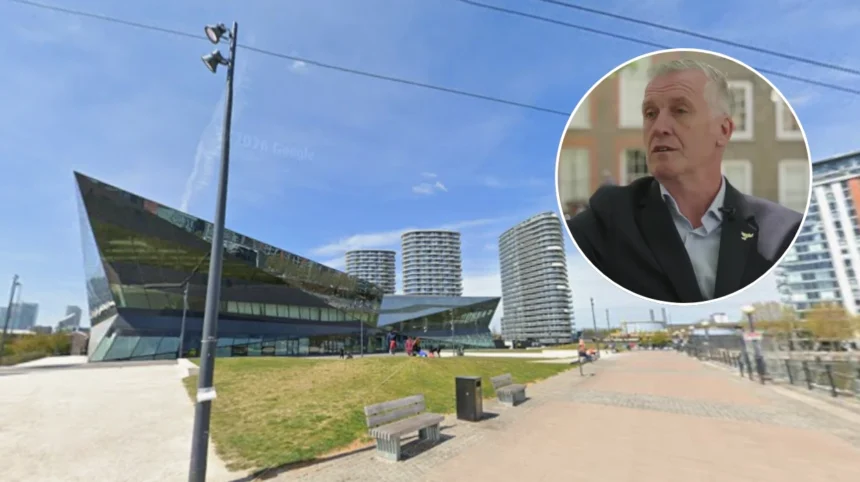
uk/local/richmond-upon-thames/richmond/">Richmond (West London Times) September 22, 2026 — As reported by Teddy Bingham of South West Londoner, Richmond council leader Gareth Roberts has condemned the Government’s proposed tourist tax, warning that money raised within the borough should not all be funneled to City Hall.
The controversy follows a statement from London Mayor Sadiq Khan welcoming plans to introduce a tourist tax in the capital to combat increasingly stretched local authority budgets. However, local leaders have raised profound concerns over how the newly generated revenue will be distributed across Greater London.
Why is Richmond Council opposing the proposed London tourist tax?
Local governance leaders are fiercely protective of borough-level resources as local authorities navigate financial strains. Liberal Democrat councillor Gareth Roberts argued that diverting all proceeds away from the areas generating the footfall is unfair.
As reported by Teddy Bingham of South West Londoner, Cllr Roberts stated that:
“For all the money to be taken out of Richmond and grabbed by the Mayor of London to add to his already swollen coffers, leaving nothing for the borough, is simply wrong.”
While acknowledging the economic advantages of international and domestic visitors, Cllr Roberts emphasized the hidden costs carried by municipal authorities. As reported by Teddy Bingham of South West Londoner, he added:
“We love being a beacon for tourists, but welcome as our visitors are, they come with a price tag.”
Which other boroughs are demanding a 50/50 revenue split?
The backlash against a centralized revenue model is not isolated to Richmond. Several municipal bodies across South West London, including Wandsworth and Lambeth, have voiced explicit support for returning a substantial portion of the funds directly to the borough councils where the overnight stays occur.
London Councils, the cross-borough organization representing all 33 local authorities in the capital, has formally lobbied for a balanced division of the levy. A formal statement from London Councils noted: “London Councils is proposing that, by default, local authorities are able to retain at least 50% of revenues collected in their area.”
Furthermore, the organization emphasized that this shared structure would reassure key commercial sectors. The statement continued, explaining that such a model: “would provide assurance to hotels, businesses and the hospitality industry that the introduction of an overnight visitor levy would directly support and benefit them.”
Wandsworth Council, which recently made national headlines following a decision to double council tax, has also added its weight to the demand for a equitable financial framework. In a community communication shared on the neighborhood platform Nextdoor, Wandsworth Council stated:
“We’re asking for a fair deal, a 50/50 share between London Boroughs and the Mayor.”
Explore more Richmond News:
Putney Pusher Suspect Nicholas Brandram Found Dead in West London 2026
Deer Rutting Season Begins With Safety Warnings In Richmond 2026
How has the Mayor of London responded to local government concerns?
In light of mounting pressure from municipal leaders across the capital, the office of the Mayor of London has signaled a collaborative approach before any definitive frameworks are finalized.
Addressing the concerns raised by regional leaders, London Mayor Sadiq Khan stated: “I will work closely with London’s boroughs, accommodation providers, hospitality and tourism businesses and other partners, before final decisions are taken.”
Despite ongoing negotiations and stakeholder consultations between regional authorities and City Hall, industry analysts note that the proposed legislative and operational plans for the overnight visitor levy are not expected to officially come into effect until 2028.
Background of the Particular Development
The debate surrounding a London tourist tax—often referred to as an overnight visitor levy—follows years of discussion regarding how major European and global destination cities fund municipal upkeep, public transport, and tourist infrastructure. Cities like Barcelona, Paris, and Rome have long implemented tourist accommodation taxes to offset the heavy infrastructural and environmental wear-and-tear caused by millions of annual visitors.
In the United Kingdom, local authorities have traditionally relied heavily on central government grants, business rates, and council tax receipts. However, persistent budgetary constraints and post-pandemic economic pressures have forced local councils to seek alternative revenue streams. The latest Government proposals aim to give London the legislative tools to implement such a levy, triggering an immediate political tug-of-war between municipal borough leaders—who bear the direct operational costs of managing tourism locally—and City Hall, which oversees broader metropolitan strategies.
The outcome of this funding dispute could significantly alter the financial stability and economic strategies of local authorities across the capital. If boroughs like Richmond, Wandsworth, and Lambeth successfully secure a 50/50 revenue split, local council budgets will receive a vital injection of funds that can be reinvested into local cleansing, public safety, and neighborhood tourism management without increasing the burden on local residents through higher council tax.
Conversely, if City Hall retains the lion’s share of the tourist tax revenue, suburban and outer-London boroughs risk bearing the infrastructure costs of high visitor volumes without receiving adequate financial compensation. For the local taxpayers, businesses, and hospitality providers in these boroughs, a fair settlement means cleaner public spaces and targeted local marketing, whereas an unfavorable model could deepen local budget deficits and increase local taxation friction ahead of the tax’s planned rollout in 2028.