

West London contains a large concentration of places that have disappeared, fallen out of everyday use, been redeveloped, or survived only through historic records. These sites include former hospitals, military buildings, industrial works, transport facilities, canalside structures and archaeological remains.
- What counts as an abandoned or forgotten place in West London?
- Which former hospital and institutional sites reveal West London’s forgotten history?
- Which industrial places in West London have been lost or transformed?
- Which military places have been forgotten in Hounslow?
- Which forgotten transport places existed in West London?
- How did redevelopment cause West London’s forgotten places to disappear?
- Why are abandoned and forgotten places important to West London?
- How can people research forgotten places in West London safely?
The phrase abandoned places often suggests empty buildings that remain physically intact. West London has fewer publicly accessible examples that fit this narrow definition. Many former sites have instead been demolished, converted, redeveloped or incorporated into modern neighbourhoods.
The area’s industrial and institutional history explains this pattern. The growth of railways, manufacturing, aviation, gas production, healthcare and housing repeatedly changed the physical landscape. Former working sites became brownfield land, heritage assets or redevelopment opportunities.
Historic England records are particularly valuable for tracing these changes. Its National Heritage List for England identifies protected buildings and sites, while its archive preserves photographs, plans and descriptions of places that have changed or disappeared. Local authority conservation documents and archaeological assessments provide additional evidence.
What counts as an abandoned or forgotten place in West London?
An abandoned or forgotten place in West London is a former building, site or landscape that has lost its original function, disappeared physically, become inaccessible, or survives mainly through historical records, archaeology and local memory.
This definition is important because many West London locations described as “abandoned” are not completely deserted.
Some are disused buildings, such as the former married quarters at uk/local/hounslow/">Hounslow Barracks. Historic England identifies the 1860 building as a Grade II listed structure that is now disused.
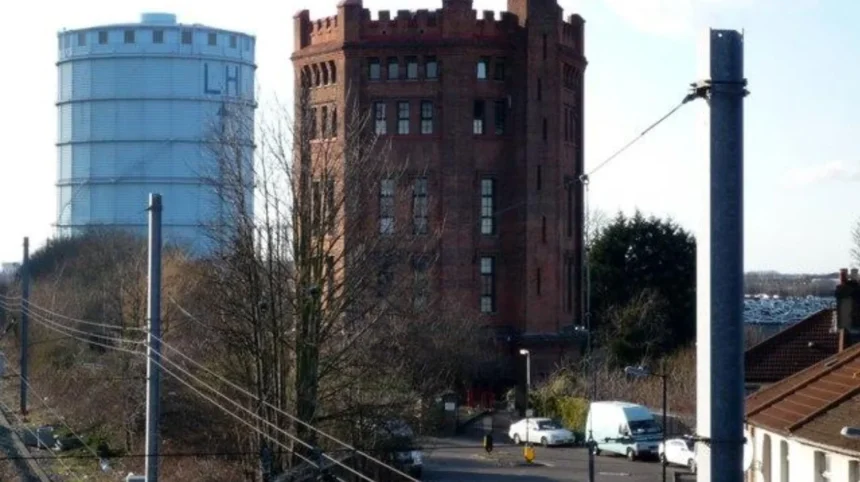
Others are former industrial sites. ealing/southall/">Southall Gasworks occupied a large industrial area that underwent major redevelopment after decades of gas and chemical activity. Historic England describes the site as approximately 37 hectares and records extensive industrial disturbance and contamination.
Some locations have disappeared entirely. The former Isleworth Pottery operated until 1831 before production moved elsewhere. The original works were subsequently demolished, but archaeological remains of the pottery site survive beneath later development.
There are also places that remain physically present but have changed function. The former West London Air Terminal in Kensington is an example. Its physical structure survives in a modern building, while its original aviation function has disappeared from everyday public awareness.
This distinction creates a broader and more historically accurate category. West London’s forgotten places are not limited to derelict buildings. They include lost buildings, former institutions, disused structures, buried archaeology, transformed industrial land and surviving heritage buildings whose original purpose is no longer obvious.
Which former hospital and institutional sites reveal West London’s forgotten history?
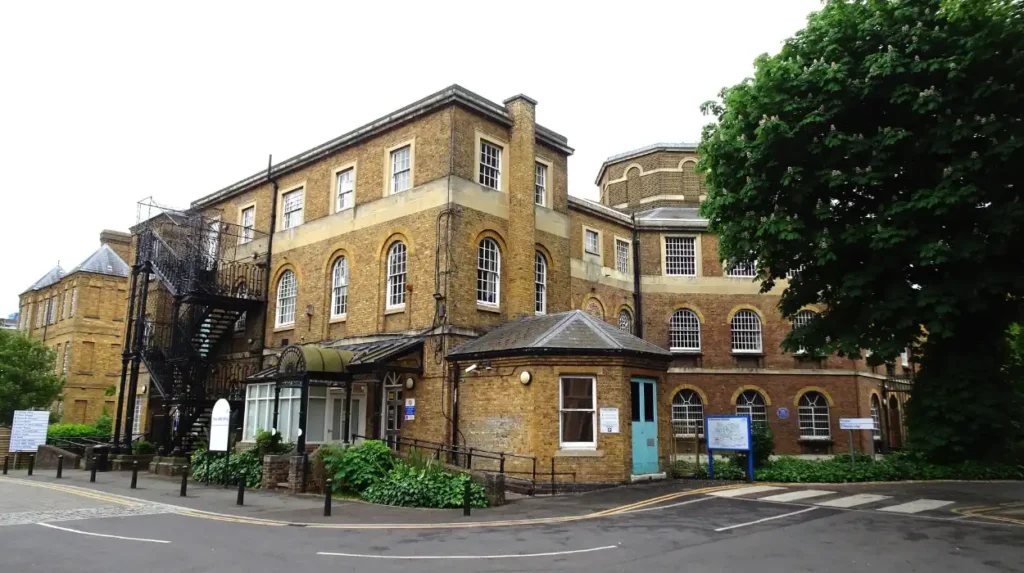
Former hospitals and institutional sites reveal West London’s social history through surviving buildings, historic plans and changing medical practices. Hanwell Asylum, later St Bernard’s Hospital, is the strongest example because its 1831 foundation shaped a large institutional landscape.
The former Middlesex County Asylum at Hanwell is one of the most significant historic institutional sites in West London.
The asylum opened in 1831 on Uxbridge Road. It was subsequently known as the London County Mental Hospital, Hanwell, Hanwell Mental Hospital and, from 1948, St Bernard’s Hospital. Historic England records the sequence of names and explains that Ealing General Hospital was later constructed on part of the site in the late 1970s.
The site represents the expansion of the 19th-century asylum system. Historic England describes the asylum movement as a major change in how British society organised care for people with mental illness and disabilities. Large institutions were designed as self-contained environments containing accommodation, work areas, gardens, kitchens, laundries and recreational facilities.
Hanwell was particularly extensive.
Historic plans preserved by Historic England show the development of the asylum during the 19th century. The surviving archival record includes a general plan from 1857 and architectural drawings dating from the 1820s and 1830s.
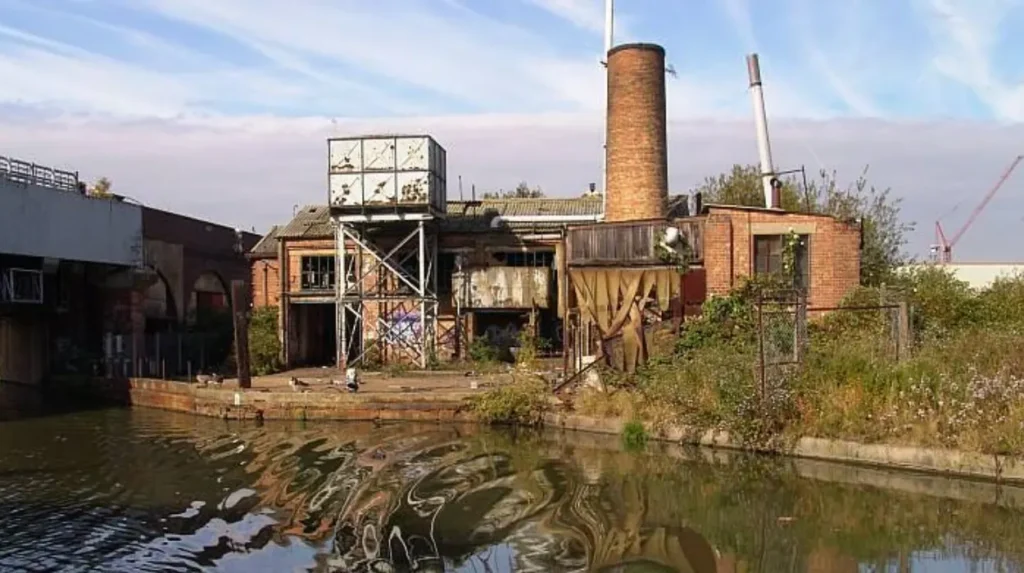
The institutional landscape also included an asylum dock connected with the Grand Union Canal. Patients cultivated food, and produce from the asylum gardens was transported by barge towards London markets. This demonstrates how the institution operated as an economically productive and partially self-sufficient community.
The site therefore has importance beyond abandoned architecture.
It records the development of Victorian healthcare, institutional architecture, employment within hospitals and changing attitudes towards mental illness.
Historic England also holds photographs of former parts of the hospital, including a padded cell in K Block. Such archive material provides evidence for buildings and interiors that are difficult to understand from modern streetscapes alone.
Today, the original asylum landscape should not be treated as an urban exploration destination. Parts of the wider former hospital site remain in institutional or developed use, and access depends on the individual property.
For research purposes, Historic England’s archive is more useful than attempting to enter restricted areas.
Which industrial places in West London have been lost or transformed?
West London’s industrial landscape includes former gasworks, pottery works, canal sheds and manufacturing sites that disappeared through redevelopment. Southall Gasworks and Isleworth Pottery are particularly important because archaeology and historical records preserve evidence after the original industrial functions ended.
Industrial activity transformed West London from the 18th century onwards.
The River Thames, Grand Union Canal, railway network and proximity to central London supported manufacturing and distribution. Many industrial sites later became obsolete as technologies, energy systems and land values changed.
Southall Gasworks
Southall Gasworks is one of the clearest examples.
Historic England describes the site as a 37-hectare West London development area with a long industrial history. Before industrialisation, the land was agricultural. During the 19th century, parts of the site were used for brickfields and gravel extraction. From the late 19th century onwards, chemical works, gas production, buildings, roads and railway sidings increasingly occupied the site.
Southall Gasworks became more than a former industrial workplace. Its activity substantially altered the ground beneath the site.
Historic England records 529 sediment logs from geotechnical investigations carried out between 1996 and 2014. Later archaeological and geoarchaeological investigations examined surviving deposits and the effects of industrial disturbance.
The site also has archaeological significance.
West London contains important Palaeolithic deposits associated with the Thames river terrace system. Archaeological investigations around Southall have identified evidence relevant to early human activity in the wider region.
At Southall Gasworks, however, industrial disturbance severely affected the survival of archaeological deposits. Historic England concluded that previous development had truncated or disturbed much of the natural sequence and that contamination was widespread.
This makes Southall Gasworks an important example of a forgotten landscape rather than an abandoned building.
The industrial structures have largely given way to redevelopment, but historical mapping, archaeological reports and surviving ground evidence preserve the site’s earlier identity.
Isleworth Pottery
The Isleworth Pottery represents a different form of industrial disappearance.
The pottery was associated with the development of London’s early porcelain industry. Production continued at the Isleworth site until 1831, after which the business moved to Hanworth Road in Hounslow.
The original pottery buildings were later demolished.
Its archaeological remains nevertheless survive beneath parts of the modern landscape. Historic England designated the site as a Scheduled Monument in 2016, recognising the importance of the archaeological remains.
This is a useful reminder that an abandoned place does not need visible ruins.
A site can disappear above ground while retaining archaeological evidence below ground.
Brentford’s canalside industrial landscape
Brentford provides another example of industrial structures that became neglected.
London City Hall records two historic barge sheds beside the Grand Union Canal that had stood empty for years. The structures formed part of Brentford’s industrial heritage and were identified for refurbishment as part of wider regeneration work.
Their history demonstrates another stage in the life of abandoned buildings.
A structure can move from active industrial use to neglect and then into heritage-led regeneration. The building does not necessarily disappear. Instead, its economic purpose changes.
This process is common across former industrial areas of West London.
Which military places have been forgotten in Hounslow?
Hounslow contains surviving military buildings that document the transformation of London’s military infrastructure. Hounslow Barracks was established in 1793, while individual surviving structures include an 1860 married-quarters block and a former hospital from the original barracks complex.
Hounslow’s military history is closely connected with Hounslow Heath.
Permanent cavalry barracks were established at Hounslow in 1793. The location was strategically important because of its position west of London and its historical use for military activity. Hounslow Council identifies the barracks as a major influence on the area’s character since the late 18th century.
The surviving complex contains several historically significant buildings.
Former married quarters
The Former Married Quarters, Building 16, dates from 1860.
Historic England describes it as a three-storey yellow-stock-brick building with a long verandah and accommodation arranged as single-room apartments. The building provided accommodation for 42 families.
Its importance extends beyond military history.
The building represents changing approaches to accommodation for married soldiers following the Crimean War. Historic England identifies it as one of the earliest purpose-built examples of married soldiers’ quarters and links its design to wider 19th-century attempts to improve institutional housing.
The building is now disused.
That status gives it particular relevance to the abandoned and forgotten places theme. It is a surviving historic structure whose original residential purpose has ended.
Former barracks hospital
Another important structure is the Former Hospital, Building 42.
Historic England dates the original building to around 1793 and attributes it to architect J. Johnson of the Barrack Department. It later became a sergeants’ mess before being converted for housing.
Historic England identifies Hounslow Barracks as the only surviving barracks from the first national barrack-building campaign in England associated with William Pitt’s government.
This illustrates why the word “abandoned” needs careful use.
A building can become disused while retaining substantial heritage value. Another structure on the same historic site can survive through adaptation. The wider barracks therefore represents several stages of architectural survival at the same location.
Which forgotten transport places existed in West London?
West London’s transport history includes railway stations, remote airport terminals and former transport infrastructure that became obsolete after travel patterns changed. The West London Air Terminal is a major example of infrastructure that survives physically while its original aviation purpose has disappeared.
West London developed as a major transport zone because it connected central London with Heathrow, the Thames Valley and western England.
The most unusual forgotten transport facility was the West London Air Terminal in Kensington.
The terminal was created after Heathrow became London’s principal airport. Instead of requiring all passengers to begin their journey at the airport, the remote terminal provided an airport check-in facility within London.
The Kensington facility was connected with British European Airways. A temporary terminal opened in 1957, followed by a larger structure built over the railway infrastructure around the Cromwell Curve.
The concept became obsolete as airport access changed.
The physical structure survived in altered form, but its original purpose disappeared. Local historical research describes the building as a forgotten part of Kensington’s transport history.
West London also contains surviving historic railway infrastructure that demonstrates earlier phases of suburban development.
Boston Manor station, for example, opened as Boston Road on 1 May 1883. It was renamed Boston Manor in 1911 and rebuilt between 1932 and 1934 as part of the development of the Piccadilly line. Historic England records the earlier and later phases as part of the station’s architectural history.
These transport sites demonstrate a wider principle.
Infrastructure becomes forgotten when the function it was designed to serve disappears. The buildings can remain, but their original purpose becomes difficult to recognise without historical research.
How did redevelopment cause West London’s forgotten places to disappear?
Redevelopment caused many West London places to disappear by replacing industrial, institutional and transport land with housing, commercial buildings, infrastructure and public spaces. Archaeological assessments, listed-building records and historic maps preserve evidence where physical structures no longer survive.
Land in West London has experienced sustained development pressure because of its proximity to central London, major transport routes and the Thames Valley.
Industrial land became particularly vulnerable to redevelopment when older manufacturing processes became uneconomic.
Southall Gasworks demonstrates this transition. Its industrial history involved gas production, chemical activity, brickfields, gravel extraction, roads and railway infrastructure. Later redevelopment required demolition, remediation and construction of new uses.
Former institutional land followed a similar pattern.
The Hanwell asylum complex changed through successive healthcare reforms and redevelopment. Historic England records the construction of Ealing General Hospital on part of the former asylum site during the late 1970s.
Archaeology becomes particularly important when redevelopment removes visible structures.
The Isleworth Pottery is a strong example. The original industrial buildings were demolished, but the archaeological site received Scheduled Monument status because remains associated with the pottery survive beneath later development.
Historic parks also demonstrate how landscapes change without completely disappearing.
Gunnersbury Park, for example, contains historic landscape features associated with successive phases of estate development. Historic England records its 18th-century park and pleasure grounds, while the walled kitchen garden formed part of the estate by the beginning of the 19th century.
The modern landscape therefore contains layers.
A modern housing estate can occupy former industrial ground. A hospital can occupy part of a former institutional landscape. A landscaped area can contain archaeological remains from an earlier building. A modern commercial structure can preserve elements of obsolete transport infrastructure.
This layered development explains why West London has relatively few untouched abandoned sites but many forgotten historic places.
Explore More Area Guide
Lost Buildings of West London: Historic Sites That Disappeared
West London Heritage Sites: Chiswick, Kew, Syon and Osterley
Why are abandoned and forgotten places important to West London?
Abandoned and forgotten places are important because they preserve evidence of West London’s industrial, military, medical, transport and archaeological development. They explain how communities, technologies and land uses changed across centuries.
The historical value of these places comes from their ability to connect physical landscapes with documented events.
Hanwell demonstrates the development of 19th-century institutional healthcare.
Hounslow Barracks records the growth and reform of Britain’s military infrastructure.
Southall Gasworks demonstrates the environmental and archaeological consequences of long-term industrial activity.
Isleworth Pottery preserves evidence of London’s early porcelain industry.
The West London Air Terminal records an unusual stage in the development of commercial air travel.
These examples also demonstrate the importance of heritage protection.
Historic England’s National Heritage List for England identifies nationally important historic buildings, monuments, parks and archaeological sites. Listed buildings receive statutory protection under the Planning (Listed Buildings and Conservation Areas) Act 1990, while Scheduled Monuments receive protection under the Ancient Monuments and Archaeological Areas Act 1979.
Not every forgotten site is listed.
Local Historic Environment Records are therefore important. They can contain archaeological information, historic maps, photographs and records of locally significant structures that do not appear on the national register.
The historical importance of a place also does not depend on whether its original building survives.
The Isleworth Pottery illustrates this particularly clearly. The visible industrial complex disappeared, but archaeological evidence remained significant enough for national designation.
Southall Gasworks demonstrates the opposite challenge. Industrial activity substantially disturbed archaeological deposits, showing that redevelopment can affect not only visible buildings but also evidence beneath the ground.
The preservation of forgotten places therefore requires several forms of evidence.
Historic maps establish previous land uses. Architectural records identify buildings. Archaeological investigations reveal buried remains. Photographs document lost structures. Planning documents record redevelopment. Oral histories preserve community memories.
Together, these sources create a more complete picture of West London’s changing landscape.
How can people research forgotten places in West London safely?
People can research forgotten West London places through Historic England, local authority heritage records, historic maps, archives and publicly accessible streets and parks. Restricted buildings and construction sites should not be entered without permission because heritage interest does not create public access rights.
Research is often more reliable than physical exploration.
Historic England provides detailed records for many West London heritage assets. Its archive contains historic photographs, architectural drawings and research records relating to places such as Hanwell Asylum and Hounslow Barracks.
Historic maps are particularly useful for locating lost sites.
Ordnance Survey maps can show former factories, hospitals, railway sidings, canalside structures, gardens and buildings that have subsequently disappeared. Historic England’s Gunnersbury Park record, for example, references historic maps from 1746, 1777, 1802, 1839, 1847 and 1865 as evidence for changes to the estate.
Local authority planning documents provide another source.
Hounslow Council’s heritage and character documents explain how historic military infrastructure influenced neighbourhood development.
Archaeological assessments are especially valuable for lost industrial locations.
The Southall Gasworks research demonstrates how geotechnical investigations, historic maps, archaeological trenches and sediment analysis can reconstruct the history of a heavily disturbed site.
Physical access requires greater caution.
A building that appears empty is not automatically open to the public. Private ownership, structural instability, construction activity, contamination and security restrictions can all prevent access.
Southall Gasworks provides an important example because Historic England records widespread contamination associated with its industrial history.
The safest approach is therefore to use public roads, recognised footpaths, public parks, museums, archives and officially organised heritage visits.
West London’s abandoned and forgotten places are best understood as layers of history rather than a collection of empty buildings. Some structures remain. Others have been demolished. Some survive only below ground. Others exist through photographs, maps and archival records.
The most important examples include Hanwell Asylum, Southall Gasworks, Isleworth Pottery, Hounslow Barracks, Brentford’s industrial canalside structures and the West London Air Terminal. Each records a different stage in the development of West London.
Their stories also show why heritage research matters. The modern landscape does not erase the past completely. Former hospitals, factories, barracks, transport facilities and archaeological sites continue to shape the identity of West London, even when their original functions have disappeared.
What are the most notable abandoned and forgotten places in West London?
Important examples include Hanwell Asylum, Southall Gasworks, Isleworth Pottery, Hounslow Barracks, Brentford’s former industrial structures and the West London Air Terminal. Some remain as buildings, while others survive through archaeology and historical records.