

West London is experiencing sustained residential development driven by housing demand, transport investment, brownfield regeneration and strategic planning. New build developments range from large regeneration districts to apartment schemes, mixed-use neighbourhoods and smaller infill projects.
- What are new build developments in West London?
- Why is West London seeing so much new housing development?
- Which areas of West London have major new build developments?
- What is the Old Oak and Park Royal development programme?
- How does transport infrastructure influence new build developments?
- What types of homes are being built in West London?
- How does the planning process work for new build developments in West London?
- How much affordable housing is included in West London developments?
- What infrastructure is required alongside new homes?
- How are new build developments changing West London’s neighbourhoods?
- What should buyers check when considering a West London new build?
- What is the future outlook for new build developments in West London?
- Why are new build developments important to West London’s future?
The area includes major development locations across uk/local/ealing/">Ealing, fulham/hammersmith/">Hammersmith & Fulham, Hounslow, Brent, Hillingdon, Kensington and Chelsea, Richmond upon Thames and the Old Oak and Park Royal area. Each location has different planning policies, transport connections, housing requirements and development opportunities.
London’s planning framework places significant emphasis on increasing housing supply while protecting employment land, green infrastructure and existing communities. The London Plan 2021 established a ten-year net housing target of 522,870 homes across London for 2019/20 to 2028/29. West London boroughs account for substantial portions of that target, including Brent with 23,250 homes, Ealing with 21,570, Hammersmith & Fulham with 16,090, Hounslow with 17,820 and Hillingdon with 10,830.
New housing therefore forms part of a wider strategic programme rather than isolated construction activity. Transport accessibility, brownfield land, employment growth, affordable housing and public infrastructure all influence where new homes are built.
What are new build developments in West London?
New build developments in West London are recently constructed residential or mixed-use schemes delivered through the planning system. They include apartments, houses, affordable homes, build-to-rent buildings and regeneration districts across established West London neighbourhoods and major growth areas.
A new build development is a residential property constructed as part of a new construction project rather than an existing property converted or substantially refurbished. Developments range from a small collection of houses to large masterplanned communities containing thousands of homes.
West London has a particularly diverse development environment. Established residential districts sit alongside industrial areas, railway corridors, town centres, former commercial sites and large brownfield locations. These different land uses create varied opportunities for residential construction.
A development can contain private market housing, affordable housing or a combination of both. Affordable housing is a planning category covering specified housing products that are available to eligible households at below-market prices or rents. London planning policy gives affordable housing a central role in major developments.
Mixed-use development is also important. A mixed-use scheme combines residential accommodation with uses such as shops, offices, restaurants, community facilities or employment space. Examples include regeneration areas where new homes are delivered alongside transport infrastructure and public spaces.
The largest strategic example is Old Oak and Park Royal. The area is designated as an Opportunity Area by the Greater London Authority. Opportunity Areas are locations identified for significant new housing, employment and infrastructure investment.
Why is West London seeing so much new housing development?
West London is seeing substantial new housing development because London requires additional homes, while transport investment and brownfield regeneration create opportunities for higher-density construction. Strategic locations such as Old Oak and Park Royal combine housing capacity with major infrastructure and employment potential.
Housing supply is the primary strategic driver. London’s planning system requires boroughs to plan for additional homes based on identified housing need and development capacity.
The London Plan provides borough-level housing targets. Brent has a ten-year target of 23,250 net homes, Ealing 21,570, Hounslow 17,820, Hammersmith & Fulham 16,090 and Hillingdon 10,830 under the 2019/20 to 2028/29 framework.
Transport investment is another major factor. Areas close to railway stations and major public transport corridors can support higher-density development because residents have better access to employment, education and services.
Old Oak is particularly significant because of its planned transport interchange. The Old Oak and Park Royal Development Corporation, known as OPDC, was established in 2015 to coordinate regeneration across the area.
Brownfield land also provides an important development opportunity. Brownfield land generally refers to previously developed land. Reusing such land supports urban regeneration without relying exclusively on undeveloped greenfield locations.
The development process also reflects changing land-use patterns. Former industrial, commercial and transport-related sites can be redeveloped into residential neighbourhoods when planning policy, infrastructure capacity and land economics support the change.
Which areas of West London have major new build developments?
Major new build activity is concentrated around Old Oak and Park Royal, Ealing, Brent, Hammersmith and Fulham, Hounslow and Hillingdon. These locations combine housing targets, regeneration opportunities, transport connections, brownfield land and established town-centre infrastructure.
Old Oak and Park Royal represent the largest strategic development area. The London Plan identifies capacity for 25,500 new homes and 65,000 jobs in the wider Opportunity Area by 2041.
Ealing has one of the largest housing targets among West London boroughs. Its development pattern includes town-centre regeneration, apartment schemes and projects around major transport corridors.
Brent is another important development location. Areas around Wembley, Alperton, Park Royal and other regeneration locations have experienced significant residential construction and mixed-use redevelopment.
Hammersmith and Fulham contains established residential districts alongside major regeneration opportunities. Development activity includes higher-density schemes around transport corridors and large redevelopment sites.
Hounslow has a combination of town-centre regeneration, riverside development and housing projects. Brentford and Hounslow town centre are particularly relevant to residential regeneration.
Hillingdon provides a different development profile because of its larger geographical area and combination of suburban housing, industrial land, transport infrastructure and airport-related employment.
Kensington and Chelsea and Richmond upon Thames generally have tighter development environments because of conservation areas, heritage assets, established neighbourhoods and planning constraints. New construction still takes place, but site availability and design requirements are different from large brownfield regeneration districts.
What is the Old Oak and Park Royal development programme?
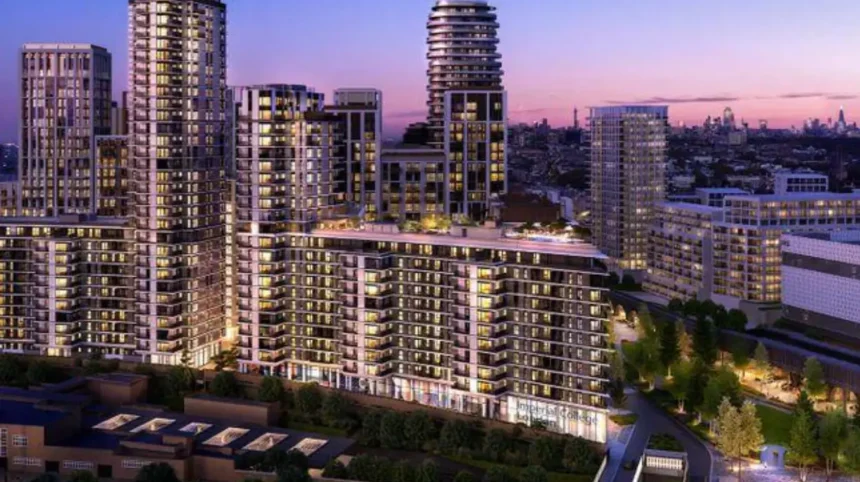
Old Oak and Park Royal is one of West London’s largest regeneration programmes. Its strategic framework combines new homes, employment space, transport infrastructure, public realm and community facilities around Old Oak Common and the wider Park Royal area.
The Old Oak and Park Royal Opportunity Area has been part of London’s strategic planning framework since its designation in 2004. The area covers parts of Brent, Ealing and Hammersmith & Fulham and is coordinated by OPDC.
OPDC’s Local Plan was adopted in June 2022. It focuses development around the future Old Oak Common station and supports new homes, employment opportunities, public green space and community infrastructure. The plan includes a target for 50% of new homes to be affordable and 30% of the area to be public green space.
The scale of development has evolved over time as planning, infrastructure and land-assembly conditions have changed.
In 2026, OPDC reported progress toward a comprehensive development programme involving around 8,000 homes and significant commercial space on a major publicly controlled site. A May 2026 announcement stated that an agreement covering 70 acres had unlocked plans for 8,000 homes, 11,000 jobs and a new canalside district.
A separate Mayoral decision published in April 2026 stated that the Old Oak project is expected to deliver around 8,000 new homes alongside approximately 150,000 to 200,000 square metres of commercial and employment space, community facilities, parks and open space.
This makes Old Oak one of the most important long-term sources of new build housing in West London.
How does transport infrastructure influence new build developments?
Transport infrastructure strongly influences new build development because accessible locations support higher residential densities and connect residents with employment and services. West London benefits from Elizabeth line, Underground, railway, bus and planned HS2 connections around major regeneration locations.
Transport accessibility is a core consideration in London’s planning system. Development density is closely connected to public transport access because well-connected locations can accommodate more residents while reducing dependence on private cars.
The Elizabeth line has strengthened connectivity across West London, linking areas including Ealing, Acton and West London districts with central London and other parts of the capital.
Old Oak Common is particularly significant because the planned station forms part of the wider HS2 network and connects with the Elizabeth line and Great Western Main Line. OPDC describes the location as a major interchange supporting the regeneration of Old Oak.
HS2 construction also directly affects the development programme. In January 2026, the Department for Transport announced that the first HS2 tunnel boring machine began its journey from Old Oak Common towards Euston. The planned tunnel is approximately 4.5 miles long.
Transport infrastructure therefore has two effects. It increases the attractiveness of development locations and creates the need for supporting infrastructure such as streets, pedestrian routes, public spaces, utilities and community facilities.
What types of homes are being built in West London?
West London new build schemes include private apartments, affordable homes, family houses, build-to-rent homes and mixed-tenure communities. Large developments often combine several housing types with commercial space, public areas, community facilities and improved pedestrian infrastructure.
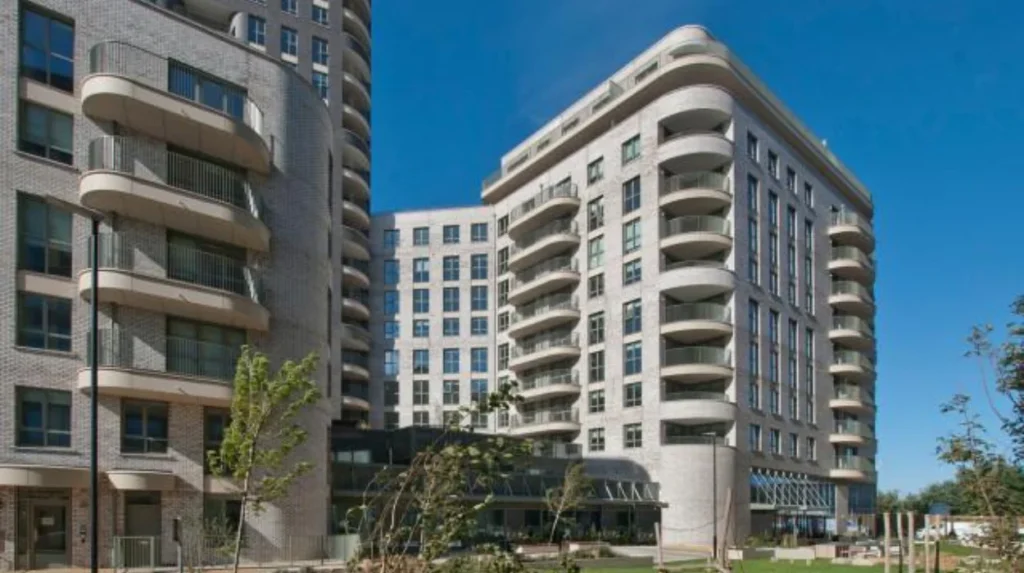
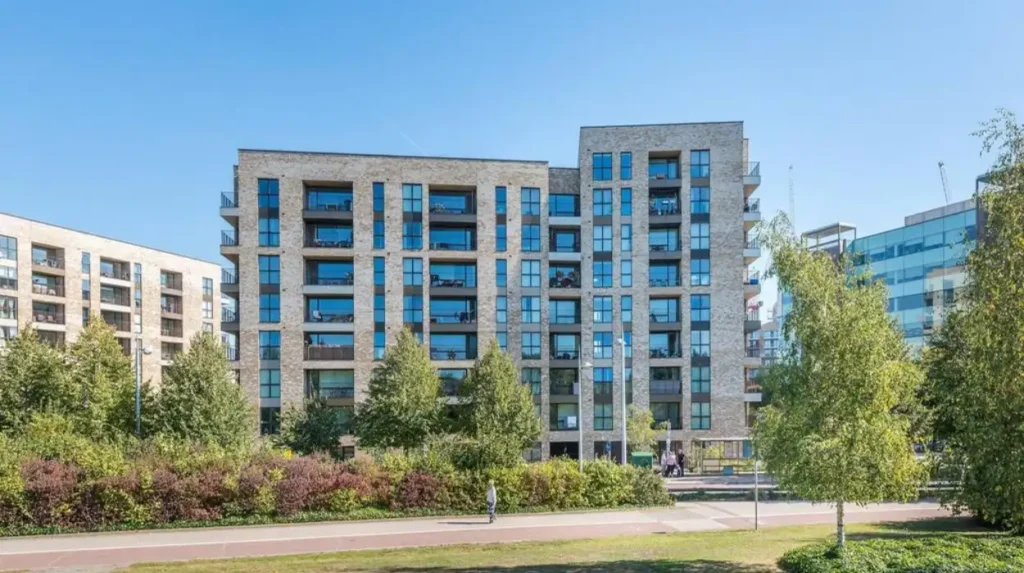
Apartments form a substantial part of new development in high-density areas. They use land efficiently and suit locations close to major transport nodes and town centres.
Family houses continue to form part of suburban development, particularly where sites contain sufficient land for lower-density construction. Their availability differs significantly between boroughs and individual development locations.
Affordable housing is a central component of London’s planning policy. It includes homes for households that cannot access equivalent accommodation at full market prices.
Build-to-rent is another established housing model. Build-to-rent developments are purpose-built residential schemes designed for long-term private rental rather than individual sale of each dwelling.
Mixed-tenure development combines market housing and affordable housing within the same wider scheme. Planning requirements determine the proportion, tenure and delivery arrangements.
The design of new homes also reflects modern building regulations and planning standards. New developments must address matters such as energy efficiency, accessibility, fire safety, internal space, daylight, ventilation and environmental performance.
How does the planning process work for new build developments in West London?
New build developments pass through planning assessment before construction begins. The process examines land use, design, housing supply, affordable housing, transport, environmental effects, infrastructure, heritage, local services and compliance with national, London-wide and local planning policies.
Planning applications are normally submitted to the relevant local planning authority. Major developments can involve borough councils, the Greater London Authority and specialist agencies.
The planning authority assesses whether a proposal complies with the development plan. The development plan includes relevant London-wide and local planning policies.
Developers also provide technical information. This can cover transport assessments, environmental information, flood risk, energy performance, landscape design, heritage impact, ecology and infrastructure requirements.
Public consultation forms part of the planning process. Residents, businesses and other organisations can submit representations on planning applications.
Large schemes can also involve Section 106 agreements. Section 106 agreements are legal agreements used to secure planning obligations connected with a development. These obligations can fund or deliver infrastructure, affordable housing and other mitigation measures.
The Community Infrastructure Levy, known as CIL, is another mechanism used to fund infrastructure. It is a charge on certain forms of development and supports infrastructure investment in accordance with the relevant charging authority’s policies.
Major schemes can therefore take years from initial land assembly and planning strategy through detailed application, permission, construction and completion.
How much affordable housing is included in West London developments?
Affordable housing is a major component of West London’s development strategy. London planning policy promotes affordable housing delivery through major schemes, while individual developments are assessed against borough and strategic policies covering tenure, proportion, viability and delivery arrangements.
Affordable housing addresses part of London’s housing affordability challenge. The planning definition includes specific products and eligibility requirements rather than simply describing low-cost market housing.
The London Plan places strong emphasis on increasing affordable housing delivery through the planning system. Major developments are expected to contribute toward strategic affordable housing objectives.
Old Oak provides a clear example. OPDC’s Local Plan includes a target for 50% of all new homes to be affordable.
The wider Old Oak and Park Royal Opportunity Area has also recorded affordable housing delivery. City Hall states that approximately 40% of homes completed in the Opportunity Area since its designation have been considered affordable.
The final affordable housing composition of an individual development depends on planning policy, site circumstances, viability, land ownership and the agreed planning permission.
Affordable housing can include different tenures. Examples include London Affordable Rent, London Living Rent and shared ownership, subject to the applicable programme and eligibility requirements.
This makes affordable housing an important factor when assessing the social and economic impact of new build developments.
What infrastructure is required alongside new homes?
New housing requires supporting infrastructure including roads, public transport, schools, healthcare, utilities, drainage, parks, walking routes and community facilities. Large West London regeneration projects therefore combine residential construction with wider infrastructure and public-realm improvements.
Infrastructure capacity is fundamental to sustainable development. A new residential population increases demand for transport, education, healthcare, utilities, recreation and local services.
Public transport is particularly important in high-density locations. Developers and planning authorities assess existing transport capacity and planned improvements when considering major housing proposals.
Schools form another important infrastructure category. Large developments can generate additional demand for primary and secondary education. Planning authorities assess projected population growth when determining infrastructure requirements.
Healthcare infrastructure also matters. Additional residents require access to general practice, pharmacies, hospitals and other health services.
Green infrastructure includes parks, trees, open spaces, waterways and ecological features. The OPDC Local Plan includes a target for 30% of its area to be public green space.
Old Oak’s regeneration strategy also identifies new parks, open spaces, community facilities and environmental improvements as components of the future district.
Infrastructure planning therefore determines whether a development functions as a complete neighbourhood rather than simply a collection of residential buildings.
How are new build developments changing West London’s neighbourhoods?
New build developments are changing West London through higher-density housing, regenerated brownfield land, new public spaces, improved transport connections and additional commercial activity. Large schemes also introduce new residents, services, employment space and community infrastructure.
Regeneration can transform underused land into productive urban districts. Former industrial or commercial sites can accommodate housing alongside employment and community uses.
The effect is especially visible around Old Oak and Park Royal. The area has historically contained substantial industrial and railway land. Its regeneration strategy seeks to create a new urban district with homes, jobs, public space and transport connectivity.
Town-centre regeneration produces a different form of change. New housing can increase footfall and support shops, restaurants and local services while encouraging investment in public spaces.
Riverside areas also form part of West London’s development landscape. Locations along the Thames and Grand Union Canal have attracted residential and mixed-use regeneration because of their existing urban infrastructure and redevelopment potential.
Higher density changes the physical character of neighbourhoods. Taller buildings, apartment blocks, new streets and public spaces create different urban forms from traditional suburban housing.
Planning controls seek to manage these changes through requirements covering building height, design, heritage, daylight, public realm, biodiversity and local character.
What should buyers check when considering a West London new build?
Buyers should examine the developer’s track record, tenure, lease terms, service charges, completion status, building warranty, energy performance, transport access, local amenities and planning information before purchasing a new build property in West London.
The developer’s identity is an important starting point. Buyers should review previous projects, construction quality, customer service history and the applicable warranty arrangements.
The tenure must also be understood. A property can be freehold, leasehold or subject to another ownership structure. Many new-build apartments are leasehold properties.
Service charges are particularly important for apartments. These charges contribute toward maintenance of communal areas, lifts, landscaping, building management and other shared services.
Buyers should also examine the property’s Energy Performance Certificate, known as an EPC. An EPC provides information about energy efficiency and typical energy costs.
Transport access should be assessed using actual routes rather than simply station names. Walking distances, interchange requirements and peak-time travel patterns all influence practical connectivity.
The surrounding development programme is equally important. Buyers should examine approved planning applications near a property because future construction can change roads, views, local services and the character of an area.
Purchasers should also understand the anticipated completion timetable. Off-plan properties involve buying before construction is complete, while completed new-build properties allow buyers to inspect the finished accommodation.
Explore More Area Guide
Luxury Property in West London: Prime Homes Guide
Affordable Areas in West London: Best Places 2026
What is the future outlook for new build developments in West London?
West London’s new build pipeline remains strategically important because housing targets, brownfield regeneration and major transport investment continue to support development. Old Oak and Park Royal will remain a major long-term focus alongside borough-led regeneration across West London.
The scale of Old Oak demonstrates the long-term importance of West London to London’s housing strategy. The Opportunity Area has a strategic capacity of 25,500 homes and 65,000 jobs by 2041.
The programme is also evolving. In 2026, OPDC reported progress toward delivering an 8,000-home development around Old Oak Common through public land coordination and private-sector partnership.
The London Plan’s borough housing targets provide another long-term framework. West London authorities must continue identifying suitable sites and supporting housing delivery while managing infrastructure and environmental constraints.
Future development will increasingly focus on brownfield regeneration, transport-oriented development and mixed-use neighbourhoods. This approach supports housing growth while making greater use of land already integrated into the urban area.
Environmental performance will also remain important. New developments face requirements relating to energy efficiency, biodiversity, sustainable drainage, green infrastructure and carbon reduction.
The future West London housing market will therefore be shaped by planning policy, infrastructure delivery, construction activity and local housing demand rather than by residential construction alone.
Why are new build developments important to West London’s future?
New build developments are important to West London’s future because they increase housing supply, regenerate brownfield land, support employment growth and fund infrastructure improvements. Strategic projects also create new neighbourhoods around major transport investments and strengthen long-term urban capacity.
West London’s development programme connects several major policy objectives. Housing delivery addresses population and household growth. Brownfield regeneration makes productive use of previously developed land. Transport investment improves connectivity. Mixed-use planning supports employment and local services.
Old Oak demonstrates how these objectives operate together. The area’s regeneration strategy combines new homes, commercial space, parks, community facilities and transport infrastructure.
The scale is significant. The wider Old Oak and Park Royal Opportunity Area has a strategic capacity for 25,500 homes and 65,000 jobs.
Elsewhere, borough-level housing targets continue to guide development across Ealing, Brent, Hounslow, Hammersmith & Fulham and Hillingdon.
For residents, new development changes housing availability, local services and neighbourhood infrastructure. For buyers, it creates opportunities to purchase newly constructed homes with modern specifications and energy-efficiency standards.
For West London as a whole, the long-term objective is broader than constructing individual buildings. The planning framework seeks to create sustainable neighbourhoods with homes, jobs, transport, public spaces and community facilities.
New build developments will therefore remain an important part of West London’s urban evolution. Their success depends on coordinated planning, infrastructure delivery, affordable housing provision, environmental standards and effective integration with existing communities.
What are new build developments in West London?
New build developments in West London are newly constructed residential or mixed-use projects. They include apartments, houses, affordable homes, build-to-rent properties and large regeneration schemes across areas such as Ealing, Brent, Hounslow, Hammersmith and Fulham, Hillingdon, and Old Oak.