

Luxury property in West London represents one of the most established high-value residential markets in the UK. The area combines prime central neighbourhoods, riverside districts, historic houses, garden squares, period architecture, modern developments, excellent transport connections and access to internationally recognised cultural institutions.
- What defines luxury property in West London?
- Which areas are best known for luxury property in West London?
- Why is Kensington and Chelsea so important to the West London luxury market?
- What types of luxury homes are available in West London?
- How do location and transport affect luxury property values?
- What architectural features make West London luxury homes distinctive?
- What amenities are associated with luxury property in West London?
- How much does luxury property cost in West London?
- What factors should buyers assess before purchasing luxury property in West London?
- How is the West London luxury property market changing?
- Why does West London remain important for luxury property?
- What is the long-term outlook for luxury property in West London?
West London does not operate as one uniform luxury market. Property values, architectural character, buyer demand and residential environments differ substantially between Kensington and Chelsea, fulham/hammersmith/">hammersmith-and-fulham/">Hammersmith and Fulham, Richmond upon Thames, hounslow/chiswick/">Chiswick, Ealing, Barnes, Fulham, Notting Hill and surrounding districts.
The market also contains several distinct forms of premium housing. Examples include Georgian townhouses, Victorian terraces, mansion flats, penthouses, detached family houses and newly built riverside apartments. Understanding these differences is essential for buyers, investors and readers researching luxury property in West London.
Government housing data confirms the exceptional position of some West London locations. In June 2026, Kensington and Chelsea recorded an average property price of £1,250,149, making it the most expensive London borough in the official dataset. Richmond upon Thames recorded £818,949, while Hammersmith and Fulham recorded £725,562.
What defines luxury property in West London?
Luxury property in West London combines high property value with location, architecture, space, privacy, quality construction, amenities and access. Examples include prime townhouses, landscaped homes, penthouses, mansion apartments and high-specification riverside residences in established neighbourhoods.
Luxury property is not defined solely by price. A premium home combines several measurable characteristics.
Location is one of the strongest factors. A property close to Kensington Gardens, Hyde Park, the River Thames, Richmond Park, high-quality schools, major cultural institutions or rapid transport connections commands a location premium.
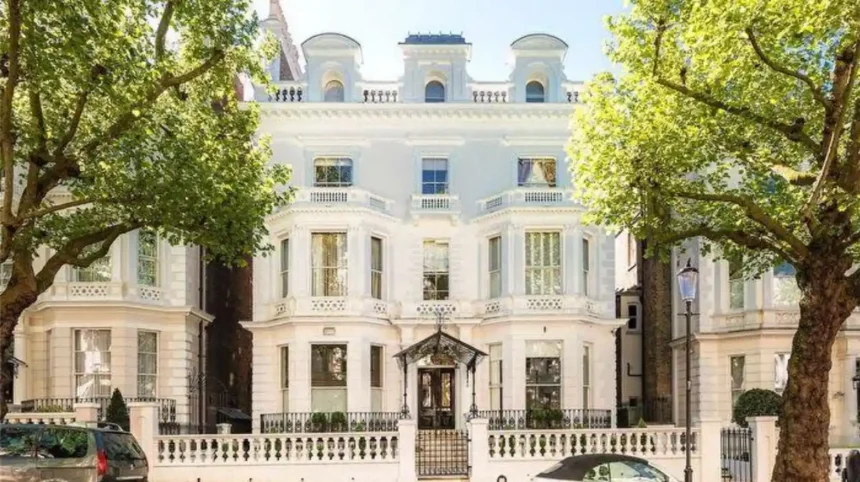
Architecture is another defining feature. West London contains substantial historic housing stock. Georgian, Victorian and Edwardian buildings remain prominent across established residential districts. Modern developments provide an alternative through contemporary layouts, underground parking, concierge services, landscaped communal areas and energy-efficient construction.
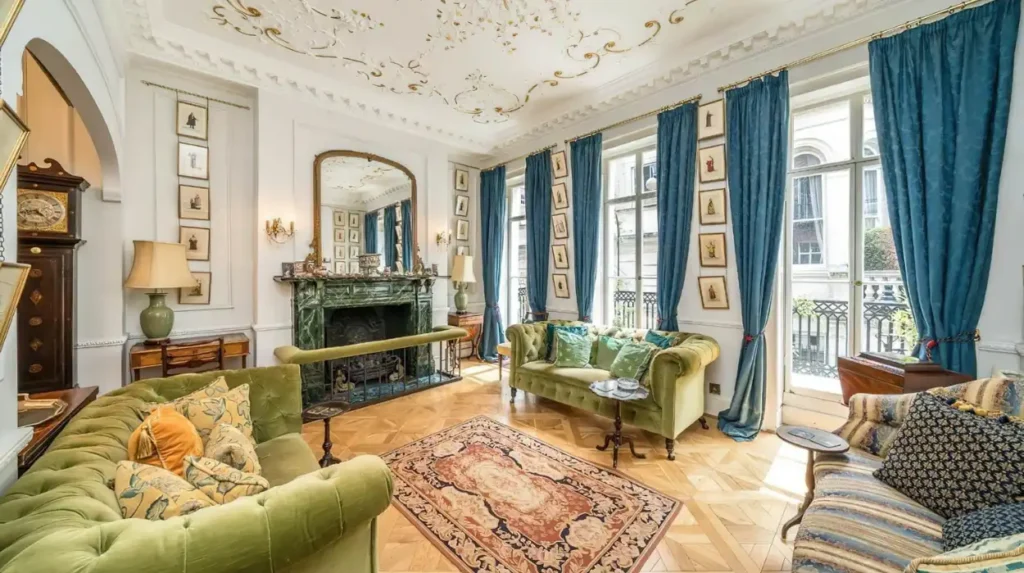
Interior specification also influences the luxury category. Common features include large reception rooms, bespoke kitchens, natural stone bathrooms, underfloor heating, air conditioning, integrated appliances, smart-home systems and high-quality joinery.
Outdoor space has particular importance in London. Private gardens, terraces, balconies, roof gardens and landscaped courtyards provide scarce residential space within a dense metropolitan environment.
Privacy is another premium characteristic. Gated entrances, private lifts, secure underground parking and limited apartment numbers appear frequently in high-end developments.
The term “luxury property” therefore describes a combination of location, specification, scarcity and residential experience, rather than a single price threshold.
Which areas are best known for luxury property in West London?
The best-known West London luxury locations include Kensington, Chelsea, Notting Hill, Holland Park, Fulham, Barnes, Chiswick and Richmond. Examples range from prime townhouses in Chelsea to riverside apartments in Richmond.
Kensington and Chelsea form the strongest concentration of prime residential property in West London. The Royal Borough of Kensington and Chelsea covers only five square miles, and 70% of its area lies within conservation areas.
Kensington and Chelsea
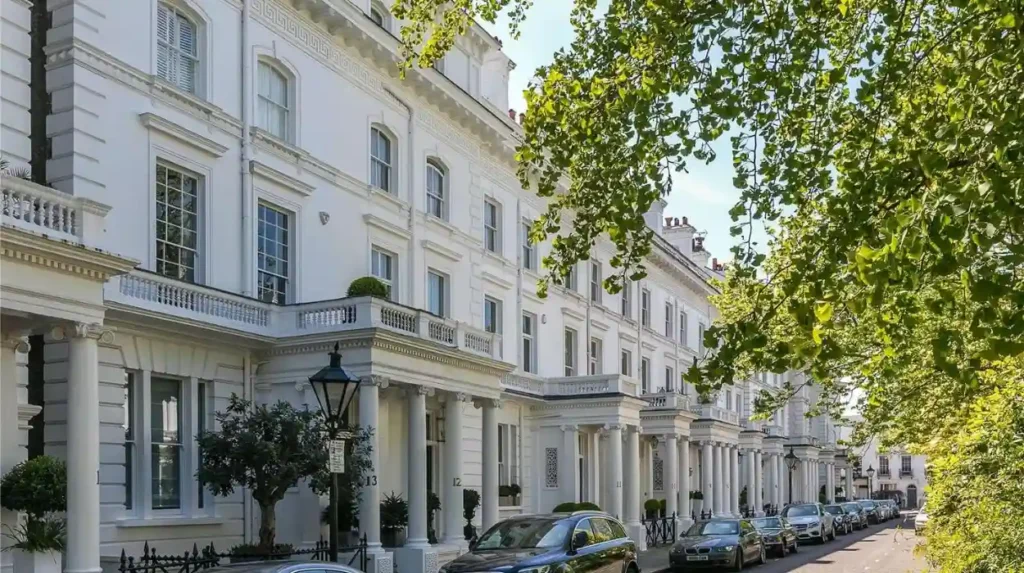
Kensington contains grand residential streets, garden squares, period terraces and substantial mansion buildings. The area benefits from proximity to Kensington Palace, Kensington Gardens, museums and major shopping destinations.
Chelsea has a distinct architectural identity built around elegant terraces, garden squares and established residential streets. King’s Road, Sloane Square and the surrounding neighbourhoods form important commercial and cultural centres.
Government data recorded Kensington and Chelsea as London’s most expensive borough in June 2026, with an average property price of £1.25 million. The annual change was -14.7%, illustrating that even London’s highest-value markets experience price movements.
Kensington’s heritage also contributes to its property identity. Kensington Palace originally operated as Nottingham House before William III and Mary acquired it in 1689. Sir Christopher Wren subsequently worked on its enlargement.
Notting Hill and Holland Park
Notting Hill is recognised for colourful terraces, period houses, garden squares and established residential streets. Holland Park provides a quieter environment with substantial Victorian and Edwardian housing.
Fulham
Fulham provides a different luxury-property profile. The area contains Victorian terraces, larger family houses, riverside residences and modern apartments. Its position between central London and the wider southwest makes transport accessibility an important factor.
Barnes and Chiswick
Barnes and Chiswick are particularly associated with larger family housing, greenery and riverside environments. Their residential character differs from the denser urban form of central Kensington.
Richmond
Richmond combines premium housing with direct access to Richmond Park and the River Thames. The borough recorded an average property price of £818,949 in June 2026, placing it among London’s higher-value residential markets.
Why is Kensington and Chelsea so important to the West London luxury market?
Kensington and Chelsea occupies a central position in West London’s luxury market because of its heritage, conservation areas, prestigious addresses, architecture, cultural institutions and limited land. Examples include Kensington, Chelsea, Holland Park and Notting Hill.
The Royal Borough of Kensington and Chelsea has a long-established relationship with high-value residential property.
Its architectural environment is highly protected. Conservation areas cover much of the borough, preserving historic streetscapes and limiting inappropriate development. The council identifies Kensington Square as one of London’s oldest squares, while the Ladbroke Conservation Area contains substantial Victorian and Edwardian architecture.
Historic protection creates scarcity. Existing properties occupy locations where replacement development faces planning controls. This gives period houses and architecturally significant properties a distinctive position within the market.
Kensington also benefits from internationally recognised institutions. Examples include Kensington Palace, the Victoria and Albert Museum, the Natural History Museum and the Royal Albert Hall.
Chelsea has its own historic identity. The area developed around the River Thames, royal connections, artistic communities and residential expansion during the Georgian and Victorian periods.
These characteristics create a market where address, architectural quality and heritage carry significant importance.
What types of luxury homes are available in West London?
West London’s luxury housing stock includes period townhouses, mansion apartments, detached houses, semi-detached family homes, penthouses and riverside residences. Examples include Georgian terraces in Kensington, Victorian houses in Fulham and contemporary apartments beside the Thames.
Period townhouses form one of the most recognisable luxury property categories. Georgian properties often feature symmetrical façades, tall sash windows and formal room layouts.
Victorian houses are also widespread. Their characteristics include bay windows, decorative brickwork, high ceilings and multiple floors.
Edwardian homes frequently provide larger internal spaces and practical family layouts. Examples include houses in Chiswick, Barnes and parts of Richmond.
Mansion apartments represent another important category. These properties often occupy converted historic buildings and provide larger communal entrances, high ceilings and substantial rooms.
Modern apartments provide different advantages. New developments frequently include concierge facilities, secure access, residents’ lounges, gyms, landscaped spaces and underground parking.
Penthouses occupy the premium end of the apartment market. They typically provide larger terraces, elevated views, private entrances or lift access and high-quality internal specifications.
Riverside properties form another distinctive category. Developments along the Thames provide views, balconies, terraces and proximity to waterside walking routes.
Detached houses are comparatively scarce in central West London. Larger detached properties therefore occupy a particularly restricted segment of the market.
How do location and transport affect luxury property values?
Location and transport influence luxury property values through accessibility, neighbourhood quality, employment connections and proximity to amenities. Examples include Underground stations in Kensington, Elizabeth line access in West London, National Rail services and riverside transport connections.
Transport connectivity remains important even in the highest-value market.
West London is served by multiple London Underground lines. The District and Piccadilly lines provide access across central London and the wider western suburbs. The Central line serves areas including Shepherd’s Bush and Ealing.
The Elizabeth line has strengthened connections between West London and central London, the City and east London. Stations including Paddington, Ealing Broadway and Southall form part of the wider network.
National Rail services provide additional connections. Stations such as Richmond, Barnes, Chiswick, Kew Bridge, Ealing Broadway and West Brompton connect residential areas with other parts of London and surrounding regions.
Transport value depends on the specific property. A home within convenient walking distance of a station generally offers stronger practical accessibility than an otherwise comparable property located farther away.
Road connectivity also matters for households requiring private vehicles. However, parking scarcity remains a significant consideration in central districts.
The transport equation is therefore highly localised. Buyers assess the exact journey time, station access, service frequency and destination rather than simply relying on a borough-wide transport label.
What architectural features make West London luxury homes distinctive?
West London’s luxury homes often combine historic architectural features with modern refurbishment. Examples include high ceilings, sash windows, period façades, fireplaces, cornicing, landscaped gardens and contemporary kitchens installed behind preserved historic exteriors.
Architecture remains a major component of West London’s premium residential identity.
Georgian homes commonly feature formal proportions, tall windows and balanced façades. Their layouts often include reception rooms arranged around central staircases.
Victorian properties introduce decorative detailing. Examples include patterned brickwork, bay windows, ornate fireplaces and ceiling cornices.
Edwardian homes frequently provide larger kitchens, broader floor plans and improved domestic layouts compared with earlier terraces.
Modern luxury housing uses a different architectural language. Large glazed areas, open-plan living spaces, private terraces and minimalist interiors are common.
The combination of old and new creates an important renovation market. Historic buildings retain their external character while interiors are upgraded with contemporary services.
Planning restrictions are significant in conservation areas. The Royal Borough of Kensington and Chelsea operates numerous designated conservation areas, including Kensington Court, Kensington Palace, Kensington Square and Ladbroke.
Owners therefore need to understand planning controls before changing windows, roofs, façades, extensions or other externally visible features.
What amenities are associated with luxury property in West London?
Luxury homes in West London frequently provide premium amenities that improve security, comfort, convenience and recreation. Examples include private gardens, concierge services, gyms, underground parking, terraces, smart-home systems, private lifts and high-quality communal spaces.
Amenities differ substantially between historic houses and modern developments.
A traditional townhouse generally offers private space rather than shared facilities. A large garden, garage, cellar, multiple reception rooms and dedicated office space can define its premium specification.
A modern apartment provides a different model. Concierge services offer controlled access and building management. Residents’ gyms provide private fitness facilities. Secure parking addresses one of London’s practical constraints.
Private lifts have particular relevance in high-value apartments and converted townhouses. They provide accessibility and privacy between floors.
Smart-home technology also forms part of contemporary luxury specifications. Examples include automated lighting, heating controls, security systems, blinds and integrated entertainment systems.
Energy performance has become increasingly relevant. Buyers examine insulation, glazing, heating systems and energy efficiency alongside conventional luxury features.
Outdoor space remains highly valuable. Roof terraces and private gardens provide scarce usable space in dense neighbourhoods.
The importance of amenities depends on property type. A family purchasing a townhouse prioritises garden space and room dimensions, while an apartment purchaser can place greater emphasis on concierge services, security and communal facilities.
How much does luxury property cost in West London?
Luxury property prices vary substantially by neighbourhood, property type, size, condition and exact address. Government data for June 2026 recorded average prices of £1.25 million in Kensington and Chelsea, £818,949 in Richmond and £725,562 in Hammersmith and Fulham.
Official averages provide useful market context but do not represent the price of every luxury property.
In June 2026, Kensington and Chelsea recorded the highest average residential property price in England at £1,250,149. Hammersmith and Fulham recorded £725,562. Richmond upon Thames recorded £818,949. Ealing recorded £575,814, while Hounslow recorded £512,888.
These figures cover entire borough housing markets. Luxury properties sit above borough averages because they represent a premium segment.
Property type also creates substantial variation. A small apartment and a large townhouse can exist within the same neighbourhood but occupy completely different price brackets.
Condition affects value. A fully renovated period house with modern services and high-quality finishes commands a different market position from a property requiring substantial refurbishment.
Outdoor space also affects pricing. Private gardens and large terraces are scarce in many central neighbourhoods.
The correct approach is therefore to compare similar properties in the same micro-location. Comparable sales provide more useful evidence than applying one borough-wide average to a specific luxury property.
What factors should buyers assess before purchasing luxury property in West London?
Luxury-property buyers should assess location, title, planning history, building condition, lease terms, service charges, energy performance, transport, flood risk and future costs. Examples include conservation restrictions, lease length, listed-building status, renovation requirements and communal maintenance obligations.
Luxury property requires detailed due diligence because higher purchase prices increase the financial consequences of mistakes.
Title information establishes ownership and legal rights. Buyers should review the registered title, boundaries, rights of way and restrictions.
Leasehold properties require additional investigation. Buyers should examine the remaining lease term, ground rent provisions, service charges, major works obligations and management arrangements.
Planning history is important for extensions and alterations. Previous work without appropriate permission creates potential legal and financial complications.
Listed buildings require particular care. Historic significance can impose additional controls over alterations.
Conservation areas create another planning consideration. External changes to windows, roofs, façades and extensions require careful assessment.
Building condition also matters. Period properties require surveys covering roofs, damp, timber, drainage, electrical systems, plumbing and structural elements.
For apartments, buyers should investigate communal systems and planned major works. Examples include roof replacement, façade repairs, lifts and heating systems.
Flood risk requires attention for riverside property. Properties close to the Thames require location-specific assessment rather than general assumptions.
Energy efficiency is increasingly important because heating and maintenance costs affect long-term ownership expenses.
Professional legal, surveying and tax advice forms an important part of the purchase process.
How is the West London luxury property market changing?
The West London luxury market is responding to changing buyer preferences, taxation, financing conditions, supply levels and international demand. Examples include stronger interest in high-quality homes, improved prime-market activity and continuing sensitivity to property taxation.
The prime London market experienced improved activity during 2026.
Knight Frank reported that transactions across London were 14% higher in the three months to July 2026, while transactions in prime central London increased by 3%. The firm described the market backdrop as more stable than in 2025.
The wider London housing market remained uneven. Government data for June 2026 showed that 19 of London’s 33 local authority areas recorded annual price decreases.
This divergence demonstrates why luxury property requires a local approach.
Prime central London has its own market dynamics. Kensington and Chelsea’s average price fell 14.7% year-on-year in the official June 2026 data, while Richmond upon Thames declined by only 0.3%. Hounslow recorded a 1.1% annual increase.
These differences show that West London should not be treated as one homogeneous market.
Tax policy also influences purchasing decisions. Higher-value residential property faces greater sensitivity to changes in transaction taxes, council tax structures and other property-related costs.
Buyers increasingly assess total ownership costs rather than purchase price alone.
Explore More Area Guide
Affordable Areas in West London: Best Places 2026
Best Areas to Invest in West London 2026
Why does West London remain important for luxury property?
West London remains important because it combines established wealth, heritage architecture, green spaces, cultural institutions, transport infrastructure and limited high-quality housing supply. Examples include Kensington, Chelsea, Richmond, Barnes, Chiswick and Fulham.
West London’s long-term residential significance rests on several structural characteristics.
First, the region contains established neighbourhoods with strong architectural identities. Historic streets and squares create a distinctive housing environment.
Second, West London provides access to major employment centres. Central London remains accessible through Underground, Elizabeth line and National Rail connections.
Third, the area contains substantial green infrastructure. Kensington Gardens, Hyde Park, Holland Park and Richmond Park provide major recreational spaces.
Fourth, the River Thames creates a series of premium residential environments. Riverside locations provide views, walking routes and distinctive urban landscapes.
Fifth, planning constraints protect large parts of the historic built environment. These restrictions preserve character while also limiting the volume of replacement development.
The Royal Borough of Kensington and Chelsea’s own description highlights its historic architecture, residential streets, squares, embassies and cultural attractions.
Luxury property therefore forms part of a wider ecosystem involving housing, heritage, transport, planning and local amenities.
What is the long-term outlook for luxury property in West London?
The long-term relevance of West London luxury property rests on scarce land, established neighbourhoods, strong infrastructure and sustained demand for high-quality housing. Examples include protected period homes, riverside residences and premium apartments near major transport connections.
Future performance will depend on market conditions, taxation, interest rates, construction costs and buyer demand.
Scarcity remains a structural characteristic. Central West London has limited land for large-scale new housing development.
Historic properties also create a restricted supply of distinctive homes. Conservation policies protect many streetscapes from wholesale redevelopment.
Environmental requirements will influence future renovations and new developments. Energy efficiency, heating systems, insulation and building performance will become increasingly important components of property ownership.
Transport investment will also affect accessibility. Elizabeth line connectivity has strengthened West London’s links with central and eastern London.
Buyer preferences continue to influence the market. Larger homes with gardens, dedicated offices, strong connectivity and high-quality outdoor space remain important within the family-home segment.
Prime apartments compete on security, amenities, views, specification and building management.
The most important long-term distinction remains location. West London contains multiple micro-markets, and individual streets can perform differently from their surrounding borough.
For buyers and researchers, reliable property analysis therefore requires current transaction evidence, comparable properties, planning information and neighbourhood-specific research rather than a single headline figure.
West London remains one of Britain’s most recognisable luxury residential destinations because its property market is supported by scarcity, heritage, accessibility, architecture and established neighbourhood infrastructure. Official data confirms the premium position of areas such as Kensington and Chelsea and Richmond upon Thames, while current prime-market research demonstrates renewed transaction activity during 2026.
What areas are best for luxury property in West London?
Kensington, Chelsea, Holland Park, Notting Hill, Fulham, Barnes, Chiswick and Richmond are among the best-known luxury property locations in West London. Each area offers different combinations of period architecture, green space, riverside living, transport connections and premium amenities.