

Key Points
- The result of a citizen science audit organized by the Zoological Society of London (ZSL) is that there is extensive “hidden” pollution of London’s rivers due to domestic misconnections.
- Citizen scientists taking part in the ZSL “Outfall Safari” initiative have discovered numerous polluted surface water outfalls pouring household effluent such as toilet waste, washing machine waste, and sink waste directly into the rivers.
- River Brent was pinpointed as one of the most polluted waterways where 44 cases of pollution were reported out of 123 outfalls checked over the 22.4km route, leading to the issuance of 15 emergency alerts to Thames Water due to the highly polluting cases.
- In terms of pollution outfalls in other catchments, there were nine on River Wandle (including two leaking severely), 18 on River Ravensbourne (six emergency alerts), and 17 on River Pinn (three severe pollution cases).
- As a result of consistent pollution along the River Brent, City Hall employed a dedicated enforcement officer to sort domestic misconnections in West London.
- Environmental Information Requests showed that six pollution cases related to plumbing misconnection were reported by Thames Water along the River Wandle between 2021 and 2024, whereas through a specially organized Thames Water scheme, 77 incorrectly plumbed appliances were found in just eight houses along Wandle Road.
- Property owners are responsible for remedying the pollution cases, but the process of enforcing compliance involves the authorities using their powers given in the Building Act 1984.
West London (West London Times) October 10, 2026 – London’s urban watercourses are facing an ongoing and pervasive pollution crisis driven by domestic misconnections, where household appliances discharge raw sewage directly into surface water drains rather than the foul sewer system. Unlike industrial contamination, these domestic drainage faults frequently occur unnoticed within residential properties, allowing untreated wastewater from toilets, washing machines, and sinks to enter local rivers for years. The full scale of the environmental issue across multiple river catchments has been documented through the UK’s first citizen science-led monitoring initiative, revealing severe impacts on water quality and aquatic ecosystems across the capital.
- Key Points
- What Is the Scale of Domestic River Pollution Discovered Across London Waterways?
- How Severely Is the River Brent Affected by Household Sewage Outfalls?
- What Do Outfall Audits Reveal About the Wandle, Ravensbourne, and Pinn Catchments?
- What Impact Does Misconnection Contamination Have on Local River Ecosystems?
- Who Holds Legal Responsibility for Fixing Misconnections and Enforcing Repairs?
- Why Is Misconnection Pollution Difficult to Track and What Future Actions Are Required?
- Background of the Development
- How This Development Can Affect London Homeowners and Residents
What Is the Scale of Domestic River Pollution Discovered Across London Waterways?
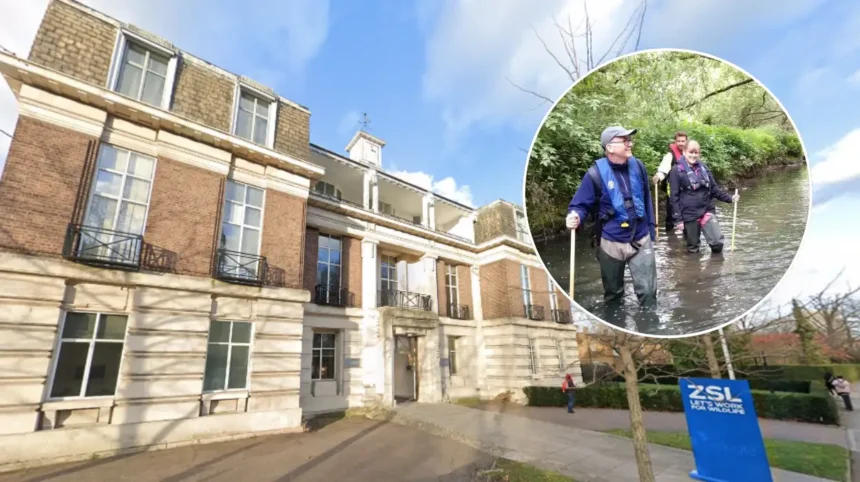
The investigation into London’s hidden water pollution relies on data collected by trained volunteers operating under the Outfall Safari initiative, a project pioneered by the Zoological Society of London (ZSL). For the past decade, the citizen-science project has dispatched volunteers along riverbanks across the capital to inspect, map, and assess the visual impact of drainage outfalls.
The latest snapshot survey conducted by ZSL volunteers evaluated surface water outfalls across four primary London catchments: the River Wandle, the River Brent, the River Ravensbourne, and the River Pinn. The findings demonstrate that domestic misconnections—which occur when internal household plumbing is erroneously wired into surface water drains intended solely for rainwater—represent an expansive and persistent threat to the capital’s urban river biology.
How Severely Is the River Brent Affected by Household Sewage Outfalls?
As reported by Harrison Galliven, Local Democracy Reporter for MyLondon, the River Brent has emerged as a primary focus of concern regarding degraded water quality in West London. During an audit covering 22.4 kilometres of the River Brent, ZSL volunteers inspected a total of 123 surface water outfalls. Of those inspected, 44 outfalls were actively discharging pollutants into the river.
The severity of the contamination along the Brent prompted ZSL to issue emergency alerts to Thames Water concerning 15 high-priority incidents. As reported by Harrison Galliven of MyLondon, Ella Carbery-Tarrant, a project officer at ZSL leading the Outfall Safari programme, stated:
“The Brent is a hotspot for poor water quality. It is pretty disgusting to be honest. There are some pretty bad surface water outfalls that are polluting a lot of watercourse.”
The source of contamination ranges from isolated domestic appliances following unmonitored home renovations to large-scale structural misconnections in multi-occupancy residential buildings. As reported by Harrison Galliven of MyLondon, Ella Carbery-Tarrant noted that activist Ben Morris, founder of the campaign group Clean Up the River Brent, previously identified a single residential block containing more than 20 flats where misconnected appliances were discharging wastewater directly into the watercourse.
To address the persistent contamination recorded along the catchment, City Hall appointed a dedicated full-time enforcement officer to tackle domestic misconnections across West London.
What Do Outfall Audits Reveal About the Wandle, Ravensbourne, and Pinn Catchments?
While the River Brent recorded the highest density of polluting outlets, outfall audits across other London catchments confirmed that misconnections are a multi-river systemic issue.
On the River Wandle, volunteers inspected 105 surface water outfalls. While 90 outfalls showed no visible signs of contamination, nine were identified as actively polluting the river. Two of these discharges were classified as severe leaks, triggering immediate alerts to Thames Water and the Environment Agency.
As reported by Harrison Galliven of MyLondon, Ella Carbery-Tarrant explained that while conditions on the River Wandle were “not too bad compared to other catchments,” chronic misconnections remain a continuous challenge. She highlighted the subtle and dangerous nature of the problem, stating to the Local Democracy Reporting Service:
“I might be biased, but I would say pretty high. A stretch of river could have continually had someone’s toilet water distributed through it for years but no one would know about it or have done anything about it. It is a very complex and expansive issue to resolve.”
In South East London, the audit of the River Ravensbourne identified 18 polluting outfalls, six of which met the criteria for emergency escalation to water authorities. Simultaneously, an inspection of the River Pinn uncovered 17 polluting outfalls, with three severe contamination incidents formally raised with Thames Water.
What Impact Does Misconnection Contamination Have on Local River Ecosystems?
The ecological impact of misconnection pollution is particularly severe in delicate river environments. Earlier, the Local Democracy Reporting Service documented visible pollution within the Watermeads Nature Reserve near Mitcham, a stretch of the River Wandle recognized for its chalk stream characteristics and biodiversity. Observers reported a milky discharge flowing continuously from an outfall, forming a distinct film on the surface of the river.
As reported by Harrison Galliven of MyLondon, Dr Isobel Ollard, catchment officer at the South East Rivers Trust, stated that such discharges “can be harmful to wildlife and lead to further degradation of river ecosystems.”
Data obtained through an environmental information request submitted by the Local Democracy Reporting Service revealed that Thames Water formally recorded six distinct pollution incidents linked to plumbing misconnections along the River Wandle between 2021 and 2024. No incidents were recorded by the utility for the years 2025 or 2026. The data disclosed that untreated wastewater entered the river through surface water drainage networks serving residential properties across the CR7, SW19, and CR0 postcode areas, alongside a pop-up food business in CR3 and a direct apartment building discharge in SW19.
To combat specific localized pollution, Thames Water operates a dedicated Surface Water Outfall Programme (SWOP), utilizing trace dye testing and door-to-door drainage surveys. A targeted SWOP investigation along Wandle Road identified 77 individual household appliances wrongly connected to rainwater drainage systems across just eight residential properties.
Who Holds Legal Responsibility for Fixing Misconnections and Enforcing Repairs?
Under UK environmental and housing legislation, the legal responsibility for rectifying misconnected plumbing rests entirely with the property owner. However, identifying and enforcing repairs involves multiple agency jurisdictions:
- Property Owners: Accountable for ensuring internal drainage connects correctly to the foul sewer. Owners are financially responsible for plumbing corrections, even if misconnections were installed by previous occupants or tradespeople without the owner’s knowledge.
- Thames Water: Deploys temporary containment interventions, such as floating booms, to absorb surface pollutants at active outfalls. The utility maintains a target response window to inspect reported river pollution incidents within two hours. When misconnections are pinpointed, Thames Water notifies the property owner, offering a voluntary rectification period—typically 12 weeks.
- Local Authorities: If a property owner fails to rectify a misconnection within the voluntary period, Thames Water refers the case to the relevant local council. Under the Building Act 1984, local authorities possess statutory powers to serve formal enforcement notices requiring property owners to conduct repairs. If non-compliance persists, councils can undertake the required plumbing work directly and legally recover all associated costs from the property owner.
- Environment Agency: Holds statutory powers under broader environmental protection legislation to conduct investigations, issue formal warnings, or pursue criminal prosecutions in cases involving severe, widespread, or persistent environmental damage.
Why Is Misconnection Pollution Difficult to Track and What Future Actions Are Required?
Quantifying the precise volume of domestic pollution entering London’s watercourses remains difficult due to physical monitoring obstacles. As reported by Harrison Galliven of MyLondon, Ella Carbery-Tarrant noted that seasonal vegetation growth frequently conceals outfall pipes along riverbanks. Furthermore, organic indicators like sewage fungus—which proliferate during warmer spring and summer months—are frequently obscured by dense foliage, leaving polluting outfalls undetected.
To address these monitoring gaps, ZSL’s Outfall Safari has expanded from a pilot group of five volunteers monitoring the River Crane in 2016 to a network of approximately 30 trained volunteers per river catchment. However, project organizers emphasize that citizen science must be backed by institutional resources. As reported by Harrison Galliven of MyLondon, Ella Carbery-Tarrant stated:
“If local people don’t report it nothing really happens. It is important for the public to have a role in this. It is a really big job to do, that is why it would be great to have more roles in the sector that are specifically designed to resolve misconnections.”
Members of the public seeking to participate in future river monitoring audits can contact ZSL or monitor scheduled training workshops listed on the ZSL Marine and Freshwater Eventbrite platform.
Explore more Local West London Times News:
Hammersmith and Fulham Literacy Campaign Launches Books for Pupils, 2026
Pensioner Trapped by Threatening Neighbours in Hounslow 2026
Background of the Development
The issue of domestic plumbing misconnections in urban catchments stems from the historic design of London’s dual drainage infrastructure. Modern drainage infrastructure in the capital is generally split into two distinct systems: the foul sewer system, which carries wastewater from toilets, sinks, and washing machines directly to sewage treatment works, and the surface water drainage system, which carries untreated rainwater runoff directly into local rivers and streams.
Misconnections occur primarily during unmonitored home renovations, extension builds, property conversions, or DIY plumbing works where domestic waste pipes are mistakenly plumbed into surface water downpipes or external gullies. Because surface water drains do not pass through water treatment facilities, any foul waste entering them flows directly into local rivers.
Over the past decade, grassroots environmental campaigns, such as MyLondon’s Wasted project and local river trusts, have pushed for greater transparency regarding urban river health. The creation of ZSL’s Outfall Safari in 2016 introduced a standardized methodology for citizen scientists to locate, score, and report outfall pollution, bridging the data gap between unmonitored urban tributaries and regulatory bodies like Thames Water and the Environment Agency.
How This Development Can Affect London Homeowners and Residents
The intensification of river monitoring, combined with the appointment of dedicated regional enforcement officers by City Hall, is likely to lead to increased regulatory oversight for homeowners, landlords, and private tenants across London.
- Financial and Legal Liability for Homeowners: As Thames Water and local authorities ramp up systematic dye-testing and trace surveys, an increasing number of property owners will receive formal notifications requiring them to fix faulty plumbing. Homeowners who fail to resolve misconnections within the standard 12-week voluntary window face compulsory enforcement actions under the Building Act 1984, which can result in significant legal costs and forced repair bills.
- Property Transactions and Renovations: Misconnection inspections may increasingly feature in standard property surveys during home purchases. Buyers and landlords could demand certified drainage audits prior to completion to avoid inherited legal liabilities. Furthermore, local council building control departments may enforce stricter oversight on domestic renovation projects and extension works to prevent illegal drainage hookups at the construction stage.
- Community Engagement and Local Living Standards: For residents living near suburban river catchments, increased citizen reporting through initiatives like Outfall Safari will gradually reduce localized foul odours, unsightly surface film, and bacterial threats in public parks and nature reserves like Watermeads. However, short-term localized disruptions may rise as utility teams carry out invasive road and pavement excavations to map complex drainage connections across residential estates.