


Key Points
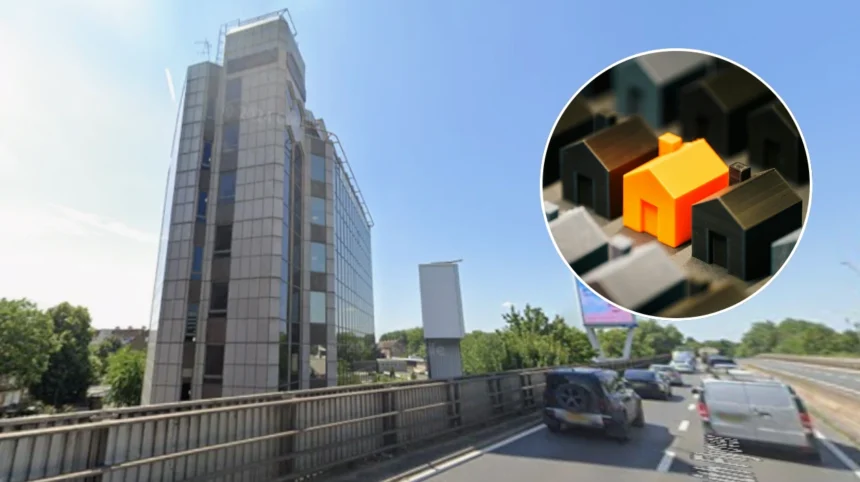
- Approval for Planning: The London Borough of Hammersmith & Fulham has granted planning permission for an ambitious redevelopment to demolish the existing office premises at 1-3 Sussex Place and build a 14-storey purpose-built student accommodation development.
- Accommodations and Size: There will be 291 student bedrooms consisting of 147 cluster apartments and 144 studios. Accompanying the building will be a basement, bike storage, waste facilities, garden courtyard, and roof terrace via sky walkway.
- University Collaboration: A formal nominations agreement has been established with Imperial College London to allocate over 100 beds (a total of 35% of all available accommodation) at affordable rents for the students of the college.
- Strategically Placed: Located next to the Hammersmith Station, the site boasts good transportation links for students coming to Imperial College from its three other locations; South Kensington, White City, and Hammersmith Hospital campus.
- Future Developments: Although planning consent has been obtained, no information regarding start date of construction, timeline of completion, or final cost of each bedroom is known yet.
uk/local/hammersmith-and-fulham/hammersmith/">Hammersmith (West London Times) September 26, 2026 — The London Borough of Hammersmith & Fulham has formally granted planning permission for a major 291-bedroom student accommodation project at 1–3 Sussex Place, directly adjacent to Hammersmith station. As detailed by LDN Editor of London Daily News, the approved proposal involves demolishing the current office building to make way for a 14-storey purpose-built structure complete with a basement, designed by WGP Architects on a 0.18-hectare site.
What does the approved Sussex Place development include?
The sanctioned development comprises a mix of 147 cluster apartments and 144 studios, culminating in 291 student beds. According to public planning documents reported by LDN Editor of London Daily News, the on-site amenity offer features communal spaces, cycle parking, refuse storage, extensive landscaping, a landscaped courtyard garden, and a skywalk roof terrace. Rather than operating as a conventional residential scheme for the open market, the development is entirely targeted at meeting student housing demands in a compact, highly connected part of west London.
How will the Imperial College London partnership work?
A defining characteristic of the approved project is an agreement established between the developer and Imperial College London. As reported by LDN Editor of London Daily News, this nominations agreement is intended to grant Imperial students access to more than 100 affordable beds, ensuring that 35 per cent of the total accommodation is provided at affordable rent levels. This partnership connects the site directly to a premier London institution, conveniently positioned for individuals commuting to Imperial’s South Kensington, White City, and Hammersmith Hospital campuses.
Explore more Hammersmith and Fulham News:
Abu Hamza Family Home Upgrades Spark Fury in Hammersmith and Fulham 2026
Civic Campus Granted Late-Night Licence in Hammersmith 2026
What are the next steps for construction and occupation?
Although planning permission represents a vital regulatory hurdle cleared, various logistical and operational details remain undetermined. As noted by LDN Editor of London Daily News, no construction start date, completion target, or formal opening date has been published alongside the approval. Furthermore, final room rental prices and the exact mechanism by which eligible Imperial College London students will be selected and nominated for the affordable rooms have not yet been finalised or publicly detailed.
Background of the particular development
The approval of the Sussex Place scheme reflects a broader, ongoing trend across Greater London where aging or underutilised office blocks situated near major transport hubs are being converted into high-density student accommodation. Hammersmith, serving as a critical west London transport interchange with multiple Underground lines and a large bus station, has experienced continuous pressure for densification. Local planning authorities face acute student housing shortages alongside high open-market residential costs, leading to an increasing reliance on university-linked nominations agreements—such as the one struck with Imperial College London—to secure guaranteed affordable housing quotas for local academic institutions.
This development will significantly reshape the immediate vicinity of Hammersmith station by injecting a transient student population into a heavily congested transport and commercial hub. For local residents and community businesses, the influx of nearly 300 students could boost footfall for local retail and hospitality venues, though it may also trigger local concerns regarding pedestrian congestion, noise, and pressure on neighbourhood infrastructure during peak commuting hours. For prospective students, particularly those enrolled at Imperial College London seeking affordable housing options near major campuses, the scheme offers a promising addition to London’s constrained accommodation market, provided that rental pricing is successfully managed through the university’s nomination framework.