

Key Points
- Late night licences have been issued for the Civic Campus project from the Hammersmith and Fulham Council, permitting music events, films, and selling alcohol up to 3 am each day.
- An earlier closing time of 11 pm was approved for the outdoor Civic Avenue and Unity Square.
- There are six provisional licenses granted to spaces which are currently under construction, including the rooftop restaurant and skyparks.
- The above application was approved by the Hammersmith and Fulham Council Licensing Sub-Committee on 22nd September 2026.
- The local residents and objectors expressed their strong objections about possible noise, disturbance and traffic problems due to the above hours being similar to a ‘night club’ license.
- Council representatives said that it was a regeneration project and King Street was going to get life through this scheme.
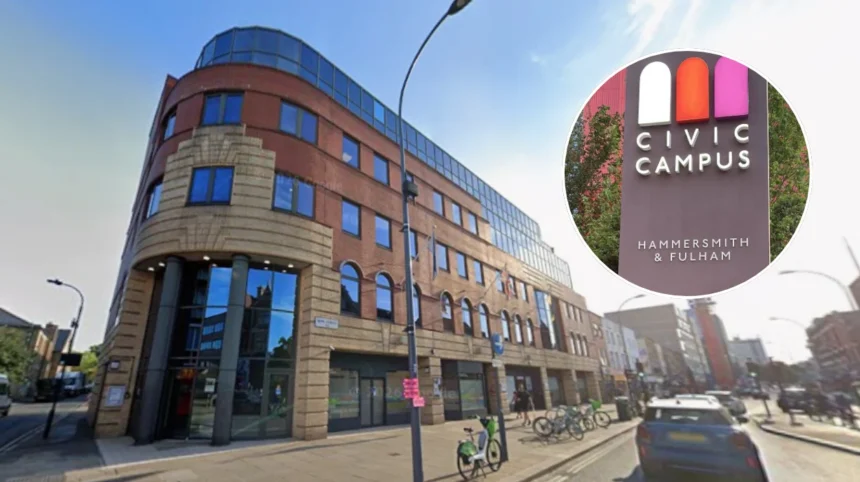
uk/local/fulham/hammersmith/">hammersmith-and-fulham/">Hammersmith and Fulham (West London Times) September 24, 2026 – As reported by Ben Lynch, Local Democracy Reporter for MyLondon, Hammersmith and Fulham Council’s flagship Civic Campus scheme has been officially granted late-night opening hours as the major regeneration project nears completion.
What Are the Details of the Approved Civic Campus Licence?
The newly approved premises licence permits activities within the main Civic Campus Building—including the playing of music and films, alongside the sale of alcohol—to continue until 3am, seven days a week. However, an earlier closing time of 11pm was applied to the outdoor areas of Civic Avenue and Unity Square.
Alongside the primary premises licence, six provisional statement applications were green-lit by the council’s Licensing Sub-Committee during a meeting on September 22, 2026. These provisional statements provide licensing frameworks for spaces still under construction, including the campus’s rooftop restaurant and the new skypark. As detailed by Ben Lynch of MyLondon, these provisions allow applicants to determine whether uncompleted premises will secure licences post-construction, though incoming commercial tenants will eventually need to apply for their own specific licences.
Why Did the Project Face Delays and Contractor Changes?
The approvals indicate that the extensive redevelopment is closing in on its full unveiling following years of delays. Earlier this year, anxieties surfaced across the borough when the lead construction contractor, Ardmore, entered administration. Nevertheless, local authorities assured stakeholders that contingency plans were successfully implemented, resulting in only minor adjustments to the overarching development schedule.
Upon completion, the revitalised King Street site will encompass a mixed-use complex featuring new homes, bars, workspaces, cultural venues, and a refurbished town hall. Well-known commercial entities, such as the cinema chain Curzon and Gail’s, are reportedly slated to occupy units within the campus.
What Concerns Were Raised by Local Residents?
Despite the council’s enthusiasm for the regeneration project, the proposals met with significant resistance from local residents during the public consultation phase. Two formal objections were submitted, criticising the extensive hours. As reported by MyLondon, one objector wrote:
“The hours applied for – open and selling until 3am every day of the week Monday to Sunday! – are excessive for all the premises in this 100% residential area around King Street.”
The objector further noted that the schedule resembles a “night club” style licence, arguing that an 11pm closure would be far more appropriate for the neighbourhood.
Expanding on these concerns during the committee meeting, local resident Una-Jane Winfield highlighted the predominantly residential character of the surrounding area, particularly referencing the 204 new homes built as part of the complex. As quoted by Ben Lynch of MyLondon, Ms Winfield stated:
“I will be absolutely amazed if any of the new residents, if they actually live there, will put up with an alcohol licence and parties and music blaring from the top floor until 3 o’clock in the morning. It’s absolutely outrageous.”
Furthermore, Ms Winfield warned that the late-night trading hours would likely trigger a rise in ride-hailing traffic, stating it is bound “to cause a good deal of trouble with Uber and Lyft parking.” Concluding her remarks, she added:
“I think this is a very unwise application. I think this should be restricted to 11pm normal licensing hours.”
How Did the Council and Developers Defend the Licence Application?
Representing the local authority, Alun Thomas of Thomas and Thomas Partners LLP championed the development as a transformative initiative. As documented by MyLondon, Mr Thomas described the campus as a “major regeneration scheme” intended to “breathe new life into the western end of King Street and help spread the economic activity from the [Hammersmith] Broadway and its unique and comprehensive transport connections to the new Unity Square and its surrounding retail and office space.”
Addressing the contested 3am closing times, Mr Thomas explained that the late hours represent a maximum allowance rather than a daily certainty, noting that appropriate mitigations—such as a comprehensive dispersal plan—are in place to manage patron movement. When questioned by Conservative councillor Aliya Afzal-Khan regarding the justification for a 3am limit, Mr Thomas stated, as reported by Ben Lynch of MyLondon:
“We are not saying these events will take place until 3am every day of the week. But there will be some events that go until 3 o’clock in the morning, and of course it saves having to apply for temporary event notices.”
Despite persistent pushback from Ms Winfield, who maintained that the schedule remains “completely intolerable” and questioned why the council would deliberately “annoy the neighbours so much,” Mr Thomas continuously emphasised the “unique” commercial opportunity presented by the scheme alongside strict administrative safeguards. Ultimately, the Licensing Sub-Committee voted to approve both the main premises licence and all six provisional statements.
Background of the Particular Development
The Hammersmith and Fulham Council Civic Campus scheme represents a massive urban regeneration project designed to modernise the local authority’s operational footprint while injecting commercial and cultural vitality into the western end of King Street. Originally granted planning approval by the council in 2019, the development replaces outdated civic structures with a modern complex that incorporates public spaces, residential housing, workspace provisions, and cultural venues like the Curzon cinema. Over the years, the project has navigated complex hurdles, including construction delays and the administration of its primary contractor earlier in 2026, before reaching its current stage of licensing approvals and imminent public unveiling.
This licensing decision will likely accelerate commercial leasing activity and foot traffic along King Street, transforming the western end of the thoroughfare into a prominent evening destination for West London residents and visitors. However, the approval of 3am trading hours sets up a sustained operational challenge regarding neighbourhood relations. If noise pollution and ride-hailing congestion are not rigorously managed through the implemented dispersal plans, local residents may face ongoing friction with commercial tenants, potentially prompting formal noise complaints and increased scrutiny from local councillors over licensing enforcement in the newly established residential community.