
Key Points
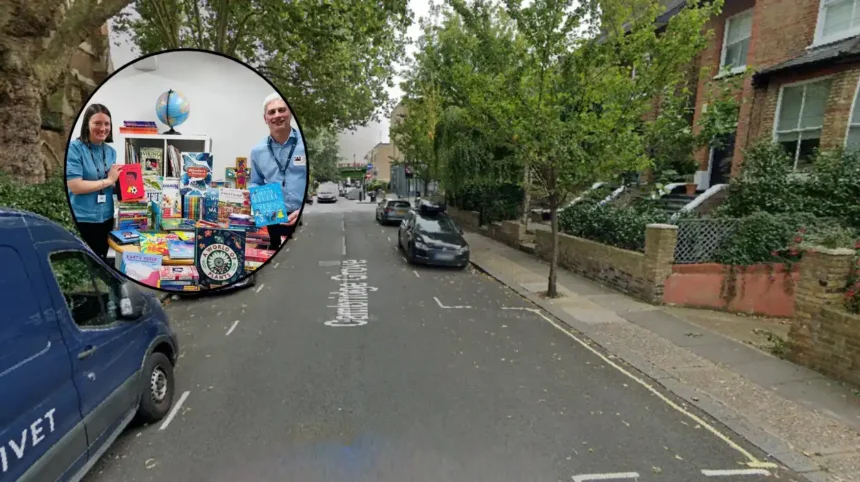
- A literacy campaign has been launched in London to ensure that every state primary school child in Hammersmith and Fulham receives a book of their own.
- The initiative is spearheaded by the literacy organisation Reading Bridge, which is working to improve reading standards across the capital.
- The campaign aims to raise a total of £28,000 to purchase 8,500 books, providing one copy for every child enrolled across the borough’s 35 primary schools.
- Hammersmith and Fulham Council has actively supported the drive by pledging £14,000 in funding towards the overall target.
- Organisers cite alarming national research showing that more than one in 10 children aged five to 18 in the UK lack a book of their own, a figure that increases to one in six for children receiving free school meals.
- The campaign addresses a broader national decline in children’s reading levels, which dropped to a 20-year low in 2025 according to data from the National Literacy Trust.
uk/local/fulham/hammersmith/">hammersmith-and-fulham/">Hammersmith and Fulham (West London Times) October 9, 2026 —In an effort to combat declining literacy rates and address educational inequality, a major new campaign has been launched in West London to place a brand-new book into the hands of every state primary school child.
The initiative is being driven by Reading Bridge, a dedicated literacy organisation that works towards improving London’s children’s literacy standards. The campaign sets out to raise £28,000 to purchase 8,500 books, ensuring that every single pupil across the borough’s 35 primary schools receives a book of their own to take home and keep.
Providing financial backing to kick-start the project, Hammersmith and Fulham Council has pledged £14,000 towards the campaign fund, matching half of the total financial goal required to fulfill the borough-wide distribution.
What do recent studies reveal about children’s access to books and reading habits?
The community drive follows recent research highlighting stark disparities in children’s reading habits, particularly differences rooted in economic backgrounds. Statistics show that more than one in 10 children aged five to 18 across the United Kingdom do not own a book of their own.
The divide is even more pronounced among socio-economically disadvantaged households. Among children who receive free school meals, the proportion of those lacking a personal book rises significantly to one in six.
Organisers point out that book ownership is a critical factor in encouraging regular reading habits at home. Without access to personal reading material outside the classroom, children from low-income families often face substantial hurdles in developing essential literacy skills during their formative years.
How does this campaign address the national decline in literacy levels?
The local effort comes in response to broader challenges facing education nationwide. According to findings published by the National Literacy Trust, levels of reading among children across the UK reached a 20-year low in 2025.
Educational experts have noted that declining engagement with reading poses long-term risks to academic achievement, cognitive development, and future employment prospects.
By targeting primary school children early, the Reading Bridge initiative aims to reverse these negative trends locally, fostering a culture of reading for pleasure before children transition to secondary education.
Explore More Hammersmith And Fulham News
Hammersmith Ram Pub Closing Unauthorised Discount Store in Hammersmith 2026
Plans Submitted to Demolish Old Oak Pub in West Kensington 2026
Background of the particular development
The launch of the Hammersmith and Fulham literacy campaign reflects a growing wave of municipal and community-led interventions designed to tackle educational poverty in urban areas across the United Kingdom. In recent years, local authorities and charitable trusts have increasingly focused on book ownership as a foundational metric for social mobility.
The National Literacy Trust’s 2025 report underscored a persistent correlation between declining household incomes, reduced book ownership, and lower attainment scores in primary schools. Local councils, facing tightening budgetary constraints, have increasingly formed partnerships with grassroots literacy charities to pool resources.
Initiatives such as the Reading Bridge project build upon established models of targeted educational funding, aiming to bridge the gap left by systemic economic inequalities and create equitable learning environments for children in urban boroughs.
Prediction
This community-led development is expected to have a measurable positive impact on local primary school pupils, particularly those from lower-income households within the borough. By ensuring that every child receives a book of their own, the campaign removes financial barriers to home book ownership, which studies consistently link to improved reading motivation, enhanced vocabulary acquisition, and higher overall academic confidence.
For parents and families in Hammersmith and Fulham, the initiative provides tangible support that encourages shared reading time at home without placing financial strain on households. On a broader scale, if the campaign successfully reaches its £28,000 target and distributes all 8,500 books across the 35 primary schools, it could serve as a replicable blueprint for other London boroughs seeking practical, localized solutions to combat declining national literacy rates and support disadvantaged students.