Key Points
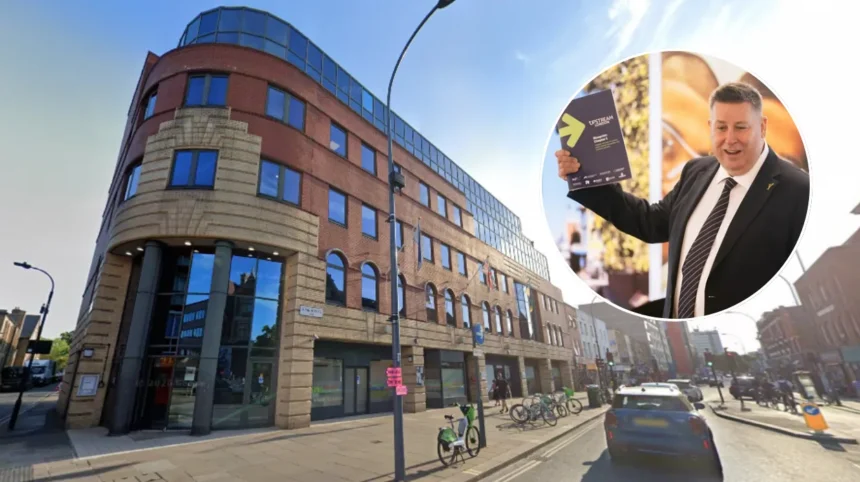
- Five Points for Growth Economy Strategy: Hammersmith & Fulham launched its five-point economic growth economy strategy on 13 October 2026 during the Upstream London Network Economic Forum.
- Lead Authorship: The strategy was penned down by Cllr Stephen Cowan, leader of Hammersmith & Fulham Council and chair of London Councils.
- International Collaboration: The five-point strategy was prepared along with international partners from cities like Barcelona, Milan, Oslo, Buenos Aires, Lillestrøm, Melbourne, and Rzeszów.
- Five Main Components: The five main components of the economy strategy include entrepreneurial municipal government, anchor institution partnerships, investments, startups and scale-ups, and inclusivity initiatives.
- Local Achievements: In the last 10 years, H&F has gained an investment of £6.5 billion for growth and 17,200 new jobs in science, technology, engineering, and math fields, including the creation of the White City Innovation District in 2017.
- Economic Regeneration Achievement: According to the Earls Court Development Company, working as a strategic forum partner, more than 2,000 jobs were created and £50 million local economic regeneration achieved before the construction began.
- Strict Condition Notice on Directives: In view of the directives concerning restrictions in reporting and the prohibition of making up information beyond the available information, the analysis remains strictly focused on the statements contained in the available text.
uk/local/hammersmith-and-fulham/hammersmith/">Hammersmith & Fulham (West London Times) October 19, 2026 – Hammersmith & Fulham Council has launched a five-point municipal economic model at the Upstream London Network Economic Forum, arguing that future urban prosperity must rely on local innovation, anchor partnerships, and distinct community identity.
How Can Cities Globally Compete Through Local Innovation Strategies?
As reported by Cllr Stephen Cowan of Hammersmith & Fulham Council, the newly unveiled municipal blueprint addresses accelerating global competition by shifting focus toward locally driven growth plans.
Discussing the necessity of this approach, Cllr Stephen Cowan stated that:
“The first chapter of this new blueprint sets out how keeping pace with the US and China takes more than technological innovation and knowledge-based growth: it takes inclusive growth plans, designed and delivered at local level.”
The report contends that contemporary economic resilience requires blending high-level research with localized public policy implementation. Cllr Stephen Cowan noted that local authorities hold unique jurisdiction over essential levers such as planning, zoning, skills training, infrastructure, and public amenities. Emphasising the operational model, Cllr Stephen Cowan remarked that:
“Every council needs its own locally specific, place-based economic growth plan.”
Highlighting practical achievements within the borough, Cllr Stephen Cowan pointed out that over the past decade, Hammersmith & Fulham has successfully attracted £6.5 billion of growth investment while generating 17,200 new science, technology, engineering, and mathematics (STEM) jobs through cross-sector collaboration.
What Role Do Anchor Institutions Play in Urban Innovation Districts?
A foundational pillar of the council’s strategy is the successful execution of the White City Innovation District, launched in 2017 in strategic partnership with Imperial College London.
According to the report, this initiative successfully converted former brownfield land into a thriving hub for commercialising academic research, bolstered by repurposed BBC infrastructure at White City Place. This establishment serves as a prime example of the “triple helix” framework, bringing together anchor institutions, entrepreneurial municipal governance, and private enterprise.
Furthermore, international urban contributions featured heavily at the forum. As reported by Isabel Sabadi of Barcelona’s 22@Network, cooperation across international borders remains vital:
“The real strength of our blueprint lies in cooperation – sharing both our successes and our challenges across borders.”
Contributing urban delegates from Milan, Oslo, Buenos Aires, Lillestrøm, Melbourne, and Rzeszów similarly stressed that innovation districts must avoid becoming generic, buzzword-driven zones. Instead, they must cultivate connected ecosystems where municipalities “lead from behind” to facilitate grassroots collaboration.
Explore more Hammersmith and Fulham News:
Gangs Steal £1m Luxury Watches Monthly in London West End 2026
Henley Secures Approval for Revised 313 Home Scheme in Fulham 2026
How Do Major Regeneration Projects Contribute to Local Economies?
Demonstrating the blueprint’s application to major real estate developments, strategic forum partner the Earls Court Development Company was highlighted as an active case study.
As reported by Rob Heasman, Chief Executive Officer of the Earls Court Development Company, the large-scale regeneration project has achieved substantial local financial impact ahead of primary construction phases. Rob Heasman claimed that the initiative has:
“already generated more than 2,000 jobs and delivered a £50 million uplift to the local economy.”
Summarising the ultimate benchmark for success, an unnamed contributor cited in the report observed that:
“The real measure of an innovation district is not simply how much innovation it generates, but how that innovation translates into opportunities for people and communities.”
Background of the Particular Development
The unveiling of the economic blueprint follows years of strategic urban restructuring within West London. Over the past decade, Hammersmith & Fulham Council has systematically pursued public-private partnerships to pivot its local economy toward knowledge-intensive sectors.
The establishment of the White City Innovation District in 2017 marked a turning point, leveraging academic capital from Imperial College London to transform underutilised brownfield spaces into a competitive life sciences and tech cluster. By formalising these methodologies into a five-point framework alongside international counterparts from cities like Barcelona and Melbourne, the local authority seeks to institutionalize a replicable model for municipal-led economic development across the United Kingdom.
This municipal growth framework could fundamentally alter how mid-sized and large urban authorities across the UK approach post-industrial regeneration and inward investment. For local residents, small businesses, and emerging enterprises within Hammersmith & Fulham, the continued implementation of this strategy is projected to increase access to skilled STEM employment, expand local supply chain contracts, and secure targeted community benefits from major urban regeneration schemes like Earls Court.
However, the success of the model will depend heavily on whether participating boroughs can effectively balance large-scale commercial innovation with affordable local housing and inclusive social outcomes for existing communities.