Key Points
- Developer & Project: Planning permission has been granted for the amended proposal for Albert and Swedish Wharf, which is known as the Fulham Wharf site development.
- Uplift in Housing Units: The new proposal provides 313 residential units, an addition of 37 units over the previously approved figure of 274 units.
- Reduction in Affordable Housing Units: The percentage of affordable housing units in the project has been lowered from 35% to 20%.
- Logistics: Besides housing, the new development will also include a last mile logistics and industrial facility of 55,000 sq ft.
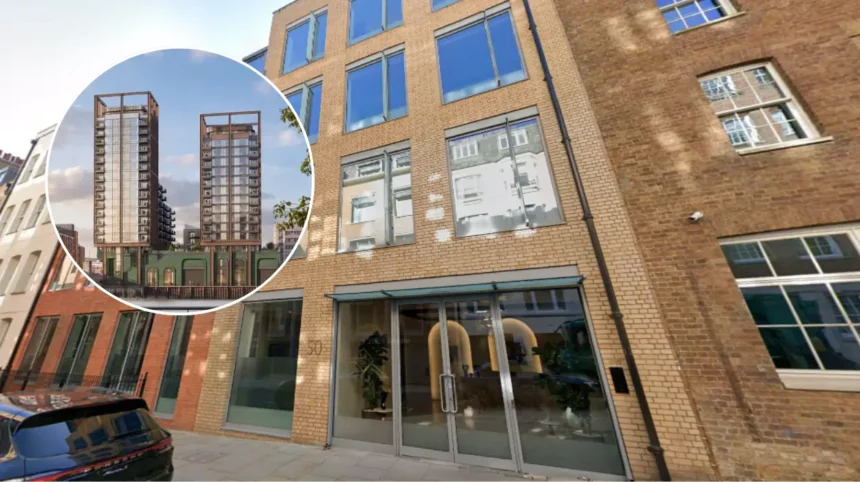
- Increase in Block Height: This proposal involves an increase in the height of blocks up to 17 storeys close to Wandsworth Bridge.
uk/local/fulham/hammersmith/">hammersmith-and-fulham/">Hammersmith And Fulham (West London Times) October 15, 2026 — Henley Investment Management has successfully secured formal planning approval for its revised multi-million-pound mixed-use project at Albert and Swedish Wharf in Fulham, unlocking a total of 313 new homes and significant industrial space.
What Are the Core Details of the Newly Approved Fulham Wharf Development Plans?
As reported by Paul Norman of CoStar and Janaire Einstein Francisco of Green Street News, Henley Investment Management has been granted the all-clear for an updated iteration of its riverside scheme situated adjacent to Wandsworth Bridge. The revised proposals—processed via a Section 73 application—introduce an increased residential yield, bringing the overall tally to 313 apartments. This represents an uplift of 37 units compared to the initial 2024 planning consent, which originally accounted for 274 homes.
In addition to the expanded residential capacity, the project maintains its vital commercial and industrial component. As detailed across trade publications, the scheme includes a substantial 55,000 square foot last-mile logistics facility. This integration is designed to cater to the growing demand for urban distribution hubs supporting West London’s commercial logistics network.
How Has the Affordability Quota Changed Under the Revised Scheme?
As covered by local democracy reporter Ben Lynch of MyLondon, the expansion in total housing numbers came alongside a controversial adjustment to the scheme’s affordable housing provision. Local planning documents indicate that the proportion of affordable homes has been scaled back from the originally stipulated 35 per cent down to 20 per cent.
Despite the reduced percentage of affordable units, the developer and planning authorities maintain that the updated configuration ensures the overall viability of the waterside regeneration project while maximizing brownfield land utility. The redesigned blocks will feature stepped height profiles reaching up to 17 storeys, reshaping the local riverfront landscape near Wandsworth Bridge.
Explore more Hammersmith and Fulham News:
Hammersmith and Fulham Council Approves Permanent Hammersmith Road C9 Scheme 2026
NHS Launches Cardiac Clinical Trial to Improve Heart Care Hammersmith 2026
Background of the Particular Development
The evolution of the Albert and Swedish Wharf site reflects broader commercial and residential real estate trends across Greater London, where developers increasingly pursue mixed-use optimization to balance housing targets with urban industrial needs. Historically utilized for industrial and wharf-related activities alongside the River Thames, the plot has been a focal point for regeneration strategies aimed at activating underutilised waterfront land. Henley Investment Management initially secured consent for a 274-home scheme with taller elements reaching 17 storeys and a 35 per cent affordable threshold in early 2024. However, shifting economic conditions, construction cost pressures, and evolving demand for last-mile urban logistics prompted the developer to lodge revised plans via a Section 73 application. By incorporating both expanded residential configurations and a dedicated 55,000 sq ft industrial logistics space, the approved blueprint mirrors a wider shift in London planning policy toward hybrid commercial-residential zones that support local economic infrastructure alongside metropolitan housing delivery.
How This Development Can Affect Local Residents, Property Seekers, and Businesses
The greenlighting of Henley’s revised Fulham Wharf project carries distinct implications for various key stakeholders across the West London area. For local residents and community amenity groups, the intensification of the site—featuring increased block heights up to 17 storeys and an influx of 313 households—may heighten pressures on surrounding transport infrastructure, local schools, and healthcare services. Furthermore, the reduction of the affordable housing quota from 35% to 20% is likely to draw scrutiny from housing advocates concerned about the accessibility of new riverside developments for average-income Londoners.
Conversely, for property seekers and prospective homebuyers, the addition of 37 net-new apartments expands housing inventory in a highly desirable Zone 2 riverside location, offering modern residential options close to the Thames. For local businesses and commercial operators, the inclusion of a 55,000 sq ft last-mile logistics facility provides a strategic economic boost, enhancing supply chain efficiency and delivery speeds across central and west London boroughs. Ultimately, while the scheme promises vital regeneration and modern urban space, it underscores the ongoing delicate balancing act between commercial viability, industrial necessity, and community-focused housing delivery in the capital.