

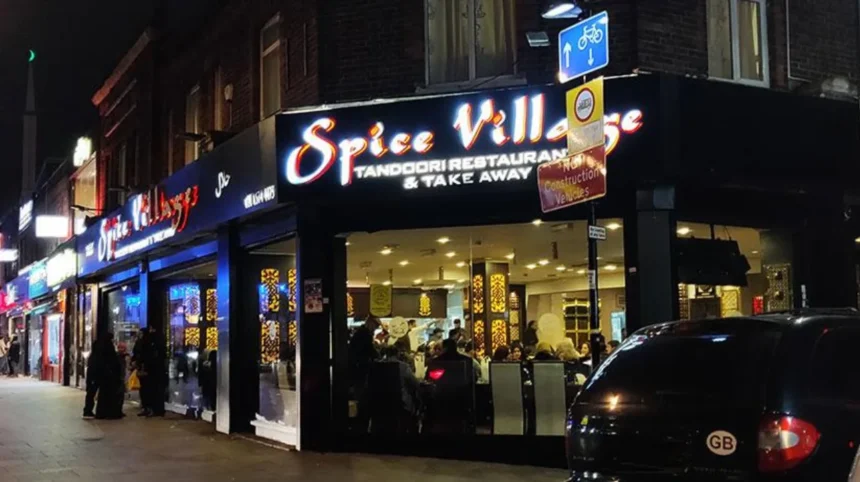
uk/local/ealing/southall/">Southall restaurants form one of West London’s most distinctive food destinations. The area is known for Punjabi, Indian, Pakistani, Sri Lankan and South Indian cooking, alongside Afghan, Nepalese, East African and other cuisines. Southall Broadway, South Road and the surrounding town centre provide the main concentration of restaurants, cafés, sweet shops and food businesses.
- Why is Southall known for its restaurants?
- How did Southall develop its food culture?
- What types of food can you find in Southall restaurants?
- Where are the main restaurant areas in Southall?
- Which Southall restaurants represent Punjabi and North Indian food?
- Where can you find vegetarian food in Southall?
- What Pakistani food can you eat in Southall?
- How important are sweets, bakeries and street food to Southall dining?
- How does Southall’s multicultural population influence its restaurants?
- How does Southall connect restaurants with shopping and cultural attractions?
- How should visitors plan a restaurant visit in Southall?
- What makes Southall restaurants important to West London?
Why is Southall known for its restaurants?
Southall is known for restaurants because its South Asian communities created a dense food culture around Broadway, South Road and the town centre. Punjabi, Indian, Pakistani, Sri Lankan and South Indian food dominate the local restaurant scene, supported by specialist shops, markets and bakeries.
Southall is a major town in the London Borough of Ealing. It sits in west London and has developed a strong international identity through migration, commerce, religious institutions and specialist retail.
Ealing Council describes Southall as a diverse community with strong Indian and Pakistani roots. The council also identifies Punjabi, Sri Lankan, Pakistani and South Indian cuisines as important parts of its food offer.
The area is often called “Little India” and “Little Punjab”. These names reflect its established South Asian cultural presence rather than a single cuisine or community. Southall also has communities with Caribbean, African, Afghan, Middle Eastern and other backgrounds.
The restaurant sector therefore operates within a wider food ecosystem. Restaurants sit alongside sweet shops, bakeries, specialist grocers, market stalls and catering businesses. This creates a concentrated destination for visitors looking for South Asian food in West London.
Southall’s food identity is particularly visible along The Broadway, the local name for the section of Uxbridge Road running through the town centre. The street contains restaurants, cafés, specialist food retailers and other businesses serving local residents and visitors.
How did Southall develop its food culture?
Southall’s food culture developed through transport-led industrial growth, post-war migration and the expansion of South Asian communities from the 1950s and 1960s. Restaurants followed this demographic and commercial development, creating a long-established food district around Broadway and South Road.
Southall began as a small agricultural settlement. Ealing Council records the first written reference to the district in 830 AD. In 1801, only 697 people lived in Southall, with many residents working on farms.
Transport changed the settlement substantially. The Grand Junction Canal was constructed in the late eighteenth century and connected the area with wider industrial routes. The Great Western Railway opened its London-west route in 1838, with a halt at Southall established in 1839.
Industrial development followed. Brickfields, flour milling, gas production, chemical works and the Otto Monsted margarine factory became part of Southall’s economy. The area developed from a rural settlement into an industrial town.
Post-war migration produced another major transformation. Ealing Council records significant immigration from India, Pakistan, Poland and other countries during the 1960s. Southall’s South Asian communities became an important part of its population and commercial economy.
Food businesses developed alongside these communities. Restaurants, cafés, sweet shops, grocery stores and specialist retailers created a commercial environment where ingredients and prepared food reflected South Asian traditions.
This history explains why Southall restaurants are closely connected to the area’s broader cultural identity.
What types of food can you find in Southall restaurants?
Southall restaurants cover several major cuisines, including Punjabi, North Indian, Pakistani, South Indian and Sri Lankan food. Other businesses provide Afghan, Nepalese, Caribbean, East African, vegetarian, fast-food and international dishes, creating a broad dining market.
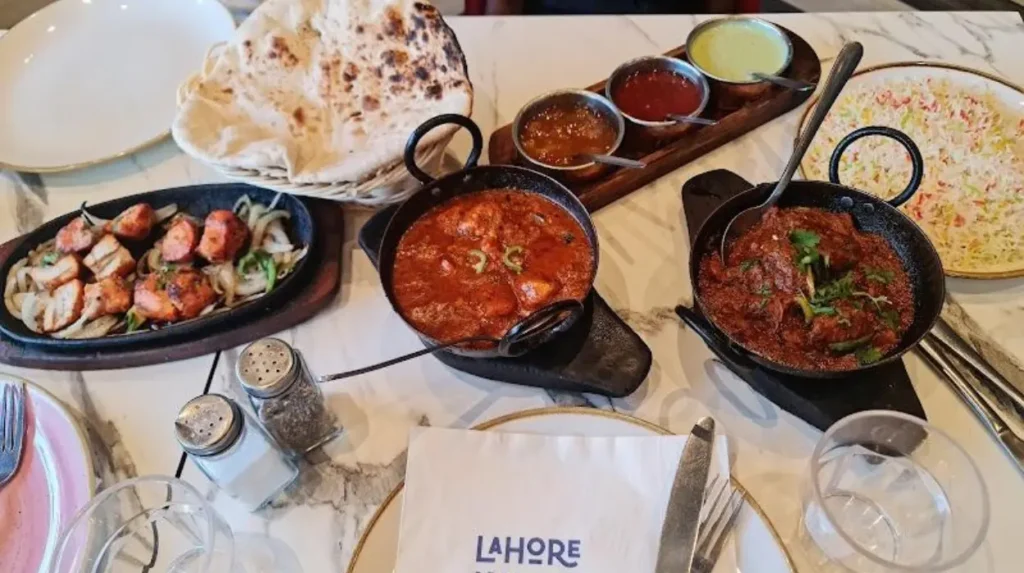
Punjabi cuisine is one of Southall’s strongest culinary traditions. Typical dishes include tandoori meats, naan, dal, saag, paneer dishes, chole and Punjabi-style curries.
North Indian cooking also has a major presence. Restaurants serve dishes such as butter chicken, rogan josh, kebabs, biryani, tandoori chicken and a wide selection of vegetarian curries.
Pakistani food adds another important part of the local dining landscape. Karahi, nihari, biryani, grilled meats, kebabs and traditional breads feature across specialist restaurants.
South Indian restaurants provide a different culinary tradition. Dosa, idli, sambar, vada, uttapam and vegetarian thali meals provide alternatives to Punjabi and North Indian menus.
Sri Lankan cuisine adds another distinctive category. Rice dishes, curries, hoppers, kottu and spiced vegetable dishes appear in restaurants serving Sri Lankan food.
Afghan and Middle Eastern influences also form part of Southall’s wider restaurant offer. The result is a food district that extends beyond the “Little India” description.
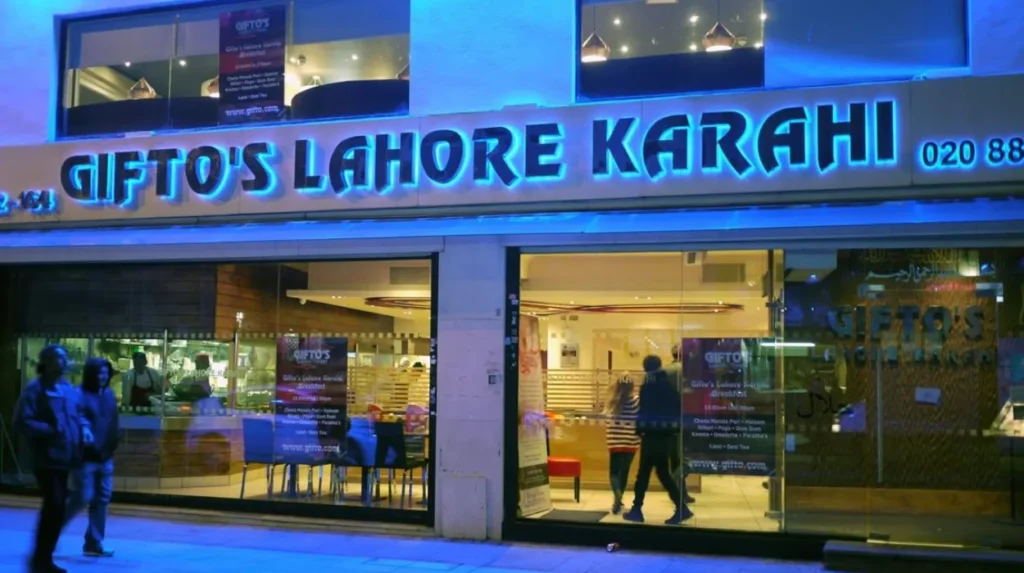
The range is also visible in local business directories. Visit Southall lists restaurants including Gifto’s Lahore Karahi, Poornima Restaurant, Kabul Restaurant, Aahar Vegetarian Restaurant, Jalebi Junction, Chandni Chowk Restaurant & Sweets and Watan Restaurant.
Where are the main restaurant areas in Southall?
The main restaurant concentration is around Southall Broadway and Uxbridge Road, with additional restaurants along South Road, The Green, High Street and nearby streets. These areas connect restaurants with markets, specialist shops, bakeries, cafés, transport links and cultural attractions.
Southall Broadway is the principal food and shopping corridor. It runs along Uxbridge Road and contains a high concentration of Asian retailers and food businesses.
South Road provides another important restaurant area. It connects the Broadway with Southall station and includes restaurants, cafés and other businesses.
The town centre extends beyond these two streets. Southall’s commercial structure includes The Green and King Street, while High Street provides additional shops and services.
The concentration of businesses makes Southall suitable for food-focused exploration. Visitors can combine a restaurant meal with specialist grocery shopping, sweets, bakery products and market browsing.
Southall Market adds another food-related destination. Ealing Council identifies the market on Uxbridge Road, opposite North Road, and describes Saturday as its busiest trading day.
The exact restaurant mix changes as businesses open, close and relocate. Current restaurant directories therefore provide the most useful way to confirm individual businesses before travelling.
Which Southall restaurants represent Punjabi and North Indian food?
Punjabi and North Indian restaurants form a central part of Southall’s food identity. Examples include Madhu’s and restaurants listed locally such as Gifto’s Lahore Karahi, while the historic Brilliant Restaurant established a major Punjabi dining tradition in Southall.
Madhu’s is a recognised Indian restaurant associated with Southall. The Michelin Guide currently lists Madhu’s Southall as an Indian restaurant.
Brilliant Restaurant has a particularly notable Southall history. Its own history records more than five decades as a North Indian Punjabi family-run restaurant. It also describes Kenyan influence within its cuisine, reflecting the Anand family’s East African heritage.
Local directories provide additional examples. Gifto’s Lahore Karahi is listed at 162–164 The Broadway and is described as an Indian and Pakistani restaurant. Aahar Vegetarian Restaurant is listed at 4–6 The Broadway. Watan Restaurant is listed at 161–163 The Broadway.
These examples demonstrate the connection between restaurant businesses and the area’s wider South Asian commercial network.
Punjabi dining also extends beyond individual dishes. Traditional breads, tandoori cooking, vegetarian preparations, lentils and regional sweets contribute to the overall food culture.
Where can you find vegetarian food in Southall?
Vegetarian food is widely represented across Southall restaurants, especially within Indian, Punjabi and South Indian cuisines. Vegetarian restaurants and specialist menus provide dishes such as paneer, dal, chole, dosa, idli, vegetable curries, rice dishes and traditional sweets.
Indian and South Asian cuisines contain extensive vegetarian traditions. Southall’s restaurant market reflects this through dedicated vegetarian businesses and vegetarian sections within broader menus.
Aahar Vegetarian Restaurant is one example listed by the local Visit Southall directory. South Indian restaurants also provide naturally vegetarian dishes based on rice, lentils and fermented batters.
Dosa is a major example. It is a thin South Indian fermented rice-and-lentil preparation that is served with accompaniments such as sambar and chutney.
Idli provides another example. These steamed rice-and-lentil cakes are commonly served as breakfast or a light meal.
Punjabi restaurants provide dishes such as saag, dal, chole, aloo-based preparations and paneer. Paneer is a fresh Indian cheese frequently used in vegetarian curries and grilled dishes.
Vegetarian visitors can therefore use both specialist vegetarian restaurants and conventional Indian restaurants.
Vegan diners need to check individual ingredients. Ghee, butter, cream, yoghurt and paneer are common in Indian cooking, so vegetarian food does not automatically mean vegan food.
What Pakistani food can you eat in Southall?
Pakistani food in Southall includes karahi, biryani, grilled meats, kebabs, naan and other regional dishes. Pakistani dining overlaps with Punjabi cuisine while retaining distinct cooking traditions, spice combinations and dishes associated with Lahore, Karachi and other Pakistani regions.
Pakistani cuisine is one of the established food categories in Southall. Ealing Council specifically identifies Pakistani food as part of the town’s restaurant offer.
Karahi is one of the most recognisable dishes. It is traditionally cooked in a deep, rounded vessel called a karahi and commonly combines meat, tomatoes, chillies, ginger and spices.
Biryani provides another major category. It combines rice with meat or vegetables and aromatic spices. Regional variations produce different flavours and cooking techniques.
Kebabs and grilled meats form another part of Pakistani dining. Restaurants often serve these with naan, salad, chutneys and yoghurt-based accompaniments.
Gifto’s Lahore Karahi provides a direct example of the Pakistani influence in Southall. The local directory identifies it as an Indian and Pakistani restaurant and lists its Broadway address.
The Pakistani food offer also demonstrates Southall’s connection with Punjab. Punjabi cultural traditions cross the modern India-Pakistan border and remain visible through food, language, music and family traditions.
How important are sweets, bakeries and street food to Southall dining?
Sweets, bakeries and street food are important parts of Southall’s dining environment because eating extends beyond sit-down restaurants. Jalebi, samosas, Indian sweets, chaat, bakery products and market food create additional ways to experience the area’s culinary traditions.
Jalebi is one of the foods specifically associated with Southall’s visitor experience. Visit London describes it as a traditional sweet made from deep-fried batter soaked in syrup.
Samosas are another common example. They consist of pastry filled with ingredients such as spiced potato, vegetables or meat before being fried or baked.
Chaat provides a broader category of snack foods. Different versions combine ingredients such as potatoes, chickpeas, yoghurt, chutneys, spices and fried components.
Southall’s food businesses also include specialist sweet shops. Chandni Chowk Restaurant & Sweets and Jalebi Junction are examples listed by Visit Southall.
Market stalls expand this food culture. Ealing Council describes Southall Market as offering food stalls alongside clothing and electronics.
This makes Southall different from a conventional restaurant-only destination. Visitors can build a food-focused visit around a restaurant meal, snack, sweet and specialist shopping.
How does Southall’s multicultural population influence its restaurants?
Southall’s multicultural population directly shapes its restaurant sector through Indian, Pakistani, Sikh, Hindu, Muslim, Caribbean, African and other community traditions. The resulting food market combines established South Asian cuisines with newer international influences and changing local demand.
Southall is one of Ealing’s most diverse areas. The borough’s Local Plan describes approximately 81,000 people across Southall’s six wards and states that 89% of residents identify as non-white.
The wider Ealing borough also has substantial ethnic diversity. Census 2021 data shows that 30.3% of Ealing residents identified as Asian, Asian British or Asian Welsh.
These figures provide context for the restaurant economy. Food businesses operate within communities where traditional cuisines remain part of everyday life.
Southall’s diversity also extends beyond South Asia. Ealing Council identifies global cuisines and community traditions, including South Asian and East African influences.
Restaurant menus therefore reflect both heritage and commercial adaptation. Established businesses serve traditional dishes, while newer businesses respond to changing tastes and customer groups.
How does Southall connect restaurants with shopping and cultural attractions?
Southall restaurants form part of a wider visitor district that combines food with specialist shopping, markets, cultural institutions, religious sites and historic buildings. The Broadway, Southall Market, Southall Library, Himalaya Palace Cinema and Sri Guru Singh Sabha Gurdwara provide major nearby destinations.
The Broadway is central to this relationship. Restaurants operate alongside shops selling Asian clothing, jewellery, food ingredients and household products.
Southall Market adds a traditional market environment. Food stalls complement restaurants by providing quick snacks and ingredients.
Southall Library reflects the area’s linguistic diversity. Ealing Council records collections in Gujarati, Hindi, Punjabi and Urdu, alongside dual-language children’s books in Arabic, Bengali and Somali.
Himalaya Palace Cinema provides another cultural landmark. The cinema opened in 1929 and was designed by architect George Coles. Its building has an unusual Chinese temple-inspired architectural style.
Sri Guru Singh Sabha Gurdwara is another major landmark. Ealing Council describes it as the largest Sikh temple outside India. The site welcomes visitors.
These destinations make Southall restaurants part of a broader cultural visit rather than an isolated dining activity.
Explore More Area Guide
Brentford Restaurants: Food Guide to West London
Fulham Restaurants: Best Places to Eat in West London
How should visitors plan a restaurant visit in Southall?
Visitors should plan Southall restaurant visits around cuisine, location, dietary requirements, group size and opening times. Broadway and South Road provide convenient starting points, while checking current restaurant information before travelling confirms menus, reservations, opening hours and business status.
Southall is accessible by rail and London buses. Visit London identifies Southall railway station and the London bus network as transport options for visitors.
A practical food visit begins around The Broadway and South Road because these streets contain a high concentration of restaurants and specialist food businesses.
Cuisine should be selected before arrival when visitors have specific requirements. Indian, Punjabi, Pakistani, South Indian and Sri Lankan restaurants provide distinct menu categories.
Dietary requirements also require direct communication with the restaurant. Vegetarian options are widespread, but vegan, halal and allergy requirements need confirmation from individual businesses.
Large groups should check seating and reservation arrangements before travelling. Popular restaurants can operate different booking systems and service schedules.
Visitors should also distinguish between restaurants, cafés, sweet shops and market stalls. Each provides a different dining format.
Current business information is important because local restaurant directories change as businesses open, close or relocate. Visit Southall currently lists dozens of restaurants and food businesses, demonstrating the scale of the local market.
What makes Southall restaurants important to West London?
Southall restaurants are important to West London because they combine food, migration history, independent commerce and cultural identity within a concentrated town centre. Their significance extends beyond dining through specialist retail, community traditions, tourism, employment and Southall’s established international reputation.
Southall is classified as a Major Centre in the London planning context. Ealing Council identifies its town centre as a specialist retail and cultural destination with a nationwide catchment for some businesses.
The council’s Local Plan describes the town centre as being organised around the A4020 and Broadway. Specialist food, retail and fashion businesses form an important part of this commercial structure.
The restaurant sector therefore contributes to Southall’s wider economic function.
Its importance also has a historical dimension. The transformation from agricultural settlement to industrial town created the infrastructure for later commercial growth. Post-war migration then changed the cultural and economic character of the area.
Food became one of the clearest expressions of that transformation.
Today, Southall restaurants provide access to Punjabi, Indian, Pakistani, South Indian and Sri Lankan food within a compact West London destination. Specialist sweets, bakeries, markets and grocery shops strengthen the same ecosystem.
The area’s restaurant culture also continues to evolve. Southall’s population, commercial development and transport connections support continued change in its food businesses. The enduring feature is the relationship between cuisine, community and the town centre.
For visitors exploring West London, Southall therefore provides a concentrated food destination with historical depth, cultural diversity and a large selection of South Asian dining traditions.
What is Southall famous for food?
Southall is famous for Punjabi, Indian, Pakistani, South Indian and Sri Lankan food. The Broadway and surrounding streets have restaurants, cafés, sweet shops, bakeries and specialist food businesses.