West London offers several places to discover wildflowers, native grasses, spring blossoms and pollinator-friendly habitats. From the flower-rich grasslands of uk/local/hillingdon/">Hillingdon to the natural woodland of Kew Gardens, these green spaces provide opportunities for nature walks, wildlife photography, family outings and seasonal plant observation.
- Why Is West London a Good Place to Find Wildflowers?
- Where Can You See Wildflowers at Yeading Brook Meadows?
- Where Can You Find Wildflowers at Gunnersbury Triangle?
- What flowers can you see in this urban reserve?
- Is Gunnersbury Triangle accessible by public transport?
- Where Can You See Wildflowers at Kew Gardens?
- What is special about Kew’s Natural Area?
- Why is The Hive important for wildflower visitors?
- Do visitors need to pay to see wildflowers at Kew?
- Where Can You Explore Wildflower Meadows at Ten Acre Wood and Meadows?
- When is the best time to visit Ten Acre Wood and Meadows?
- Can you combine this visit with other West London nature reserves?
- Where Can You Find More Wildflowers at Gutteridge Wood and Meadows?
- When Is the Best Time to See Wildflowers in West London?
- Which wildflowers can you look for in spring?
- What flowers and wildlife can you expect in summer?
- Can you find wildflowers in autumn and winter?
- How Do Wildflowers Support West London’s Biodiversity?
- How Can You Plan a Wildflower Walk in West London?
- Which destination suits different visitors?
- What should you bring?
- How can you protect wildflowers during a visit?
- How Can You Help Protect Wildflowers Beyond Visiting Nature Reserves?
Wildflower spots in West London include Yeading Brook Meadows, Gunnersbury Triangle, Kew Gardens, Ten Acre Wood and Meadows, and Gutteridge Wood and Meadows. Each location offers a different combination of grassland, woodland, wetlands or managed gardens. The best choice depends on the season, the flowers visitors want to observe, and the type of walking route they prefer.
Wildflowers are important components of urban biodiversity. They provide nectar and pollen for bees, butterflies and other insects, support food webs, and help maintain ecological connections between green spaces. Finding these plants in West London also reveals how nature survives within a densely populated urban area.
Why Is West London a Good Place to Find Wildflowers?
West London contains a mixture of grasslands, woodlands, wetlands, riverside habitats and landscaped gardens that support wildflowers. Areas around Hillingdon, hounslow/chiswick/">Chiswick and Kew provide opportunities to observe seasonal blooms alongside pollinating insects, native grasses and other urban wildlife.
West London’s natural environment reflects centuries of landscape change. Historic estates, agricultural land, railway corridors, river valleys and modern residential developments have shaped the green spaces visible today. Some areas retain semi-natural habitats, while others support wildlife through conservation management and carefully maintained planting.
The London Wildlife Trust manages nature reserves across the capital, including sites in West London. Its reserves protect habitats that support native plants and animals in locations surrounded by housing, roads and transport infrastructure.
Hillingdon is particularly valuable for visitors seeking meadow landscapes. Yeading Brook Meadows contains extensive grassland where wildflowers and grasses dominate the vegetation. Gunnersbury Triangle, by contrast, combines woodland, ponds and grassland in a compact urban reserve. Kew Gardens offers a more managed setting, with dedicated wildflower areas and educational displays about pollination.
These differences matter when planning a visit. Meadow habitats generally provide more opportunities to see open-ground flowering plants, while woodland settings favour shade-tolerant species and spring flowers. Managed gardens offer a broader horticultural experience alongside dedicated areas for wildlife.
Wildflower availability also changes throughout the year. Spring brings early blooms, including bluebells in suitable woodland habitats. Late spring and summer are important periods for meadow flowers and many pollinating insects. Autumn visits reveal seed heads, grasses and late-flowering plants rather than the same displays seen in June.
Where Can You See Wildflowers at Yeading Brook Meadows?
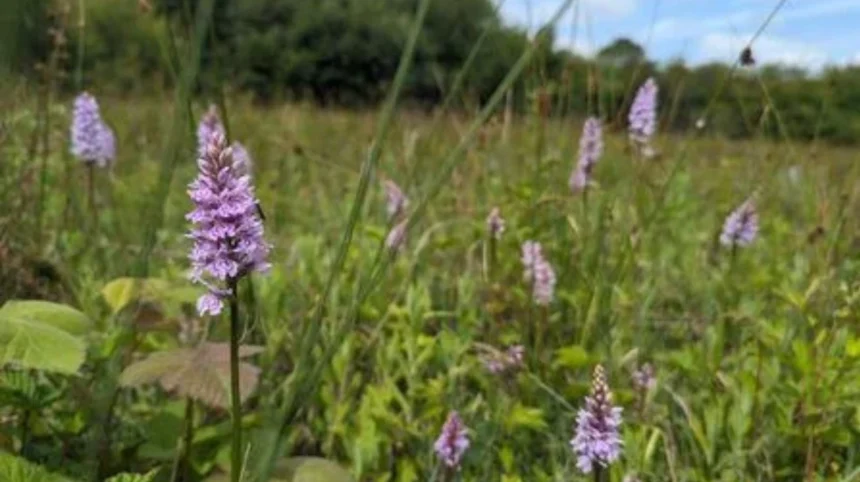
Yeading Brook Meadows in Hillingdon is one of West London’s strongest choices for seeing wildflowers in a natural meadow setting. The 24-hectare London Wildlife Trust reserve features extensive grassland, wildflowers and grasses that support insect life across the Yeading Valley.
Yeading Brook Meadows is located along The Greenway, Hillingdon, UB4 9HL. Its large grassland habitat makes it especially relevant to visitors interested in native plants, meadow ecology and insect observation.
The reserve is managed by London Wildlife Trust. According to the organisation, wildflowers and grasses dominate the site, creating habitat for a range of insects. The reserve also features the six-spot burnet moth, a distinctive day-flying moth associated with flower-rich grasslands.
The meadow landscape offers a different experience from a formal flower garden. Plants grow within a wider ecological community, and the appearance of the vegetation changes with the seasons and management practices. Some areas feature flowering plants, while others contain taller grasses or vegetation that provides shelter for insects.
Which flowers and wildlife should visitors look for?
Visitors should pay attention to flowering plants growing among the grasses, along with butterflies, moths and other insects. Exact flower species and their abundance vary by location, season and management. The reserve’s confirmed emphasis is on wildflowers, grasses and insect life, rather than a guaranteed list of blooms.
Early summer is a useful period to explore meadow habitats, although spring and later summer visits also reveal seasonal changes. Warm, relatively calm conditions generally make it easier to observe active flying insects.
Visitors should remain on established paths wherever possible. Walking through flowering vegetation damages plants and disturbs insects, particularly where wildlife uses the grassland for feeding or shelter.
How can you reach Yeading Brook Meadows?
The reserve has entrances along The Greenway and Shakespeare Avenue. London Wildlife Trust lists buses 90, 696 and 697 near the northern boundary, with routes 140, 697 and E8 serving the southern side. Check current public transport information before travelling.
Yeading Brook Meadows is the most suitable starting point for visitors whose main objective is a natural meadow rather than ornamental flower displays.
Where Can You Find Wildflowers at Gunnersbury Triangle?
Gunnersbury Triangle in Chiswick is a three-hectare urban nature reserve containing woodland, ponds, grassland and wet woodland. It suits visitors who want to explore natural habitats, observe seasonal plants and discover wildlife within easy reach of public transport.
Gunnersbury Triangle is situated on Bollo Lane, Chiswick, W4 5LN. Railway lines surround this compact green space, making its protected natural habitats a notable example of urban nature conservation.
The site was threatened by development in 1981. A local campaign supported by London Wildlife Trust and the former Greater London Council helped secure its protection following a planning inquiry in 1983. The reserve opened to the public in 1985.
Its habitats include grassland, ponds, woodland and wet woodland. These environments support different plant communities, so the site offers more than one type of seasonal botanical interest.
What flowers can you see in this urban reserve?
Gunnersbury Triangle is better understood as a habitat-based wildlife destination than as a dedicated wildflower meadow. Visitors can look for seasonal woodland plants, flowering vegetation in grassland areas and other plants suited to damp conditions. Specific blooms depend on the time of year and local growing conditions.
The reserve also supports wildlife such as common toads, smooth newts, common frogs, green woodpeckers and orange-tip butterflies. These species demonstrate how a relatively small natural area supports several parts of an urban ecosystem.
Spring is particularly useful for observing the transition from winter vegetation to fresh growth. From spring through autumn, visitors can also look for changes in foliage, flowers and insect activity.
Is Gunnersbury Triangle accessible by public transport?
Yes. The entrance is opposite Chiswick Park Underground station on the District line. London Wildlife Trust also identifies bus 440 as stopping by the entrance, with routes 237, 267, 110 and H91 serving nearby Chiswick High Road.
The reserve is open at all times according to the published site information. Its footpaths include gentle slopes and anti-slip boardwalks, but uneven ground and steep steps prevent wheelchair users from accessing every area. Assistance dogs are permitted.
Visitors should plan for a nature walk rather than expect a fully paved, step-free garden route. The site is particularly suitable for people interested in woodland ecology, small urban reserves and the relationship between wildflowers and other habitats.
Where Can You See Wildflowers at Kew Gardens?
Kew Gardens in Richmond offers a combination of wildflower habitats, botanical collections and educational displays. Its Natural Area, seasonal flower displays and meadow around The Hive provide opportunities to explore plant diversity, pollination and the relationship between flowers and wildlife.
The Royal Botanic Gardens, Kew, is a major botanical institution in southwest London. Unlike a nature reserve focused primarily on protecting a local habitat, Kew combines plant science, conservation, research, education and public gardens.
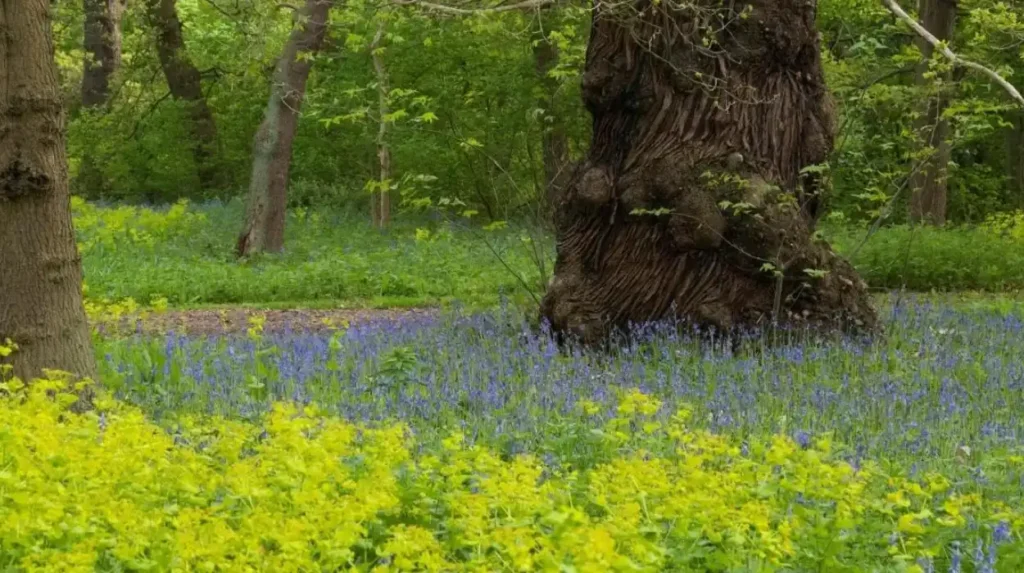
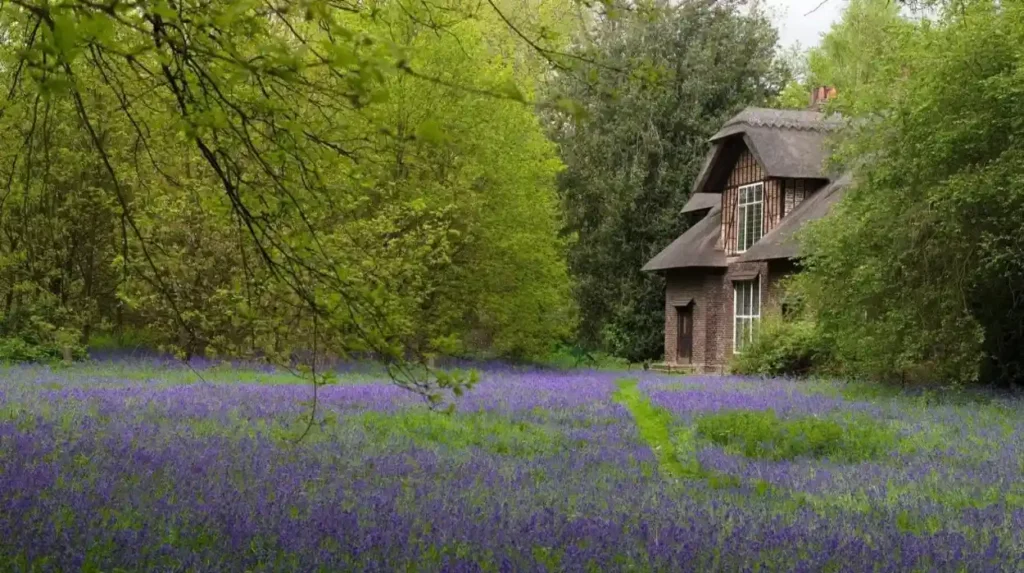
Its wildflower interest includes both deliberately developed displays and more naturalistic areas. Kew announced a new wildflower meadow beneath the Treetop Walkway in 2025, designed to add colour and support biodiversity. Its seasonal programme also highlights spring flowers, including bluebells in the Natural Area and around Queen Charlotte’s Cottage.
What is special about Kew’s Natural Area?
Kew’s Natural Area covers 37 acres of woodland. It provides a less formal landscape within the wider botanical garden, with tall grasses, wildflowers and trees surrounding woodland paths. Butterflies, dragonflies and damselflies also inhabit the area.
The Natural Area is useful for understanding how wildflowers grow alongside trees and other vegetation. Woodland plants respond to differences in light, moisture and soil conditions. Their flowering periods also vary from those of plants growing in open meadows.
Spring visitors should look for seasonal woodland flowers, including bluebells where they occur. Later visits provide opportunities to observe changing vegetation and insect activity. The exact appearance of the area varies throughout the year.
Kew’s Woodland Walk has been listed as closed for essential maintenance on its official Natural Area page. Visitors should check the latest access notice before planning a route around it.
Why is The Hive important for wildflower visitors?
The Hive is a 17-metre installation by artist Wolfgang Buttress, located in a wildflower meadow at Kew. It explores the life of honeybees through a structure incorporating 1,000 LED lights that respond to bee activity.
The surrounding meadow gives visitors a practical context for learning about pollination. Flowers provide food for pollinating insects, while insects transfer pollen between flowers of compatible plants. This process contributes to plant reproduction and supports many ecological relationships.
Kew’s Pollination Trail explains how different plants attract pollinators and how pollination occurs in different environments. The route includes displays and interpretive information that connect flower structure with insect behaviour.
Do visitors need to pay to see wildflowers at Kew?
Kew is a managed botanical garden with admission arrangements, unlike free-entry nature reserves such as those operated by London Wildlife Trust. Visitors should check Kew’s official website for current ticket prices, opening times, access information and any seasonal closures before travelling.
Kew is the strongest option for visitors who want to combine wildflower viewing with botanical education, formal gardens and dedicated pollination interpretation.
Where Can You Explore Wildflower Meadows at Ten Acre Wood and Meadows?
Ten Acre Wood and Meadows in Hillingdon combines ancient woodland, wet and dry meadows, marshland and a small pond. It is a useful destination for visitors interested in native vegetation, seasonal wildflowers and the connections between woodland and open grassland.
London Wildlife Trust describes Ten Acre Wood and Meadows as a site with traditional countryside character, where ancient woodland meets wildflower meadows. Hawthorn and blackthorn grow beneath older oak trees, while different moisture conditions create varied meadow habitats. Yeading Brook runs along parts of the reserve’s boundary.
This mixture of habitats makes the reserve especially relevant to visitors who want to understand more than the appearance of individual flowers. Plant communities depend on factors such as sunlight, soil conditions, water availability and competition from surrounding vegetation.
When is the best time to visit Ten Acre Wood and Meadows?
London Wildlife Trust identifies April to July as the best visiting period for this reserve. Spring and early summer bring renewed plant growth, while flowering plants and grasses develop as temperatures rise.
The precise flowers visible during a visit depend on the weather and local habitat conditions. Visitors should treat seasonal timing as a guide rather than an assurance that a particular species is flowering on a specific date.
Woodland edges are useful places to observe the contrast between shaded vegetation and plants growing in open conditions. Meadow areas provide more sunlight, while woodland habitats favour plants adapted to lower light levels.
Can you combine this visit with other West London nature reserves?
Yes. Ten Acre Wood and Meadows is adjacent to Gutteridge Wood and Meadows, and Yeading Brook Meadows is a short walk to the south. These neighbouring reserves allow visitors to explore connected habitats during a longer outing.
The route requires preparation because some parts of the site can be muddy. London Wildlife Trust notes that barriers and gates make the site inaccessible to wheelchair users, including along the Hillingdon Trail. Parking is available in Charville Lane.
This destination is best suited to walkers who want a countryside-style experience within West London and who are prepared for uneven or wet ground.
Where Can You Find More Wildflowers at Gutteridge Wood and Meadows?
Gutteridge Wood and Meadows in Hillingdon is another option for exploring woodland and grassland habitats in West London. Its position near Ten Acre Wood and Meadows makes it useful for nature walks focused on seasonal vegetation, habitat diversity and wildlife observation.
Gutteridge Wood and Meadows forms part of the wider network of nature reserves in Hillingdon. The area is relevant to visitors who want to explore landscapes that retain woodland and meadow characteristics rather than relying entirely on formal park planting.
The reserve is included in London Wildlife Trust’s outdoor-learning locations, alongside sites such as Yeading Brook Meadows and Ten Acre Wood and Meadows. The Trust provides information for planning visits and understanding the natural habitats protected across London.
What should visitors look for at Gutteridge Wood and Meadows?
Focus on the transition between woodland and open vegetation. Woodland edges receive different amounts of sunlight from the centre of a wooded area, creating conditions for different plants. Meadow habitats provide open growing space for grasses and flowering plants, while woodland offers shelter and shade.
Visitors should not assume that every meadow contains the same species. The plants present depend on the soil, moisture, habitat management and the history of the land.
Spring and early summer are sensible periods for looking for fresh growth and seasonal flowers. A later visit still offers botanical interest through grasses, seed heads, changing foliage and signs of insect activity.
What should you know before visiting?
Check the reserve’s current access details and travel options before setting out. The London Wildlife Trust nature-reserve directory provides location information and filters for facilities and access requirements.
Nature reserves are not always equipped like large public parks. Visitors should prepare for limited facilities, natural surfaces and changing ground conditions. Suitable walking shoes, water and a charged phone are useful for longer outings.
Gutteridge Wood and Meadows is most useful as part of a broader Hillingdon nature itinerary, particularly when combined with neighbouring habitats rather than treated as a formal flower garden.
When Is the Best Time to See Wildflowers in West London?
Spring and summer are generally the most productive seasons for wildflower viewing in West London. Bluebells appear in suitable woodland habitats during spring, while meadow flowers and many pollinating insects become more prominent as the weather warms through late spring and summer.
Wildflowers do not all bloom at the same time. Their flowering cycles depend on species, temperature, sunlight, rainfall and local habitat conditions. Choosing a season that matches the type of landscape is therefore more useful than relying on a single calendar date.
Which wildflowers can you look for in spring?
Spring is associated with early flowering woodland plants, fresh leaves and the return of active insects. At Kew, the Natural Area and the surroundings of Queen Charlotte’s Cottage are identified as places to see bluebells during the spring season.
In other locations, look for plants growing along woodland edges, in grassland and near damp habitats. Species differ from site to site, so use an identification guide rather than assuming every blue or yellow flower belongs to a familiar species.
Spring also provides a useful opportunity to compare shaded woodland with open meadow. Differences in light exposure influence when plants flower and how long their blooms remain visible.
What flowers and wildlife can you expect in summer?
Summer is a strong season for exploring meadow habitats. Flowering vegetation attracts bees, butterflies, moths and other insects, while grasses develop seed heads and the appearance of open landscapes changes through the season.
Yeading Brook Meadows is particularly relevant because London Wildlife Trust identifies its wildflowers, grasses and insect life as defining features. The six-spot burnet moth is one example of the insect wildlife recorded at the site.
Visitors interested in photography should look for calm weather and suitable natural light. Early morning and later afternoon often provide softer lighting than the middle of the day. These conditions also help visitors avoid the strongest daytime heat during warm weather.
Can you find wildflowers in autumn and winter?
Autumn and winter offer different forms of botanical interest. Some late-flowering plants remain visible in early autumn, while seed heads, dried stems, evergreen foliage and fallen leaves reveal other aspects of plant life.
A meadow does not lose its ecological value when its flowers fade. Seed-bearing vegetation and standing stems provide food and shelter for wildlife, and the soil continues to support roots and other organisms throughout winter.
Visitors should avoid cutting across dormant vegetation or removing seed heads. Leaving natural material undisturbed helps preserve habitat structure and allows plants to complete their seasonal cycles.
How Do Wildflowers Support West London’s Biodiversity?
Wildflowers support biodiversity by providing nectar, pollen, seeds and habitat for insects and other wildlife. In West London, flower-rich meadows, woodland edges and pollinator-friendly gardens help sustain ecological relationships within an urban landscape where natural habitats face pressure from development.
Wildflowers are flowering plants that grow naturally in a habitat or are deliberately established to support wildlife. The term includes native species, such as many British meadow flowers, as well as naturalised plants that grow outside their original ranges.
Their ecological importance extends beyond their appearance. Flowering plants provide food for pollinating insects, and their seeds support other wildlife. Vegetation also creates shelter, while plant roots contribute to soil structure and influence how water moves through the ground.
The scale of the conservation challenge is significant. Kew’s Grow Wild initiative reports that the UK has lost 97% of its wildflower meadows since the 1930s. This loss reflects changes in land use and agricultural management, alongside the effects of urban expansion.
Why are pollinating insects important?
Pollinating insects transfer pollen between flowers, enabling fertilisation in many flowering plants. Bees, butterflies, moths and other insects perform different roles, depending on their behaviour and the flowers they visit.
Some plants produce nectar as a food source, while pollen supplies nutrients. Flower shape, colour, scent and flowering time influence which insects visit a plant. A habitat containing a variety of flowering species can therefore provide food across a longer period than a site dominated by one short flowering season.
Kew’s Pollination Trail explains these relationships through examples of plants and their pollinators. Its educational displays help visitors understand how flower structures and insect behaviour interact.
How does meadow conservation work?
Meadow conservation involves maintaining conditions that allow grassland plants to grow and reproduce. Depending on the site, management includes seasonal mowing, removing cut vegetation, controlling invasive plants and protecting the soil from excessive disturbance.
The timing of management affects which plants survive. Cutting at the wrong time can remove flowers before they set seed, while allowing vigorous grasses to dominate can reduce opportunities for some flowering plants. Conservation teams select management methods according to the habitat and its objectives.
London Wildlife Trust’s reserves illustrate how different habitats require different approaches. Yeading Brook Meadows focuses on grassland and insect life, while Gunnersbury Triangle combines ponds, woodland and grassland within a protected urban site.
These protected areas help retain wildlife habitats within the wider city. Their long-term value depends on continued management, responsible visitor behaviour and protection from damaging activities.
Explore More Area Guide
Explore Woodland Areas in West London: Parks and Nature
Wetlands in West London: Wildlife, Nature Reserves and Conservation
How Can You Plan a Wildflower Walk in West London?
A successful West London wildflower walk starts with choosing a suitable habitat, checking seasonal flowering periods and confirming access arrangements. Visitors should use established paths, carry basic supplies, respect conservation rules and allow enough time to observe plants without disturbing wildlife.
The best route depends on whether the priority is meadow flowers, woodland plants, pollinating insects or a botanical garden. Travel time, walking conditions and available facilities also affect which destination is most practical.
Which destination suits different visitors?
Yeading Brook Meadows is a strong choice for visitors seeking open grassland and natural meadow vegetation. Gunnersbury Triangle suits people interested in compact urban woodland and mixed habitats. Ten Acre Wood and Meadows offers a countryside-style walk, while Kew provides botanical displays and educational facilities.
Visitors with limited time can prioritise one reserve and explore its established paths. Those planning a longer outing in Hillingdon can investigate the connected nature areas around Ten Acre Wood, Gutteridge Wood and Yeading Brook Meadows.
Kew is more appropriate for visitors who want a planned garden experience and are comfortable paying admission. The London Wildlife Trust reserves provide alternatives for people seeking a more natural habitat-based experience.
What should you bring?
Comfortable footwear is important because natural paths can contain mud, uneven surfaces and exposed roots. Water, weather-appropriate clothing and a phone with a map are useful for longer walks.
Binoculars help visitors observe butterflies and birds without approaching them closely. A plant-identification guide or a reputable nature app also helps distinguish between similar species. Take photographs instead of collecting flowers, and avoid stepping into vegetation for a closer view.
Visitors with accessibility requirements should check each destination individually. Gunnersbury Triangle has uneven terrain and steep steps in some areas, while Ten Acre Wood and Meadows has access limitations documented by London Wildlife Trust.
How can you protect wildflowers during a visit?
Stay on established paths, leave flowers and seeds in place, avoid disturbing nesting or resting wildlife, and take litter home. Keep dogs under control and follow the rules displayed at each reserve.
Photographing a plant without picking it preserves food resources for insects and allows the plant to complete its life cycle. Visitors should also avoid trampling meadow edges, where plants and insects can be especially vulnerable to repeated foot traffic.
The Wildlife Trusts specifically advise visitors to keep to paths at the edges of fields when exploring wildflower meadows during summer, helping reduce damage to wildlife and vegetation.
Responsible access supports the long-term value of these sites. Wildflower conservation depends not only on land management but also on visitors respecting the habitat.
How Can You Help Protect Wildflowers Beyond Visiting Nature Reserves?
Residents can support wildflowers by planting suitable native-origin species, reducing unnecessary pesticide use, maintaining flowering plants through the growing season and protecting existing green spaces. These actions provide additional food for pollinators and complement the habitat conservation carried out at West London nature reserves.
Urban gardens, balconies, shared courtyards and community green spaces all offer opportunities to support flowering plants. Even small areas contribute resources when plants are selected and maintained with local conditions in mind.
Kew’s Grow Wild programme provides guidance on native wildflowers, their ecological value and practical approaches to growing them. Its resources explain how plant selection and growing conditions influence the success of a wildflower area.
Which planting practices help pollinators?
Choose plants suited to the available sunlight, soil and moisture. Include species with different flowering periods so that food is available across spring, summer and early autumn. Avoid using pesticides unnecessarily, particularly when flowers are attracting bees and other insects.
Native-origin plants are useful choices when they suit the location and growing conditions. However, a successful wildlife garden also depends on providing shelter, leaving some vegetation undisturbed and avoiding excessive tidying.
Residents should source seeds responsibly and avoid introducing plants into protected natural areas without permission. Wildflower conservation in an established reserve requires site-specific decisions rather than informal planting by visitors.
Why should local green spaces remain connected?
Connected habitats allow wildlife to move between feeding, breeding and shelter areas. Railway edges, river corridors, parks, gardens and nature reserves can all contribute to this network when suitable vegetation and habitat conditions remain available.
West London’s mix of public parks, botanical gardens and protected reserves demonstrates the importance of maintaining green spaces within an urban region. Individual sites provide different resources, and the wider ecological benefit increases when habitats function together.
Continued conservation, thoughtful garden planting and responsible public access help retain opportunities for future generations to experience wildflowers close to home.
Wildflower spots in West London offer several ways to explore seasonal plants, native habitats and urban biodiversity. Yeading Brook Meadows stands out for its extensive grassland, Gunnersbury Triangle for its mixture of woodland and ponds, Kew Gardens for botanical education and dedicated meadow displays, and Ten Acre Wood and Gutteridge Wood for countryside-style nature walks.
Spring and summer are generally the best seasons for flowering displays, although every season reveals different aspects of plant life. Checking official access information, choosing the right habitat and following conservation guidance help visitors plan a rewarding outing.
Protecting these places is equally important. Wildflowers support pollinators and wider food webs, while well-managed habitats preserve natural features within a growing city. Exploring West London’s wildflower locations responsibly helps visitors appreciate the region’s biodiversity and the value of protecting it.
Where are the best wildflower spots in West London?
The best wildflower spots in West London include Yeading Brook Meadows, Gunnersbury Triangle, Kew Gardens, Ten Acre Wood and Meadows, and Gutteridge Wood and Meadows. These locations offer a mix of wildflower meadows, woodland plants, seasonal blooms and wildlife habitats.