Key Points
- Storm Austen Impact: Thousands of homes were left without electricity after Storm Austen struck south-west England, with outages peaking at 31,000 households at the height of the gale.
- Structural and Travel Disruption: Part of the historic West Pier in Brighton partially collapsed into the sea, while flights, ferries, and rail services suffered widespread cancellations.
- Storm Boelo Arrival: The second named storm of the season, Storm Boelo, is tracking closely behind, threatening northern regions of the UK with gusts potentially exceeding 80mph.
- Met Office Warnings: Amber and yellow weather warnings for wind and heavy rain are active across Scotland, northern England, Northern Ireland, Wales, and parts of western and southern England.
- Public Events Cancelled: London’s annual Diwali on the Square celebrations scheduled for Sunday were called off following health and safety advice amid the severe weather forecast.
- Government Response: Prime Minister Andy Burnham convened a resilience summit addressing civil preparedness, warning that the country must prepare for potential flood risks during the upcoming winter season.
London (West London Times) October 24, 2026- Thousands of homes across south-west England remain without power following the onslaught of Storm Austen, while transport networks face severe paralysis as the country immediately braces for a second consecutive weather front, Storm Boelo.
What Are the Current Impacts of Storm Austen in the South West?
As reported by the PA News Agency, thousands of homes remain without power in south-west England after Storm Austen swept across the region, leaving infrastructure severely damaged. At the peak of the storm on Friday, 31,000 homes were cut off from electricity supplies, and portions of the historic West Pier in Brighton collapsed directly into the sea.
Providing an update on restoration efforts, the National Grid responded via social media to a customer who had spent 23 hours without power, stating: As reported by the PA News Agency, the National Grid noted that
“our engineers are working to get supplies restored as quickly as possible, but there are currently dozens of cuts across Cornwall, due to storm damage & each one requires extensive repairs (lines down, trees fallen onto lines, snapped poles etc..).”
Despite extensive overnight efforts by power company engineers who successfully reconnected more than 60,000 homes since the gales initially struck, National Grid maps indicated that over 3,700 homes remained without electricity across the region on Saturday morning.
How Is Storm Boelo Threatening the North of the UK?
Following hard on the heels of Storm Austen, a second system named Storm Boelo has targeted northern territories, bringing severe hazards including flying debris and dangerous crashing waves.
As reported by the PA News Agency, the Met Office issued an amber wind warning—the second most severe classification—stretching across Scotland and northern England down to Carlisle from 9pm Saturday to 9pm Sunday. A separate amber warning was implemented for the north-east of Northern Ireland from 9pm Saturday to 10am Sunday. In addition, extensive yellow warnings for heavy rain and high winds cover the entire northern half of the UK, alongside separate alerts spanning Wales and western and southern England from 11am to 11pm on Saturday.
Detailing the atmospheric progression, Met Office meteorologist Alex Burkill stated: As reported by the PA News Agency, Mr Burkill explained that
“there’s more stormy weather to come as we go through this weekend, especially northern parts – that’s where we’re going to see the strongest winds.” He added: “Storm Boelo is arriving. It’s going to bring widespread rain and some very strong winds indeed, and it’s quick on the tails of Storm Austen which is now clearing away towards the east.”
Furthermore, Mr Burkill emphasized the specific risks posed by the gales:
“It’s the winds that were perhaps most concerned about, they’re really going to whip up some strong gusty winds across Northern Ireland, northern parts of England and also Scotland through the day – strengthening as we head towards the evening.”
Meteorologists project that rainfall totals on higher ground in Scotland could exceed 100mm within a single day, amplifying the threat of localized flooding and significant surface spray on transit routes.
What Travel Disruptions and Event Cancellations Have Been Announced?
The compounding severe weather has triggered widespread disruption across national rail and ferry services. TransPennine Express strongly urged passengers to avoid all but essential rail travel across Saturday and Sunday, while Avanti West Coast advised customers against traveling north of Preston on Sunday. Cross-Channel and Irish Sea ferry crossings also suffered significant cancellations and schedule delays.
Public gatherings have not been spared. London’s annual Diwali on the Square festival, scheduled for Sunday, was cancelled entirely following recommendations from independent health and safety experts due to the severe weather risks.
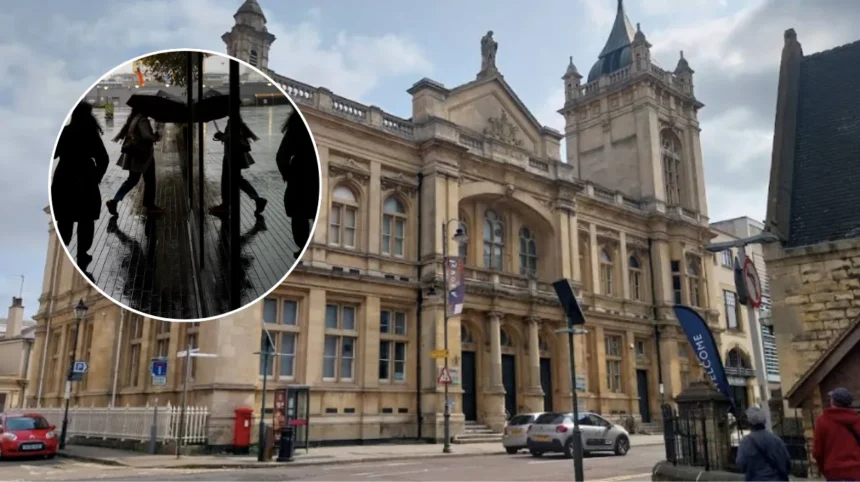
Urban infrastructure adjustments were mirrored by individual accounts, with pedestrians navigating heavy downpours across landmarks such as Westminster Bridge in London as public safety advisories urged citizens to remain indoors wherever possible.
Explore more UK News:
UK’s Largest Counterfeit Vinyl Ring Leader Jailed in Southall 2026
UK House Price Growth Slows Down to Weakest Pace in London 2026
Background of the Particular Development
The rapid succession of Storm Austen and Storm Boelo unfolds against a backdrop of intensifying climate volatility across the United Kingdom and broader European continent. Earlier in the year, the UK experienced a severe summer drought accompanied by successive record-breaking heatwaves. Meteorological experts have repeatedly highlighted that human-driven climate change is actively altering traditional precipitation models and intensifying extreme weather frequencies.
Addressing these systemic vulnerabilities, Prime Minister Andy Burnham recently convened a national resilience summit aimed at overhauling civil preparedness and tackling infrastructure threats, such as the devastating summer wildfires. Government officials have acknowledged that shifting weather extremes demand heightened structural defense mechanisms, as the country transitions rapidly from extreme parched conditions to severe autumn gales and flood threats.
Prediction and Impact on the Particular Audience
For the general public, transport commuters, and residents living in vulnerable coastal and northern communities, these back-to-back storms present immediate risks to personal safety, property integrity, and daily mobility. Homeowners in amber and yellow warning zones face prolonged power outages, structural roof damage, and potential property flooding, while commuters should anticipate multi-day rail and road delays.
Looking forward, the compounding impact of these severe weather events underscores a broader societal shift: citizens, local authorities, and utility providers must treat autumn and winter storm preparedness not as isolated incidents, but as an ongoing operational standard. As predicted by government leadership regarding potential winter flooding, communities residing near flood plains or exposed coastal sectors will need to adopt proactive reinforcement measures to mitigate recurring climate-induced disruptions in the months ahead.