Key Points
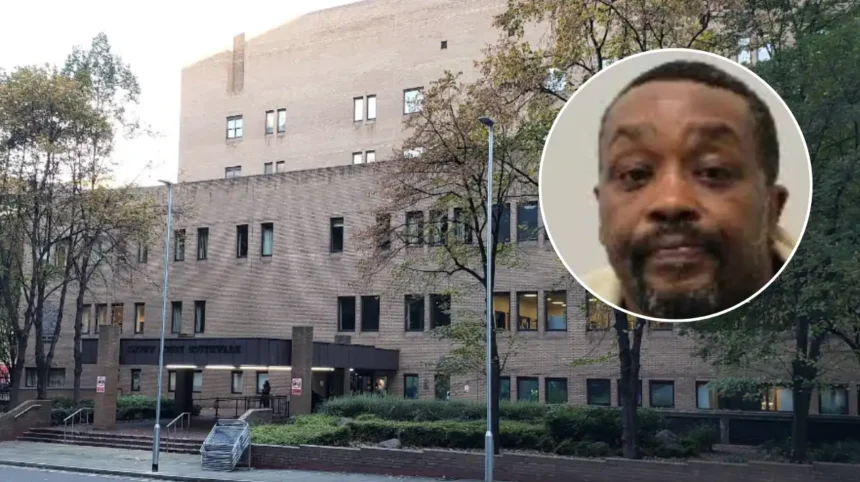
- Life Sentence: Alvin Gitahi, aged 43, of Uxbridge Road, Ealing, has been jailed for life at the Southwark Crown Court on Friday, 23 October 2026, following his conviction for murder on 6 August 2026, serving a minimum of 21 years and three months.
- The Case: Following a report of welfare at an address in Riverside Close, Hanwell, the police and paramedics were called to a domestic incident at approximately 3.15pm on 26 March 2024, where they found 35-year-old Vivienne Baraka, fatally wounded.
- Reason for Death: The post-mortem findings showed that Ms Baraka died of strangulation.
- Call for Help: Prior to her death, Ms Baraka had asked her mother to call the police because she was really scared for her safety.
- Abuse and Witness Statements: The police investigation revealed considerable evidence of abuse and threatening messages sent to and from Ms Baraka by Gitahi, along with statements from the witnesses who heard her cries just before the arrival of emergency services.
- Family’s Statement: As stated formally in a press release issued by the Metropolitan Police: “We are happy to see that justice has been done. Vivienne was a very community minded person who helped many people in her lifetime.”
uk/local/ealing/hanwell/">Hanwell, (West London Times) October 24, 2026 — A 43-year-old Ealing resident has been handed a life sentence with a minimum term of 21 years and three months following the brutal murder of his partner at a residential address in Hanwell, bringing a tragic domestic abuse case to a legal close after extensive police investigations.
Why Was Alvin Gitahi Sentenced to Life Imprisonment at Southwark Crown Court?
As reported by an Ealing.News reporter of Ealing.News, Alvin Gitahi, residing on Uxbridge Road, was sentenced to life imprisonment at Southwark Crown Court on Friday, 23 October 2026. The sentencing followed a jury verdict delivered on 6 August 2026, which found him guilty of the murder of his 35-year-old partner, Vivienne Baraka. Under the terms of the life sentence, Gitahi must serve a minimum of 21 years and three months behind bars before he can even be considered for parole.
The court proceedings revealed the harrowing nature of the crime, which unfolded on 26 March 2024. According to official reports from the Metropolitan Police, emergency services were called to a property located in Riverside Close, Hanwell, at approximately 3.15pm following mounting concerns raised regarding a woman’s welfare. Upon arrival, police officers and ambulance paramedics discovered Ms Baraka suffering from severe injuries. Despite immediate medical interventions, she was pronounced dead at the location.
What Did the Post-Mortem Examination Reveal About Vivienne Baraka’s Death?
As detailed by an Ealing.News reporter of Ealing.News, a post-mortem examination carried out following the tragic incident confirmed that Vivienne Baraka died as a result of compression to the neck.
The subsequent criminal investigation conducted by the Metropolitan Police unveiled a disturbing pattern of behaviour leading up to the tragedy. Investigators discovered extensive evidence pointing towards repeated domestic abuse within the relationship, substantiated by recovered text messages exchanged between Ms Baraka and Gitahi. Furthermore, crucial testimony from local neighbours corroborated the escalating danger, with residents informing investigating officers that they had heard Ms Baraka screaming inside the property shortly before emergency responders arrived at the scene. In the moments leading up to the fatal attack, Ms Baraka had desperately pleaded with her mother to contact the police because she genuinely feared for her safety.
Explore more Ealing Crime News:
Why Was Alcohol Licence Denied For Store In Southall Ealing 2026
Southall Driver Charged After Fatal Ford Mustang Crash in Ealing 2026
How Did Vivienne Baraka’s Family React to the Verdict and Sentencing?
As shared in a formal statement released via an Ealing.News reporter of Ealing.News, Vivienne’s grieving family expressed their relief following the conclusion of the trial. They stated:
“We are grateful that justice has prevailed. Vivienne was very community-orientated and helped a lot of people during her life.”
The family’s statement further reflected on the profound personal loss suffered by all who knew her:
“She was taken from us far too soon. She was a very much-loved member of our family, and she is missed every day. Vivienne’s spirit lives on in her daughter. We would like to thank everyone who has supported us through this difficult time.”
Background of the Particular Development
Domestic violence and intimate partner homicides remain critical challenges for community safety across Greater London and the broader United Kingdom. The tragic killing of Vivienne Baraka in Hanwell highlights the critical importance of early intervention, victim disclosure, and community vigilance in recognising signs of domestic abuse. Law enforcement agencies, including the Metropolitan Police, continue to promote specialist safeguarding initiatives and support networks designed to protect vulnerable individuals who express fear for their safety. Cases of this magnitude underscore the legal frameworks in place in England and Wales, where convictions for domestic murder carry mandatory life sentences with substantial minimum custodial terms set by the judiciary to reflect the severity of the offence and the presence of prior coercive or abusive behaviour.
This sentencing serves as a stark reminder of the lethal risks associated with domestic abuse, potentially encouraging victims and witnesses within the Ealing and Hanwell communities to report concerns and seek help proactively through organisations like the Metropolitan Police and domestic violence support charities. For the local community and residents of Ealing, high-profile prosecutions of domestic homicide foster heightened awareness regarding coercive control and the importance of supporting vulnerable neighbours and relatives. While the legal resolution provides a degree of closure for Vivienne Baraka’s family and her young daughter, it also reinforces ongoing public scrutiny on how local authorities, emergency services, and community networks identify and respond to domestic safety alerts before they escalate to fatalities.