Key Points
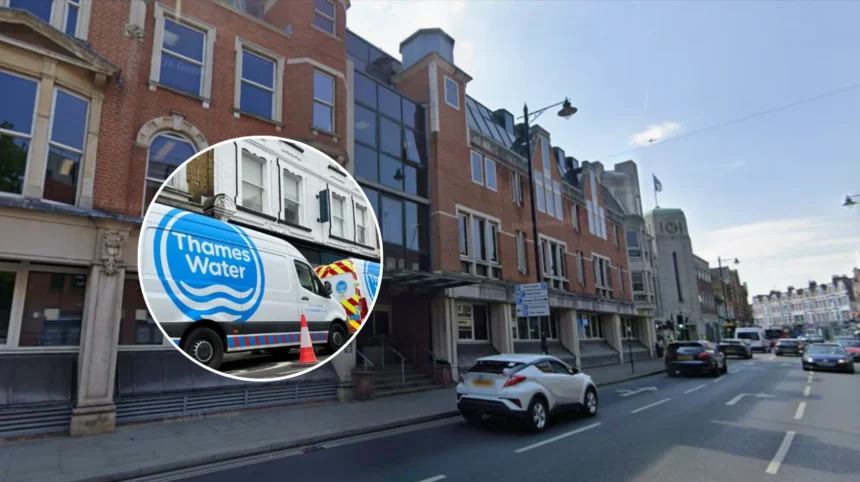
- Filming Request Refused: Richmond London Borough Council has formally rejected a request from a production company seeking permission to film a promotional video on behalf of Thames Water within the borough.
- Protest Against Wastewater Scheme: Council Leader Gareth Roberts stated the decision was made on behalf of local residents to oppose Thames Water’s Teddington Direct River Abstraction (TDRA) project.
- Project Details: The controversial TDRA scheme aims to abstract up to 75 million litres of water per day from the River Thames above Teddington Weir during drought conditions, replacing it with treated wastewater from the Mogden Sewage Treatment Works.
- Community and Environmental Opposition: The scheme faces significant resistance from the council, local Members of Parliament, residents, and environmental campaigners over concerns regarding wildlife, ecology, and public health, with a petition surpassing 34,200 signatures.
- Thames Water Response: Thames Water defended its request, explaining the filming was intended for a customer awareness campaign detailing network upgrades, and reiterated that the scheme will meet all legal, regulatory, and Environment Agency standards.
uk/local/richmond-upon-thames/richmond/">Richmond, (West London Time) October 17 2026 – Richmond London Borough Council has officially blocked Thames Water from filming a promotional advertisement within the local area, escalating an ongoing dispute regarding the utility firm’s proposed river wastewater scheme.
- Key Points
- Why Did Richmond Council Block Thames Water’s Filming Request?
- What Is the Teddington Direct River Abstraction (TDRA) Scheme?
- Why Is Richmond Council Demanding Thames Water Shelve the Plans?
- How Has Thames Water Responded to the Council’s Refusal?
- Background of the Development
- Prediction: How This Development Can Affect the Local Community and Stakeholders
Why Did Richmond Council Block Thames Water’s Filming Request?
As reported by Charlotte Lillywhite, Local Democracy Reporter for MyLondon, Liberal Democrat Council Leader Gareth Roberts confirmed that the local authority denied permission to a third-party production company acting on behalf of Thames Water. The production firm had approached the council to request permission to film promotional material within the borough as part of a public relations initiative highlighting network improvements.
In a video published across the council’s official social media channels, Councillor Roberts expressed astonishment at the application, noting that the utility provider sought to use the area to promote its corporate image whilst simultaneously advancing infrastructure proposals that local officials contend will damage the local environment.
“Richmond Council was shocked to receive a request from a production company asking to film a promotional piece for Thames Water’s services using our beautiful borough as the backdrop – the beautiful borough that they are hell-bent on destroying.” — Gareth Roberts, Leader of Richmond Council (via MyLondon)
Speaking directly to the Local Democracy Reporting Service (LDRS), Councillor Roberts reiterated the council’s firm stance:
“Thames Water does not get to come and spoil our borough, and at the same time ask permission for it to form the backdrop for one of your nice promotional puff pieces.” — Gareth Roberts, Leader of Richmond Council (via MyLondon)
What Is the Teddington Direct River Abstraction (TDRA) Scheme?
The conflict stems from Thames Water’s proposed Teddington Direct River Abstraction (TDRA) scheme. Under the current plans designed to safeguard London’s drinking water supply during prolonged periods of drought, the utility provider intends to extract up to 75 million litres of water daily from the River Thames upstream of Teddington Weir.
The abstracted water would be transferred via a newly constructed pipeline to an existing underground tunnel network, eventually joining the Lee Valley reservoirs to be processed into drinking water. To balance river levels, Thames Water plans to replace the extracted volume by pumping “highly-treated” wastewater effluent from the Mogden Sewage Treatment Works directly back into the River Thames through a purpose-built tunnel.
The proposal has drawn widespread criticism from local authority representatives, constituency MPs, resident groups, and ecological campaigners, who argue that discharging treated sewage effluent into the river poses risks to human health, aquatic biodiversity, and local river ecosystems. A public petition calling for the complete cancellation of the project has gathered over 34,200 signatures.
Why Is Richmond Council Demanding Thames Water Shelve the Plans?
Councillor Roberts asserted that the council will not compromise on its resistance to the project, contending that alternative methods to secure London’s long-term water resilience have been bypassed due to financial considerations.
“We would like to see Thames Water shelve these plans in their entirety. We believe that there are options that they haven’t looked at to solve the problem with water supply in the future. There are other options on the table, and we believe that they’re going with the TDRA scheme because it’s the cheapest one available.” — Gareth Roberts, Leader of Richmond Council (via MyLondon)
He reinforced that the local authority remains resolute in its campaign against the water provider, stating:
“We are not backing down in our fight against Thames Water to get them to shelve these plans.” — Gareth Roberts, Leader of Richmond Council (via MyLondon)
How Has Thames Water Responded to the Council’s Refusal?
In response to the council’s decision, a spokesperson for Thames Water provided clarification to the LDRS regarding the nature of the requested filming and maintained that the TDRA scheme complies with all required environmental safeguards.
“A production company working on our behalf contacted Richmond Council to discuss possible filming in the borough as part of the next phase of our ‘biggest upgrade’ customer awareness campaign. The campaign is intended to explain the scale of investment underway to improve services, reduce leaks and cut pollutions, for the benefit of customers and the environment. The proposed film would update customers on what has been delivered over the past year and showcase how we are continuing to deliver improvements as we make the biggest upgrade to our network in 150 years.”
— Thames Water Spokesperson (via MyLondon)
Thames Water previously stated that the proposed TDRA project will fully comply with all water quality parameters set out by the Environment Agency, as well as statutory standards established by Her Majesty’s Government. The company intends to submit an application for a Development Consent Order (DCO) to the Planning Inspectorate in early 2027 to seek national infrastructure planning approval.
Explore more Richmond News:
Deer Rutting Season Begins With Safety Warnings In Richmond 2026
Ore Oduba Warns Children on Pornography in Richmond 2026
Background of the Development
The controversy surrounding the Teddington Direct River Abstraction (TDRA) scheme forms part of Thames Water’s wider Water Resources Management Plan, which outlines how the supplier intends to address predicted future supply deficits across Greater London and the South East. Drought modelling by industry regulators indicates that London faces significant water security risks over the coming decades due to population growth and climate variability.
However, Thames Water’s operational record—specifically regarding sewer overflows, pipe leakage, and corporate governance—has heightened public scrutiny across London boroughs. Richmond upon Thames residents and environmental organizations have repeatedly raised alarms over the ecological impact on the tidal Thames and the localized disruption associated with constructing new underground tunnels and pipeline infrastructure in Teddington and surrounding residential zones.
Prediction: How This Development Can Affect the Local Community and Stakeholders
This latest escalation between Richmond Council and Thames Water indicates a deteriorating relationship that will likely influence future regulatory and planning proceedings.
- For Local Residents and Campaigners: The council’s decision provides a political endorsement of community opposition, reinforcing public campaigning efforts ahead of the planned 2027 Development Consent Order application. However, because national infrastructure projects of this scale are decided by government ministers rather than local councils, municipal resistance may not guarantee a final veto over the scheme.
- For Thames Water: The refusal of filming access underscores a challenging public relations landscape. As the company seeks to build public support for its major infrastructure investments, strong opposition from municipal leadership may complicate local consultation processes and increase scrutiny during upcoming statutory planning inquiries.
- For River Users and the Local Environment: Continued delays or potential legal challenges during the planning phase could push back construction timelines, prolonging uncertainty for river users, recreational anglers, and environmental conservation groups concerned about the river’s ecological baseline.