Key Points
- Hillingdon Council has granted listed building consent for step-free access improvements at Eastcote Underground Station.
- Transport for London (TfL) originally submitted the planning application in August to install two new lifts, connecting walkways, and related structural alterations.
- The development aims to make the Grade II-listed station on Field End Road accessible for wheelchair users, passengers with reduced mobility, and parents with pushchairs.
- Approval was granted on Friday, 9 October, subject to strict preservation conditions to protect the station’s historic architectural character.
- The decision represents a key step forward in TfL’s wider initiative to enhance accessibility across the London Underground network.
Lead Paragraph (West London Times) October 12, 2026 Eastcote, uk/local/hillingdon/hillingdon-council/">Hillingdon Council, 9 October 2026 – Transport for London has secured critical planning approval from local authorities to introduce step-free access at Eastcote Underground Station, advancing infrastructure upgrades across the suburban rail network.
- Key Points
- Why Has Hillingdon Council Approved the Eastcote Underground Station Upgrades?
- What Architectural and Heritage Features Must Be Protected During Construction?
- How Will the New Lifts Improve Local Accessibility and Network Operations?
- What Are the Next Steps for the Infrastructure Project?
- Background of the Development
- Prediction: How This Development Will Affect Local Residents and Passengers
Why Has Hillingdon Council Approved the Eastcote Underground Station Upgrades?
Plans to install two new step-free lifts at Eastcote Underground Station have taken a significant step forward following a formal decision by Hillingdon Council to grant listed building consent for the proposed site improvements. The decision ensures that long-awaited infrastructure modifications to enhance local transport accessibility can proceed while maintaining regulatory oversight over the heritage structure.
Transport for London submitted the official planning application in August, outlining comprehensive changes to the Grade II-listed building situated on Field End Road. The proposed engineering work is designed to deliver step-free access from street level to the platforms, removing physical barriers for passengers with varied accessibility requirements.
Under the detailed specifications submitted to the local authority, the project includes the installation of two dedicated lift towers, elevated walkways, and targeted alterations to the existing station fabric. These additions are designed to accommodate wheelchair users, passengers travelling with heavy luggage, individuals with mobility challenges, and parents with pushchairs or prams who currently navigate stairs.
The local planning authority officially granted listed building consent on Friday, 9 October. However, the approval is subject to several legal conditions and heritage safeguards designed specifically to preserve the station’s distinct architectural identity and historical features during construction.
What Architectural and Heritage Features Must Be Protected During Construction?
Eastcote Underground Station holds a Grade II listing due to its historical and architectural significance within the expansion of London’s suburban transport infrastructure during the early 20th century. As a result, any physical alterations to the building require specialist consent and strict adherence to historical conservation guidelines.
To ensure the modern additions do not compromise the building’s aesthetic integrity, Hillingdon Council attached explicit conditions to the planning consent. These conditions mandate that materials used in the construction of the new lift shafts, walkways, and supporting structures must visually complement the original brickwork, glasswork, and timber features of the station.
Transport for London is required to work alongside heritage specialists throughout the technical design and physical installation phases. Planning documentation emphasizes that all structural integration points between the historic building and the modern steel-and-glass lift enclosures must be executed with minimal impact on the surviving historical fabric.
Local planning officers noted in their assessment that while the station requires modernization to meet contemporary accessibility standards, the public benefit of enabling universal access outweighs the minor physical interventions required on the listed asset, provided the strict mitigation measures are fully implemented.
How Will the New Lifts Improve Local Accessibility and Network Operations?
The introduction of step-free access at Eastcote is part of a broader strategy by Transport for London to increase overall accessibility across the London Underground and London Overground networks. For decades, many suburban stations built during the Metroland expansion featured staircases and multi-level platform arrangements that present significant obstacles for vulnerable or mobility-impaired commuters.
Once the new lifts and interconnecting walkways are fully operational, Eastcote will provide a fully accessible route from the main entrance on Field End Road directly onto the platform areas serving both the Metropolitan and Piccadilly lines. This development will eliminate the necessity for step-only navigation within the facility.
Local community groups and accessibility advocates have consistently highlighted the need for step-free interventions along this stretch of the network. The station serves as a crucial transit hub for residents in Eastcote, Ruislip, and surrounding areas of the Borough of Hillingdon, connecting local commuters to central London and regional employment hubs.
In addition to assisting disabled passengers and families, the infrastructure enhancements are expected to streamline passenger movement through the station during peak operational hours, reducing congestion around existing staircases and improving overall station safety.
What Are the Next Steps for the Infrastructure Project?
Following the granting of listed building consent, the development moves into its next operational phase, which involves detailed technical design, procurement, and site preparation work. Transport for London will need to discharge specific planning conditions with Hillingdon Council before full-scale physical construction can commence on site.
Engineers and project planners will establish a temporary construction framework to minimize disruption to regular train services operating on the Metropolitan and Piccadilly lines. Because Eastcote remains an active operational station, much of the heavy structural work and crane operations are expected to be scheduled during off-peak hours or engineering overnights.
A finalized timeline for the commencement of construction works and the eventual commissioning of the lifts will be confirmed once technical contractors are fully appointed and site preparation logistics are formally finalized.
Explore More Hilingdon Council News
Hillingdon Council Pays £1,950 Compensation to Pregnant Mother in Hillingdon 2026
Council Condemned After Housing Pregnant Mother in Hazardous Conditions, Hillingdon 2026
Background of the Development
Eastcote Underground Station originally opened in 1906 as a halt on the Metropolitan Railway before being substantially rebuilt during the 1930s under the design direction of renowned architect Charles Holden and his team.
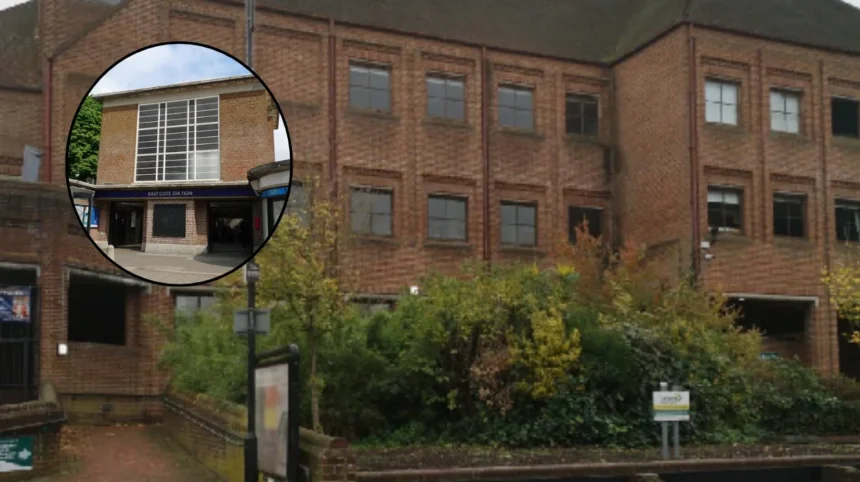
The station’s distinctive modern design, featuring a tall brick booking hall, large glazed windows, and clean geometric lines, became an iconic representation of the London Transport aesthetic of that era. Recognising its architectural value and contribution to British transport history, the building was officially designated as a Grade II listed asset in 1994.
For many years, the historical layout of the 1930s station structure posed substantial technical challenges for modernization. Because the platforms and booking hall were constructed with fixed stairways and specific structural loads, retrofitting modern elevator machinery without defacing the heritage façade required years of specialized feasibility studies and engineering assessments.
The broader effort to make Eastcote step-free fits into Transport for London’s strategic accessibility goals. Historically, less than half of the stations on the London Underground network have offered step-free access from street to platform level.
In recent years, public consultation and legislative requirements under the Equality Act 2010 have accelerated efforts by local authorities and regional transport bodies to secure funding and regulatory approval for step-free retrofits across outer London boroughs.
Prediction: How This Development Will Affect Local Residents and Passengers
The successful approval and ultimate completion of the step-free access project at Eastcote Underground Station will have a direct, positive influence on several groups within the local community and the wider traveling public.
For residents of Eastcote and the London Borough of Hillingdon who live with physical disabilities, mobility impairment, or chronic health conditions, the addition of two functional lifts removes a major transport barrier. It will allow these individuals to travel independently across the London transit network without requiring advance assistance or taking lengthy detours to alternative step-free stations such as Ruislip or Pinner.
Parents and caregivers travelling with young children in pushchairs, as well as elderly passengers and travelers carrying heavy luggage, will experience improved daily convenience and reduced physical strain. This increased ease of access is likely to encourage greater reliance on public transport over private motor vehicles for local journeys and commutes into central London.
From a economic and property perspective, improved infrastructure at Eastcote Station is anticipated to enhance the overall desirability of the surrounding residential neighborhood. Accessible public transport hubs frequently drive local high-street footfall along Field End Road, benefiting small businesses, retail outlets, and local service providers. Furthermore, the carefully managed integration of modern infrastructure into a Grade II-listed building sets a clear planning precedent for how historic suburban stations across Greater London can be modernized effectively without sacrificing their cultural heritage.