

Key Points
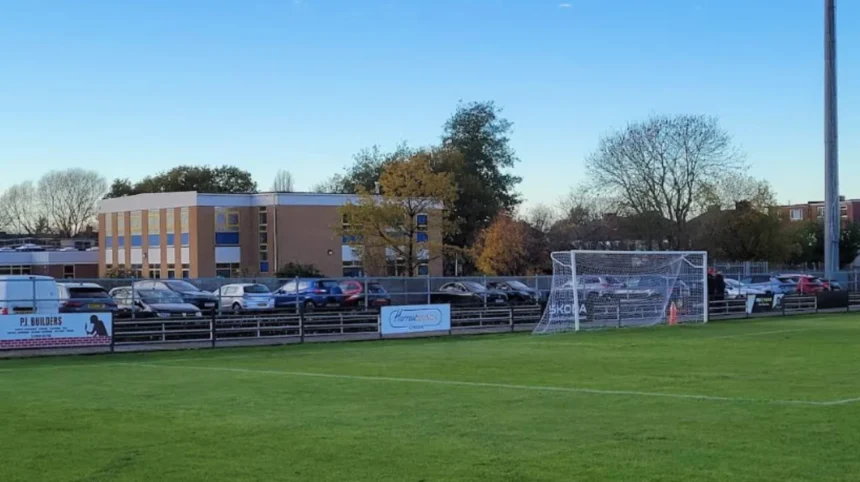
- Ground Sale: Harrow Borough Football Club has finalized the exchange of contracts concerning the sale of the Rogers Family Stadium (Earlsmead), ending over 90 years of the club’s history at this ground.
- Debt Repayment: All of the club’s current debts will be repaid using the money earned from selling the ground.
- Plan for Leaving the Ground: The club will play at Earlsmead until the end of the current club year, after which the clubhouse will close on 31 May 2027.
- Ground Sharing: Currently, the board is looking for a partner football club for ground sharing in the 2027/28 season and later.
- Manager Stability: Manager Wayne Carter has agreed to stay for two additional years thanks to the financial stability of the club.
- Background Information: Founded in 1933 under the name of Roxonian FC, the club has been playing at Earlsmead since 1934.
South uk/local/harrow/">Harrow (West London Exporess) September 9, 2026 — Harrow Borough Football Club has confirmed that it will leave its long-standing home at Earlsmead next year after contracts were officially exchanged for the sale of the stadium. The landmark decision brings down the curtain on more than nine decades of football history at the site, but the club’s board has insisted that the move is essential to wipe out mounting debts and guarantee the long-term survival of the institution.
Why Did Harrow Borough FC Have to Sell Earlsmead?
According to a statement released by the club board, as reported by Harrow Online and the Isthmian League official website, Wednesday, 26 August 2026, marked a momentous and emotional turning point when contracts for the sale were formally exchanged. The board candidly explained that financial pressures had mounted to unsustainable levels over recent years.
As stated by the board in their official announcement:
“We will be sad to move away from Earlsmead, but our debts had become too large. We were falling behind with vital maintenance of the premises and the costs of running the operation were soaring. Against this membership levels were decreasing.”
The structural and economic challenges had been visible for some time. Earlier in the year, local reporting highlighted that a previous attempt to sell the ground to a developer had fallen through, generating intense anxiety regarding the future of the Isthmian League South Central Division side. In response, concerned supporters mobilized to launch the Harrow Borough Supporters Trust to raise funds and attract fresh investment, while appeals were made for volunteers to maintain the stadium. At the time, Harrow West MP Gareth Thomas publicly warned that losing the club would represent “a major blow to the community”.
What Does the Sale Mean for the Club’s Finances and Future?
Despite the heartbreak of leaving a historic home, the board emphasized that the financial injection from the sale provides a clean slate. The transaction will eliminate all external liabilities and leave residual funds to help the club move forward on a stable footing.
As detailed by the board:
“The proceeds from which guarantees the future of the football club. The years of struggle will be behind us.”
They further added:
“As a direct result of the sale, all debts will be settled in full and with the residual the football club will prosper. We will also be looking to increase the playing budget.”
Capitalizing on this newfound financial security, the club has already secured stability in the dugout. Manager Wayne Carter has agreed to a new two-year contract, allowing the coaching staff and administration to plan ahead without the perpetual cloud of financial distress.
The board noted:
“Confident of a successful sale we had already agreed a 2-year contract with popular manager, Wayne Carter. For the first time in decades, we can confidently start planning the next season’s campaign now with funds secure for years to come.”
Explore more Harrow News:
New Flats Planned Next To Pizza Express In Stanmore, Harrow 2026
Sadiq Khan Enjoys Sunday Brunch in Hatch End Cafe, Harrow 2026
What Are the Next Steps and Timeline for the Relocation?
Harrow Borough will continue to play its home fixtures at the Rogers Family Stadium for the remainder of the current campaign. However, the tenure has a definitive expiration date. The club confirmed that the premises and clubhouse will close permanently on 31 May 2027, consigning decades of social memories to local history.
In the interim, club officials are actively searching for a suitable partner club to enter into a ground-sharing agreement ahead of the 2027/28 season and beyond. No potential ground-sharing host has yet been publicly named as negotiations continue. In the immediate term, members have been reminded that annual club subscriptions remain due to support operations through this transitional final year at Earlsmead.
Background of the Development
The departure from Earlsmead closes a chapter that began over ninety years ago. Founded in 1933 as Roxonian FC, the club played its inaugural season in the Harrow and District League before moving to Earlsmead in 1934 after joining the Spartan League. Over the decades, the club transitioned through names including Harrow Town before adopting its current identity as Harrow Borough FC in 1967.
The site itself, originally known as Dabbs Field before becoming Earlsmead, has witnessed iconic moments, including a record attendance of 3,000 spectators set in 1946 for an FA Cup tie against local rivals Wealdstone. This is also not the first instance where the club has relied on its property assets to navigate troubled waters; during the early 1970s, the sale of a secondary pitch funded a new clubhouse, floodlights, and terracing, paving the way for the club’s entry into the Isthmian League in 1975. However, unlike previous adjustments, this transaction spells the complete abandonment of the historic ground in exchange for long-term fiscal solvency.
The sale of Earlsmead and the subsequent relocation will fundamentally alter the operational and cultural identity of Harrow Borough FC. For the playing squad, the immediate injection of capital and the promise of an increased playing budget under manager Wayne Carter should translate into greater competitiveness on the pitch within the Isthmian League South Central Division, free from the existential threats that previously hampered long-term squad building.
However, for the core fan base, local supporters, and club members, the transition poses significant challenges. Moving away from a ground occupied since 1934 risks temporarily diluting local attendances and matchday revenue streams if the club is forced to ground-share outside of the immediate Harrow area. The success of this transition will heavily depend on securing a ground-sharing partner close enough to retain the loyal local following, ensuring that the financial salvation achieved through the sale does not come at the cost of the club’s deep-rooted community connection.