Key Points
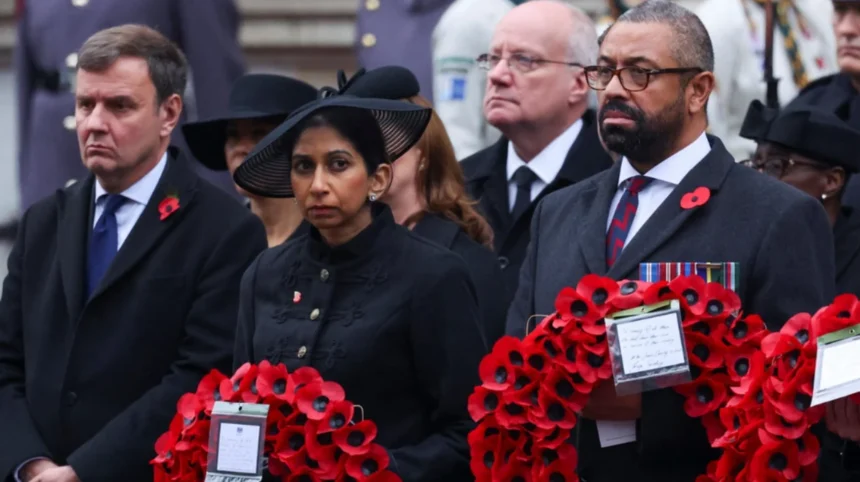
- Residents and community leaders across the West London borough gathered to mark Remembrance Sunday, honouring those who lost their lives in the First and Second World Wars and subsequent global conflicts.
- Official services and multi-faith commemorations took place across key locations, including Ealing, Greenford, and Southall.
- Formal proceedings featured the traditional sounding of The Last Post, a nationwide two-minute silence at 11am, the Mayor’s Exhortation, and the laying of wreaths.
- Local political figures, faith leaders, and armed forces representatives participated in readings, reflections, and community marches.
- Ahead of the events, leadership from Ealing Council emphasised the importance of community unity and ensuring that past sacrifices are never forgotten.
uk/local/ealing/">Ealing (West London Times) November 9, 2026 — Communities throughout the West London borough of Ealing united in solemn reflection and public ceremonies to pay solemn tribute to military personnel who made the ultimate sacrifice in past and present conflicts, as local war memorials hosted traditional Remembrance Sunday commemorations.
How did residents across Ealing, Greenford and Southall mark Remembrance Sunday?
As reported by Leslie Bunder of Ealing.News, residents across the borough have paid their respects to those who lost their lives in the First and Second World Wars and other conflicts, with Remembrance Sunday services taking place on 8 November 2026 across Ealing, Greenford and Southall.
The formal proceedings began with the sounding of The Last Post shortly before the observance of the two-minute silence at 11am. Following the silence, the mayor’s Exhortation was delivered to the assembled crowds. Those gathered responded in unison, declaring, “We will remember them,” before proceeding to lay wreaths at the foot of the war memorials.
The multi-faith and community-oriented nature of the services was highlighted by contributions from local religious and civic leaders. Imam Safeer Khan of the Darus Salaam Mosque delivered a reading during the commemorations. Additionally, the Reverend Ayres offered a reflection, followed by the congregation joining in to sing the traditional hymn ‘The Lord’s Our Shepherd’, concluding with a solemn blessing. The formal services drew to a close with the rendition of the national anthem and a disciplined march-past.
What were the key statements from local leaders and political representatives?
Local political figures and community groups took active roles in the wreath-laying ceremonies to underscore the borough’s solidarity with service families and veterans.
As reported by Leslie Bunder of Ealing.News, Councillor Gary Malcolm, leader of the Ealing Liberal Democrats, laid a wreath during the events. Councillor Gary Malcolm stated that it was a tribute in memory of
“the many brave men and women who served and gave their lives so we could live ours”.
Ahead of the Sunday services, Ealing Council leader Councillor Peter Mason addressed the significance of the annual commemoration. As reported by Leslie Bunder of Ealing.News, Councillor Peter Mason stated:
“It is an opportunity to give thanks, pay our respects and ensure that their service is never forgotten.”
The collective involvement of diverse civilian groups, faith leaders, and political representatives highlighted the ongoing commitment of the West London boroughs to preserving historical memory and supporting current armed forces communities.
Background of the Particular Development
Remembrance Sunday in the United Kingdom is historically rooted in the aftermath of the First World War, serving as a national memorial day to commemorate the contribution of British and Commonwealth military personnel who lost their lives in war. Officially observed on the second Sunday of November—the Sunday closest to Armistice Day on 11 November—the tradition bridges generations by maintaining civic spaces dedicated to historical reflection.
Within the London Borough of Ealing, local multi-faith observances across town centres such as Ealing, Greenford, and Southall have long served as focal points for civic identity. These services bring together diverse local demographics, including historic immigrant communities and multi-generational families, to reflect on shared histories of wartime service, civilian resilience, and international cooperation. Over the years, the structure of these local commemorations has expanded to embrace interfaith leadership—incorporating contributions from Christian, Muslim, and other community leaders—reflecting Ealing’s contemporary multicultural fabric while maintaining traditional military protocols like the Last Post and the two-minute silence.
Prediction
This annual development strengthens local civic cohesion and reinforces institutional safety nets for armed forces personnel and veterans residing within the borough. For the local community and veterans in Ealing, Greenford, and Southall, these public acts of remembrance foster a heightened sense of shared heritage and mutual support across diverse cultural groups. Furthermore, active civic participation by local authorities and community leaders helps sustain public engagement with council-backed initiatives, such as the Armed Forces Covenant, which provides practical support in housing, employment, and healthcare for former service members and their families. By embedding remembrance into the cultural calendar, the local population ensures that successive generations remain connected to the social responsibilities owed to veterans and military families.