

Key Points
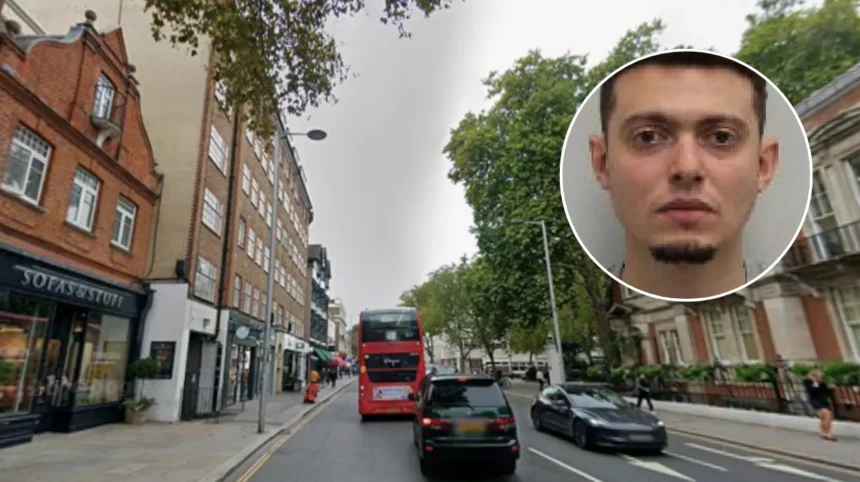
- Salem Rekoub, 28, has been jailed for 21 years at Isleworth Crown Court for the rape and assault charges.
- The criminal approached his victim after she fell ill while heading back home after spending some time out in London and collapsed on the pavement in Chelsea, west London.
- It is revealed that Rekoub, who was a food delivery rider for Deliveroo using the equipment but was not officially a courier on the platform, was working without authorization at the time of the offense.
- According to Patricia May, the prosecutor, incomplete background check facilitated the criminal’s access to the work platforms.
- Later, Rekoub deceived emergency services, provided a fake name to the police and followed the victim’s ambulance to Chelsea and Westminster Hospital.
- Speaking of the incident, a spokesperson from Deliveroo confirmed that the company is horrified about the crime.
West London (West London Times) September 19, 2026 – A food delivery worker who preyed upon a vulnerable, semi-conscious woman on a west London street has been handed a 21-year custodial sentence.
- Key Points
- What Are the Details of the Attack in West London?
- How Did the Offender Attempt to Evade Detection?
- What Was Revealed Regarding Employment Checks and Immigration Status?
- How Has the Victim and Platform Provider Responded?
- Background of the Particular Development
- How This Development Can Affect the Public and Gig-Economy Workers
What Are the Details of the Attack in West London?
As reported by Shaun Wilson of the Evening Standard, Salem Rekoub, 28, targeted the female victim after she grew unwell and collapsed on the pavement in Chelsea following an evening out with friends. Court proceedings detailed how Rekoub, wearing turquoise high-visibility Deliveroo gear and leaning his delivery bicycle against a wall, dragged the victim down a side road away from public view.
As reported by Patricia May, prosecutor for the Crown, the offender pulled the woman between two parked vehicles and repeatedly assaulted her while she drifted in and out of consciousness. Ms May stated during the legal proceedings:
“The victim had been out with friends having a nice evening. She had to get off a bus when she was travelling home because she felt unwell… She passed out on the pavement and it is there when the defendant, a complete stranger, found her”.
The court heard that the prolonged assault left the victim with 33 distinct bruises across her body. During the attack, Rekoub instructed the victim to remain quiet while keeping his hands around her throat.
How Did the Offender Attempt to Evade Detection?
Following the assault, Rekoub engaged in extensive efforts to mislead emergency services and cover up his crimes. Prosecutor Patricia May outlined that Rekoub placed a call to 999 operators providing a pack of lies, falsely claiming that the victim had consumed an excessive amount of alcohol. He subsequently approached police officers at the scene using a false name while pretending to be a concerned passer-by.
Jurors at uk/local/hounslow/isleworth/">Isleworth Crown Court were presented with CCTV footage showing Rekoub tracking the victim’s ambulance all the way to Chelsea and Westminster Hospital. Footage captured him pacing through corridors and peering into triage and treatment areas. Hospital personnel eventually challenged and confronted him after he spent prolonged periods searching for the victim. When questioned by a staff member, Rekoub stated, “I’m here to find someone”.
The victim managed to whisper details of the rape to paramedics at the hospital, setting off an investigation that led to Rekoub’s arrest nine days later by the Metropolitan Police.
What Was Revealed Regarding Employment Checks and Immigration Status?
The trial exposed significant vulnerabilities regarding gig-economy employment verification. Prosecutor Patricia May informed Isleworth Crown Court that Rekoub was working illegally as a food delivery courier at the time of the incident without being a verified Deliveroo account holder. Ms May stated to the court that there had been “incomplete checks to whether he should have been working”.
Defence representatives told the court that Rekoub had arrived in Britain from Algeria on a tourist visa after fleeing violence in his home country. Defence barrister Brinder Soora mentioned that Rekoub was formerly a talented footballer who nearly reached professional status prior to suffering a severe knee injury. In a brief statement read aloud to the court during sentencing, Rekoub stated: “I am deeply sorry for everything”.
Addressing the court, the presiding judge condemned the defendant, formally labeling him a dangerous threat to public safety before handing down the 21-year prison sentence. Rekoub was formally convicted of three counts of rape and two counts of assault by penetration.
How Has the Victim and Platform Provider Responded?
In a devastating victim impact statement read during the hearings, the survivor detailed the catastrophic psychological and physical aftermath of the attack. The woman stated: “This has destroyed my life and I am not the same person”. She added that she had been left in a “constant state of fear” and experienced severe medical complications, including seizures, lengthy psychiatric treatment, and profound trauma that persisted more than two years later.
A corporate spokesperson for Deliveroo issued a statement addressing the security implications of the case, saying:
“We are appalled by these truly horrific crimes and our thoughts are with the victims and their families. This individual was not a verified rider on our platform, but a criminal who abused our systems to gain access illegally. We have since significantly strengthened the measures to control who can access our platform – and continue to invest to combat any abuse”.
Explore more fulham/hammersmith/">hammersmith-and-fulham-crime/">Hammersmith and Fulham Crime News:
Council Homes Recovered in Fraud Crackdown: Hammersmith 2026
Council Probes Unauthorised Discount Store at Hammersmith Ram in 2026
Background of the Particular Development
The sentencing of Salem Rekoub arrives amid intense ongoing scrutiny across the United Kingdom regarding public safety, vetting standards within the rapidly expanding app-based delivery sector, and immigration controls. Gig-economy platforms have frequently faced parliamentary and public pressure to tighten their digital onboarding procedures, which bad actors have occasionally exploited by sharing or renting verified rider accounts. This legal case highlights systemic vulnerabilities in third-party account verification processes, prompting technology firms to overhaul security protocols, implement stricter right-to-work checks, and deploy advanced identification controls to protect urban communities.
How This Development Can Affect the Public and Gig-Economy Workers
This high-profile sentencing is expected to accelerate regulatory demands on food delivery and courier networks operating throughout the United Kingdom, directly impacting everyday consumers, independent couriers, and platform operators. For the general public, heightened awareness of gig-economy security risks will likely increase pressure on local authorities and corporations to mandate robust, real-time biometric or physical verification for all active delivery personnel.
For legitimate delivery riders, stricter platform oversight may introduce more rigorous authentication steps—such as regular facial recognition checks or mandatory in-app identity refreshes—designed to block unauthorized account-sharing. Consequently, while these measures aim to restore public trust and enhance street safety, they may also lead to longer onboarding times and tighter administrative controls for lawful workers striving to earn a living within the UK delivery sector.