

Hammersmith restaurants form a diverse West London dining scene shaped by the area’s riverside setting, transport connections, theatres, offices, shopping areas and long-established streets. The area includes modern British dining, international cuisine, casual eateries, gastropubs, cafés and restaurants designed around theatre and riverside visits.
- What makes Hammersmith a significant restaurant destination in West London?
- How did Hammersmith develop into an important food and hospitality area?
- Which areas of Hammersmith have the largest concentration of restaurants?
- What types of cuisine are available at Hammersmith restaurants?
- Which Hammersmith restaurants are suitable for modern British dining?
- Where can visitors find casual and affordable food in Hammersmith?
- Which Hammersmith restaurants are suitable for lunch?
- Where can visitors eat before a theatre or concert in Hammersmith?
- Which Hammersmith restaurants are suitable for riverside dining?
- What role do pubs play in the Hammersmith restaurant scene?
- How accessible are Hammersmith restaurants by public transport?
- How can visitors combine Hammersmith restaurants with local attractions?
- What should visitors consider when choosing a Hammersmith restaurant?
- How is the Hammersmith restaurant scene changing?
- Why are Hammersmith restaurants important to West London tourism?
What makes Hammersmith a significant restaurant destination in West London?
uk/local/hammersmith-and-fulham/hammersmith/">Hammersmith is a major West London dining destination because its town centre combines restaurants, cafés, pubs and food businesses with strong transport links, offices, theatres, shopping and the River Thames. Its hospitality scene serves residents, commuters, tourists, theatre audiences and business visitors.
Hammersmith sits within the London Borough of Hammersmith and Fulham and functions as both a residential district and a major commercial centre. Hammersmith Business Improvement District describes the town centre as approximately 34 hectares and identifies it as one of London’s key business districts.
The area has two major shopping centres close to Hammersmith Tube station: Hammersmith Broadway and Livat, formerly known as Kings Mall. King Street also contains a mixture of independent and national businesses. This commercial concentration supports a restaurant market that operates across breakfast, lunch, afternoon and evening periods.
Hammersmith also has an important cultural economy. Lyric Hammersmith provides theatre and performance programming, while Riverside Studios hosts theatre, music, dance, comedy, film and exhibitions. The Eventim Apollo provides a major live entertainment venue. These attractions generate additional demand for pre-show meals, post-show dining and casual food.
The combination of business, residential, retail, transport and cultural activity gives Hammersmith restaurants several distinct customer groups. Weekday lunch demand comes from office workers and shoppers. Evening demand includes residents, theatre audiences and visitors. Weekend demand includes leisure visitors and local households.
How did Hammersmith develop into an important food and hospitality area?
Hammersmith developed from a riverside settlement and rural hamlet into a major London suburb through road building, commercial growth, industrialisation and railway expansion. Transport transformed the area during the nineteenth century, increasing its population and creating demand for shops, services, pubs and restaurants.
Hammersmith has a long settlement history connected to the River Thames. The London Borough of Hammersmith and Fulham records Hammersmith developing around the mouth of Hammersmith Creek, with the settlement later extending along the riverfront.
King Street became an important route between London and the west. The council’s conservation-area history records commercial and residential premises along King Street from the seventeenth century onwards. Hammersmith therefore had a commercial foundation before the modern restaurant industry developed.
The nineteenth century brought major infrastructure changes. The Metropolitan Railway reached Hammersmith in 1864, while the District Railway connection followed in 1874. Hammersmith’s population increased from approximately 25,000 in 1861 to 112,000 in 1901, later reaching a peak of approximately 136,000 in 1931.
Transport encouraged housing, employment and commercial activity. More residents required local services, while improved connections brought workers and visitors into the area.
Hammersmith Bridge also contributed to the district’s connectivity. The first bridge opened in the nineteenth century, while the current bridge was designed by engineer Sir Joseph Bazalgette and opened in 1887.
The riverside later changed substantially. Industrial uses and working wharves declined after the Second World War, with parts of the waterfront becoming residential and commercial areas. This transition helped establish the modern riverside environment where restaurants, pubs and leisure venues operate today.
Which areas of Hammersmith have the largest concentration of restaurants?
The main restaurant concentrations are around Hammersmith Broadway, King Street, the town centre, the riverside and routes connecting the commercial district with cultural venues. Each area serves different dining purposes, ranging from quick lunches and casual meals to riverside dining and pre-theatre food.
Hammersmith Broadway
Hammersmith Broadway is the principal transport and commercial hub. Hammersmith Tube station connects the area through the District, Piccadilly, Hammersmith & City and Circle lines. The surrounding centre contains restaurants, cafés, takeaway businesses and food outlets.
This location suits commuters and visitors who prioritise convenience. Restaurants around the Broadway also benefit from proximity to shopping and offices.
King Street
King Street is a traditional high street extending west from the central Hammersmith area. The council identifies it as an important town-centre street with small-scale high-street buildings, commercial premises and connections towards the river and surrounding neighbourhoods.
The restaurant offer here includes casual dining, international food, cafés, pubs and modern restaurant concepts.
Hammersmith Riverside
The riverside provides a different dining environment. Lower Mall, Hammersmith Bridge and the surrounding streets connect food venues with riverside walking routes and historic buildings.
The area includes established pubs and restaurants, while the broader Hammersmith and Shepherds Bush district is recognised by Visit London for its riverside pubs and food venues.
Cultural and entertainment areas
Restaurants also benefit from proximity to Lyric Hammersmith, Riverside Studios and Eventim Apollo. This creates a distinct pre-theatre and event-dining market.
What types of cuisine are available at Hammersmith restaurants?
Hammersmith restaurants cover British, Italian, Indian, Caribbean, Mediterranean, Japanese, pan-Asian, Mexican, vegetarian and vegan food, alongside cafés, bakeries, dessert shops and pub kitchens. The local market includes independent businesses and national restaurant brands operating across different price levels.
The diversity of Hammersmith’s population, workforce and visitor economy supports a broad culinary mix.
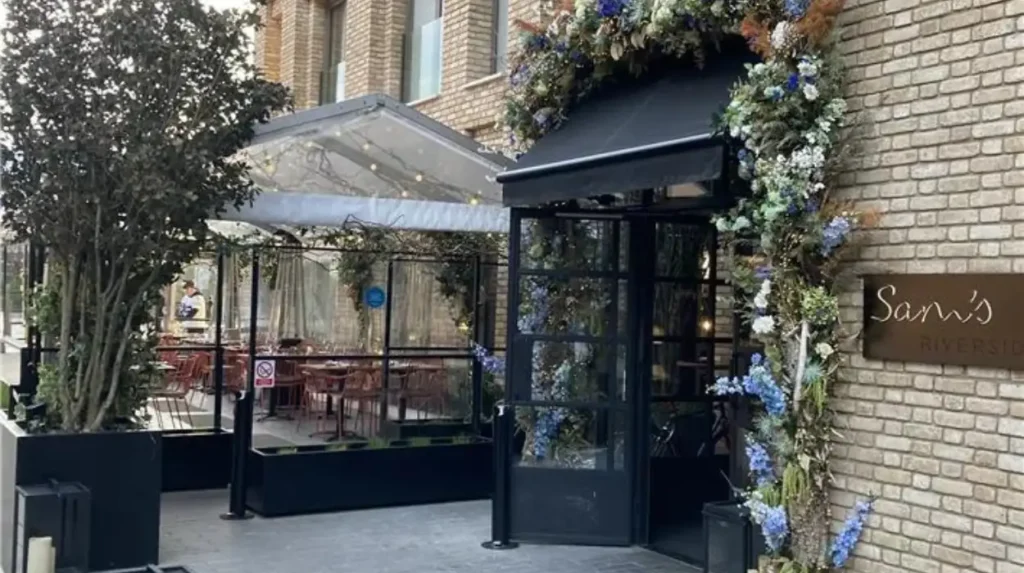
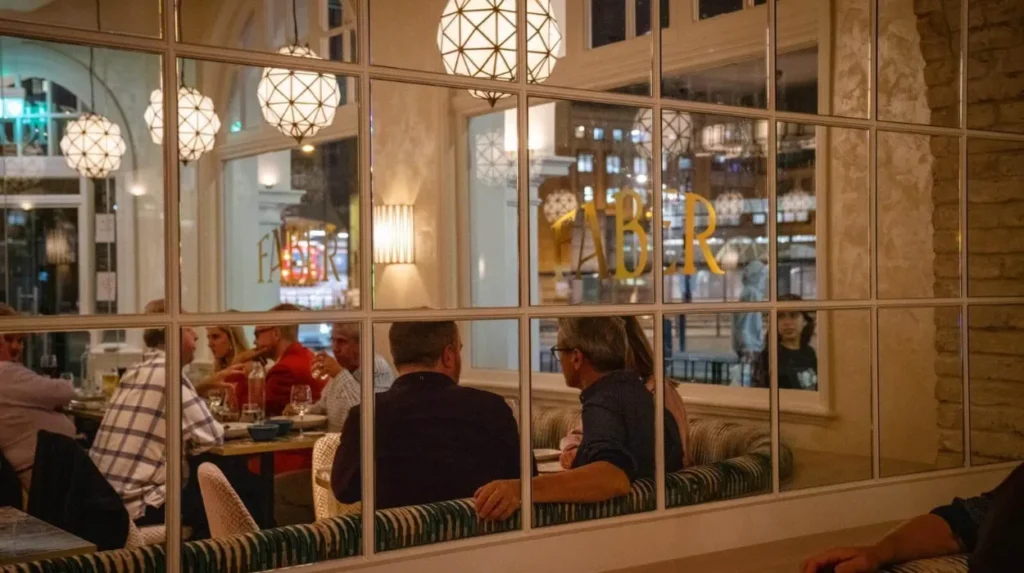
Hammersmith BID’s current hospitality listings include Turtle Bay, which serves Caribbean food; Flat Iron, which specialises in steak; Green Mosaic Pizza; Sam’s Riverside, which focuses on modern British food; Chez Maiss, a Mediterranean-oriented restaurant and wine bar; and Faber, a seafood restaurant.
The BID also lists Wagamama for pan-Asian food, Nando’s for Portuguese-inspired PERi-PERi chicken, Tortilla for California-style Mexican food and IKEA Restaurant for Swedish food including meatballs.
International cuisine is therefore an established feature rather than a limited part of the local dining economy.
Hammersmith also has specialist options. Visit London lists The Gate as a vegetarian restaurant and identifies 222 Vegan Cuisine among the area’s food venues.
This range allows diners to choose according to cuisine, dietary requirement, budget, meal period and occasion.
Which Hammersmith restaurants are suitable for modern British dining?
Modern British restaurants in Hammersmith focus on seasonal ingredients, contemporary presentation and familiar British culinary traditions. Sam’s Riverside provides a prominent example, while local gastropubs extend the British dining offer through pub classics, Sunday meals and informal food.
Sam’s Riverside is located beside the Thames and is included by the MICHELIN Guide among restaurants associated with Hammersmith Tube stations. The restaurant serves modern British food using seasonal produce from around the United Kingdom.
Modern British dining in Hammersmith also overlaps with the gastropub tradition. A gastropub combines the social function of a traditional pub with a more substantial food operation.
The local hospitality scene includes several pubs offering food. Visit London identifies venues such as The Crabtree and The Dove within the wider Hammersmith and Shepherds Bush food-and-drink area.
The riverside setting adds another dimension to British dining because restaurants and pubs can serve visitors exploring the Thames.
Where can visitors find casual and affordable food in Hammersmith?
Casual food is concentrated around Hammersmith Broadway, King Street, Livat and the wider town centre. Options include sandwiches, salads, sushi, noodles, burritos, fried chicken, pizza, doughnuts, pastries and coffee, with both independent operators and national chains represented.
Hammersmith BID lists a substantial range of quick-service food businesses. These include Chopstix, Wasabi, Chicken Shop, Tortilla, Pret, PAUL, Greggs, Caffè Nero, Costa, Starbucks, Café de Nata, Crosstown and Egg & Bun.
This category is particularly important for commuters and office workers.
Lunch is a major part of the Hammersmith food economy. Hammersmith BID’s I Love Lunch 2026 programme specifically promoted restaurants, pubs and eateries across the town centre and described the local area as a diverse food and drink destination.
Casual dining also supports visitors attending daytime shopping trips, theatre performances and local appointments.
The presence of both seated restaurants and takeaway-oriented businesses gives Hammersmith a broad range of meal formats.
Which Hammersmith restaurants are suitable for lunch?
Hammersmith is well suited to lunch because its restaurant district sits within a major business and shopping centre. Lunch options include modern British food, steak, pizza, pan-Asian dishes, Caribbean food, Mediterranean meals, sandwiches, salads, sushi and quick-service takeaway food.
Weekday lunch demand is closely connected to Hammersmith’s office economy. The BID identifies major businesses and global companies with headquarters in the area, creating a large daytime working population.
Restaurants therefore operate within a mixed customer environment rather than relying exclusively on evening leisure dining.
The 2026 Hammersmith BID lunch programme included restaurants such as Turtle Bay, Flat Iron, Green Mosaic Pizza, Sam’s Riverside, Chez Maiss, Faber, Bill’s, Kindred Cellar and Wagamama.
For a quick lunch, visitors can use the Broadway and King Street food outlets. For a longer lunch, full-service restaurants provide seated dining.
This distinction is useful when planning a Hammersmith itinerary because meal duration affects how easily lunch fits around shopping, sightseeing, work meetings or theatre visits.
Where can visitors eat before a theatre or concert in Hammersmith?
Pre-theatre dining is concentrated around the town centre because Hammersmith’s major cultural venues sit close to restaurants, pubs and cafés. Lyric Hammersmith, Riverside Studios and Eventim Apollo create regular demand for meals before performances and drinks or food afterwards.
Lyric Hammersmith stands on King Street and is approximately a three-minute walk from Hammersmith Tube station. Visit London identifies the theatre’s Lyric Bar as a food and drink option serving pizzas, snacks, coffee, pastries and other light refreshments.
The theatre has a 550-seat Main House and a 120-seat Studio, creating regular performance traffic.
Riverside Studios is another cultural anchor. The venue hosts live music, dance, theatre, comedy, film and exhibitions, creating additional demand for nearby restaurants and bars.
The Eventim Apollo is also a major entertainment venue in Hammersmith. Its concert programme contributes to evening footfall across the surrounding hospitality district.
Visitors attending performances should consider the venue location first. Restaurants near Hammersmith Broadway and King Street provide convenient access to the main cultural sites.
Which Hammersmith restaurants are suitable for riverside dining?
Riverside dining in Hammersmith is concentrated around the Thames, Lower Mall, Hammersmith Bridge and neighbouring streets. The area combines restaurants and traditional pubs with riverside walking routes, historic buildings and views across the water.
The Thames is central to Hammersmith’s physical identity. Hammersmith Bridge connects the north and south sides of the river, while Lower Mall runs beside the waterfront.
The London Borough of Hammersmith and Fulham’s borough walking route passes Hammersmith Bridge, Lower Mall and Furnivall Gardens, before continuing along the riverside towards historic pubs and buildings.
The Dove is one of the area’s historic riverside pubs. The council records the building as dating from 1790, when it operated as the Dove Coffee House.
The riverside dining area therefore has both modern and historical elements.
Visitors can combine a meal with a Thames walk, a visit to Hammersmith Bridge or exploration of Hammersmith Terrace and nearby historic streets.
What role do pubs play in the Hammersmith restaurant scene?
Pubs remain an important part of Hammersmith’s food economy because they combine drinks, meals, social space and entertainment. Traditional pubs, gastropubs and sports-focused venues serve residents, workers and visitors, particularly during evenings and major sporting events.
The Hammersmith hospitality market includes traditional pubs alongside restaurants and casual eateries.
The Hammersmith BID identifies pubs and gastropubs as part of the town centre’s night-time economy.
The 2026 hospitality programme also included pubs such as the Hop Poles, while the BID’s events information identifies venues including The Hammersmith Ram, The Queen’s Head, The Distillers and The Dartmouth Castle.
Food-led pubs provide an alternative to formal restaurants. Typical pub dining includes burgers, sandwiches, pies, Sunday roasts and other British dishes.
Sports also influence evening demand. Hammersmith venues have promoted live football and other major sporting events, linking food and drink with entertainment.
How accessible are Hammersmith restaurants by public transport?
Hammersmith restaurants are highly accessible by public transport because Hammersmith station is served by four Underground lines: District, Piccadilly, Hammersmith & City and Circle. Bus routes, pedestrian connections and nearby cycling infrastructure extend access across West London.
Hammersmith’s transport network is one of the principal reasons the area functions as a regional commercial centre.
The Underground provides connections towards central London, Heathrow, East London and other parts of West London through different lines and interchange points.
Visit London identifies Hammersmith Tube station as the nearest station to Lyric Hammersmith and lists several bus routes serving the theatre area.
The transport network also affects restaurant choice. Visitors arriving by Tube can prioritise restaurants around Broadway and King Street. Visitors exploring the Thames can continue south towards the riverside dining area.
Hammersmith’s location makes it suitable for combining food with other West London activities.
How can visitors combine Hammersmith restaurants with local attractions?
Hammersmith restaurants fit naturally into itineraries combining food with theatre, live music, shopping, riverside walks and local heritage. The central restaurant district connects efficiently with Hammersmith Broadway, King Street, the Thames, cultural venues and historic riverside streets.
A visitor can structure a Hammersmith day around several connected destinations.
Shopping is concentrated around Hammersmith Broadway and Livat. King Street provides another commercial route with restaurants and local businesses.
The Thames provides a contrasting environment. Furnivall Gardens, Hammersmith Bridge and Lower Mall offer opportunities for walking before or after a meal.
Culture provides another route. Lyric Hammersmith offers theatre, while Riverside Studios provides theatre, music, dance, comedy, film and exhibitions.
Hammersmith restaurants therefore work as part of a broader visitor itinerary rather than as isolated destinations.
What should visitors consider when choosing a Hammersmith restaurant?
Visitors should choose Hammersmith restaurants according to location, cuisine, meal duration, budget, dietary requirements, opening times and nearby activities. Broadway suits transport and quick meals, King Street suits central dining, while the riverside suits meals combined with Thames walks and heritage.
Location is the first consideration because Hammersmith has several distinct food clusters.
Visitors attending Lyric Hammersmith should focus on King Street and the central town centre. People attending events at Riverside Studios should consider the riverside and central Hammersmith. Concert audiences at Eventim Apollo should consider venues that fit their event schedule.
Cuisine is the second consideration. Hammersmith provides British, Mediterranean, Caribbean, Italian, Japanese, pan-Asian, Mexican, vegetarian and vegan options.
Meal duration is also important. Quick-service businesses support short lunch breaks, while full-service restaurants suit longer meals.
Dietary requirements should be checked directly with individual restaurants because menus, ingredients and allergen information change.
Advance booking is relevant for busy evenings, theatre nights and major events. Restaurant opening hours and menus should also be checked before travel.
Explore More Area Guide
Ealing Restaurants: Best Places to Eat in West London
Job Opportunities in West London: Jobs, Careers and Skills
How is the Hammersmith restaurant scene changing?
The Hammersmith restaurant scene continues to evolve through new independent businesses, changing consumer demand, redevelopment and investment in the town centre. Recent openings demonstrate continued diversification, while established restaurants and pubs maintain the area’s existing hospitality identity.
A recent example is Chez Maiss, which opened in Hammersmith Broadway in 2026. Hammersmith BID describes it as an all-day restaurant and wine bar serving breakfast, lunch and dinner, with a globally inspired menu.
The opening demonstrates how Hammersmith continues to attract independent hospitality operators alongside established brands.
The local BID also continues to promote hospitality through programmes such as I Love Lunch, which brings restaurants, pubs and eateries together as part of the town’s food economy.
Hammersmith’s future restaurant market is closely linked to its wider town-centre economy. Continued business activity, cultural programming, residential development and riverside use all create demand for food and hospitality.
The area’s combination of transport accessibility and diverse land uses provides a strong structural foundation for a broad restaurant market.
Why are Hammersmith restaurants important to West London tourism?
Hammersmith restaurants contribute to West London tourism by connecting food with transport, entertainment, shopping, riverside recreation and cultural attractions. The area provides dining choices for visitors staying locally, travelling through West London, attending performances or exploring the Thames.
Hammersmith occupies an important position between central London and western districts. Visit London describes the wider Hammersmith and Shepherds Bush area as a destination for entertainment, shopping, riverside experiences and food.
Food strengthens this visitor economy by giving tourists practical places to eat during wider itineraries.
The restaurant offer also supports different travel patterns. A visitor can have breakfast before sightseeing, lunch during shopping, an early dinner before theatre or a later meal after an event.
Hammersmith’s restaurants therefore reflect the district’s wider identity as a connected West London centre.
The combination of historic riverside areas, modern commercial development, major cultural venues and a diverse food market gives Hammersmith a distinctive hospitality structure. Its restaurants are part of the area’s transport, business, leisure and tourism economy rather than a separate attraction.
What types of restaurants are available in Hammersmith?
Hammersmith has a wide range of restaurants serving British, Italian, Indian, Caribbean, Mediterranean, Japanese, pan-Asian, Mexican, vegetarian and vegan food. The area also has cafés, bakeries, gastropubs, takeaway businesses and casual dining venues.