


Key Points
- Sarah Doolin is calling for ambulance-response changes after her 19-day-old son Ezrah Pollard died from group B streptococcal sepsis and meningitis.
- A call to NHS 111 was transferred to South Western Ambulance Service and categorised as Category 2, with a target response of 18 minutes.
- An ambulance was not dispatched after the family called again, citing significant operational pressures.
- Senior Coroner Andrew Cox said Ezrah needed immediate antibiotics and that treatment was avoidably delayed.
- The coroner raised concerns about the absence of a Category 1 pathway for babies aged up to three months with serious infection symptoms.
- South Western Ambulance Service said clinical oversight of waiting calls has increased and reported improvements since 2022.
Bold inverted pyramid reporting
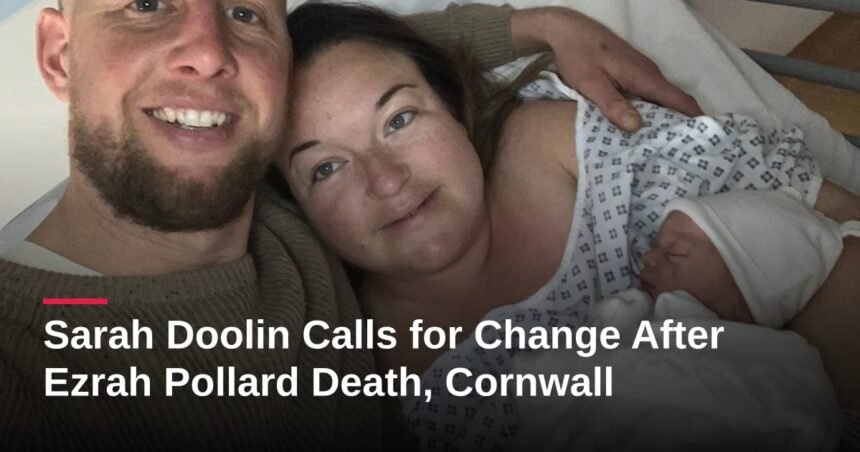
St Martin (West London Times) November 26, 2026 – Sarah Doolin has called for urgent changes to ambulance responses for babies after her 19-day-old son, Ezrah Pollard, died from group B streptococcal sepsis and meningitis following delays in receiving emergency care in Cornwall.
As reported by ITV News, Ezrah’s parents contacted NHS 111 at about 8.25pm after he developed symptoms including poor feeding, fever, grunting, breathlessness, drowsiness and a deathly colour. The call was transferred to South Western Ambulance Service NHS Foundation Trust and classified as Category 2, for which the expected response time was 18 minutes.
The Courts and Tribunals Judiciary report said the family followed up at about 9.30pm but an ambulance had not been dispatched because of significant operational pressures. At the time, Category 2 calls were taking an average of four hours to receive a response.
Sarah Doolin and Craig Pollard then drove their son about 20 miles to Royal Cornwall Hospital. Medical staff recognised that Ezrah was seriously ill and he was transferred to Bristol Royal Hospital, where he later died.
What did the coroner find about Ezrah Pollard’s care?
Senior Coroner for Cornwall and the Isles of Scilly Andrew Cox concluded that Ezrah required immediate antibiotics, but their administration was avoidably delayed. His Prevention of Future Deaths report also raised concerns that neither NHS 111 nor the ambulance trust gave the parents clear guidance about the possible delay or advised them to travel to hospital immediately.
Reports by the Falmouth Packet and Cornwall Live said the coroner identified no established pathway allowing an infant aged up to three months with serious infection symptoms to receive a Category 1 ambulance response. Category 1 responses are reserved for immediately life-threatening conditions and have an average target of seven minutes.
Mr Cox also identified problems with information-sharing. Ezrah’s parents had to repeat details about his condition to different services, and relevant information was not fully available when he reached hospital.
Why is Sarah Doolin calling for ambulance-response changes?
Ms Doolin told the Press Association that newborn babies should not have to reach the point of cardiac arrest or stopped breathing before receiving the highest-priority response. She said better call monitoring could help clinicians identify delays, warn parents and enable them to reach hospital sooner.
Ezrah had late-onset group B streptococcal infection, which can affect babies between seven days and three months old. Ms Doolin and Mr Pollard have since raised more than £100,000 in their son’s memory and are campaigning to increase awareness of infection symptoms in newborn babies.
What have the ambulance and hospital services said?
Dr Timothy Godfrey, medical director of enhanced and critical care at South Western Ambulance Service NHS Foundation Trust, offered his condolences. The trust’s formal response to the coroner said clinical oversight of waiting calls had significantly increased since 2022, alongside work to reduce hospital handover delays and improve response times.
The Royal Cornwall Hospital Trust said it had discussed the case with NHS 111 and South Western Ambulance Service, and recognised the need for better information-sharing between the services.
What is the background to the case?
Ezrah became unwell in March 2022 after initially appearing to have minor symptoms. His parents contacted NHS 111 when his breathing changed and he became less interested in feeding. He died at Bristol Royal Hospital on March 25, 2022, aged 18 days, according to the coroner’s report. The inquest concluded in September 2026, after which Mr Cox issued a Prevention of Future Deaths report to NHS England, the ambulance service, NHS 111 and Royal Cornwall Hospital.
What could the case mean for future newborn ambulance responses?
The case may increase scrutiny of how emergency services prioritise babies under three months who show signs of serious infection but are not yet unconscious, fitting, choking, in cardiac arrest or suffering major blood loss.
It could also prompt clearer instructions for parents when ambulance delays occur, improved communication between NHS 111, ambulance control rooms and hospitals, and closer monitoring of lower-priority waiting calls. Any changes would need to be developed and implemented by the relevant health authorities and ambulance services.