


Key Points
- Rishi Sunak has warned Andy Burnham against reopening the debate about Britain’s future relationship with the European Union.
- Mr Sunak described the issue as “divisive” and potentially an “all-consuming” distraction for the Government.
- Andy Burnham’s Government has agreed new arrangements with the European Union covering food trade, emissions trading and youth mobility.
- Theresa May and other former prime ministers have also cautioned against reopening the question of EU membership.
Inverted pyramid: the most important information appears first, followed by supporting context and background.
- Key Points
- Why has Rishi Sunak warned against reopening the Brexit debate?
- What agreements has Andy Burnham reached with the European Union?
- What have other former prime ministers said?
- What does the development mean for the Government’s audience?
- What is the background to the dispute?
- How could the Brussels agreements affect public debate?
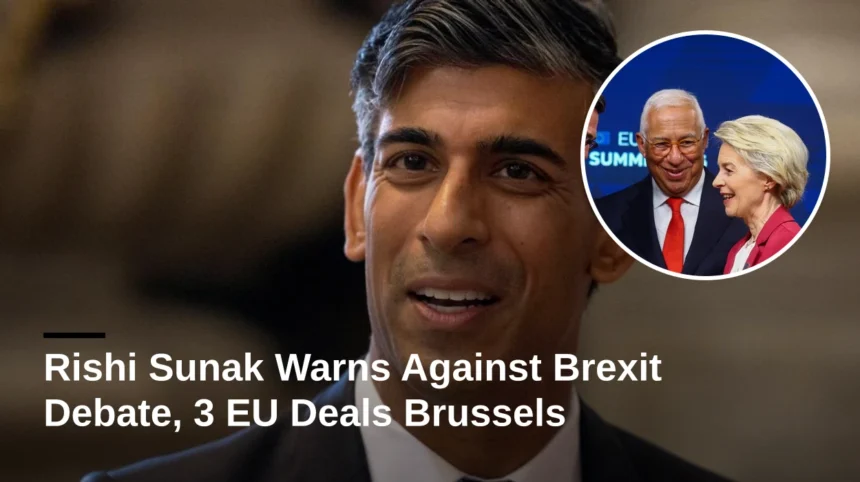
Brussels (Cambridge Tribune) November 23, 2026 – Former Prime Minister Rishi Sunak has warned Prime Minister Andy Burnham against reopening the debate over Britain’s relationship with the European Union, saying renewed discussions about rejoining the bloc could become a divisive and all-consuming distraction for the Government. Mr Sunak made the comments in a Sky News interview as Mr Burnham pursued closer practical ties with the European Union after a Brussels summit.
Why has Rishi Sunak warned against reopening the Brexit debate?
As reported by the Belfast Telegraph, Rishi Sunak said he would not reopen the debate about rejoining the European Union because it was divisive and could consume government attention. He said he did not expect the United Kingdom to rejoin the bloc within five years.
“I certainly wouldn’t reopen up this whole debate about rejoining the EU,” Mr Sunak said, adding that it could become “a huge distraction for government”.
Mr Sunak also referred to Andy Burnham’s stated reservations about returning to European Union arrangements in areas including financial services and technology, which he described as important to future economic growth.
What agreements has Andy Burnham reached with the European Union?
Reports by The Independent and the European Observer said the Brussels package covers food and agricultural trade, emissions trading and a youth experience scheme.
The proposed sanitary and phytosanitary agreement is intended to remove most post-Brexit checks and restrictions on food and agricultural products from March 2028. The linked emissions-trading systems are expected to exempt about £6.5 billion of British exports, including steel and aluminium, from European Union carbon border taxes.
The youth experience scheme would allow citizens aged 18 to 31 to live and work in each other’s jurisdictions for up to three years. Reports said up to 100,000 visas could be available each year for young people from each side.
Andy Burnham has described the package as a reset of relations and said it could provide an economic boost. The Independent reported that the Government plans to spend the next year considering options for future ties with the European Union.
What have other former prime ministers said?
Former Prime Minister Theresa May has also opposed reopening negotiations on European Union membership. Speaking to the BBC, Baroness May said voters had chosen Brexit and urged Mr Burnham to accept the result and move on.
The report said former prime ministers Boris Johnson and David Cameron had previously issued similar warnings. Former Prime Minister Tony Blair has argued that Britain should consider rejoining only if the European Union reforms and supports greater technological innovation.
During his premiership from 2022 to 2024, Rishi Sunak oversaw improved relations with the European Union and agreed the Windsor Framework, which eased post-Brexit trading arrangements affecting Northern Ireland.
What does the development mean for the Government’s audience?
For voters, businesses and young people affected by the new United Kingdom-European Union arrangements, the immediate focus is likely to remain on whether the agreements reduce trade barriers, create mobility opportunities and protect exporters from carbon charges.
Rishi Sunak’s intervention increases political scrutiny of Andy Burnham’s approach, but it does not itself alter the Brussels agreements. The Government will need to explain how closer practical cooperation can proceed without reopening the wider question of European Union membership.
What is the background to the dispute?
The United Kingdom left the European Union after the 2016 referendum and completed its withdrawal process in 2020. Relations later focused on trade barriers, Northern Ireland arrangements and the wider economic effects of Brexit. The Windsor Framework, agreed during Rishi Sunak’s premiership, addressed some of the most difficult arrangements involving Northern Ireland. Andy Burnham’s Brussels summit has since shifted attention towards practical cooperation in food trade, carbon markets and youth mobility.
How could the Brussels agreements affect public debate?
The agreements could give businesses and younger people practical benefits without requiring the United Kingdom to rejoin the European Union. If implementation reduces trade costs or expands opportunities, Andy Burnham may face pressure to pursue further cooperation. Rishi Sunak and other opponents are likely to continue arguing that broader constitutional debate could divert government resources. The political effect will depend on the agreements’ final terms, delivery timetable and measurable impact on the public.