


Key Points
- Pascale Waschnig’s artwork will be exhibited at Maudsley Hospital in Camberwell from 27 November 2026 to 1 March 2027.
- The University of West London PhD researcher’s work examines the experiences of families whose relatives have gone missing.
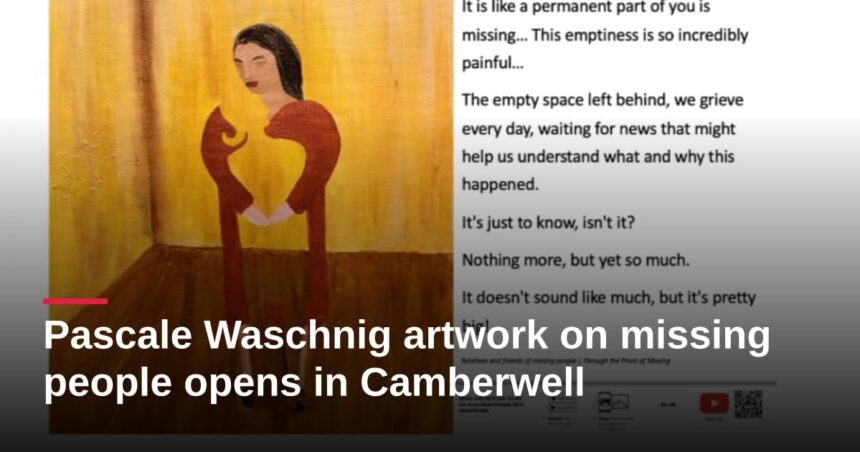
- The void in us uses an empty space within a woman’s body to represent unresolved loss and uncertainty.
- Waschnig’s research uses art and family accounts to support education for medical and mental health students.
Camberwell (West London Times) November 20, 2026 – Artwork by Pascale Waschnig, a PhD researcher in Psychology at the University of West London, will go on display at Maudsley Hospital from Friday, 27 November 2026, until 1 March 2027. The exhibition will present The void in us, a work exploring the emotional impact on families of people who go missing. The project forms part of Waschnig’s art-based doctoral research into the experiences of relatives living with uncertainty after a disappearance.
What does Pascale Waschnig’s artwork explore?
As reported by the University of West London, The void in us depicts a woman with an empty space at the centre of her body. The image represents the sense of absence experienced by families whose loved ones are missing, including the ongoing uncertainty caused by having no confirmed explanation or outcome.
The University of West London said families may face months or years of uncertainty when someone goes missing. Waschnig’s research examines those experiences and uses family members’ stories to help educate medical and mental health students.
Where and when will the artwork be exhibited?
The artwork will be exhibited at Maudsley Hospital in Camberwell from 27 November 2026 until 1 March 2027. The University of West London identified the exhibition as an opportunity to present research addressing the effects of missing-person cases through visual art.
What recognition has Pascale Waschnig received?
The University of West London reported that Waschnig was one of four artists to receive a Highly Commended award at the Bethlem Art Fair. Earlier in 2026, she also won the art competition at the PsychArt Conference, which examines the role of the arts in supporting mental health.
What is the background to the development?
Waschnig is conducting an art-based doctoral project at the University of West London’s School of Human and Social Sciences. The research focuses on the experiences of family members of missing people and the effects of prolonged uncertainty. It also considers how creative work can communicate experiences that may be difficult to express through conventional academic methods. The project is intended to help medical and mental health students develop empathy while recognising and managing vicarious trauma.
How could the artwork affect its intended audience?
The exhibition could give medical and mental health students a visual way to understand the emotional consequences of people going missing and the continuing uncertainty faced by relatives. For families affected by a disappearance, the work may provide a public representation of absence and unresolved grief without presenting a confirmed outcome that does not exist. Its impact will depend on how audiences engage with the artwork and the wider research accompanying it.