Key Points
- Hammersmith and Fulham Council has approved above-inflation increases for RingGo on-street parking from January 2027.
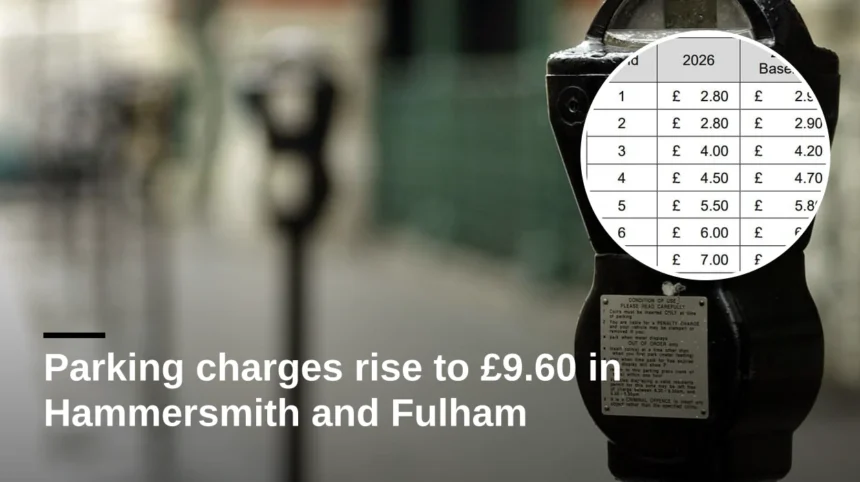
- Charges will range from £3.80 an hour for Band 1 vehicles to £9.60 for Band 7 vehicles.
- The highest-emission vehicles will face an increase of up to £2.60 an hour.
- Parking permits, visitor permits and designated shopper bays will receive inflation-linked rises instead.
- The council said rising parking demand showed that cleaner vehicles had not reduced car journeys.
Hammersmith and Fulham (West London Times) November 18, 2026 – Hammersmith and Fulham Council has approved above-inflation increases for on-street parking sessions booked through RingGo from January 2027. The plan targets vehicles in the highest emissions bands as the council seeks to reduce unnecessary short car journeys and overall traffic. Charges will rise from £3.80 an hour for the least-polluting vehicles to £9.60 for the most-polluting vehicles. Parking permits, visitor permits and designated shopper bays will be excluded from the above-inflation increase.
Why are Hammersmith and Fulham parking charges increasing?
As reported by the Evening Standard, the council’s Cabinet approved the revised pricing plan after a report showed that on-street parking sessions increased from 2.36 million in 2024-25 to 2.47 million in 2025-26.
The report said electric and hybrid parking sessions increased by 27.9 per cent over the same period. Council officers concluded that the growth in cleaner vehicles had not been matched by a reduction in car journeys.
“However, the increase in total parking sessions shows that cleaner vehicle choices are not the same as fewer car journeys,” the council report stated.
How much will drivers pay from January 2027?
The proposed charges will range from £3.80 an hour for Band 1 vehicles to £9.60 an hour for Band 7 vehicles. The Band 1 charge is 90 pence higher than the amount that would result from an inflation-only increase.
Band 7 drivers currently pay £7 an hour. An inflation-linked rise would have increased that charge to £7.40, while the approved proposal sets it at £9.60. The highest-emission vehicles will therefore pay £2.60 more an hour than under the current charge.
The above-inflation increase applies only to on-street parking sessions managed through RingGo. Parking permits, visitor permits and designated shopper bays will receive smaller inflation-linked increases.
What did councillors say about the plan?
Nicole Trehy, cabinet member for climate emergency and travel, said parking sessions were continuing to grow despite the council’s objective of discouraging short car journeys.
Conservative group leader Jose Afonso criticised the proposal and said councillors did not have sufficiently detailed information about which drivers would be affected.
Council officers told councillors that earlier checks indicated residents made about 9 to 10 per cent of RingGo parking sessions, although no current figure was available at the meeting.
Council leader Stephen Cowan defended the increase, saying many parking sessions were made by visitors travelling to shopping centres, railway stations and football grounds.
What is the background to the emissions-based parking policy?
Hammersmith and Fulham Council’s Cabinet agreed in October 2024 to move towards emissions-based charging for residents’ parking permits. The new model began in January 2025 and introduced seven emissions bands, alongside a diesel surcharge and an additional fee for second vehicles.
The council has continued to distinguish between vehicle emissions and the number of journeys made. Its report said the rise in electric and hybrid parking sessions showed a change in vehicle mix, while the overall increase in sessions indicated that parking demand remained high.
Residents with parking permits will continue to park free at all times in their home Controlled Parking Zone. The new RingGo charges are scheduled to begin in January 2027.
How could the changes affect West London drivers?
West London drivers who use RingGo for occasional on-street parking will face higher hourly costs from January 2027, with the largest increases affecting vehicles in the highest emissions bands.
Residents who rely on parking permits will not face the same above-inflation rise for their home Controlled Parking Zone, although permit and visitor charges will still be subject to inflation-linked increases. Drivers visiting shops, railway stations, football grounds and other destinations in the borough may need to allow for higher parking costs or consider public transport and other alternatives.
The council’s stated aim is to reduce car journeys rather than simply encourage cleaner vehicles. The effect on parking demand will depend on whether drivers change travel patterns after the new charges take effect.